Food Systems Addressing Nutrition Transition and Diet-Related Disease
Complete nutrition transition guide • Step-by-step explanations
Nutrition Transition Fundamentals:
Show Nutrition Transition SimulatorNutrition transition refers to the shift in dietary patterns and disease profiles associated with economic, demographic, and epidemiological changes. Modern food systems must address the dual burden of malnutrition: undernutrition alongside rising rates of obesity and diet-related chronic diseases.
Food systems play a critical role in shaping dietary patterns through food availability, affordability, accessibility, and marketing. Addressing nutrition transition requires transforming food systems to promote healthy diets while preventing diet-related diseases.
Key nutrition transition challenges:
- Diet Quality: Shifting from traditional, nutrient-dense foods to processed foods
- Disease Patterns: Rise in diabetes, heart disease, and obesity
- Accessibility: Making healthy foods available and affordable
- Marketing: Influencing food choices through advertising and promotion
Successful interventions require coordinated efforts across food production, processing, distribution, and consumption to create environments that support healthy eating while preventing diet-related diseases.
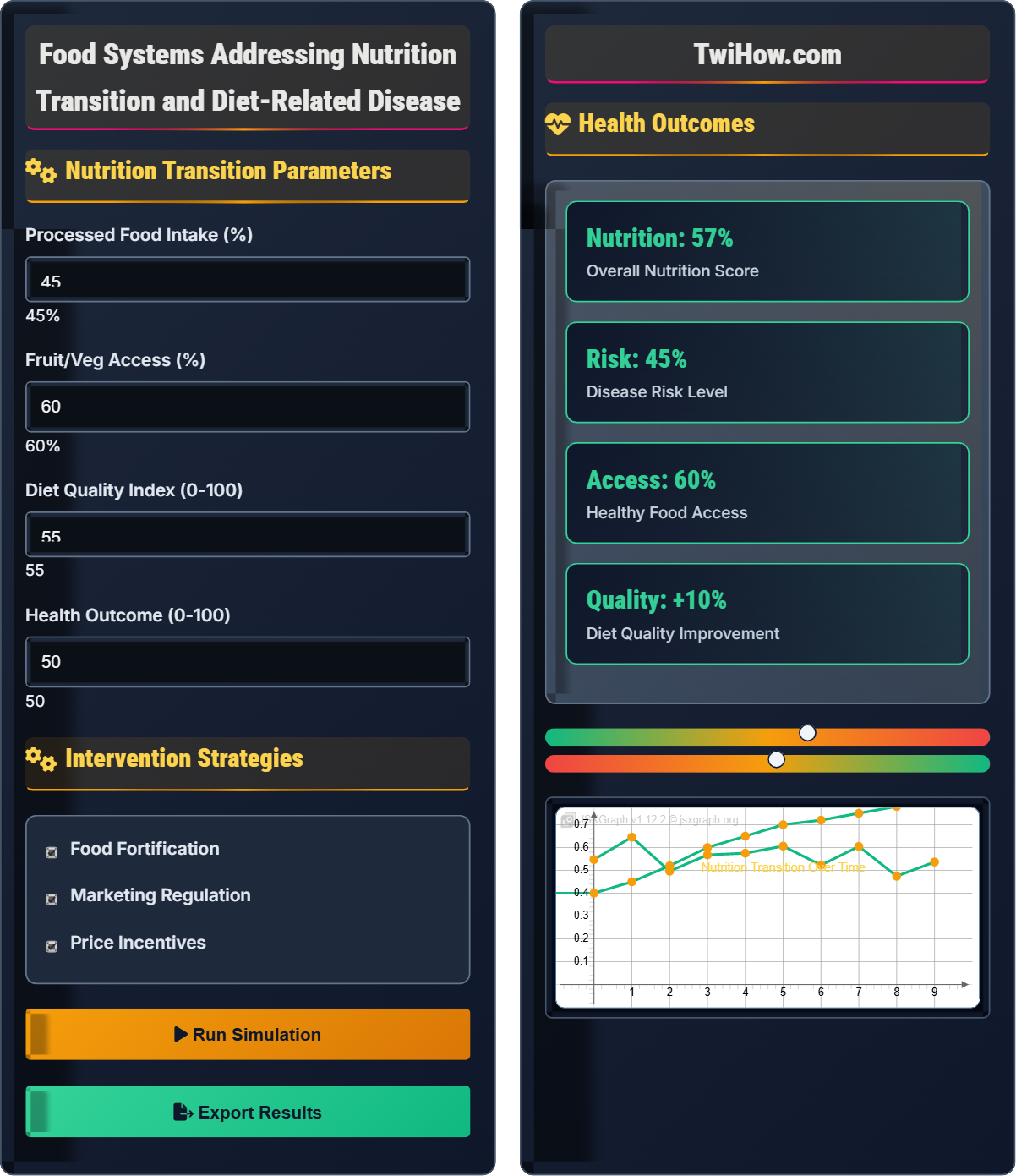
Nutrition Transition Parameters
Intervention Strategies
Health Outcomes
| Indicator | Current | Target | Intervention |
|---|---|---|---|
| Processed Foods | 45% | 25% | Regulation |
| Fruits/Veggies | 60% | 80% | Subsidies |
| Whole Grains | 35% | 50% | Marketing |
| Added Sugars | 12% | 5% | Taxation |
F=Food, P=Processed, D=Diet, H=Health, N=Nutrition, A=Access, I=Interventions, C=Consumers, S=System
Nutrition Transition in Food Systems Explained
Nutrition transition refers to the dynamic shifts in dietary patterns, physical activity, and nutritional status that occur as societies undergo economic, demographic, and epidemiological changes. This includes the shift from traditional diets to processed foods and sedentary lifestyles, leading to increased rates of diet-related diseases.
Nutrition transition is measured using several important indicators:
Where:
- Diet Quality: Nutritional adequacy of food intake
- Health Outcomes: Disease prevalence and mortality rates
- Food Access: Availability and affordability of healthy foods
- Goal: Optimize all components for healthy nutrition
Effective nutrition transition interventions include:
- Food Fortification: Enhancing nutritional value of processed foods
- Regulatory Measures: Taxation on unhealthy foods, labeling requirements
- Marketing Restrictions: Limiting promotion of unhealthy foods
- Price Incentives: Subsidies for healthy foods, taxes on unhealthy ones
- Supply Chain: Improving access to fresh, nutritious foods
- Education: Promoting healthy eating behaviors
- Policy: Regulations, standards, and incentives
- Market: Supply chain and pricing interventions
- Community: Local food systems and education
- Individual: Behavior change and education
- Multi-sectoral: Coordinated approaches across sectors
Nutrition Transition Fundamentals
Nutrition transition, diet-related diseases, food environment, dietary guidelines, public health nutrition, food security.
Index = (Diet Quality + Health Outcomes + Food Access) / 3
Where Index = nutrition transition score, Diet Quality = nutritional adequacy, Health Outcomes = disease prevalence, Food Access = availability and affordability.
- Prevention is better than cure
- Food systems shape diets
- Multi-sectoral approaches work best
Applications
Food fortification programs, sugar taxes, front-of-package labeling, school feeding programs, healthy food subsidies.
- Policy development
- Stakeholder engagement
- Implementation monitoring
- Impact evaluation
- Cultural acceptability
- Economic feasibility
- Equity implications
- Industry resistance
Nutrition Transition Learning Quiz
Which stage of nutrition transition is characterized by increased consumption of processed foods and rising obesity rates?
Stage 3 of nutrition transition is characterized by increased consumption of energy-dense, nutrient-poor processed foods, leading to rising rates of obesity, diabetes, and cardiovascular diseases. This stage typically occurs in middle-income countries experiencing rapid urbanization and lifestyle changes.
The answer is C) Stage 3 - Degenerative diseases.
Students should understand the sequential stages of nutrition transition. Each stage represents different dietary and health challenges. Stage 3 represents the shift from infectious diseases and undernutrition to chronic diseases associated with overconsumption of processed foods and sedentary lifestyles.
Nutrition Transition: Shift from traditional to modern diets
Stage 3: Period of degenerative diseases
Energy-Dense Foods: High-calorie, low-nutrient foods
• Transition stages occur sequentially
• Each stage has distinct characteristics
• Food systems influence transitions
• Remember the sequence of stages
• Associate stages with disease patterns
• Consider economic development
• Confusing stage characteristics
• Not understanding progression
• Ignoring economic factors
Explain how the food environment influences dietary choices and contributes to nutrition transition. What are the key environmental factors?
Food Environment Definition: The physical, economic, and sociocultural context in which food choices are made.
Key Environmental Factors: Food availability, affordability, convenience, marketing, and social norms.
Impact on Choices: Easy access to processed foods, aggressive marketing of unhealthy products, and social normalization of fast food consumption.
Transition Contribution: Creates an obesogenic environment that promotes overconsumption of energy-dense foods while reducing access to healthy options.
Interventions: Regulating food marketing, improving access to healthy foods, and creating supportive food policies.
Students should understand that individual food choices are heavily influenced by the surrounding environment. The food environment can either support or hinder healthy eating. This concept is crucial for designing effective interventions that go beyond individual behavior change to address systemic factors.
Food Environment: Context in which food choices occur
Obesogenic Environment: Environment promoting weight gain
Food Accessibility: Physical and economic access to food
• Environment shapes behavior
• Systemic changes are needed
• Multiple factors interact
• Consider multiple environmental layers
• Think about accessibility and affordability
• Address marketing influences
• Focusing only on individual choice
• Ignoring environmental factors
• Not considering accessibility
A country implements a 20% tax on sugar-sweetened beverages. Before the tax, consumers bought 100 million liters annually at $1.50/liter. After the tax, consumption drops by 25%. Calculate the health impact in terms of calories reduced (assume 45 calories per 100ml) and estimate the revenue generated.
Before Tax: 100 million liters × $1.50 = $150 million in sales
After Tax: 100 million × 0.75 = 75 million liters
Calories Per Liter: (45 cal/100ml) × 1000ml = 450 calories/liter
Calories Before: 100M × 450 = 45 billion calories
Calories After: 75M × 450 = 33.75 billion calories
Calories Reduced: 45B - 33.75B = 11.25 billion calories
Revenue Generated: 75M liters × $0.30 tax = $22.5 million
This problem demonstrates how fiscal policies can impact both consumption and public health. Students should understand that sugar taxes not only generate revenue but also reduce calorie intake. The calculation shows the potential health impact in terms of calories avoided, which can translate to reduced obesity rates.
Sugar Tax: Excise tax on sugary drinks
Calorie Reduction: Decrease in energy intake
Fiscal Policy: Government taxation for health outcomes
• Taxes can influence behavior
• Calculate both health and economic impacts
• Consider consumption elasticity
• Convert units consistently
• Calculate both effects
• Consider substitution effects
• Not converting units properly
• Forgetting to calculate tax revenue
• Not considering substitution
A city wants to improve access to healthy foods in underserved neighborhoods. Design a comprehensive intervention strategy that addresses availability, affordability, and accessibility while considering economic and cultural factors.
Availability: Incentivize grocery stores to locate in underserved areas, support farmers' markets, and promote community gardens.
Affordability: Implement SNAP incentives at farmers' markets, provide vouchers for healthy foods, and subsidize healthy food prices.
Accessibility: Improve public transportation to grocery stores, establish mobile markets, and create walkable neighborhoods.
Cultural Factors: Include culturally appropriate foods, involve community leaders, and respect local preferences.
Economic Sustainability: Partner with local businesses, create employment opportunities, and support local food systems.
Implementation: Use multi-sectoral approach involving government, private sector, and community organizations.
This problem demonstrates that improving healthy food access requires addressing multiple barriers simultaneously. Students should understand that interventions must be comprehensive, culturally sensitive, and economically sustainable. The key is addressing all dimensions of access - availability, affordability, and physical accessibility.
Food Access: Ability to obtain food
Food Desert: Area lacking healthy food access
SNAP Incentives: Supplemental Nutrition Assistance Program benefits
• Address all access dimensions
• Consider cultural appropriateness
• Ensure economic sustainability
• Engage community in planning
• Use multiple intervention types
• Address systemic barriers
• Focusing on only one barrier
• Ignoring cultural factors
• Not considering sustainability
Which food marketing practice has the greatest impact on children's food preferences and consumption?
TV and digital advertising have the greatest impact on children's food preferences and consumption. These platforms use animated characters, bright colors, and engaging narratives that appeal to children. Children are particularly susceptible to advertising because they have difficulty distinguishing between entertainment and commercial content.
The answer is B) TV and digital advertising.
Students should understand that children are a particularly vulnerable population when it comes to food marketing. The combination of visual appeal, emotional engagement, and repetitive messaging in TV and digital advertising makes these platforms especially effective at influencing children's food preferences. This is why many countries regulate food marketing to children.
Food Marketing: Promotional activities for food products
Child Susceptibility: Children's vulnerability to advertising
Animated Characters: Cartoons used in food promotions
• Children are more susceptible to marketing
• Visual appeals are particularly effective
• Repetitive messaging influences preferences
• Consider target audience vulnerability
• Understand marketing psychology
• Address regulatory approaches
• Underestimating marketing impact
• Not considering child vulnerability
• Ignoring psychological effects
FAQ
Q: How can I protect my children from unhealthy food marketing while living in an area with limited healthy food options?
A: Several strategies can help:
1. Media Literacy: Teach children to recognize and question food advertisements
2. Family Rules: Establish screen time limits and food guidelines
3. Alternative Snacks: Keep healthy options readily available
4. Community Action: Advocate for better food access in your area
5. Meal Planning: Prepare healthy meals in advance
6. Education: Involve children in food preparation and nutrition discussions
Focus on building healthy habits and critical thinking skills.
Q: What policy interventions are most effective for addressing nutrition transition?
A: Most effective interventions include:
Regulatory Measures: Front-of-package labeling, marketing restrictions to children, and sugar taxes.
Supply Side: Subsidies for healthy foods, fortification requirements, and food safety standards.
Environmental Changes: Improving food access in underserved areas and workplace wellness programs.
Education: National nutrition campaigns and school-based nutrition education.
Multi-sectoral: Coordination across health, agriculture, and trade sectors.
Success requires comprehensive approaches targeting multiple levels simultaneously.