How to Build Strong Relationships with Professors or Advisors
Complete guide • Communication strategies • Step-by-step instructions
Building strong relationships with professors and advisors is crucial for academic success and career development. These relationships provide mentorship, networking opportunities, research collaborations, and valuable recommendations. Effective relationship building requires professionalism, genuine interest, and consistent communication.
Key elements include:
- Professional Communication: Respectful and appropriate interactions
- Active Participation: Engagement in class and office hours
- Follow-up Actions: Maintaining contact and showing appreciation
- Genuine Interest: Authentic curiosity about their work
- Reciprocal Value: Contributing to the relationship
This guide provides comprehensive strategies for building meaningful academic relationships.
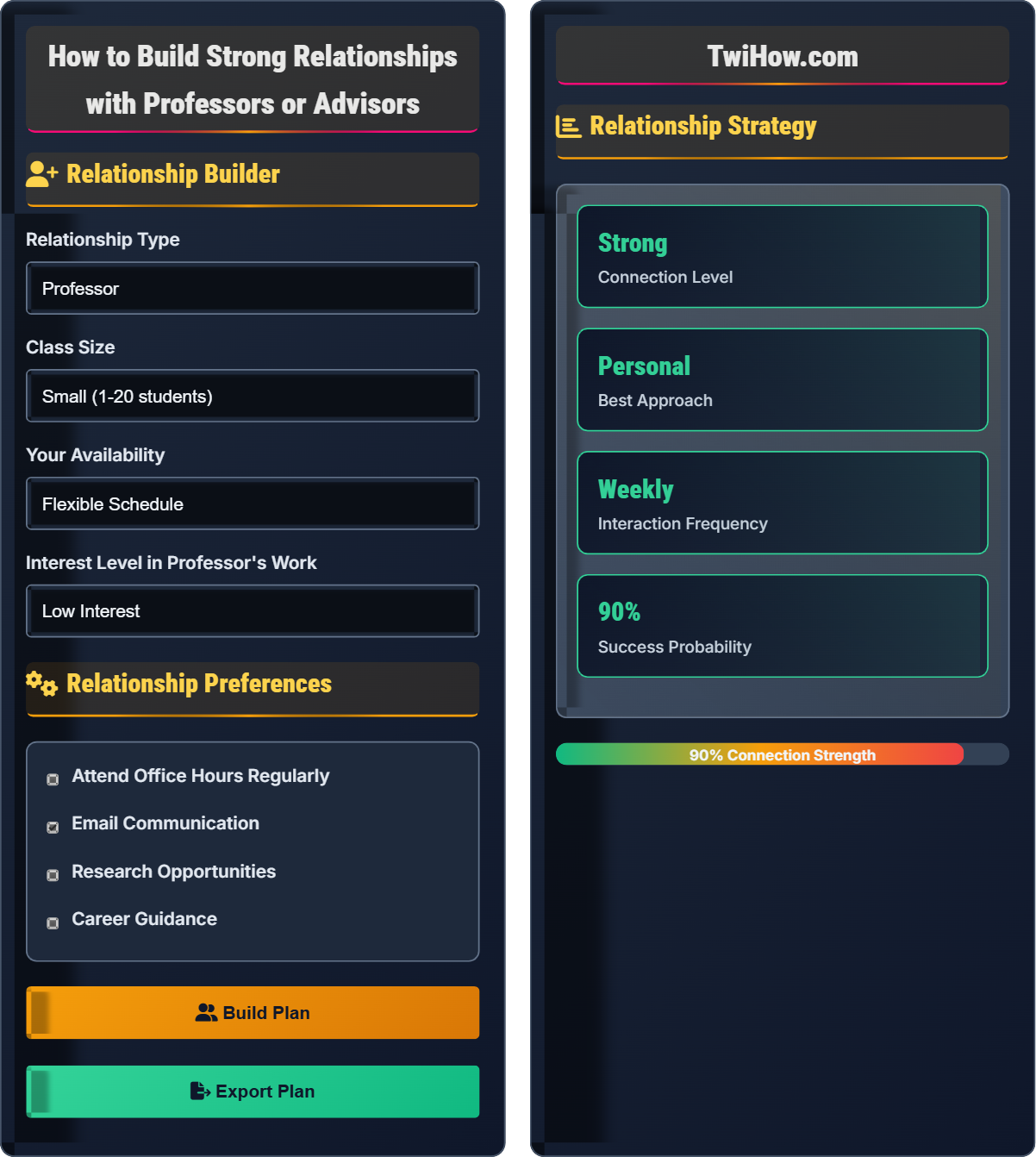
Relationship Builder
Relationship Preferences
Relationship Strategy
Participate actively in class discussions, ask thoughtful questions, and demonstrate genuine interest in the subject matter. This shows respect for the professor's expertise and creates opportunities for meaningful interaction.
Visit office hours regularly to discuss course material, ask questions, and show commitment to learning. Come prepared with specific questions to make the most of this time.
Relationship Building Strategies
Active participation in class is the foundation of professor relationships. Attend all classes, participate in discussions, ask thoughtful questions, and demonstrate genuine interest in the subject. This shows respect for the professor's expertise and creates natural opportunities for interaction.
Office hours are invaluable for building relationships. Visit regularly, come prepared with specific questions, and show genuine interest in the professor's research or expertise. This demonstrates commitment to learning beyond the classroom.
- Arrive prepared with specific questions
- Show interest in the professor's research
- Discuss course material in depth
- Seek advice on academic/career paths
- Follow up on previous discussions
Effective email communication is crucial. Use professional salutations, clear subject lines, concise but complete messages, and appropriate language. Always proofread before sending and include your course information.
Express interest in the professor's research and seek opportunities to collaborate. This could involve independent study, research projects, or assisting with ongoing work. This creates meaningful connections and demonstrates commitment.
- Read professor's publications
- Attend research presentations
- Volunteer for research projects
- Propose relevant research ideas
- Seek research mentorship
Consider how you can add value to the relationship. This might include sharing relevant articles, offering assistance with departmental events, or providing fresh perspectives on research topics. Relationships should be mutually beneficial.
- Share relevant resources
- Offer to help with projects
- Provide fresh perspectives
- Assist with departmental activities
- Give thoughtful feedback
Office Hours Schedule
Meeting Log Template
| Date | Professor | Topic | Outcome | Follow-up |
|---|---|---|---|---|
| 2024-01-15 | Dr. Smith | Research Opportunities | Discussed summer research | Email proposal draft |
| 2024-01-22 | Prof. Johnson | Course Material | Clarified assignment | Submit revised work |
Professor Relationship Building Quiz
What is the most important element of professional email communication with professors?
Professional tone and proper etiquette are crucial when communicating with professors. This includes using formal greetings, clear subject lines, respectful language, and proper grammar. Professional communication shows respect and seriousness about the relationship.
The answer is B) Using professional tone and proper etiquette.
Professional communication sets the foundation for academic relationships. Professors interact with hundreds of students and appreciate those who demonstrate professionalism. Proper email etiquette shows respect for their time and expertise, increasing the likelihood of positive responses and continued engagement.
Professional Communication: Respectful, appropriate exchange of information
Email Etiquette: Proper email writing conventions
Academic Professionalism: Maintaining professional standards in academic settings
• Use formal salutations
• Include course information
• Proofread before sending
• Always use proper titles (Dr., Prof.)
• Keep emails concise and specific
• Include your student ID and course
• Using informal language
• Not including course information
• Sending emails at inappropriate times
Explain the importance of attending office hours and how to make the most of these interactions.
Importance of Office Hours:
Office hours provide unique opportunities for one-on-one interaction with professors. They allow for deeper discussions about course material, clarification of concepts, and personal academic guidance. Office hours also demonstrate commitment to learning and help professors remember you positively.
Maximizing Office Hours:
1. Prepare Questions: Come with specific questions about course material, assignments, or career advice.
2. Research Professor's Work: Show interest in their research or publications.
3. Be Respectful of Time: Arrive on time and be mindful of other students waiting.
4. Bring Materials: Bring relevant assignments, notes, or research for reference.
5. Follow Up: Thank the professor and implement their suggestions.
Topics to Discuss:
• Course material clarification
• Assignment feedback
• Career advice
• Research opportunities
• Graduate school guidance
Office hours represent a professor's dedicated time for individual student interaction. Students who utilize this time effectively demonstrate initiative and commitment to learning. The personal attention received during office hours often leads to stronger relationships and better academic outcomes.
Office Hours: Scheduled time for professor-student interaction
One-on-One Interaction: Individual attention outside of class
Academic Guidance: Personalized advice on academic matters
• Come prepared with specific questions
• Respect the professor's time
• Follow up on advice given
• Start with course-related questions
• Gradually build to broader topics
• Take notes during conversations
• Coming unprepared
• Wasting time with small talk
• Not following up on advice
Sarah is interested in collaborating with her psychology professor on research but doesn't know how to approach the topic. She's a sophomore with no research experience. How should she initiate this conversation and what steps should she take to become a valuable research partner?
Initial Approach:
• Research First: Read the professor's recent publications to understand their research focus.
• Office Hours: Visit during office hours to discuss course material and express interest in their research.
• Specific Interest: Identify specific aspects of their research that interest you.
Building Value:
• Start Small: Offer to help with literature reviews or data entry.
• Develop Skills: Learn relevant research software or methodologies.
• Show Reliability: Be punctual, complete tasks thoroughly, and communicate effectively.
• Ask Questions: Demonstrate genuine curiosity about the research process.
Next Steps:
1. Email the professor expressing interest and mentioning specific research
2. Request a meeting to discuss potential involvement
3. Propose starting with a small project or independent study
4. Be prepared to commit time and effort consistently
Sarah should emphasize her enthusiasm and willingness to learn rather than experience.
Research collaboration begins with genuine interest and respect for the professor's work. Professors value students who take initiative to understand their research and demonstrate commitment. Starting with smaller tasks and gradually taking on more responsibility builds trust and expertise.
Research Collaboration: Working together on academic research projects
Academic Mentorship: Guidance in research and academic pursuits
Gradual Involvement: Starting with small tasks and building responsibilities
• Research the professor's work beforehand
• Start with small, manageable tasks
• Demonstrate reliability and professionalism
• Read recent publications before approaching
• Emphasize enthusiasm over experience
• Be prepared to commit consistent time
• Approaching without research knowledge
• Expecting immediate major responsibilities
• Not following through on commitments
Michael had a great conversation with his advisor about graduate school preparation, but hasn't heard back from them after sending a thank-you email. How should he continue building the relationship and maintain professional contact?
Patience and Persistence:
• Wait Appropriately: Allow 1-2 weeks for response before following up.
• Professional Follow-up: Send a polite follow-up email referencing the previous conversation.
• Show Progress: Mention any actions taken based on their advice.
Ongoing Engagement:
• Office Hours: Continue attending office hours to maintain contact.
• Updates: Share relevant academic achievements or progress.
• Events: Attend departmental events where the professor will be present.
• Academic Relevance: Bring up relevant course material or career developments.
Follow-up Email Template:
Subject: Following up on graduate school discussion
Dear Professor [Name], I hope you're well. I wanted to follow up on our conversation about graduate school preparation. Since our meeting, I've [specific action taken]. I would appreciate the opportunity to continue our discussion when your schedule permits.
Consistent, professional engagement is key to maintaining relationships.
Building relationships requires ongoing engagement, not just initial contact. Professors have busy schedules, so patience is important. However, consistent professional contact demonstrates genuine interest and commitment to the relationship. Showing action based on their advice demonstrates that you value their input.
Follow-up: Continuing communication after initial contact
Professional Persistence: Maintaining contact respectfully
Value Demonstration: Showing that advice was implemented
• Allow appropriate response time
• Be persistent but not pushy
• Show appreciation for their time
• Reference previous conversations
• Show specific progress made
• Suggest specific times for meetings
• Following up too quickly
• Not showing action based on advice
• Being too pushy in follow-ups
Which of the following best demonstrates how a student can add value to a relationship with a professor?
Sharing relevant articles or resources demonstrates that the student is engaged with the professor's field of interest and can contribute to their work. This creates a reciprocal relationship where both parties benefit from the interaction.
The answer is B) Sharing relevant articles or resources.
Effective relationships are built on mutual benefit. When students can contribute value to professors through shared resources, fresh perspectives, or assistance with projects, the relationship becomes more meaningful and sustainable. This demonstrates that the student views the relationship as more than just personal gain.
Reciprocal Value: Mutual benefit in a relationship
Contributing Value: Adding worth to the relationship
Mutual Benefit: Both parties gaining from interaction
• Look for ways to contribute
• Share relevant information
• Offer assistance when appropriate
• Stay updated on field developments
• Share interesting articles
• Offer to help with projects
• Viewing relationship as one-way
• Not looking for contribution opportunities
• Focusing only on personal benefits
Relationship Building Timeline
Follow-up Actions
FAQ
Q: How often should I contact professors to maintain a good relationship without being annoying?
A: Quality over frequency is key. One meaningful interaction per month is better than multiple superficial contacts. Contact professors when you have specific questions, updates on projects, or relevant achievements. Always have a legitimate reason for reaching out rather than just checking in. Office hours are perfect for maintaining regular contact in person.
Q: What if my child is shy and uncomfortable approaching professors?
A: Start small with email communication to build confidence. Encourage attending office hours when few other students are present. Practice conversations beforehand and focus on academic topics rather than personal concerns initially. Many professors are understanding and willing to help students who are genuinely interested in learning. The key is starting somewhere and building gradually.