What are Effective Strategies for Group Projects?
Complete guide • Team collaboration • Step-by-step instructions
Group projects are essential components of academic learning that develop teamwork, communication, and project management skills. Success in group projects requires effective collaboration, clear communication, defined roles, and structured planning. The most successful group projects combine individual strengths while managing diverse personalities and perspectives.
Key success factors include:
- Clear Communication: Regular, open, and respectful dialogue
- Defined Roles: Specific responsibilities for each member
- Structured Planning: Timeline, milestones, and deliverables
- Conflict Resolution: Strategies to address disagreements
- Quality Control: Consistent standards and review processes
This guide provides comprehensive strategies for effective group project management.
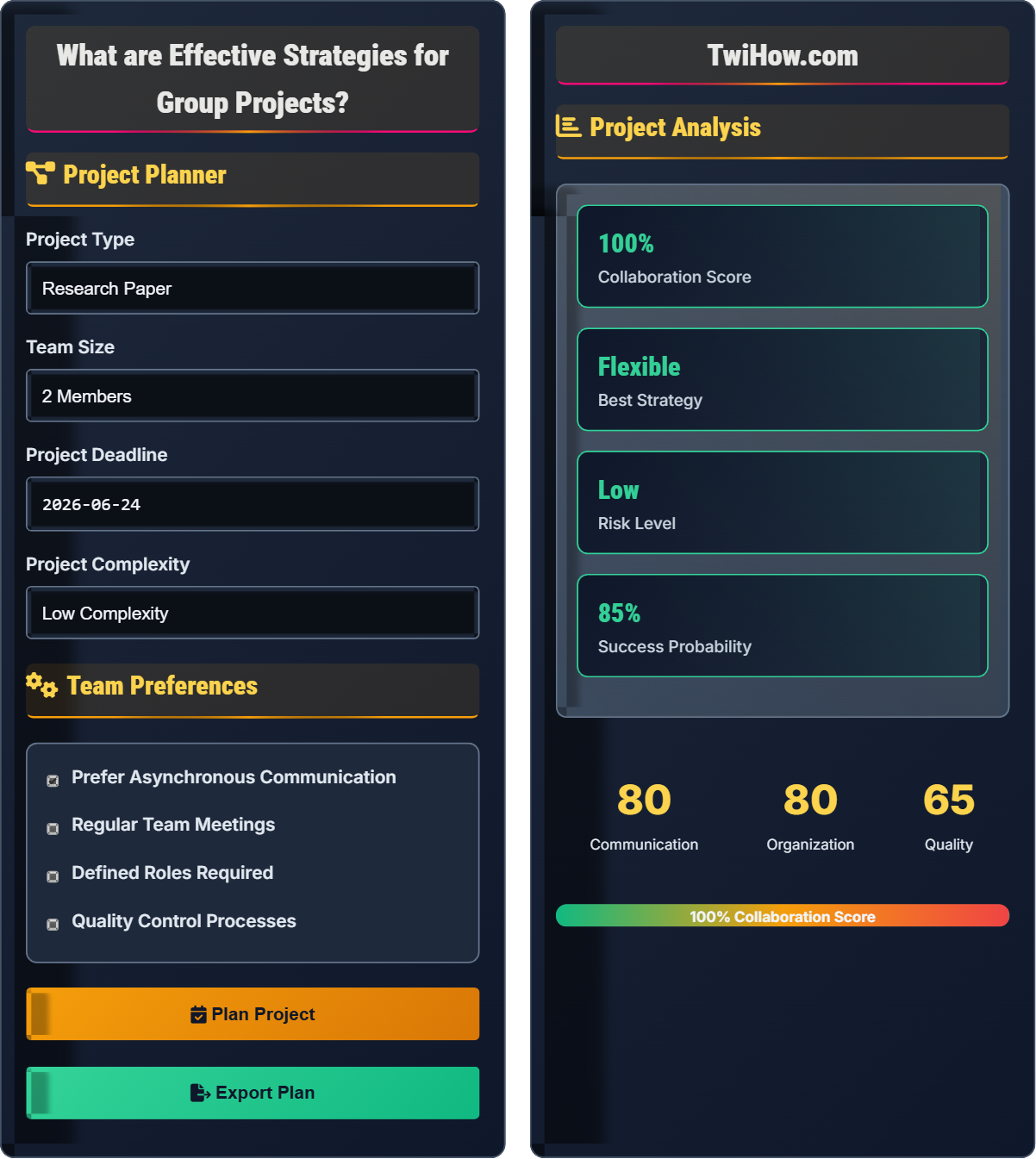
Project Planner
Team Preferences
Project Analysis
Based on your project type and complexity, a structured timeline with regular check-ins will optimize success.
With your team size, defined roles and responsibilities will ensure accountability and efficient progress.
| Phase | Activity | Timeline |
|---|---|---|
| 1 | Team Formation | Week 1 |
| 2 | Project Planning | Week 1-2 |
| 3 | Research/Execution | Week 2-4 |
| 4 | Review/Edit | Week 4-5 |
Essential Group Project Strategies
Effective team formation is the foundation of successful group projects. Begin by establishing clear expectations, defining roles, and setting ground rules. Consider each member's strengths, availability, and communication preferences. Create a team charter that outlines goals, responsibilities, and conflict resolution procedures.
Establish clear communication channels and expectations from the start. Decide on primary communication methods, response time expectations, and meeting schedules. Create guidelines for respectful dialogue and ensure all voices are heard. Regular check-ins prevent misunderstandings and keep everyone aligned.
- Set response time expectations
- Use appropriate communication channels
- Schedule regular team meetings
- Document important decisions
- Address issues promptly
Break the project into manageable tasks with clear deadlines and assigned responsibilities. Use project management tools to track progress and maintain accountability. Establish milestones and checkpoints to ensure steady progress and early identification of potential problems.
Anticipate potential conflicts and establish procedures for addressing them constructively. Focus on the issue, not the person, and encourage open dialogue. Use compromise and negotiation techniques to find mutually acceptable solutions. If internal resolution fails, involve a neutral third party.
- Address issues early and privately
- Focus on the problem, not personalities
- Listen actively to all perspectives
- Seek win-win solutions
- Document agreements
Team Role Definitions
Communication Timeline
Group Project Strategies Quiz
What is the most important step when forming a group project team?
Establishing clear expectations and ground rules is the most important step. This creates a foundation for effective collaboration, defines how the team will operate, and prevents many potential conflicts. When everyone understands the expectations and agreed-upon procedures, the project runs more smoothly.
The answer is B) Establishing clear expectations and ground rules.
Group formation requires establishing a collaborative framework. Clear expectations about communication, deadlines, quality standards, and conflict resolution prevent misunderstandings and ensure all members are aligned. This foundational work pays dividends throughout the project lifecycle.
Ground Rules: Agreed-upon behaviors and procedures
Expectations: Clear standards and requirements
Collaborative Framework: Structure for team interaction
• Establish expectations early
• Document agreed-upon procedures
• Ensure all members understand
• Create a team charter
• Define communication protocols
• Set response time expectations
• Not establishing ground rules
• Assuming everyone knows expectations
• Not documenting agreements
Explain the key elements of effective communication protocols for group projects and why they're important.
Primary Communication Channels:
• Platform Selection: Choose reliable platforms like Slack, Teams, or email for regular communication
• Backup Channels: Establish alternative communication methods for urgent issues
• File Sharing: Use shared drives or platforms like Google Drive for document collaboration
Response Time Expectations:
• Urgent Issues: 2-4 hour response time for critical problems
• Regular Updates: 24-48 hour response time for routine communication
• Non-urgent: 1-2 day response time for general discussions
Meeting Protocols:
• Regular Check-ins: Weekly or bi-weekly meetings to track progress
• Agenda Setting: Prepare agendas in advance to maximize meeting efficiency
• Documentation: Record decisions and action items from meetings
Conflict Resolution:
• Private Discussion: Address issues privately before involving the whole team
• Neutral Facilitation: Use a neutral party to mediate if needed
• Focus on Issues: Address problems, not personalities
Effective communication protocols prevent misunderstandings, ensure accountability, and maintain project momentum.
Communication protocols create structure and predictability in group interactions. They ensure that all team members know how and when to communicate, which prevents information gaps and reduces stress. Clear protocols also establish accountability and provide a framework for addressing issues before they escalate.
Communication Protocol: Established procedures for team communication
Response Time: Expected timeframe for replies
Meeting Efficiency: Maximizing meeting outcomes
• Establish protocols early in the project
• Use consistent communication methods
• Document important decisions
• Set up notification preferences
• Use video calls for complex discussions
• Keep communication professional
• Using inconsistent communication channels
• Not establishing response time expectations
• Failing to document decisions
Your group of 4 has 8 weeks to complete a research project. The deadline is approaching, but one member hasn't completed their assigned section. How should the group handle this situation while maintaining team cohesion?
Immediate Response:
• Private Discussion: Contact the member privately to understand the situation and offer support
• Assess Impact: Determine how their section affects other parts of the project
• Offer Assistance: Ask if they need help or resources to complete their work
Contingency Planning:
• Reallocate Tasks: Temporarily assign parts of their section to other members if necessary
• Adjust Timeline: Negotiate a realistic timeline for completion
• Document Issues: Keep records of the situation and resolution attempts
Maintaining Cohesion:
• Focus on Solutions: Address the problem, not blame the individual
• Team Support: Offer to help the member catch up
• Future Prevention: Establish more frequent check-ins to prevent similar issues
Long-term Strategies:
• Regular Check-ins: Implement weekly progress updates
• Buffer Time: Build extra time into the schedule for unexpected issues
• Accountability Systems: Create systems to monitor progress
The goal is to complete the project successfully while preserving relationships and learning from the experience.
Project management requires balancing task completion with team relationships. When challenges arise, the focus should be on finding solutions rather than assigning blame. Effective project managers anticipate potential problems and have contingency plans. Communication and support are key to resolving issues while maintaining team cohesion.
Project Management: Coordinating resources to achieve goals
Contingency Planning: Preparing for potential problems
Team Cohesion: Unity and cooperation among team members
• Address issues privately first
• Focus on solutions, not blame
• Maintain team relationships
• Set up regular progress checks
• Build buffer time into schedules
• Offer support proactively
• Publicly confronting members
• Not addressing issues early
• Failing to document problems
Two members of your group strongly disagree about the approach to take for your project. One wants to focus on creativity while the other prioritizes technical accuracy. The disagreement is causing tension and slowing progress. How should you resolve this conflict?
Initial Assessment:
• Listen Actively: Allow both sides to present their viewpoints without interruption
• Identify Common Ground: Find shared goals and objectives
• Understand Perspectives: Explore the underlying reasons for each position
Moderation Approach:
• Neutral Facilitation: Have a neutral team member moderate the discussion
• Focus on Objectives: Redirect the conversation to project goals
• Seek Compromise: Look for solutions that incorporate both perspectives
Resolution Strategies:
• Integrated Approach: Find ways to incorporate both creativity and technical accuracy
• Phased Implementation: Address one aspect first, then the other
• Expert Consultation: Seek guidance from instructor or mentor
Maintaining Relationships:
• Acknowledge Validity: Recognize the merit in both perspectives
• Focus on Team Goals: Emphasize shared objectives
• Prevent Escalation: Address the conflict before it becomes personal
The resolution should address the underlying concerns of both parties while advancing the project.
Conflict in group projects often stems from different priorities and perspectives, which can actually be beneficial if managed properly. The key is to channel disagreements into productive discussions that lead to better solutions. Effective conflict resolution focuses on the issues rather than personalities and seeks to understand the underlying concerns of all parties.
Conflict Resolution: Process of addressing disagreements constructively
Neutral Facilitation: Mediation by an impartial party
Constructive Disagreement: Disagreements that lead to better solutions
• Address conflicts early
• Focus on issues, not personalities
• Seek win-win solutions
• Use structured discussion formats
• Acknowledge valid concerns
• Focus on shared goals
• Letting conflicts escalate
• Taking sides in disputes
• Ignoring underlying issues
What is the most effective approach to maintaining quality standards in group projects?
Establishing clear standards and peer review processes is the most effective approach. This ensures all members understand quality expectations, creates accountability, and allows for early correction of issues. Peer review also promotes learning and skill development among team members.
The answer is B) Establish clear standards and peer review processes.
Quality control in group projects requires systematic approaches rather than relying on individual excellence. Clear standards ensure consistency, peer review promotes accountability and learning, and regular checks prevent major issues from accumulating. This approach distributes responsibility and builds quality into the process rather than trying to add it at the end.
Quality Standards: Clear expectations for project deliverables
Peer Review: Evaluation by fellow team members
Systematic Approach: Structured methods for quality assurance
• Set standards early in the project
• Implement regular quality checks
• Use peer review processes
• Create quality checklists
• Establish review milestones
• Provide constructive feedback
• Not establishing clear standards
• Waiting until the end for quality checks
• Not involving all members in quality control
Quality Assurance Plan
FAQ
Q: What should I do if a group member is not contributing?
A: First, have a private conversation with the member to understand the situation. They may be facing challenges you're unaware of. If the issue continues, document the problem and inform your instructor. Try redistributing the work among other members temporarily, but don't completely take over their responsibilities. Focus on finding a solution that maintains team relationships while ensuring project completion.
Q: How can I support my child with group projects?
A: Help your child develop communication skills and conflict resolution strategies. Encourage them to take initiative in group formation and planning. Teach them to document their contributions and maintain professional relationships. Support them in learning from both successful and challenging group experiences. Avoid intervening directly in group conflicts.