What are the Signs of Academic Burnout and How to Recover?
Complete guide • Recovery strategies • Step-by-step instructions
Academic burnout is a state of physical, emotional, and mental exhaustion caused by prolonged academic stress. It manifests as reduced motivation, decreased performance, and feelings of detachment from academic work. Early recognition and intervention are crucial for preventing long-term academic and personal consequences.
Key indicators include:
- Physical Symptoms: Chronic fatigue, headaches, sleep disturbances
- Emotional Signs: Irritability, anxiety, depression, cynicism
- Cognitive Effects: Difficulty concentrating, memory problems
- Behavioral Changes: Procrastination, absenteeism, withdrawal
- Academic Decline: Decreased performance, loss of interest
This guide provides comprehensive strategies for recognizing, preventing, and recovering from academic burnout.
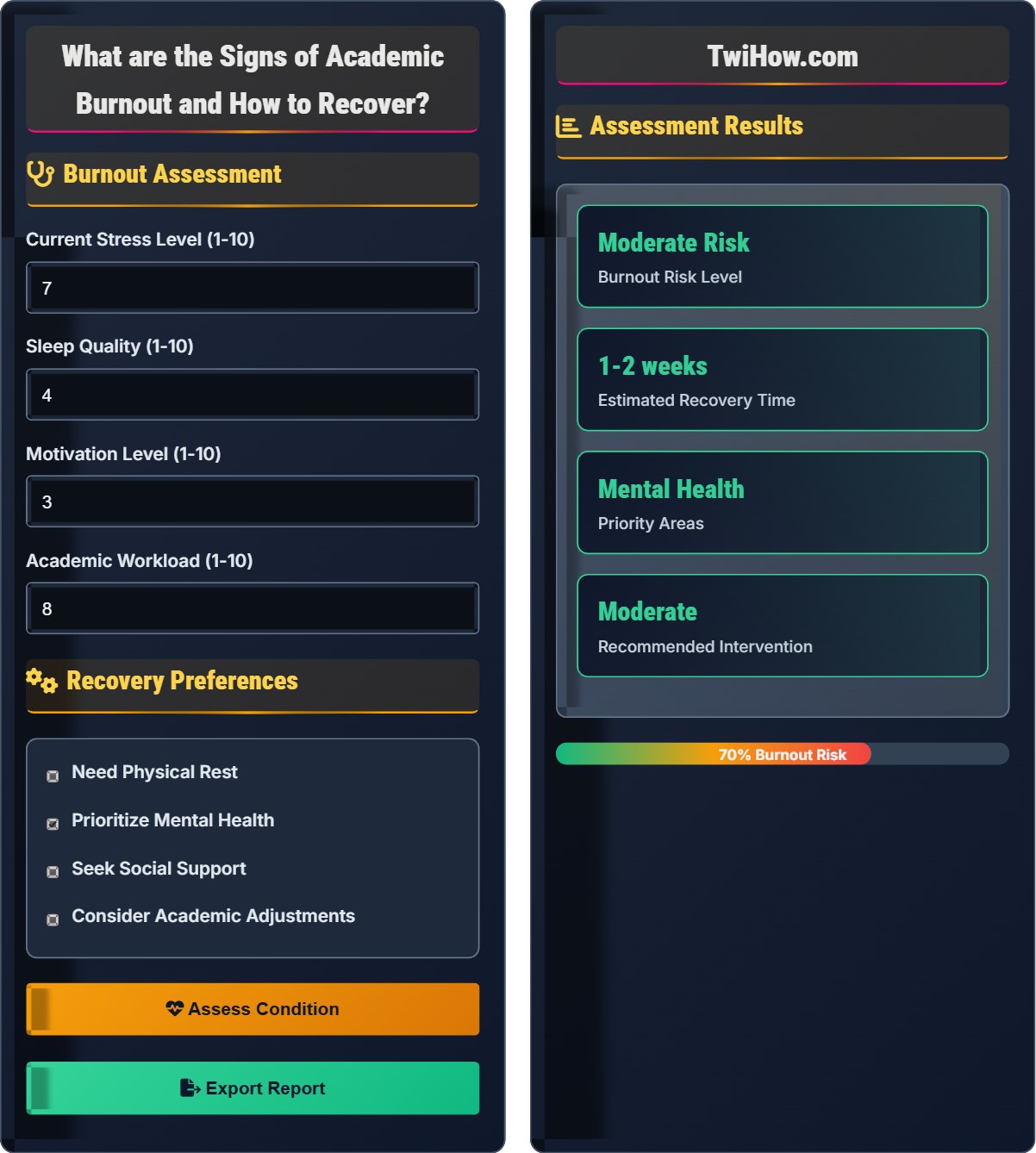
Burnout Assessment
Recovery Preferences
Assessment Results
You may be experiencing irritability, anxiety, feelings of hopelessness, or emotional exhaustion. These are common indicators of academic burnout.
Difficulty concentrating, memory problems, and inability to focus are signs that academic stress is affecting your mental capacity.
Prioritize 7-9 hours of quality sleep and incorporate rest periods into your daily schedule.
Engage in stress-reduction activities and seek professional support if needed.
Recognizing Academic Burnout
Physical manifestations of academic burnout include persistent fatigue, headaches, muscle tension, sleep disturbances, and changes in appetite. These symptoms often worsen during high-stress periods like midterms or finals.
Emotional symptoms include feelings of cynicism, detachment, irritability, and a sense of inefficacy. Students may experience mood swings, anxiety, depression, or a complete loss of interest in previously enjoyed activities.
- Feelings of helplessness or hopelessness
- Increased irritability and mood swings
- Loss of motivation and enthusiasm
- Feelings of being overwhelmed
- Detachment from academic work
Behavioral signs include procrastination, skipping classes, isolation from peers, increased absenteeism, and neglecting personal hygiene. Students may also exhibit changes in eating patterns or substance use.
- Increased procrastination and avoidance
- Skipping classes or assignments
- Social withdrawal and isolation
- Changes in eating or drinking habits
- Decreased academic performance
Academic burnout significantly impacts performance through decreased concentration, memory problems, reduced creativity, and difficulty retaining information. Students may experience grade decline and struggle with previously manageable tasks.
- Declining grades despite effort
- Difficulty concentrating during study
- Reduced retention of information
- Decreased participation in class
- Loss of academic confidence
Recovery Strategies
Recovery Timeline
Burnout Recognition and Recovery Quiz
Which of the following is typically an early sign of academic burnout?
Difficulty concentrating and feeling overwhelmed are among the earliest signs of academic burnout. These cognitive symptoms often precede more severe emotional and physical manifestations. When students begin to struggle with focus and feel overwhelmed by manageable tasks, it's often the first indication that stress levels are becoming problematic.
The answer is B) Difficulty concentrating and feeling overwhelmed.
Early recognition of burnout is crucial for effective intervention. Cognitive symptoms like difficulty concentrating often appear before more obvious emotional or physical signs. Students and educators should be vigilant for changes in focus, memory, or the ability to handle normal academic demands, as these indicate the need for stress management interventions.
Early Signs: Initial symptoms that appear before severe burnout
Cognitive Symptoms: Mental effects like concentration problems
Stress Indicators: Signs that stress levels are problematic
• Monitor cognitive changes closely
• Address symptoms early
• Don't ignore early warning signs
• Track your concentration levels daily
• Notice when tasks seem harder than usual
• Pay attention to mental fatigue
• Dismissing cognitive symptoms as normal stress
• Pushing through when concentration declines
• Not recognizing early warning signs
Explain the stages of academic burnout recovery and what strategies are most effective at each stage.
Stage 1: Immediate Rest (Week 1)
Focus on physical recovery through adequate sleep (7-9 hours), proper nutrition, and basic self-care. Reduce or eliminate academic work to allow the nervous system to reset. Engage in relaxing activities like gentle walks or meditation.
Stage 2: Gradual Return (Week 2)
Slowly reintroduce academic activities at a reduced level. Set realistic expectations and shorter work sessions. Monitor energy levels and stress responses carefully. Begin implementing stress management techniques.
Stage 3: Rebuilding (Weeks 3-4)
Gradually increase academic load while maintaining self-care practices. Focus on rebuilding confidence and skills. Continue stress management and establish sustainable work habits.
Stage 4: Prevention (Ongoing)
Implement long-term strategies including time management, stress reduction, and work-life balance. Regularly assess stress levels and make adjustments as needed. Maintain healthy habits and support systems.
Recovery is not linear and may require adjustments based on individual responses.
Recovery from academic burnout requires a systematic approach that respects the body's need for healing. Rushing the process often leads to relapse. The gradual approach allows for sustainable recovery while rebuilding academic confidence and capacity. Each stage builds on the previous one, creating a foundation for long-term academic success.
Recovery Stages: Progressive phases of healing from burnout
Gradual Return: Slow reintegration of academic activities
Sustainable Habits: Practices that maintain long-term wellness
• Don't rush the recovery process
• Monitor your response to increased activity
• Maintain self-care throughout recovery
• Keep a recovery journal
• Set small, achievable goals
• Celebrate progress milestones
• Returning to full academic load too quickly
• Not maintaining self-care during recovery
• Ignoring warning signs of relapse
Emma notices she's been feeling increasingly overwhelmed with her coursework and has started having trouble sleeping. She's worried she might be heading toward academic burnout. What preventive measures should she implement immediately to avoid burnout?
Immediate Actions:
• Assess Current Load: Evaluate whether her course load is manageable and consider dropping a course if possible.
• Establish Sleep Routine: Create a consistent bedtime routine and aim for 7-9 hours of sleep nightly.
• Implement Stress Management: Begin daily relaxation techniques like deep breathing or meditation.
• Time Management: Create a realistic schedule with breaks and leisure time.
• Seek Support: Talk to a counselor, academic advisor, or trusted friend about her concerns.
Short-Term Strategies:
• Break large tasks into smaller, manageable chunks
• Take regular breaks during study sessions
• Engage in physical activity for stress relief
• Maintain social connections and hobbies
Emma should act immediately on these signs rather than hoping they'll resolve on their own. Early intervention is much more effective than waiting for symptoms to worsen.
Prevention is always more effective than treatment when it comes to academic burnout. Emma's awareness of her symptoms is a positive sign, but immediate action is necessary. The key is to address both the immediate stressors and implement long-term protective strategies. Proactive intervention prevents the escalation of symptoms and maintains academic performance.
Prevention: Actions taken to avoid developing burnout
Early Intervention: Addressing symptoms before they become severe
Protective Strategies: Measures that prevent burnout development
• Don't ignore early warning signs
• Address sleep issues immediately
• Maintain social connections
• Create a "stop" signal for stress
• Build in regular check-ins with yourself
• Establish boundaries with academic work
• Pushing through when noticing early signs
• Not seeking help when needed
• Continuing unsustainable work patterns
David has been experiencing academic burnout symptoms for several months but is reluctant to seek help, believing he should handle it on his own. What are the benefits of seeking support, and what types of support are most helpful for academic burnout recovery?
Benefits of Seeking Support:
• Professional Guidance: Counselors can provide evidence-based strategies for recovery and coping.
• Objective Perspective: Others can identify blind spots and provide reality checks about workload and expectations.
• Accountability: Support systems help maintain healthy boundaries and self-care practices.
• Validation: Normalizes the experience and reduces feelings of shame or weakness.
Types of Support:
• Professional Help: Academic counselors, therapists, or medical professionals
• Academic Accommodations: Working with advisors to adjust course load or deadlines
• Social Support: Friends, family, or support groups who understand
• Peer Networks: Connecting with others who have experienced similar challenges
Seeking support is not a sign of weakness but rather a strategic and mature approach to recovery. Professional help can accelerate recovery and provide tools for long-term prevention.
Recovery from academic burnout rarely occurs in isolation. The stigma associated with seeking help often prevents students from accessing valuable resources. Understanding that support-seeking is a strength rather than a weakness is crucial for recovery. Professional support provides evidence-based strategies that self-help methods may not offer.
Support System: Network of people and resources for assistance
Professional Help: Expert guidance from qualified professionals
Academic Accommodations: Adjustments to academic requirements
• Don't suffer in silence
• Professional help is often necessary
• Support accelerates recovery
• Start with trusted individuals
• Research available campus resources
• Remember that seeking help is normal
• Believing you must handle it alone
• Waiting until crisis point to seek help
• Not utilizing available resources
When recovering from academic burnout, what should be the first priority?
Restoring physical and mental health must be the first priority when recovering from academic burnout. Without a healthy foundation, academic performance cannot improve sustainably. Physical recovery through adequate sleep, nutrition, and rest allows the nervous system to heal and rebuild capacity for academic work.
The answer is B) Restoring physical and mental health.
The recovery process follows a hierarchical approach where basic needs must be addressed before higher-level functioning can resume. Attempting to maintain academic performance while burned out often exacerbates symptoms. The body and mind need time to heal before they can effectively engage in academic tasks. Once physical and mental health is restored, academic recovery can begin.
Hierarchical Recovery: Addressing basic needs before higher-level functions
Foundation Building: Establishing health before performance
Sustainable Recovery: Healing that supports long-term wellness
• Health comes before performance
• Recovery is not optional
• Patience is essential in healing
• Focus on self-care first
• Set health-based goals
• Be patient with the process
• Trying to maintain academic performance during recovery
• Not prioritizing rest and healing
• Rushing back to full academic load
Prevention Strategies
To prevent academic burnout:
- Establish and maintain healthy sleep routines
- Practice regular stress management techniques
- Set realistic academic goals and expectations
- Maintain social connections and support systems
- Take regular breaks and engage in non-academic activities
- Monitor stress levels and address issues early
- Seek help when challenges arise
Remember that academic success includes maintaining your physical and mental health.
FAQ
Q: How do I know if I need professional help for academic burnout?
A: Seek professional help if: symptoms persist for more than 2-3 weeks despite self-care efforts, you experience thoughts of self-harm or suicide, physical symptoms worsen, or you're unable to function in daily activities. Additionally, if you find yourself using substances to cope, experiencing panic attacks, or having persistent feelings of hopelessness, professional intervention is recommended. There's no shame in seeking help, and early intervention often prevents more serious complications.
Q: Can academic burnout be prevented, or is it inevitable for high-achieving students?
A: Academic burnout is not inevitable for high-achieving students. With proper self-care, realistic goal-setting, and stress management, even ambitious students can maintain high performance without burning out. The key is building sustainable habits early, recognizing warning signs, and maintaining balance between achievement and wellness. High achievers who prioritize self-care often perform better long-term than those who sacrifice health for short-term gains.