How Do I Prepare My Child for Puberty and Adolescence?
Complete parenting guide • Step-by-step explanations
Puberty Preparation:
Show Puberty Preparation SimulatorPreparing your child for puberty and adolescence is one of the most important parenting challenges. This transitional period brings significant physical, emotional, and social changes that require thoughtful preparation and ongoing support. Early preparation helps children navigate these changes with confidence and resilience.
Key aspects of puberty preparation:
- Physical Changes: Understanding body transformations and hygiene needs
- Emotional Development: Managing mood swings and identity formation
- Communication: Creating open dialogue about sensitive topics
- Independence: Gradually increasing autonomy and responsibility
- Peer Relationships: Navigating social dynamics and pressures
Successful preparation involves age-appropriate conversations, providing accurate information, and creating a supportive environment where children feel comfortable asking questions and expressing concerns.
Preparation Parameters
Preparation Areas
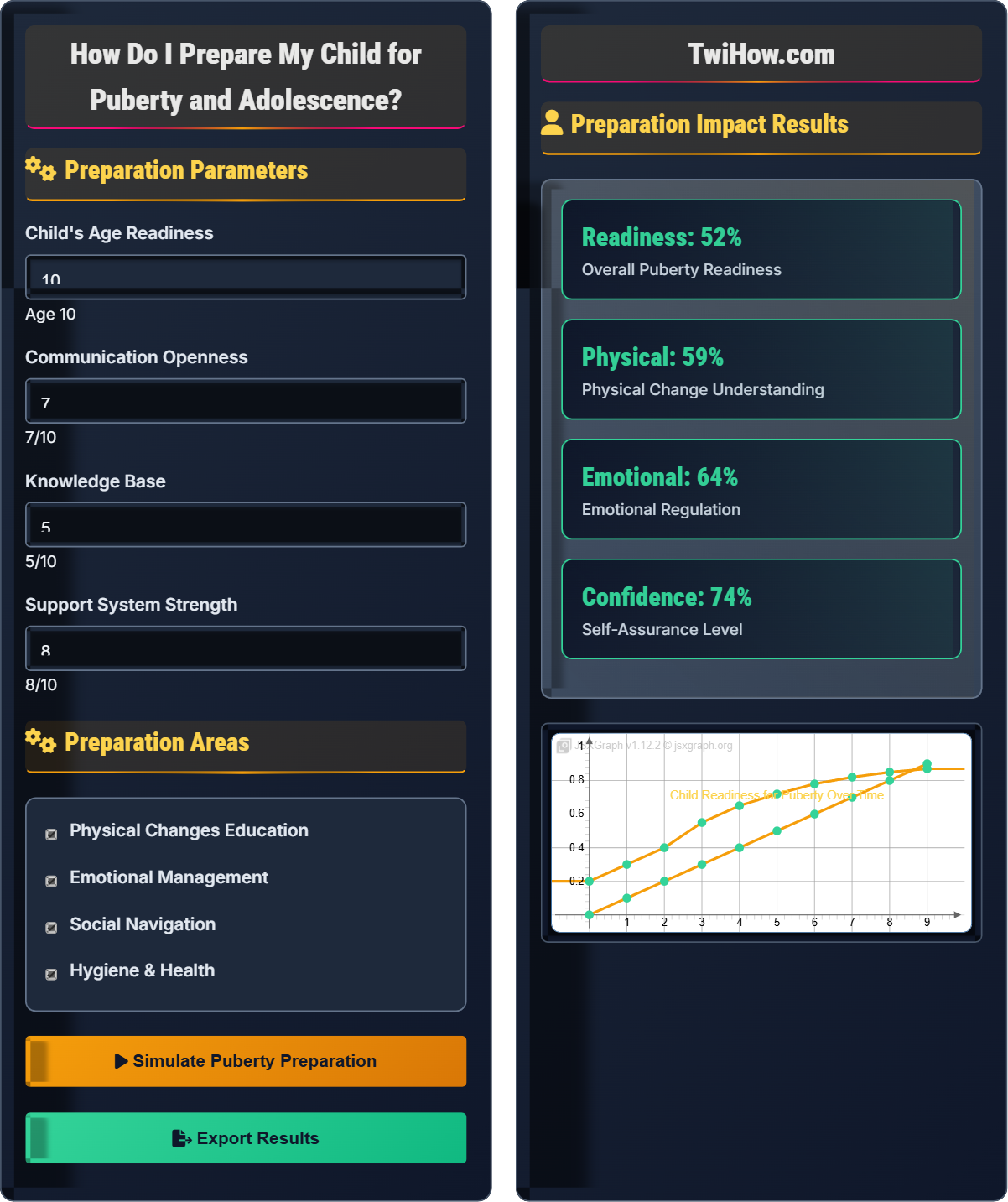
Preparation Impact Results
| Preparation Area | Current Level | Preparation Impact | Child Confidence |
|---|---|---|---|
| Physical Changes | 5/10 | 85% | 82% |
| Emotional Changes | 6/10 | 78% | 75% |
| Social Dynamics | 4/10 | 72% | 68% |
| Hygiene & Health | 7/10 | 88% | 85% |
| Independence | 5/10 | 70% | 65% |
Preparing Your Child for Puberty and Adolescence
Puberty preparation involves educating your child about the physical, emotional, and social changes they will experience during adolescence. It includes discussing body changes, emotional development, hygiene, peer relationships, and gradual independence. The goal is to help children feel informed, confident, and prepared rather than surprised or confused by these changes.
Where:
- Knowledge: Accurate information about physical and emotional changes
- Communication: Open, honest dialogue between parent and child
- Support: Available resources and emotional backing
- Timing: Starting conversations before changes occur
Essential preparation topics:
- Physical Changes: Growth spurts, body hair, voice changes, menstruation
- Emotional Development: Mood swings, identity formation, self-esteem
- Hygiene & Health: Personal care routines, nutrition, exercise
- Social Relationships: Peer pressure, friendships, romantic interests
- Independence: Decision-making, responsibility, privacy
- Health & Safety: Body safety, online safety, healthy choices
- Be Proactive: Initiate conversations before changes occur
- Use Age-Appropriate Language: Adjust complexity to match maturity level
- Be Honest: Provide accurate information without sugar-coating
- Encourage Questions: Create safe space for inquiries and concerns
- Normalize Changes: Emphasize that all children go through this
- Reassure: Address fears and concerns with empathy
Puberty Preparation Fundamentals
Puberty, adolescence, physical development, emotional changes, communication, preparation, timing, support.
Child Readiness = (Information × Timing) + (Communication × Support) + (Confidence × Reassurance)
Where Child Readiness = preparedness level, Information = accurate knowledge provided.
- Start conversations early, before changes begin
- Be honest and factual without being alarming
- Reassure children that changes are normal
Practical Applications
Body changes, emotional outbursts, peer pressure, hygiene needs, independence requests, social challenges.
- Assess your child's current understanding
- Provide age-appropriate information gradually
- Establish open communication channels
- Create supportive environment for questions
- Monitor and adjust approach based on reactions
- Individual development timelines
- Gender-specific considerations
- Cultural and family values
- Previous communication patterns
Puberty Preparation Quiz
When should parents ideally begin preparing their children for puberty?
Experts recommend beginning puberty preparation around ages 8-9, before physical changes begin. This timing allows children to understand what's coming before experiencing changes, reducing confusion and anxiety. Early preparation helps children feel informed and prepared rather than caught off guard by unexpected changes.
The answer is B) Around ages 8-9, before changes begin.
Starting conversations before changes occur gives children time to process information and ask questions in a calm environment. When children understand what to expect, they're less likely to be frightened or confused by physical changes. This approach builds trust and establishes open communication patterns that will be valuable throughout adolescence.
Puberty: Period of physical and hormonal changes leading to sexual maturity
Preparation: Providing information and support before changes occur
Timing: When to initiate conversations about changes
• Start conversations early, before changes occur
• Provide information gradually, not all at once
• Adjust information to match child's maturity level
• Use books and visual aids to supplement conversations
• Relate changes to those observed in older siblings or peers
• Normalize the experience by emphasizing universality
• Waiting until after changes begin
• Providing too much information at once
• Avoiding conversations due to discomfort
Explain the emotional changes children can expect during puberty and how parents should prepare them for these changes. Include specific strategies and examples.
Expected Emotional Changes: Mood swings, increased sensitivity, identity exploration, fluctuating self-esteem, heightened emotions, and desire for independence.
Preparation Strategies: Explain that hormones affect emotions, normalize mood fluctuations, teach coping strategies, emphasize that these changes are temporary, and reassure children that they remain loved and valued.
Specific Examples: "Sometimes you might feel sad or angry for no reason - this is normal," "It's okay to need extra support during this time," "These strong feelings will settle down eventually."
Emotional changes during puberty can be confusing and frightening for children. Preparing them helps them understand that these changes are normal and expected. When children know what to expect emotionally, they're less likely to feel like something is wrong with them. This preparation builds emotional resilience and helps children develop healthy coping strategies.
Hormones: Chemical messengers affecting mood and behavior
Mood Swings: Rapid shifts in emotional state
Identity Exploration: Discovering who you are as a person
• Explain that emotional changes are normal
• Provide coping strategies for mood management
• Maintain consistent love and support
• Teach deep breathing techniques
• Encourage physical activity for mood regulation
• Validate feelings while setting boundaries
• Dismissing emotional changes as "just hormones"
• Not providing coping strategies
• Withdrawing support during emotional challenges
Your 10-year-old child has just started showing early signs of puberty, including increased sweating and body odor. How would you approach teaching them about hygiene changes and establishing new routines? Describe your strategy and the expected outcomes.
Strategy: Explain that as their body grows, they'll need different hygiene routines. Show them how to shower daily, use deodorant, wash hair regularly, and change clothes more frequently. Demonstrate proper techniques and provide age-appropriate products. Create a routine chart and gradually increase independence.
Expected Outcomes: Better personal hygiene, increased confidence, reduced body odor, improved self-esteem, and establishment of healthy lifelong habits.
Implementation: Start with simple steps, praise improvements, answer questions openly, and gradually transfer responsibility to the child.
Hygiene education during puberty preparation helps children feel confident about their changing bodies. Teaching proper hygiene prevents embarrassment and social difficulties. When children understand why they need to change their routines, they're more likely to adopt these practices willingly. Gradual implementation allows children to build confidence and independence.
Hygiene: Practices promoting cleanliness and health
Routine: Regular sequence of activities
Independence: Ability to care for oneself
• Explain the reasons for new routines
• Use visual aids like routine charts
• Provide child-friendly products
• Praise improvements and efforts
• Assuming children know how to use products properly
• Not explaining the reasons for changes
• Expecting immediate independence
Your child is approaching adolescence and will soon face peer pressure regarding appearance, behavior, and risky activities. How do you prepare them to handle these social challenges? Explain your approach and anticipated benefits.
Approach: Discuss common peer pressure scenarios, practice refusal techniques, emphasize the importance of making independent choices, highlight the value of choosing friends who respect them, and establish clear family values. Role-play scenarios and discuss consequences of different choices.
Anticipated Benefits: Increased confidence to make independent choices, better friend selection, stronger resistance to negative peer pressure, clearer understanding of personal values, and improved decision-making skills.
Implementation: Ongoing conversations, real-world examples, and practice scenarios.
Peer pressure preparation builds confidence and decision-making skills before challenges arise. When children understand common scenarios and practice responses, they're better equipped to handle real situations. This preparation helps maintain family values while respecting the child's growing independence. Building self-confidence makes children less likely to seek validation through risky behaviors.
Peer Pressure: Influence from friends to conform to group behavior
Decision-Making: Choosing between options based on values
Refusal Techniques: Strategies to resist unwanted pressure
• Discuss scenarios before they occur
• Practice refusal techniques
• Emphasize personal values
• Role-play different scenarios
• Provide alternative activities
• Encourage open communication about social challenges
• Assuming children will automatically resist pressure
• Not discussing consequences of choices
• Dismissing peer influence as unimportant
Which communication approach is most effective when preparing children for puberty?
Ongoing, age-appropriate conversations over time is the most effective approach. This method allows children to process information gradually, ask questions as they arise, and build trust with their parents. It creates an environment where children feel comfortable discussing sensitive topics and seeking guidance when needed.
The answer is B) Ongoing, age-appropriate conversations over time.
Gradual, ongoing conversations allow children to digest information at their own pace and build confidence in their understanding. This approach accommodates different learning styles and allows for adjustments based on the child's responses. It also strengthens the parent-child relationship and creates a foundation for continued communication throughout adolescence.
Ongoing Conversations: Regular, spaced-out discussions over time
Age-Appropriate: Information suited to child's developmental level
Gradual Process: Information provided in stages
• Information should be gradual and ongoing
• Adjust to child's developmental level
• Create safe space for questions
• Use everyday moments to start conversations
• Follow child's lead and comfort level
• Be patient with questions and concerns
• Providing too much information at once
• Avoiding the topic due to discomfort
• Assuming children will learn from other sources
FAQ
Q: How do I handle it if my child is uncomfortable talking about puberty changes?
A: Start with less sensitive topics first, like general body changes or hygiene. Use books or videos as conversation starters to avoid direct eye contact initially. Let your child know it's normal to feel uncomfortable and that you're there to help. Gradually build up to more sensitive topics as they become more comfortable. Respect their pace and don't force conversations, but continue to make yourself available.
Q: Should boys and girls be prepared differently for puberty?
A: While the general preparation approach is similar, there are gender-specific considerations. Boys may need more emphasis on voice changes and facial hair, while girls may need more preparation for menstruation. Both genders need information about emotional changes, hygiene, and social dynamics. The key is to address gender-specific changes honestly while emphasizing that all children go through these changes as they grow up.