How Do I Support My Child's Cultural Identity and Belonging?
Complete parenting guide • Step-by-step explanations
Cultural Identity:
Show Identity BuilderSupporting your child's cultural identity and belonging is essential for their emotional well-being, self-esteem, and social development. Cultural identity provides children with a sense of rootedness, values, and connection to their heritage while also helping them navigate diverse environments. When children feel secure in their cultural identity, they develop stronger self-confidence and better cross-cultural competencies.
Key aspects of cultural identity support:
- Heritage Preservation: Maintaining family traditions, languages, and customs
- Community Connection: Linking children to cultural communities and resources
- Multicultural Awareness: Understanding and appreciating diversity
- Belonging Creation: Helping children feel connected and accepted
- Identity Exploration: Supporting children in exploring their identity
Children who have strong cultural identity foundations show greater resilience, academic success, and emotional stability. They're better equipped to navigate diverse environments and form meaningful relationships across cultures.
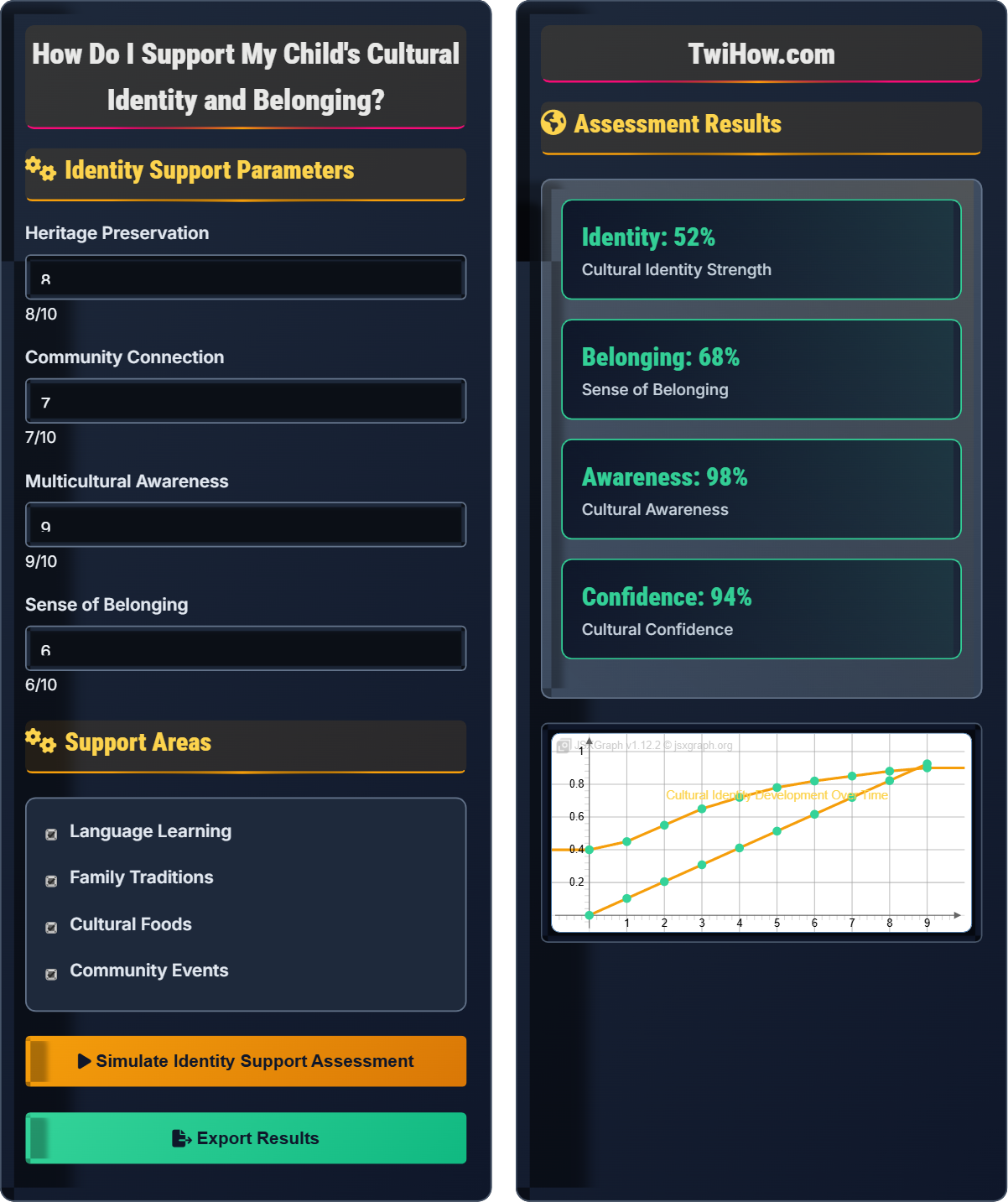
Identity Support Parameters
Support Areas
Assessment Results
| Component | Score | Impact | Recommendation |
|---|---|---|---|
| Heritage Preservation | 8/10 | High | Excellent |
| Community Connection | 7/10 | High | Expand networks |
| Multicultural Awareness | 9/10 | High | Perfect |
| Belonging Strength | 6/10 | Medium | Build connections |
| Identity Exploration | 7/10 | High | Encourage curiosity |
Supporting Cultural Identity and Belonging
Cultural identity encompasses the beliefs, values, traditions, languages, and practices that define a person's cultural group. For children, cultural identity provides a sense of belonging, self-understanding, and connection to their heritage. It influences how they see themselves and how they relate to others in diverse environments.
Where:
- Heritage: Family traditions, languages, and customs
- Community: Connection to cultural groups and resources
- Awareness: Understanding of diversity and inclusion
- Belonging: Feeling accepted and valued
Essential components of cultural identity support:
- Language Learning: Preserving and developing heritage languages
- Traditional Foods: Cooking and sharing cultural cuisine
- Religious/Spiritual Practices: Maintaining spiritual traditions
- Festivals and Celebrations: Participating in cultural events
- Arts and Crafts: Creating cultural artwork and crafts
- Historical Education: Learning about cultural history and contributions
- Regular Practice: Consistent cultural activities and traditions
- Community Engagement: Connecting with cultural organizations
- Educational Resources: Books, media, and materials
- Family Involvement: Engaging extended family in traditions
- Age-Appropriate Adaptation: Adjusting activities for development
- Open Dialogue: Encouraging questions about identity
Identity Fundamentals
Cultural identity, belonging, heritage, tradition, diversity, multicultural awareness, community connection.
Identity Strength = (Heritage × Community) + (Awareness × Belonging)
Where Identity Strength = cultural confidence, Heritage = family traditions.
- Consistency builds cultural security
- Respect individual identity journey
- Balance heritage with adaptation
Practical Applications
Language learning, festival celebrations, community involvement, school activities, intercultural relationships.
- Assess child's current cultural knowledge
- Identify available cultural resources
- Create regular cultural activities
- Connect with community organizations
- Encourage cultural exploration and questions
- Individual cultural interests and preferences
- Family cultural background diversity
- Community cultural resources availability
- Child's age and developmental stage
Cultural Identity Quiz
What is the most important foundation for a child's cultural identity?
Feeling secure and accepted in their heritage is the most important foundation for a child's cultural identity. This sense of security provides the emotional stability necessary for children to explore and connect with their culture. While other elements are valuable, they build upon this fundamental sense of acceptance and belonging.
The answer is B) Feeling secure and accepted in their heritage.
Emotional security forms the foundation for all cultural learning. When children feel safe and valued in their cultural identity, they're more likely to engage with cultural practices, explore their heritage, and maintain cultural connections. This security also helps them navigate diverse environments with confidence and resilience.
Cultural Identity: Sense of self based on cultural group membership
Heritage: Cultural traditions passed down through generations
Belonging: Feeling accepted and connected to a group
• Emotional security comes first
• Acceptance builds confidence
• Foundation supports exploration
• Validate children's cultural questions
• Celebrate cultural differences positively
• Create safe spaces for expression
• Focusing only on external practices
• Forcing cultural activities
• Not addressing cultural insecurities
Explain how to teach children about multicultural awareness while maintaining pride in their own cultural identity.
Approach: First establish strong foundation in their own culture, then introduce other cultures with respect and appreciation. Compare similarities and differences, emphasize that diversity enriches society, and show how different cultures contribute to the world.
Strategies: Read multicultural books, celebrate diverse holidays, visit cultural museums, learn about global traditions, and discuss how different cultures solve similar problems.
Balance: Maintain pride in heritage while fostering curiosity about others.
Multicultural awareness builds upon a strong cultural foundation. Children need to feel secure in their own identity before they can appreciate others. This approach prevents cultural confusion and helps children develop both cultural pride and global awareness. The key is to present diversity as enriching rather than threatening.
Multicultural Awareness: Understanding and appreciating diverse cultures
Cultural Pride: Positive feeling about one's cultural background
Global Perspective: Understanding worldwide cultural diversity
• Build own culture first
• Approach others with respect
• Emphasize enrichment
• Use stories from different cultures
• Cook international foods together
• Attend diverse cultural events
• Comparing cultures as superior/inferior
• Not establishing own cultural foundation
• Treating diversity as exotic
Your child speaks English at school but your family's heritage language at home. Your child feels embarrassed about speaking the heritage language and prefers English. How do you support their language learning while respecting their feelings?
Approach: Acknowledge their feelings, explain the value of bilingualism, make language learning fun and rewarding, connect language to positive cultural experiences, and gradually increase heritage language use.
Strategies: Watch movies in heritage language, play games, read fun books, connect with relatives who speak the language, and highlight advantages of being bilingual.
Implementation: Start with enjoyable activities, respect their pace, and emphasize the benefits rather than obligations.
Language is deeply tied to cultural identity, but children may feel embarrassed about differences. The key is to make heritage language positive and valuable rather than burdensome. Connecting language to enjoyable experiences and practical benefits helps children see its value. Gradual, pressure-free learning is more effective than forced practice.
Heritage Language: Language of family's cultural background
Bilingualism: Ability to speak two languages fluently
Language Pride: Positive feeling about multilingual abilities
• Make language learning enjoyable
• Respect child's feelings
• Emphasize benefits over obligations
• Use songs and rhymes in heritage language
• Connect with relatives who speak the language
• Highlight career advantages of bilingualism
• Forcing language use without understanding
• Not addressing child's embarrassment
• Making language feel like punishment
Your family belongs to a cultural minority group in your area, and your child has few opportunities to connect with others who share their heritage. How do you create meaningful community connections to support their cultural identity?
Strategies: Join cultural organizations, attend religious institutions, participate in cultural festivals, connect with cultural centers, use online communities, and create informal gathering opportunities.
Alternatives: Connect with extended family, invite friends from similar backgrounds, participate in virtual cultural events, and organize cultural activities.
Long-term: Build relationships that extend beyond formal events.
Community connections provide children with cultural role models and peer relationships that reinforce their identity. When local communities are small, creativity in forming connections becomes important. The goal is to provide children with multiple touchpoints to their culture beyond the family unit.
Cultural Community: Group sharing common cultural background
Role Models: Adults demonstrating cultural values and practices
Peer Relationships: Friendships with similar cultural backgrounds
• Diversify connection opportunities
• Maintain multiple touchpoints
• Adapt to available resources
• Use social media to connect with communities
• Organize informal gatherings
• Connect with cultural schools or programs
• Limiting to formal organizations only
• Not adapting to child's preferences
• Overlooking virtual connection opportunities
What is the best way to support a child who is questioning their cultural identity?
Encouraging questions and providing information is the best approach when a child is questioning their cultural identity. This supports their natural exploration while providing them with accurate information to make informed decisions about their identity. It shows respect for their autonomy while maintaining cultural connection.
The answer is B) Encourage questions and provide information.
Identity questioning is a normal developmental process, especially during adolescence. Forcing acceptance can create resistance and resentment. Providing information and support allows children to explore their identity while maintaining cultural connections. This approach builds trust and keeps communication open during identity formation.
Identity Exploration: Process of examining cultural background
Autonomy: Right to make personal identity choices
Developmental Process: Natural growth and maturation
• Support natural exploration process
• Provide information without pressure
• Respect child's autonomy
• Share your own identity journey
• Provide multiple perspectives
• Maintain cultural options available
• Forcing cultural acceptance
• Withdrawing cultural support
• Not addressing questions
FAQ
Q: How do I balance maintaining cultural traditions with helping my child adapt to mainstream culture?
A: Focus on core values rather than specific practices, teach children to code-switch appropriately, maintain important traditions while adapting others, and emphasize that having multiple cultural identities is a strength. Help children understand when and how to express different aspects of their identity in different contexts. The goal is bicultural competence, not choosing one culture over another.
Q: What if my child seems disinterested in learning about their cultural heritage?
A: Respect their current feelings while keeping options open. Try different approaches that match their interests - if they don't like traditional activities, connect culture to their current interests like sports, music, or technology. Sometimes interest develops later, especially during adolescence or young adulthood. Continue providing opportunities without pressure, and remember that identity development is a lifelong process.