How Do I Successfully Potty Train My Child?
Complete parenting guide • Step-by-step explanations
Potty Training:
Show Training SimulatorPotty training is a significant milestone that requires patience, consistency, and understanding of your child's development. Success depends on recognizing readiness signs, choosing appropriate strategies, and maintaining positive reinforcement. The process varies widely between children, with some mastering it quickly and others needing more time and support.
Key aspects of successful potty training:
- Readiness Recognition: Physical, cognitive, and emotional preparedness
- Consistent Routines: Regular bathroom schedules and reminders
- Positive Reinforcement: Encouragement and rewards for progress
- Patience & Support: Understanding that setbacks are normal
- Appropriate Equipment: Child-sized potty chair or training seat
Successful potty training builds confidence and independence while establishing healthy habits. The key is matching your approach to your child's individual needs and development level.
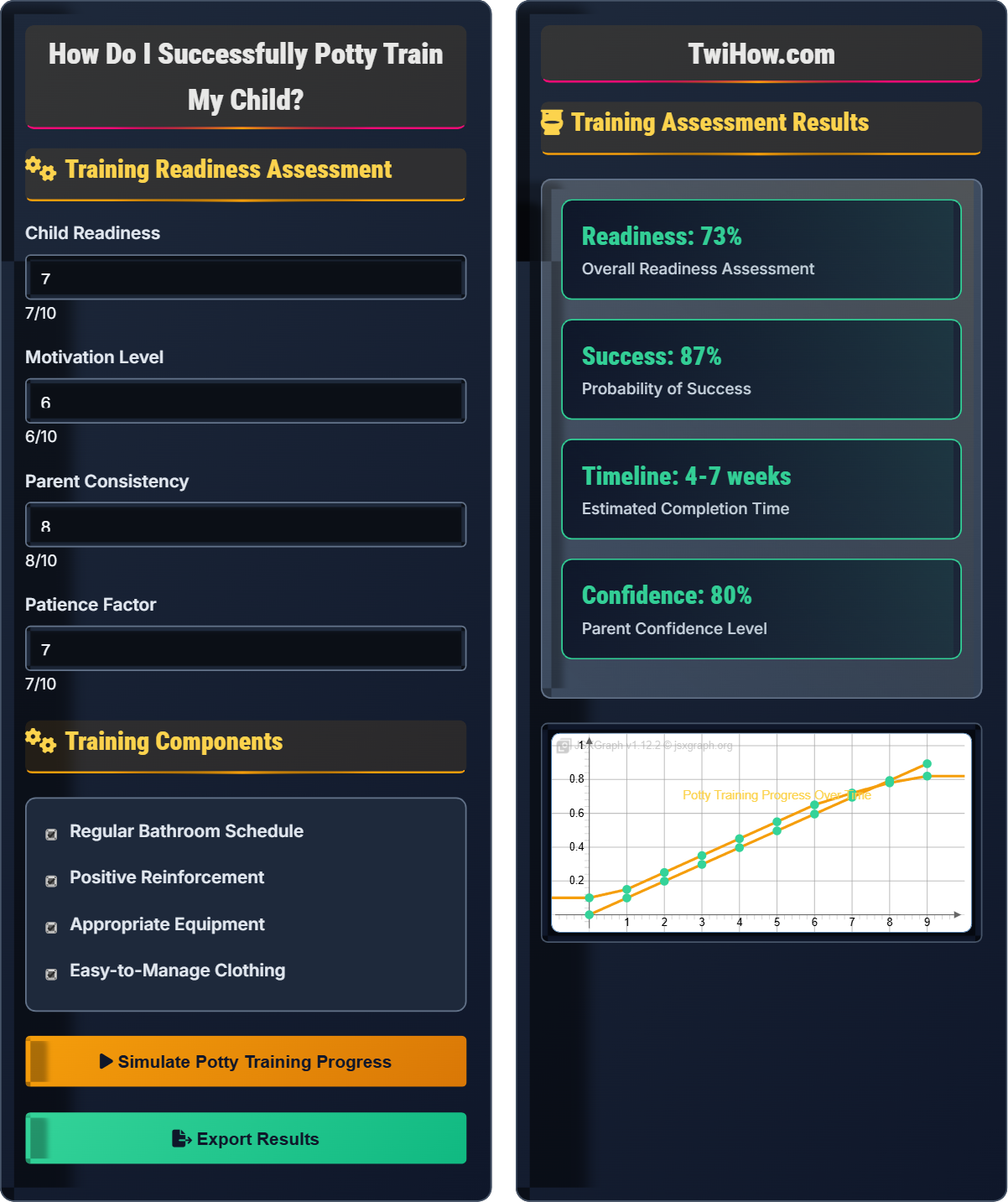
Training Readiness Assessment
Training Components
Training Assessment Results
| Training Component | Score | Impact Level | Recommendation |
|---|---|---|---|
| Readiness Assessment | 7/10 | High | Good to proceed |
| Motivation Level | 6/10 | Medium | Improve engagement |
| Consistency | 8/10 | High | Excellent |
| Patience | 7/10 | High | Good |
| Support System | 7/10 | Medium | Strengthen network |
Effective Potty Training Strategies
Potty training is the process of teaching a child to recognize the need to use the bathroom, communicate that need, and successfully use a toilet or potty chair for urination and defecation. It involves physical, cognitive, and emotional development as children learn to control their bladder and bowels and develop the communication skills to express their needs. The process typically begins between 18-24 months and can take several months to complete.
Where:
- Readiness: Physical and cognitive preparedness
- Consistency: Regular routines and expectations
- Patience: Tolerance for setbacks and accidents
- Positive Reinforcement: Encouragement and rewards
Physical signs indicating readiness:
- Bladder Control: Staying dry for longer periods (2+ hours)
- Regular Bowel Movements: Predictable timing patterns
- Physical Ability: Walking to bathroom and undressing independently
- Interest: Showing curiosity about toilet or wearing underwear
- Communication: Ability to express needs or discomfort
- Following Directions: Understanding simple instructions
- Start Gradually: Begin with potty chair introduction and sitting fully clothed
- Use Positive Language: Focus on capability and progress rather than accidents
- Establish Routines: Regular bathroom visits after meals and before bed
- Provide Choices: Let child choose underwear or potty chair
- Offer Rewards: Stickers, praise, or small treats for progress
- Maintain Patience: Expect setbacks and regressions
Potty Training Fundamentals
Potty training, readiness, bladder control, bowel movements, independence, toileting skills, developmental milestones.
Success = (Readiness × Consistency) + (Patience × Support)
Where Success = training outcome, Readiness = child's preparedness level.
- Wait for readiness signs before starting
- Maintain consistent routines
- Stay calm during accidents
Practical Applications
Daycare transitions, overnight training, travel situations, sibling comparisons, developmental variations.
- Assess child's physical and emotional readiness
- Introduce potty chair and bathroom concepts gradually
- Establish regular bathroom schedules
- Encourage and reward successful attempts
- Handle accidents with patience and support
- Individual developmental timeline
- Temperament and personality
- Family schedule and logistics
- Support systems and resources
Potty Training Quiz
Which of the following is the most important sign of potty training readiness?
Bladder control, demonstrated by staying dry for 2+ hours, is the most important sign of physical readiness. This indicates the child's body is capable of controlling elimination. While other signs are important, physical readiness is the foundation for successful potty training. Without adequate bladder control, other efforts may be premature.
The answer is B) Ability to stay dry for 2+ hours.
Physical readiness is the prerequisite for potty training success. Children must have sufficient bladder and bowel control before they can successfully use the toilet. Starting before physical readiness often leads to frustration and setbacks. Understanding the difference between physical and behavioral readiness helps parents time the training appropriately.
Readiness: Physical and cognitive preparedness
Bladder Control: Ability to hold urine for extended periods
Physical Readiness: Body's capability for elimination control
• Physical readiness precedes behavioral changes
• Wait for multiple readiness signs
• Don't rush the process
• Watch for 2+ hour dry periods
• Look for predictable bowel movements
• Observe interest in toilet activities
• Starting before physical readiness
• Focusing only on age
• Ignoring physical signs
How should parents handle potty training accidents? Include specific strategies and examples.
Strategies: Remain calm, avoid shaming, clean up together, acknowledge the effort, and maintain positive attitude.
Examples: "That's okay, accidents happen," "Let's clean this up together," "You did well by trying."
Approach: Focus on progress, not perfection. Accidents are normal and part of the learning process.
Accidents are a normal part of potty training and shouldn't be treated as failures. Negative reactions can create anxiety and setbacks. Positive, supportive responses maintain motivation and reduce stress. Children need to feel safe to learn and practice without fear of punishment or shame.
Accident: Unintentional elimination outside the toilet
Shaming: Creating feelings of embarrassment or guilt
Normalization: Treating as expected part of process
• Stay calm during accidents
• Don't punish or shame
• Focus on positive progress
• Have spare clothes readily available
• Use matter-of-fact cleaning language
• Emphasize that accidents are normal
• Reacting with anger or frustration
• Making child feel ashamed
• Giving up after accidents
Your child has mastered daytime potty training but still has nighttime accidents. How do you approach nighttime training while maintaining daytime success? Describe your strategy and expected outcomes.
Strategy: Limit evening fluids, use bathroom before bed, implement protective measures, and maintain patience. Nighttime control often develops later than daytime.
Measures: Waterproof mattress cover, extra sheets, pull-ups at night, bathroom access light.
Approach: Don't pressure for immediate nighttime success, maintain daytime routines, and expect gradual improvement.
Nighttime control typically develops after daytime control and may take months or years. The brain's ability to wake up when full develops later. It's important not to regress daytime progress by pressuring for nighttime control. Protective measures reduce stress while allowing natural development.
Nighttime Control: Ability to remain dry through the night
Protective Measures: Precautions to reduce accident impact
Gradual Development: Natural progression over time
• Nighttime control develops separately from daytime
• Don't regress daytime progress
• Maintain patience for natural development
• Limit fluids 2 hours before bed
• Use waterproof mattress protector
• Keep extra bedding accessible
• Expecting simultaneous day and night control
• Regressing daytime progress
• Not implementing protective measures
Your child who had been successfully potty trained for weeks suddenly starts having frequent accidents after a major life change (new baby, move, etc.). How do you address this regression while maintaining progress?
Approach: Expect temporary regression during major changes, return to basics if needed, provide extra support, and maintain patience. Major life changes often cause temporary setbacks.
Strategies: Go back to diapers temporarily if needed, increase reminders, offer comfort, and maintain consistent routines despite changes.
Timeline: Regression is usually temporary and improvement returns once child adjusts to change.
Regression is normal during stress or major life changes. Children may temporarily lose previously acquired skills when feeling insecure or overwhelmed. This doesn't mean they've forgotten - they're just needing more support during the transition. Maintaining patience and returning to basics helps them regain confidence.
Regression: Temporary loss of previously acquired skills
Major Life Changes: Significant events affecting routineStress Response: Behavioral changes during challenging times
• Regression is normal during stress
• Don't expect immediate progress
• Provide extra support during changes
• Temporarily return to diapers if needed
• Increase positive reinforcement
• Maintain consistent routines despite changes
• Punishing for regression
• Not adjusting expectations
• Forgetting regression is temporary
Which potty training approach is most effective?
A consistent approach with flexibility for individual needs is most effective. This provides structure and predictability while allowing for adjustments based on the child's development, temperament, and circumstances. Rigidity can create stress, while too little structure can be confusing. The key is balance.
The answer is B) Consistent approach with flexibility for individual needs.
Consistency provides security and helps children learn expectations, while flexibility accommodates individual differences and changing circumstances. This approach builds confidence while maintaining adaptability. It's important to have core principles but allow for adjustments based on the child's development and needs.
Consistency: Maintaining regular expectations and routines
Flexibility: Adjusting approach based on individual needs
Individual Differences: Unique developmental patterns
• Maintain core expectations
• Adjust for individual needs
• Balance structure with flexibility
• Establish baseline routines
• Monitor for individual patterns
• Adjust approach based on progress
• Being too rigid with schedules
• Not adjusting for individual differences
• Focusing only on external rewards
FAQ
Q: How long should potty training take?
A: Potty training typically takes 3-6 months for daytime control and can take up to 1-2 years for nighttime control. Every child is different, and some may take longer. The key is consistency, patience, and not comparing your child to others. Focus on your child's individual progress rather than timelines. If training takes significantly longer than 6 months or regresses after initial success, consult your pediatrician.
Q: What if my child resists potty training?
A: Resistance often indicates the child isn't ready or feels pressured. Take a break from training and try again in a few weeks. Make the potty more appealing with books, toys, or favorite characters. Let your child observe others using the toilet. Never force or punish resistance. Consider if there are underlying fears or anxieties. If resistance continues, consult with your pediatrician to rule out physical or developmental issues.