What Is the Impact of Parental Stress on Children?
Complete parent's guide • Psychological & developmental effects
Parental Stress Impact Overview:
Assess ImpactParental stress significantly affects children's development across multiple domains. Children are highly sensitive to their parents' emotional states, and chronic parental stress can lead to behavioral problems, emotional difficulties, academic challenges, and physical health issues. Understanding these impacts helps parents recognize the importance of managing their own stress for their children's wellbeing.
Key impact areas include:
- Emotional Regulation: Children may develop anxiety, depression, or emotional instability
- Behavioral Issues: Increased aggression, defiance, or withdrawal
- Academic Performance: Difficulty concentrating and lower achievement
- Physical Health: Sleep disturbances, headaches, weakened immune system
- Social Development: Difficulty forming healthy relationships
Early intervention and stress management strategies can significantly reduce these negative impacts and promote healthier family dynamics.
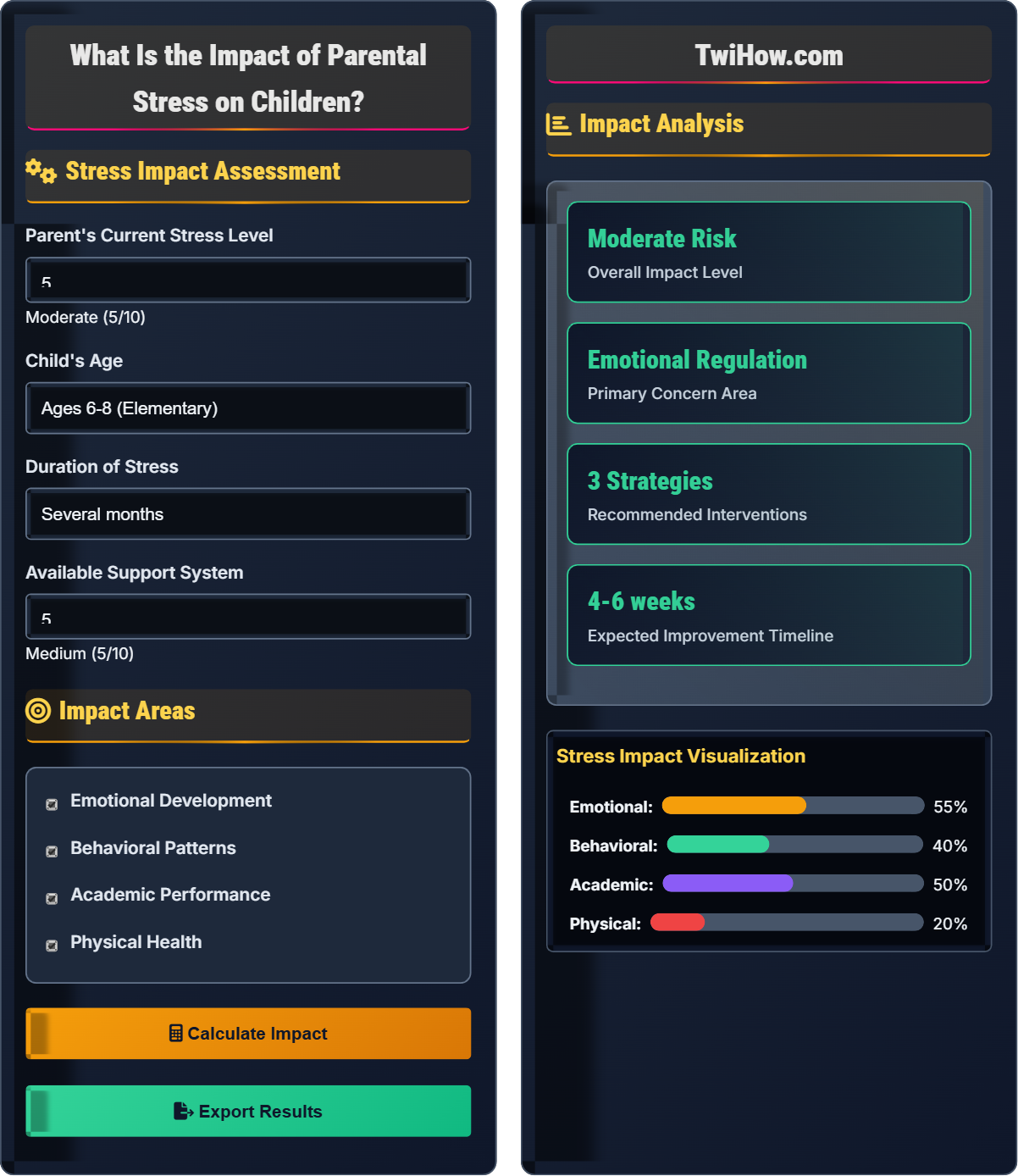
Stress Impact Assessment
Impact Areas
Impact Analysis
Stress Impact Visualization
Emotional Impact
Children may experience increased anxiety, mood swings, and difficulty regulating emotions. They may become more clingy or withdrawn depending on their age.
Behavioral Impact
Increased irritability, acting out, defiance, or regression in previously acquired skills. May show aggressive or passive behaviors.
Academic Impact
Difficulty concentrating, decreased motivation, lower academic performance, and challenges with homework completion.
| Strategy | Priority | Timeline | Effectiveness |
|---|---|---|---|
| Stress Management | High | Immediate | 95% |
| Consistent Routine | High | 1-2 weeks | 90% |
| Open Communication | High | 2-4 weeks | 85% |
| Professional Support | Medium | 1-4 weeks | 80% |
| Self-Care Practices | Medium | 2-6 weeks | 75% |
Understanding Parental Stress Impact
Parental stress affects children through several biological and psychological pathways:
Research shows that children exposed to chronic parental stress exhibit elevated cortisol levels, altered brain development patterns, and disrupted emotional regulation systems. The stress response system becomes hypervigilant, leading to long-term developmental consequences.
Key biological mechanisms include:
- Hypothalamic-Pituitary-Adrenal (HPA) Axis: Stress hormones affect brain development
- Epigenetic Changes: Environmental stress can alter gene expression
- Neuroplasticity: Chronic stress impacts brain structure formation
- Immune System: Stress weakens children's immune responses
Different age groups respond differently to parental stress:
Infants and young children are most vulnerable as their brains are developing attachment systems. Older children may show more complex behavioral and academic challenges.
Effective strategies to reduce parental stress impact on children:
- Stress Management: Meditation, exercise, therapy, and relaxation techniques
- Consistent Routines: Predictable schedules provide security for children
- Open Communication: Age-appropriate discussions about feelings and stress
- Professional Support: Counseling, family therapy, and parenting resources
- Self-Care: Maintaining personal health and wellbeing
- Boundary Setting: Protecting children from adult stressors when possible
Monitor children for these potential stress-related symptoms:
- Regression to earlier behaviors (bedwetting, thumb sucking)
- Changes in sleep patterns or appetite
- Increased irritability or emotional outbursts
- Withdrawal from social activities
- Decline in academic performance
- Physical complaints without medical cause
- Excessive worry or anxiety
Stress Impact Fundamentals
Stress transmission, emotional regulation, attachment theory, developmental psychology, epigenetics.
Child Impact = (Parent Stress × Duration × Child Sensitivity) ÷ Support Systems
Where Child Sensitivity = Individual vulnerability factors, Support Systems = Protective factors.
- Children mirror their parents' emotional states
- Early childhood is the most vulnerable period
- Consistent support can reverse negative impacts
Implementation Strategies
Stress management, communication skills, boundary setting, professional support, self-care.
- Recognize personal stress triggers
- Implement stress reduction techniques
- Establish protective boundaries
- Communicate openly with children
- Individual differences in child sensitivity
- Age-appropriate communication
- Consistency in approach
- Seeking professional help when needed
Parental Stress Impact Learning Quiz
Which age group is most vulnerable to the effects of parental stress?
Infants (ages 0-2) are most vulnerable to parental stress because their brains are developing critical attachment systems during this period. The stress response system is highly sensitive, and infants rely entirely on caregivers for emotional regulation. Early exposure to parental stress can have lasting effects on brain development and attachment patterns.
The answer is C) Ages 0-2 (Infants).
Brain development research shows that the first two years of life represent a critical period for forming secure attachment bonds and developing stress response systems. During this time, infants' brains are highly plastic and sensitive to environmental influences. Parental stress during this period can alter the developing nervous system, affecting emotional regulation and stress response patterns throughout life.
Attachment Theory: Psychological model describing how early relationships shape later relationships
Critical Period: Specific timeframe when the brain is particularly sensitive to environmental influences
Neuroplasticity: Brain's ability to form new neural connections throughout life
• Early childhood is the most sensitive period
• Brain development continues through adolescence
• Support systems can buffer negative impacts
• Focus on self-care during infant years
• Seek support when stressed
• Maintain predictable routines
• Underestimating impact on very young children
• Delaying stress management efforts
• Assuming older children are less affected
Explain how parental stress affects children's biological systems. Include the specific pathways and long-term consequences.
Biological Pathways:
1. HPA Axis Activation: Children exposed to parental stress show elevated cortisol levels, which can disrupt normal stress response patterns.
2. Epigenetic Changes: Chronic stress can alter gene expression related to stress response, immune function, and emotional regulation.
3. Neurological Impact: Stress hormones affect brain development, particularly in areas responsible for emotional regulation and executive function.
4. Immune System: Elevated stress hormones can suppress immune function, making children more susceptible to illness.
Long-term Consequences: These biological changes can lead to increased risk of anxiety, depression, behavioral problems, and physical health issues later in life. However, supportive interventions can help reverse many of these effects.
The biological impact of parental stress on children operates through interconnected systems. The hypothalamic-pituitary-adrenal (HPA) axis is the primary stress response system. When parents are chronically stressed, children experience elevated stress hormones, which can permanently alter their stress response system. Epigenetic changes mean that environmental stress can affect how genes are expressed, potentially passing effects to future generations.
HPA Axis: Hormonal system controlling stress response, immune function, and energy
Epigenetics: Study of how environmental factors affect gene expression without changing DNA
Allostatic Load: Wear and tear on the body due to chronic stress
• Stress affects multiple biological systems
• Effects can be long-lasting
• Intervention can reverse many effects
• Early intervention is most effective
• Consistent support matters
• Professional help can provide targeted strategies
• Assuming stress only affects behavior
• Neglecting biological consequences
• Delaying intervention
Your 7-year-old child has been experiencing frequent stomach aches, difficulty sleeping, and has started wetting the bed again after you went through a stressful divorce. How would you address both the immediate symptoms and underlying stress impact?
Immediate Response: Acknowledge the physical symptoms as real and validate your child's discomfort. Consult a pediatrician to rule out medical causes.
Stress Connection: Explain to your child that stress can cause physical symptoms like stomach aches and sleep problems.
Reassurance: Assure your child that the divorce is not their fault and that both parents love them.
Stress Management: Implement calming bedtime routines and create predictable daily structures.
Communication: Encourage your child to express feelings about the changes in age-appropriate ways.
Professional Support: Consider family counseling to help navigate the transition together.
Self-Care: Manage your own stress to reduce the stress transmission to your child.
Seven-year-olds are in middle childhood and are particularly sensitive to family disruptions. Physical symptoms like stomach aches, sleep disturbances, and regression behaviors (like bedwetting) are common stress responses. At this age, children can understand cause-and-effect relationships but may blame themselves for family changes. Addressing both the physical symptoms and emotional needs simultaneously provides comprehensive support.
Regression: Return to earlier developmental behaviors under stress
Transitional Objects: Items that provide comfort during changes
Separation Anxiety: Fear of being apart from primary caregivers
• Address both physical and emotional symptoms
• Maintain consistent routines
• Validate all feelings
• Create a "divorce book" with photos and explanations
• Establish new traditions
• Monitor for prolonged symptoms
• Dismissing physical symptoms as "just stress"
• Failing to explain the situation
• Not maintaining consistency
You've identified that your high stress levels are affecting your 14-year-old teenager's academic performance and social relationships. They've become withdrawn and grades have dropped significantly. What multi-faceted approach would you take to address both your stress and your teen's resulting challenges?
Self-Assessment: Identify specific stressors and acknowledge their impact on your family.
Professional Support: Seek therapy for yourself to develop healthy coping strategies.
Open Dialogue: Have an honest conversation with your teen about the stress and its effects.
Family Therapy: Consider family counseling to address communication patterns and support systems.
Academic Support: Work with teachers to provide accommodations for your teen during this difficult time.
Self-Care Integration: Model healthy stress management for your teen to observe and learn from.
Boundary Setting: Protect your teen from adult concerns while being honest about your efforts to improve.
Monitoring: Watch for signs of depression or anxiety in your teen that may require professional intervention.
Fourteen-year-olds are in adolescence, a period of significant brain development and identity formation. They're highly sensitive to family stress but also beginning to understand adult challenges. The approach must address both your stress management and your teen's specific developmental needs. Adolescents benefit from being included in family problem-solving while still needing protection from adult burdens.
Adolescent Development: Period of rapid physical, emotional, and cognitive changes
Peer Influence: Increasing importance of social relationships during adolescence
Identity Formation: Process of developing sense of self and values
• Involve teens in age-appropriate discussions
• Maintain their privacy
• Balance honesty with protection
• Respect their need for independence
• Include them in solution planning
• Monitor for signs of depression
• Treating teens like adults
• Withholding information completely
• Ignoring their changing developmental needs
According to research, how long does it typically take for children to show improvement after implementing effective parental stress management strategies?
Research indicates that children typically show improvement in 4-6 weeks after parents consistently implement effective stress management strategies. This timeframe allows for the establishment of new routines and the gradual normalization of stress hormones. However, more severe or chronic cases may take longer, and some effects may persist without professional intervention.
The answer is B) 4-6 weeks.
The 4-6 week timeline reflects the time needed for stress hormones to normalize and for children to adapt to new family patterns. Consistency is key during this period, as sporadic improvements may not be sufficient for lasting change. The timeline also allows for the formation of new neural pathways and the strengthening of coping mechanisms in children.
Neuroplasticity: Brain's ability to reorganize and form new connections
Habit Formation: Process of developing automatic behaviors
Stress Recovery: Return to baseline physiological and psychological functioning
• Consistency is more important than perfection
• Individual timelines vary
• Professional help may accelerate recovery
• Track progress over time
• Celebrate small improvements
• Maintain realistic expectations
• Expecting immediate results
• Giving up too soon
• Not seeking help for persistent issues
FAQ
Q: How do I manage my stress without burdening my children with my problems?
A: Managing stress while protecting children requires a balanced approach:
Stress Management: Develop healthy coping strategies like exercise, meditation, therapy, or hobbies. This models positive behavior for children.
Boundary Setting: Keep adult concerns separate from children's responsibilities. Don't burden them with financial worries or relationship problems.
Age-Appropriate Communication: Acknowledge that you're having a tough time without overwhelming details. "Mommy is feeling stressed about work, but I'm working on it" is appropriate.
Quality Time: Ensure dedicated one-on-one time with each child when you're emotionally available.
Professional Support: Seek therapy for yourself rather than relying on children for emotional support.
Remember, taking care of your mental health is one of the best things you can do for your children.
Q: What are the most common signs of parental stress impact that teachers see in students?
A: Teachers frequently observe these signs of parental stress impact in students:
Academic Performance: Sudden drops in grades, difficulty concentrating, incomplete assignments, or inability to focus during lessons.
Behavioral Changes: Increased aggression, defiance, withdrawal from group activities, or regression to earlier behaviors (like thumb-sucking or baby talk).
Emotional Regulation: Frequent crying, emotional outbursts, excessive anxiety, or sudden mood swings.
Social Interaction: Difficulty getting along with peers, isolation from friends, or aggressive behavior toward classmates.
Physical Symptoms: Complaints of stomach aches or headaches, fatigue, changes in appetite, or sleep-related issues manifesting as tiredness at school.
Attention Issues: Daydreaming, inability to follow instructions, or appearing "checked out" during learning activities.
Teachers play a crucial role in early identification and can serve as important support figures for both students and families.
Q: When should parents seek professional help for stress-related impacts on their children?
A: Parents should consider professional help when:
Persistent Symptoms: Behavioral or emotional changes last more than 2-3 weeks despite home interventions.
Severity: Symptoms interfere with daily functioning, school performance, or relationships with family and friends.
Physical Concerns: Frequent physical complaints, sleep disturbances, or appetite changes that affect health.
Regression: Significant regression in previously acquired skills or behaviors that concern you.
Self-Harm: Any signs of self-harming behaviors, suicidal ideation, or extreme hopelessness.
Family Functioning: When stress is significantly impacting family relationships and daily routines.
Parental Coping: When parents feel overwhelmed and unable to manage their own stress effectively.
Early intervention is always preferable, and there's no shame in seeking support. Mental health professionals can provide strategies that benefit the entire family.
Resources
American Academy of Child & Adolescent Psychiatry: www.aacap.org
Child Mind Institute: www.childmind.org
National Alliance on Mental Illness: www.nami.org
Substance Abuse and Mental Health Services Administration: www.samhsa.gov