How to Find Communities That Share My Cultural Interests?
Complete community guide • Step-by-step explanations
Cultural Community Finding Fundamentals:
Show Community FinderFinding communities that share your cultural interests is essential for personal growth, learning, and connection. Whether you're passionate about traditional music, visual arts, literature, or cultural practices, connecting with like-minded individuals enriches your experience and provides opportunities for collaboration, learning, and cultural exchange.
Key community types include:
- Online Communities: Digital spaces for global connections and discussions
- Local Groups: In-person gatherings for deeper relationships
- Cultural Centers: Institutional spaces for cultural programming
- Special Interest Clubs: Focused groups around specific interests
Building meaningful cultural connections requires proactive engagement, openness to diverse perspectives, and consistent participation in community activities.
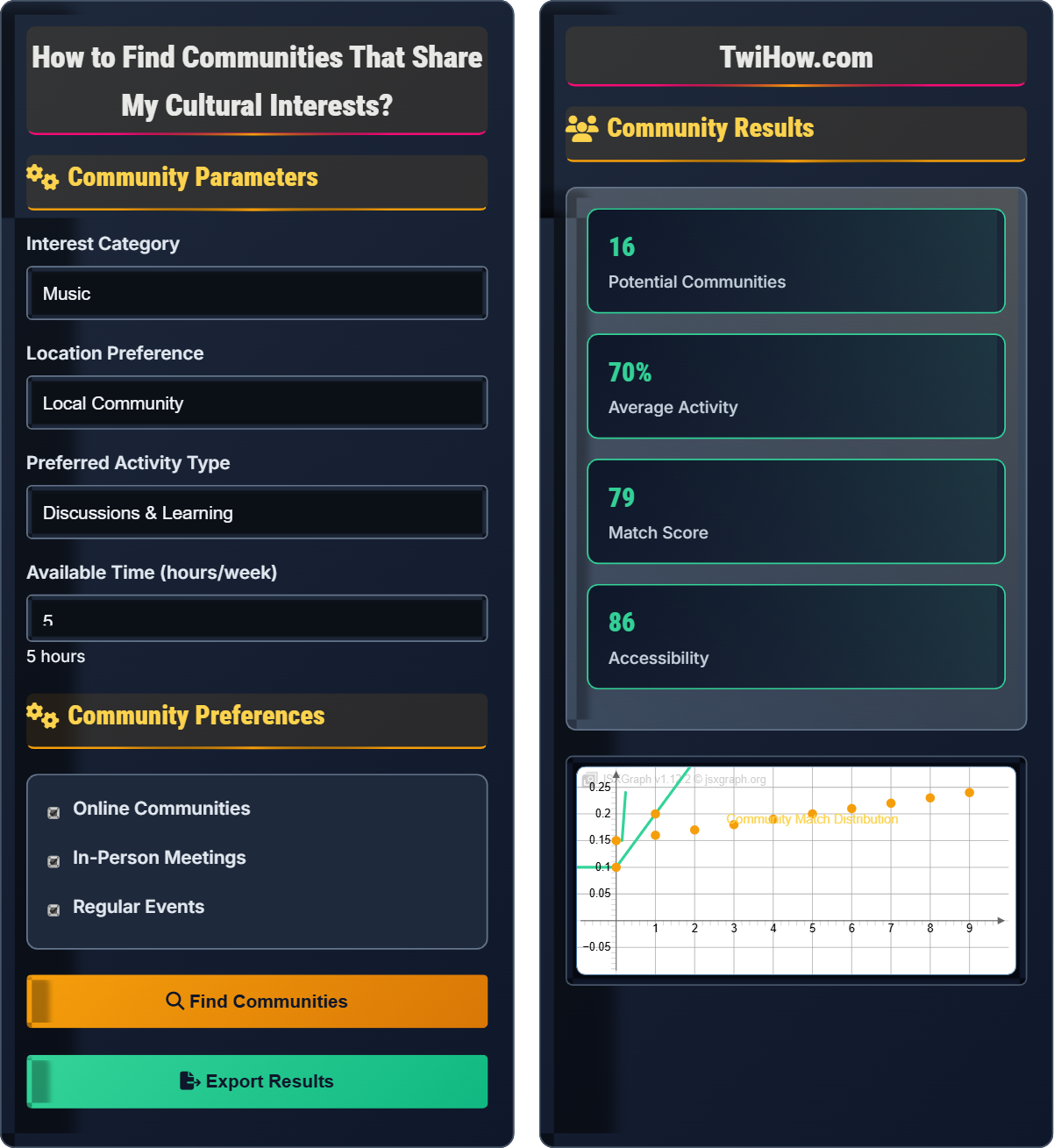
Community Parameters
Community Preferences
Community Results
| Community | Type | Activity | Match |
|---|---|---|---|
| Local Jazz Society | In-Person | 85% | 90% |
| World Music Forum | Online | 92% | 88% |
| Art Appreciation Club | In-Person | 78% | 85% |
| Cultural Exchange Group | Hybrid | 88% | 82% |
Personalized Recommendations
Based on your preferences:
- Start with 2-3 communities to avoid overwhelm
- Attend virtual events to test compatibility
- Join local groups for deeper connections
- Participate actively rather than just observing
Finding Cultural Communities Explained
Connecting with cultural communities provides numerous benefits including shared learning opportunities, cultural preservation, networking, and personal fulfillment. Communities offer support, inspiration, and opportunities to deepen your understanding of cultural interests through interaction with others who share your passion.
The effectiveness of community matching depends on multiple factors:
Where:
- Interest Alignment: How closely community interests match yours
- Availability Fit: Compatibility with your time constraints
- Geographic Proximity: Physical distance and accessibility
- Engagement Factor: Your willingness to participate actively
Community involvement impacts various life areas:
- Learning: Access to expertise and educational resources
- Networking: Professional and personal connections
- Cultural Preservation: Maintaining traditions and practices
- Personal Growth: Expanding perspectives and skills
- Well-being: Social connection and belonging
- Advocacy: Collective voice for cultural causes
- Start Small: Begin with one or two communities to avoid overwhelm
- Be Authentic: Share your genuine interests and perspectives
- Listen Actively: Learn from others' experiences and knowledge
- Offer Value: Contribute your skills, knowledge, or resources
- Stay Consistent: Regular participation builds stronger relationships
- Remain Open: Embrace diverse viewpoints and cultural expressions
Community Types
Online forums, local clubs, cultural centers, professional associations, hobby groups, religious organizations, ethnic associations.
Online Platforms
Popular Platforms
Upcoming Events
Networking Strategies
Connection Building
Cultural Community Finding Learning Quiz
Which type of community is most likely to provide both online and in-person engagement opportunities?
Cultural centers with digital programs offer the most comprehensive engagement opportunities. They typically host in-person events, workshops, and exhibitions while also providing online resources, virtual events, and digital communities. This hybrid approach maximizes accessibility and engagement for diverse participant needs.
The answer is B) Cultural center with digital programs.
Hybrid community models provide the greatest flexibility and accessibility. Cultural centers often have the infrastructure and expertise to offer both physical and digital engagement, making them ideal for diverse participation needs. The combination of in-person and online options maximizes community reach and engagement.
Hybrid Model: Combination of online and in-person engagement
Accessibility: Ease of participation for diverse audiences
Engagement: Active participation in community activities
• Hybrid models maximize participation
• Institutional support enables diverse programs
• Flexibility increases community reach
• Look for institutions with digital programs
• Attend both online and in-person events
• Participate in multiple engagement formats
• Limiting to only online or in-person options
• Not exploring institutional resources
• Missing hybrid engagement opportunities
Compare the advantages and disadvantages of online versus offline cultural communities, and explain when each type might be most appropriate.
Online Communities Advantages:
• Global reach and diverse perspectives
• Flexible scheduling and accessibility
• Resource sharing and archiving capabilities
• Lower barrier to entry and cost
Online Communities Disadvantages:
• Limited personal connection and intimacy
• Technical barriers and digital divide
• Less accountability and engagement
• Potential for misinformation or low-quality content
Offline Communities Advantages:
• Deeper personal connections and relationships
• Immersive, hands-on experiences
• Immediate feedback and interaction
• Enhanced trust and accountability
Offline Communities Disadvantages:
• Geographic and scheduling limitations
• Higher time and travel commitments
• Limited diversity of perspectives
• Potential for exclusivity or cliquish behavior
Best Use Cases: Online for research, resource sharing, and global networking; offline for hands-on learning, deep relationships, and immersive experiences.
The choice between online and offline communities depends on specific needs, goals, and circumstances. Both formats serve complementary purposes in cultural engagement. The most effective approach often combines both formats for comprehensive community participation.
Online Community: Digital space for interaction and engagement
Offline Community: Physical space for face-to-face interaction
Digital Divide: Gap in access to technology and internet
• Consider both formats for comprehensive engagement
• Evaluate personal preferences and constraints
• Assess community goals and needs
• Start with online to explore options
• Transition to offline for deeper connections
• Maintain both for maximum benefit
• Choosing only one format
• Not considering personal constraints
• Overlooking hybrid options
You're passionate about traditional folk music but live in a city with limited local cultural events. You work full-time and have family obligations. Develop a strategy for finding and engaging with folk music communities that accommodates your constraints while maximizing cultural learning opportunities.
Multi-Platform Strategy:
1. Online Research: Join international folk music forums and Facebook groups to connect with enthusiasts worldwide
2. Virtual Events: Attend online concerts, workshops, and cultural presentations during evenings or weekends
3. Local Discovery: Search for nearby cultural centers, music schools, or ethnic associations that might host folk music events
4. Flexible Participation: Join online communities that offer recorded sessions for later viewing
5. Seasonal Events: Plan for summer festivals and cultural events when schedules are more flexible
6. Family Integration: Find family-friendly folk music events that include your loved ones
This approach maximizes cultural engagement while respecting time and geographic constraints.
Effective community engagement requires adapting strategies to personal circumstances. The key is to leverage available resources and platforms while maintaining flexibility for changing needs. Balancing online and offline engagement provides both accessibility and depth of connection.
Time Management: Efficient allocation of available time
Geographic Constraints: Limitations based on location
Flexible Participation: Options that accommodate varying schedules
• Adapt strategies to personal constraints
• Leverage technology for accessibility
• Maintain flexibility for changing needs
• Use online platforms for research and discovery
• Look for recorded sessions for busy schedules
• Connect with others facing similar constraints
• Limiting to only local options
• Not considering online alternatives
• Setting unrealistic participation expectations
You've discovered a local cultural center that offers programs in your interest area, but you're unsure about their inclusivity and whether you'll fit in. Propose a gradual approach to engagement that allows you to assess the community while building meaningful connections.
Gradual Engagement Plan:
1. Observation Phase: Attend public events as an observer to assess community culture and values
2. Information Gathering: Speak with staff about programs, values, and community guidelines
3. Low-Stakes Participation: Join beginner-friendly classes or workshops
4. Community Integration: Participate in discussions and informal gatherings
5. Leadership Engagement: Volunteer for events or committees to build deeper connections
6. Feedback Assessment: Evaluate whether the community aligns with your values and goals
This approach minimizes risk while maximizing opportunity for meaningful engagement.
Gradual engagement allows for informed decision-making and relationship building. Starting with observation and low-commitment activities provides insight into community dynamics while allowing for safe exit if the fit isn't right. This approach builds trust and demonstrates genuine interest.
Inclusivity: Welcoming and accommodating diverse participants
Community Culture: Shared values and behaviors of group members
Gradual Engagement: Progressive participation approach
• Assess culture before full commitment
• Start with low-stakes activities
• Build relationships gradually
• Observe community interactions
• Ask about diversity and inclusion policies
• Look for welcoming behaviors
• Jumping into full commitment immediately
• Not assessing cultural fit
• Forgoing due diligence
What is the most effective way to establish yourself as a valuable member of a cultural community?
Sharing your knowledge and skills with others is the most effective way to establish yourself as a valuable community member. This approach demonstrates expertise, builds relationships, and creates mutual benefit. Contributing to the community's knowledge base and helping others learn establishes you as a trusted and valued member.
The answer is B) Share your knowledge and skills with others.
Reciprocity is fundamental to community building. When you share your expertise, knowledge, or resources, you create value for the community while establishing your credibility and building relationships. This approach fosters mutual respect and long-term engagement.
Reciprocity: Mutual exchange of value and support
Community Value: Contribution that benefits the group
Knowledge Sharing: Distributing expertise and insights
• Give as much as you receive
• Share your unique expertise
• Build reciprocal relationships
• Offer to teach others
• Share resources and contacts
• Volunteer for community needs
• Being passive without contribution
• Withholding knowledge
• Focusing only on personal gain
FAQ
Q: How do I know if a cultural community is welcoming to newcomers?
A: Look for these signs of a welcoming community:
1. Welcoming Behaviors: Members introduce themselves and include newcomers in conversations
2. Beginner-Friendly: Programs and activities accommodate different skill levels
3. Clear Communication: Information about events and expectations is readily available
4. Open Attitudes: Members are curious about others' backgrounds and experiences
5. Leadership Accessibility: Organizers are approachable and responsive to questions
Trust your instincts about whether you feel comfortable and valued.
Q: What if I'm interested in multiple cultural areas? Should I join several communities?
A: Having multiple interests is perfectly normal and beneficial! Here's how to manage:
Start Small: Begin with 1-2 communities to avoid overwhelm and build meaningful connections
Look for Overlaps: Some communities may span multiple interests (e.g., a world music group that includes dance)
Balance Commitment: Assess your available time realistically before joining additional groups
Share Interests: Let each community know about your other interests - they might introduce you to related groups
Be Transparent: Let organizers know about your diverse interests - they often appreciate members with broad perspectives
Quality connections in fewer communities often provide more value than superficial participation in many.