How to Find Local Artists & Cultural Events in Your Community
Complete community culture guide • Event discovery
Local Cultural Discovery:
Show Event FinderFinding local artists and cultural events in your community requires a multi-pronged approach using both digital and traditional resources. This guide explores various methods to discover local musicians, artists, galleries, theaters, and cultural festivals happening in your area.
Key discovery methods:
- Online Platforms: Eventbrite, Facebook Events, Bandsintown, local websites
- Community Centers: Libraries, community centers, university bulletin boards
- Venues: Local venues, galleries, theaters, and coffee shops
- Social Networks: Word-of-mouth, community groups, neighborhood apps
Successful cultural discovery involves combining multiple resources and staying engaged with your community.
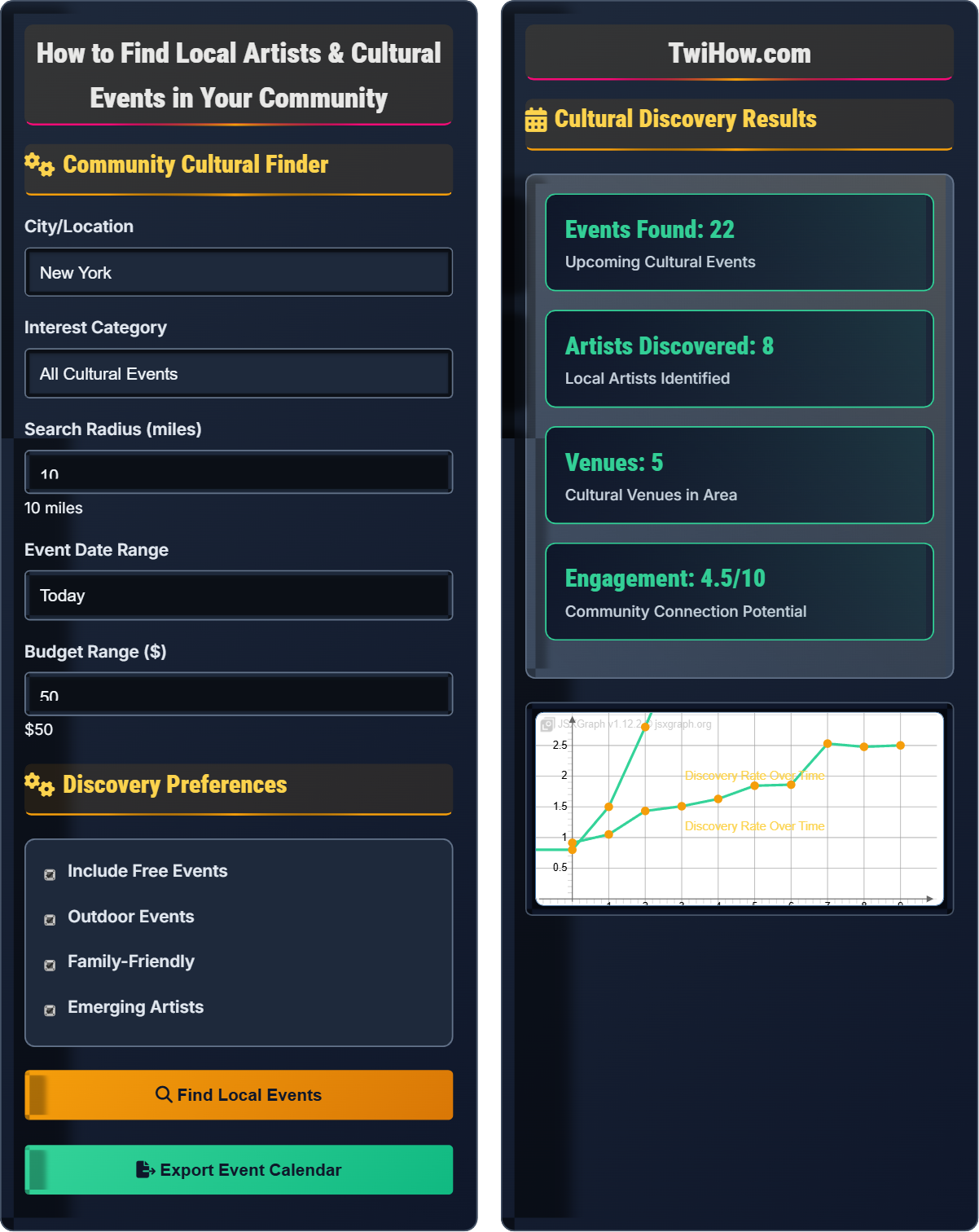
Community Cultural Finder
Discovery Preferences
Cultural Discovery Results
| Event | Date | Venue | Cost |
|---|---|---|---|
| Local Band Showcase | Dec 15 | Community Venue | $15 |
| Art Gallery Opening | Dec 18 | Downtown Gallery | Free |
| Community Theater | Dec 20 | City Theater | $25 |
| Winter Cultural Festival | Dec 22 | City Park | $10 |
Finding Local Artists & Cultural Events
Discovering local artists and cultural events requires a systematic approach that combines digital tools with community engagement. The most effective discovery involves multiple channels and consistent effort to build awareness of your local cultural scene.
Success depends on understanding both online platforms and traditional community networks that connect artists and audiences.
Where:
- Resources Used: Number of discovery channels utilized
- Community Engagement: Level of participation in community activities
- Time Invested: Consistency of search efforts
- Geographic Distance: Travel radius for events
Primary channels for finding local artists and events:
- Online Platforms: Eventbrite, Facebook Events, Bandsintown, Meetup
- Community Centers: Libraries, recreation centers, community boards
- Local Venues: Coffee shops, bookstores, restaurants, galleries
- Social Media: Facebook groups, Instagram, Twitter, TikTok
- Word of Mouth: Friends, neighbors, coworkers, family
- Local Media: Newspapers, radio stations, local TV
- Follow Artists: On social media to receive updates
- Join Groups: Local art and music enthusiast communities
- Volunteer: At cultural events to meet organizers and artists
- Attend Openings: Gallery openings, first nights, launch events
- Visit Studios: Open studio events and art walks
- Take Classes: Community art and music classes
Discovery Methods Guide
Effective online resources for finding local cultural events:
- Event Platforms: Eventbrite, Facebook Events, Bandsintown, Songkick
- Community Sites: Nextdoor, Craigslist, local Facebook groups
- Artist Platforms: Bandcamp, SoundCloud, Instagram, YouTube
- Government Resources: City websites, parks and recreation departments
- University Calendars: College event listings and art departments
Traditional and physical resources for cultural discovery:
- Community Centers: Libraries, recreation centers, YMCAs
- Local Venues: Coffee shops, bookstores, restaurants
- Cultural Institutions: Museums, galleries, theaters
- Public Spaces: Bulletin boards, community boards
- Local Businesses: Posters and flyers at businesses
Networking and social approaches to finding local culture:
- Word of Mouth: Asking friends, family, and colleagues
- Community Groups: Neighborhood associations, hobby groups
- Volunteering: Helping at events to meet organizers
- Classes and Workshops: Taking courses to meet like-minded people
- Social Events: Attending parties and gatherings
Cultural Resources
Local artists, cultural events, community discovery, cultural engagement, local culture, community resources.
Discovery Potential = (Resources Used × Community Engagement × Time Invested) ÷ Geographic Distance
Where Discovery Potential = likelihood of finding local culture, Resources Used = number of channels.
- Use multiple discovery channels
- Engage with the community consistently
- Support local artists and venues
Community Cultural Discovery Quiz
Which method is most effective for discovering local artists and cultural events?
Using multiple online and offline channels is the most effective method for discovering local artists and cultural events. This approach maximizes coverage and increases the likelihood of finding diverse opportunities. Relying on a single method limits discovery potential and may miss important events.
The answer is B) Using multiple online and offline channels.
This demonstrates the principle of redundancy in information gathering. Different channels serve different communities and have varying update frequencies. A multi-channel approach ensures comprehensive coverage of the local cultural landscape, similar to diversifying an investment portfolio.
Discovery Channels: Methods and platforms for finding information
Redundancy Principle: Using multiple sources for reliability
Information Coverage: Comprehensive range of sources
• Multiple channels increase discovery
• Different sources reach different audiences
• Consistency improves results
• Set up Google Alerts for your city + "events"
• Follow local newspapers on social media
• Check community bulletin boards regularly
• Relying on only one discovery method
Explain the importance of supporting local artists and cultural events. How does this benefit the community?
Community Benefits: Supporting local artists strengthens the cultural fabric of a community, attracts tourism, and enhances quality of life. Local culture creates a sense of place and identity that distinguishes one community from another.
Economic Impact: Local artists contribute to the economy through spending, employment, and attracting visitors. Cultural events bring people together and support local businesses.
Social Cohesion: Cultural activities build social connections, reduce isolation, and create shared experiences that bind communities together.
Artistic Development: Support encourages artists to continue creating, leading to a vibrant cultural scene that benefits everyone.
Educational Value: Local artists often provide educational opportunities and mentorship for emerging talents.
This demonstrates the multiplier effect of cultural investment. When communities support local artists, they create a positive feedback loop where cultural richness attracts more residents, businesses, and cultural activities, further enhancing the community's appeal and vitality.
Multiplier Effect: Economic impact that exceeds initial investment
Cultural Fabric: The artistic and cultural elements that define a community
Quality of Life: Factors that contribute to community desirability
• Local culture enhances community
• Support creates positive cycles
• Cultural investment has broad impact
• Buy local art and music directly
• Attend events regularly
• Share events on social media
• Undervaluing local artists
• Not attending community events
• Assuming only big names are worth supporting
You want to organize a monthly cultural event series in your neighborhood that showcases local artists. Design a plan that identifies potential artists, venues, and promotion strategies. Consider budget constraints and community engagement.
Artist Identification: Contact local art schools, community centers, and music venues to identify emerging artists. Use social media to find local performers and creators.
Venue Options: Partner with local coffee shops, libraries, community centers, or parks. Consider rotating venues to reach different audiences.
Promotion Strategy: Use neighborhood apps, local newspapers, social media, and word-of-mouth. Create eye-catching flyers for community boards.
Budget Considerations: Start small with free venues and low-cost promotion. Consider sponsorships from local businesses.
Community Engagement: Survey residents for interest, involve local organizations, and create volunteer opportunities.
Programming: Mix music, visual arts, poetry, and other cultural expressions to appeal to diverse interests.
This demonstrates how to build a cultural ecosystem from the ground up. The approach involves identifying resources, building partnerships, and creating sustainable programming that serves the community's interests while supporting local artists.
Cultural Ecosystem: Interconnected network of artists, venues, and audiences
Community Engagement: Involving residents in cultural activities
Sustainable Programming: Long-term viable cultural activities
• Start small and grow organically
• Build partnerships with existing institutions
• Survey community interests
• Partner with local businesses
• Use social media effectively
• Create event series for consistency
• Not surveying community interest
• Over-budgeting for initial events
• Not building sustainable partnerships
A talented local musician is struggling to build an audience in your community. How would you help them promote their music and connect with potential fans using local resources?
Local Venue Strategy: Help them perform at coffee shops, farmers markets, community centers, and local festivals. Start with free or low-paying gigs to build a following.
Community Integration: Connect them with local radio stations, community newspapers, and local music blogs for interviews and reviews.
Social Media: Create community-focused content that highlights their local connections and involvement in community events.
Networking: Introduce them to other local musicians, venues, and cultural organizations for collaboration opportunities.
Community Events: Encourage participation in charity events, community celebrations, and local fundraisers to increase visibility.
Local Media: Help pitch stories about their music to local newspapers and radio stations.
This shows how to build a local music career through community engagement. Success often comes from being deeply embedded in the local community rather than trying to compete globally immediately. Local success can provide a foundation for broader recognition.
Local Integration: Connecting with community resources and networks
Community Foundation: Building local support base
Grassroots Marketing: Bottom-up promotion through local networks
• Start with local community
• Build relationships first
• Consistency over intensity
• Focus on local stories and connections
• Build genuine relationships
• Support other local artists
• Trying to be too big too fast
• Not engaging with local community
• Ignoring local media opportunities
What is the most significant long-term impact of actively participating in local cultural events?
Building community connections and cultural identity is the most significant long-term impact of participating in local cultural events. This creates a sense of belonging, strengthens social networks, and contributes to a community's unique character and appeal. These connections often extend far beyond the events themselves.
The answer is B) Building community connections and cultural identity.
This highlights the social capital created through cultural participation. The relationships and shared experiences formed at local events create lasting bonds that strengthen the entire community fabric. This social infrastructure is valuable for both individuals and the broader community.
Social Capital: Networks and relationships that benefit communities
Cultural Identity: Unique character created by local culture
Community Fabric: Interconnected social relationships
• Relationships extend beyond events
• Cultural identity attracts residents
• Social networks provide support
• Engage with other attendees
• Volunteer for events
• Join cultural organizations
• Attending passively without engaging
• Not building relationships
• Missing networking opportunities
FAQ
Q: How do I find cultural events that are suitable for families with children?
A: Look for these family-friendly resources:
1. Library Events: Story times, puppet shows, craft workshops
2. Community Centers: Family festivals, holiday celebrations, movie nights
3. Local Parks: Outdoor concerts, festivals, recreational activities
4. Children's Museums: Interactive exhibits and educational programs
5. School Districts: Community events and performances
6. Local Newspapers: Family event calendars and columns
Always check event descriptions for age recommendations and contact organizers with questions.
Q: How can I get my work showcased in local venues and events?
A: Effective strategies for getting showcased:
1. Build Relationships: Attend events regularly, meet venue owners and event organizers
2. Create Professional Materials: Portfolio, demo reel, professional photos
3. Start Small: Perform at open mic nights, art fairs, local festivals
4. Network Actively: Connect with other artists, join local artist groups
5. Use Social Media: Share your work consistently, engage with local community
6. Submit Proposals: Apply for grants, artist residencies, exhibition opportunities
Consistency and professionalism are key to building your reputation in the local scene.