What are the Benefits of Learning a Musical Instrument or Artistic Skill as an Adult?
Complete learning guide • Step-by-step explanations
Adult Learning Benefits Fundamentals:
Show Benefit CalculatorLearning musical instruments or artistic skills as an adult offers profound cognitive, emotional, and social benefits that extend far beyond the creative realm. Modern neuroscience confirms that adult brains retain remarkable plasticity, allowing for significant growth and development even later in life.
Key benefits include:
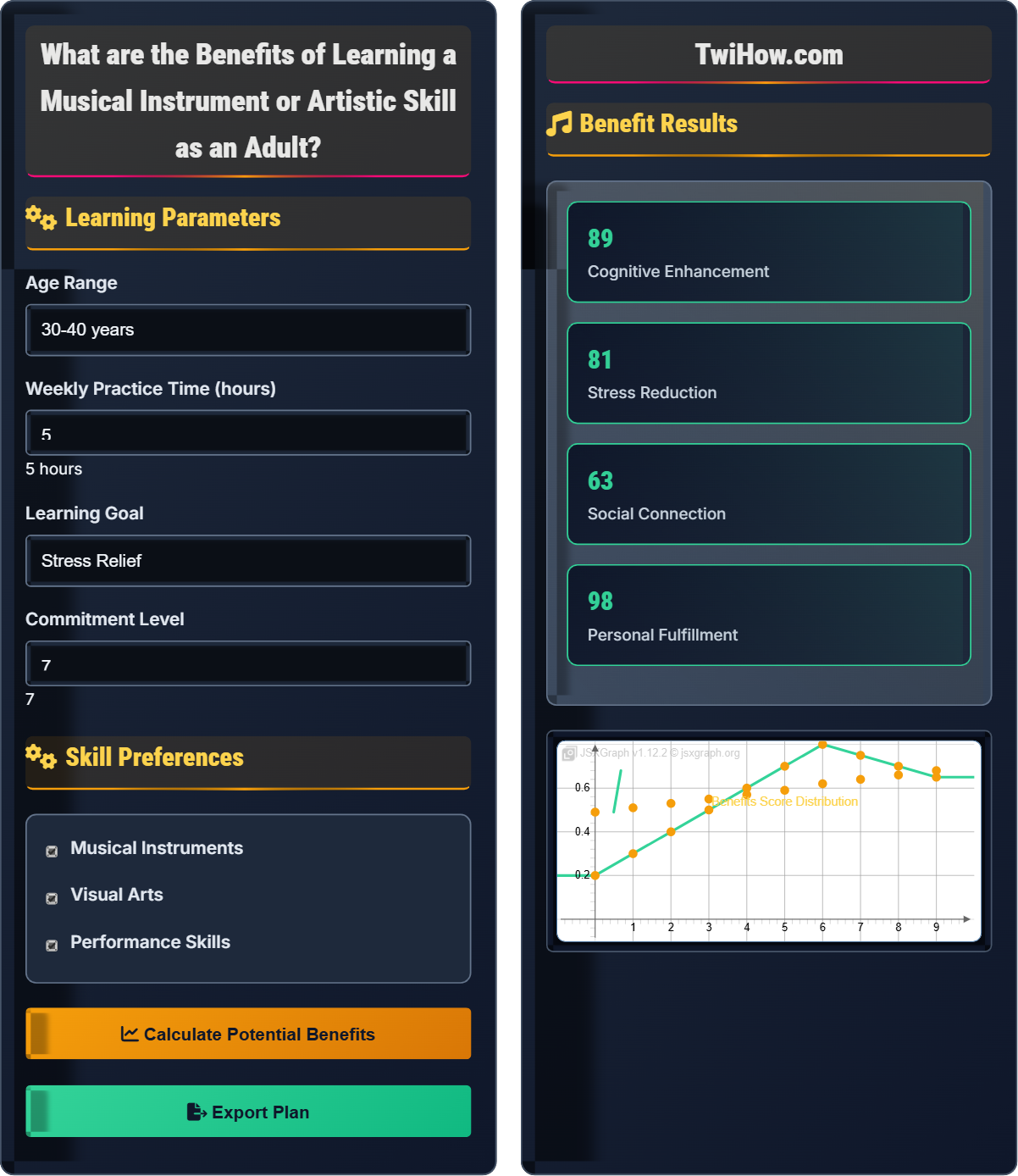
- Cognitive Enhancement: Improved memory, attention, and executive function
- Stress Reduction: Therapeutic effects and emotional regulation
- Social Connection: Community building and collaborative experiences
- Personal Fulfillment: Sense of accomplishment and creative expression
Starting artistic pursuits as an adult brings unique advantages including focused motivation, life experience, and appreciation for the learning process itself.
Learning Parameters
Skill Preferences
Benefit Results
| Benefit Area | Score | Timeline | Impact |
|---|---|---|---|
| Cognitive Function | 85 | 3-6 months | Significant improvement |
| Stress Management | 78 | 1-2 months | Noticeable relief |
| Social Skills | 72 | 2-4 months | Moderate improvement |
| Self-Esteem | 90 | 1-3 months | Strong boost |
Personalized Recommendations
Based on your profile:
- Start with 30-minute daily sessions for optimal consistency
- Join local music groups or art classes for social benefits
- Set realistic milestones to maintain motivation
- Track progress weekly to see measurable improvements
Benefits of Adult Learning Explained
Contrary to popular belief, adults possess unique advantages for learning musical instruments and artistic skills. Neuroplasticity continues throughout life, and adult learners bring focused motivation, life experience, and appreciation for the learning process that can lead to remarkable achievements.
The overall benefit score is calculated based on multiple factors:
Where:
- Cognitive: Memory, attention, and executive function improvements
- Emotional: Stress reduction and mood enhancement
- Social: Connection and community building
- Physical: Motor skills and coordination improvements
- Consistency Factor: Regular practice multiplier
Learning impacts multiple life areas:
- Work Performance: Enhanced focus and creativity in professional settings
- Relationships: Improved communication and emotional regulation
- Health: Better cognitive function and stress management
- Personal Growth: Increased confidence and self-efficacy
- Retirement Planning: Meaningful activities for later life
- Brain Health: Protection against cognitive decline
- Goal-Oriented Practice: Focus on specific, achievable objectives
- Integration Learning: Connect new skills to existing knowledge
- Flexible Scheduling: Adapt practice to busy adult lifestyles
- Technology Integration: Use apps and online resources effectively
- Peer Learning: Engage with age-appropriate learning communities
- Patience and Persistence: Embrace the learning journey
Cognitive Benefits
Memory improvement, attention enhancement, executive function strengthening, processing speed optimization.
Brain Changes Timeline
Popular Instruments & Skills
Beginner-Friendly Options
Learning Pathways
Social Benefits
Community Connection
Adult Learning Benefits Learning Quiz
What is neuroplasticity and why is it important for adult learning?
Neuroplasticity is the brain's remarkable ability to form new neural connections and pathways throughout life. This means adults can continue to learn, adapt, and develop new skills at any age. When we learn musical instruments or artistic skills, we strengthen existing neural networks and create new ones, improving cognitive function.
The answer is B) The brain's ability to form new connections throughout life.
Neuroplasticity challenges the outdated belief that learning ability declines dramatically with age. Research shows that adult brains remain remarkably adaptable, especially when engaged in complex, novel activities like learning instruments. This neuroplasticity is enhanced by consistent practice and meaningful engagement.
Neuroplasticity: Brain's ability to reorganize and form new connections
Neural Networks: Connections between brain cells that store memories and skills
Cognitive Reserve: Brain's ability to compensate for damage through alternative pathways
• Adult brains remain plastic throughout life
• Novel activities enhance neuroplasticity
• Consistent practice strengthens neural pathways
• Start with manageable practice sessions
• Combine learning with other activities
• Stay consistent with your routine
• Believing age limits learning ability
• Expecting immediate results
• Not practicing consistently
Describe the timeline and specific cognitive benefits of learning a musical instrument as an adult, including both short-term and long-term effects.
Short-term Benefits (1-3 months):
• Improved focus and concentration during practice
• Enhanced working memory for musical patterns
• Reduced stress and anxiety through engagement
• Better emotional regulation and mood stability
Medium-term Benefits (3-6 months):
• Strengthened executive function and multitasking
• Enhanced auditory processing and discrimination
• Improved motor coordination and dexterity
• Better pattern recognition and sequencing
Long-term Benefits (6+ months):
• Increased gray matter density in auditory and motor regions
• Enhanced cognitive reserve protecting against dementia
• Improved verbal memory and executive function
• Better attention control and cognitive flexibility
The cognitive benefits of musical learning follow a predictable progression. Early gains come from focused attention and stress reduction, while structural brain changes take longer to develop. The combination of cognitive, emotional, and motor demands makes music uniquely beneficial for brain health.
Executive Function: Mental processes controlling attention and behavior
Cognitive Reserve: Brain's resilience against cognitive decline
Gray Matter: Brain tissue containing nerve cell bodies
• Benefits accumulate over time
• Consistent practice is essential
• Individual variation exists in timing
• Track progress with regular assessments
• Combine with other brain-healthy activities
• Stay motivated with achievable goals
• Expecting immediate cognitive changes
• Not maintaining consistent practice
• Focusing only on performance goals
An adult learner reports high stress levels and wants to start learning piano to manage stress. They have 30 minutes available each evening after work. Calculate the expected stress reduction timeline and suggest an optimal practice approach for maximum therapeutic benefit.
Stress Reduction Timeline:
• Week 1-2: Initial relaxation from focused activity
• Week 3-4: Noticeable stress reduction and improved mood
• Month 2: Significant improvement in stress management
• Month 3+: Enhanced emotional regulation and resilience
Optimal Practice Approach:
1. Warm-up: 5 minutes of breathing exercises and gentle finger warm-ups
2. Focus Activity: 15 minutes on familiar pieces for confidence
3. Learning: 10 minutes on new material at comfortable pace
4. Cool-down: Play favorite relaxing piece for 5 minutes
This approach maximizes stress relief while building skills progressively.
Therapeutic music practice differs from performance-oriented learning. The focus should be on the process rather than outcomes, incorporating mindfulness and relaxation techniques. Regular, gentle practice is more beneficial for stress management than intense, infrequent sessions.
Musical Therapy: Using music for therapeutic benefits
Mindfulness Practice: Present-moment awareness during activity
Stress Hormones: Cortisol and adrenaline reduction through music
• Consistency over intensity
• Focus on process over perfection
• Create calming environment
• Start with simple, familiar melodies
• Use practice as meditation time
• Don't worry about mistakes
• Choosing overly challenging pieces
• Focusing on performance pressure
• Not creating a calm practice space
An adult learner wants to combine musical skill development with social connection. They're shy about performing but interested in community engagement. Propose a gradual approach to social integration through music learning that accommodates their personality while maximizing benefits.
Gradual Social Integration Plan:
1. Observation Phase: Attend local concerts and open mic nights as audience member
2. Group Class: Join beginner group lessons for supportive environment
3. Small Ensemble: Participate in duets or small group playing
4. Community Service: Offer to play for nursing homes or community events
5. Teaching: Help other adult beginners (confidence building)
6. Performance: Gradual exposure to larger audiences
This approach allows for personality accommodation while building social skills and confidence.
Social integration in adult learning should match personality and comfort levels. Introverted learners benefit from observation and small group activities before moving to performance settings. The social benefits of music learning extend beyond performance to include shared experiences and community building.
Introversion: Energy drawn from solitary activities
Extroversion: Energy drawn from social interactions
Social Confidence: Self-assurance in social settings
• Respect personality differences
• Gradual exposure reduces anxiety
• Social benefits don't require performance
• Start with online communities
• Find like-minded adult learners
• Focus on shared interests over performance
• Forcing uncomfortable social situations
• Expecting immediate social confidence
• Measuring success by performance alone
Which of the following represents a unique advantage adults have over children when learning musical instruments?
Adults typically have greater focus and motivation when learning musical instruments because they choose to learn voluntarily and understand the value of the process. Children often learn due to parental pressure and may lack intrinsic motivation. Adults also bring life experience and discipline that enhances their learning capacity.
The answer is B) Greater focus and motivation.
Adult learning advantages include self-directed motivation, life experience integration, and appreciation for the learning process. While children may have physical advantages, adults compensate with focused attention and purposeful practice. This makes adult learning highly effective when approached strategically.
Intrinsic Motivation: Internal drive to learn for personal satisfaction
Self-Directed Learning: Taking responsibility for one's own learning
Life Experience Integration: Connecting new knowledge to existing knowledge
• Adults have unique learning advantages
• Motivation enhances learning outcomes
• Experience enriches learning
• Leverage life experience in learning
• Set personal, meaningful goals
• Appreciate the learning journey
• Comparing to child learners
• Undervaluing adult learning advantages
• Not leveraging life experience
FAQ
Q: Is it too late for me to start learning piano at 45 years old?
A: Absolutely not! Research shows that the adult brain retains remarkable plasticity throughout life. In fact, adult learners often have advantages over children:
1. Better Focus: Adults typically have stronger attention and concentration
2. Life Experience: You can connect music to your rich life experiences
3. Motivation: You're learning because you want to, not because someone told you to
4. Patience: Adults are generally more accepting of the learning process
Studies show significant cognitive benefits even when starting in the 60s and 70s!
Q: Will learning guitar help prevent memory problems as I age?
A: Yes, there's strong evidence that musical training provides protective benefits against cognitive decline:
Research Findings:
- Musicians show delayed onset of dementia by 4-5 years
- Musical training enhances working memory and executive function
- Creates cognitive reserve that compensates for brain changes
- Improves processing speed and attention control
Additional Benefits:
- Finger dexterity helps maintain fine motor skills
- Social aspects of music reduce isolation
- Creative expression supports emotional well-being
It's never too late to start for brain health benefits!