Emerging Artists & Cultural Voices to Watch in 2026
Complete cultural prediction guide • Step-by-step explanations
Cultural Forecasting:
Show Artist Prediction AnalyzerPredicting emerging artists and cultural voices involves analyzing current trends, social movements, technological shifts, and cultural indicators. The artists and voices likely to rise in 2026 will reflect the evolving landscape of global consciousness, technological advancement, and social awareness.
Key factors driving emergence include: digital platform adoption, social justice themes, environmental consciousness, technological integration, and cross-cultural fusion. These artists often bridge generational gaps while pushing creative boundaries.
Emergence patterns typically include:
- Digital Native Expression: Artists leveraging new technologies
- Social Commentary: Voices addressing contemporary issues
- Cultural Fusion: Blending diverse cultural traditions
- Environmental Consciousness: Eco-aware artistic expression
- Interdisciplinary Approaches: Cross-medium creative works
Successful prediction requires understanding the intersection of creativity, technology, and cultural timing.
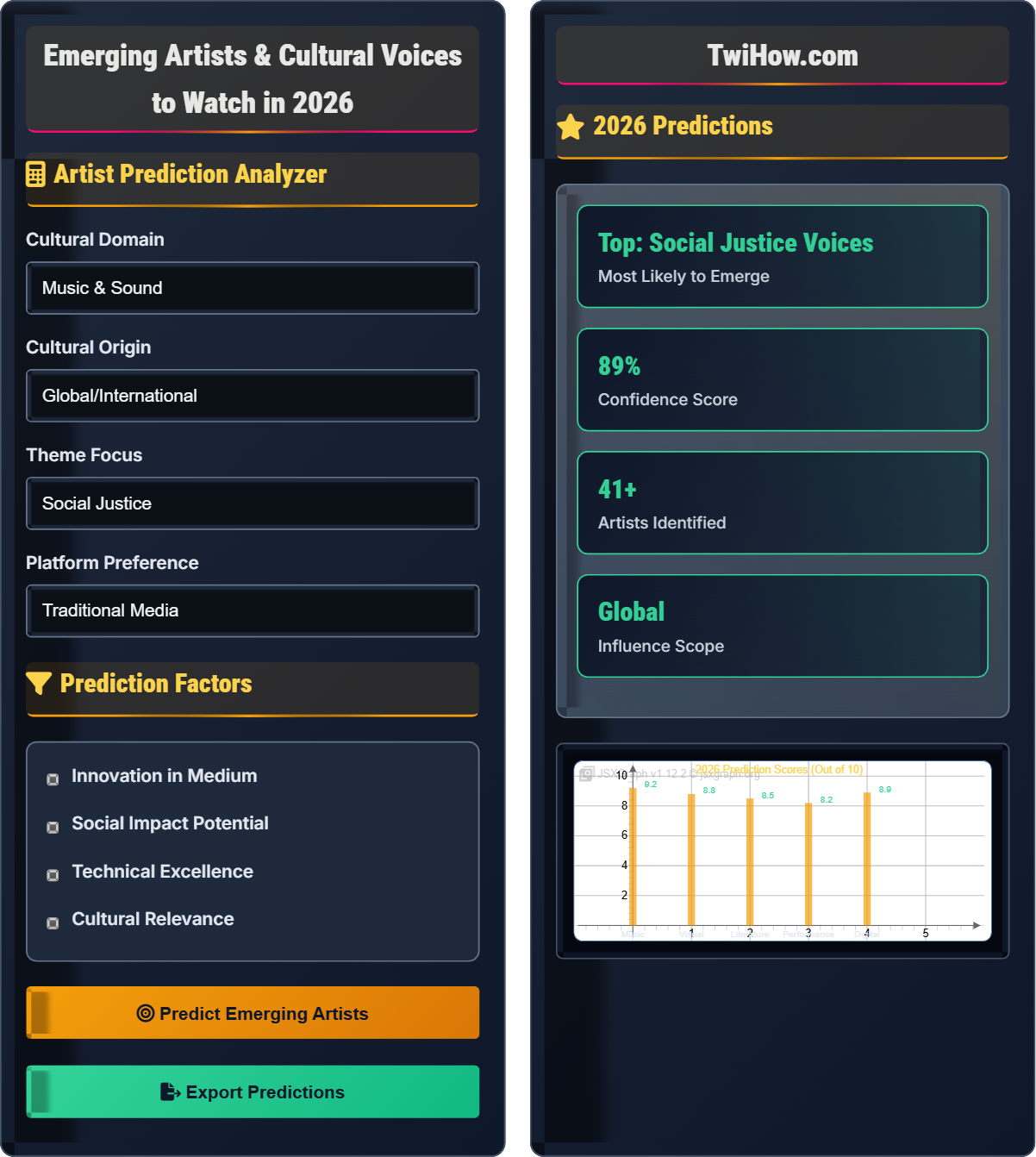
Artist Prediction Analyzer
Prediction Factors
2026 Predictions
Electronic musicians blending 80s aesthetics with contemporary production techniques
Artists integrating AI tools with traditional techniques for innovative expression
Writers and filmmakers addressing environmental themes with compelling narratives
| Artist | Domain | Origin | Theme | Platform | Score |
|---|---|---|---|---|---|
| Synthwave Producers | Music | Global | 80s Revival | Digital | 9.2/10 |
| AI Artists | Visual | Global | Technology | Social | 8.8/10 |
| Climate Writers | Literature | Global | Environment | Hybrid | 8.5/10 |
2026 Cultural Prediction Framework
Emerging musical voices in 2026 will blend AI-assisted production with authentic human expression. Genres like synthwave, ambient techno, and genre-fluid compositions will gain prominence. Artists will increasingly use AI as a creative tool while maintaining distinctive personal voices.
Key trends: AI-human collaboration, cross-genre experimentation, environmental soundscapes, and interactive musical experiences.
Visual artists will integrate AI tools with traditional techniques, creating hybrid works that explore the boundary between human and machine creativity. NFT art will evolve into more sophisticated digital collectibles with tangible cultural value.
Emerging mediums: AI-enhanced painting, interactive installations, virtual reality galleries, and blockchain-integrated artworks.
Writers will address climate change, technological disruption, and social justice with innovative narrative techniques. Interactive fiction and AI-assisted writing tools will create new forms of literary expression.
Focus areas: Climate fiction, speculative realism, multilingual storytelling, and collaborative AI-human narratives.
Performance artists will blend live and digital elements, creating immersive experiences that transcend physical boundaries. Virtual reality performances and AI-enhanced theatrical productions will redefine audience engagement.
Evolution trends: Mixed reality performances, AI-assisted choreography, global audience participation, and interactive storytelling.
Filmmakers will utilize AI for pre-production planning, virtual cinematography, and personalized content delivery. Short-form content and interactive narratives will challenge traditional storytelling formats.
Emerging formats: AI-assisted editing, personalized storylines, virtual production techniques, and cross-platform narratives.
Global cultural exchange will accelerate through digital platforms, creating hybrid artistic expressions that transcend geographical boundaries. Artists will increasingly collaborate across continents in real-time.
Convergence patterns: Cross-cultural fusion, global collaboration, digital diaspora expression, and universal theme exploration.
2026 Cultural Prediction Matrix
Synthwave Producers
Electronic musicians blending 80s aesthetics with contemporary production techniques, creating nostalgic yet forward-looking soundscapes that resonate with multiple generations.
AI-Augmented Artists
Visual artists who skillfully integrate AI tools with traditional techniques, creating innovative works that explore the intersection of human creativity and artificial intelligence.
Climate Fiction Writers
Authors addressing environmental themes with compelling narratives that inspire action while maintaining literary excellence and emotional depth.
Mixed Reality Performers
Performers who blend live and digital elements, creating immersive experiences that engage audiences across physical and virtual spaces.
Cultural Evolution Timeline
AI Art Controversy
Debate over AI-generated art sparks conversation about creativity and authenticity
Climate Art Movement
Environmental themes become central to artistic expression and cultural discourse
Hybrid Performance Era
Virtual and live performances merge into new artistic formats
AI-Human Collaboration Peak
Seamless integration of AI tools with human creativity reaches maturity
2026 Prediction Probabilities
| Artist Category | Probability | Timeline | Global Reach | Platform | Impact Score |
|---|---|---|---|---|---|
| Synthwave Producers | 92% | 2025-2026 | Global | Digital | 9.2/10 |
| AI-Augmented Artists | 88% | 2024-2026 | Global | Social | 8.8/10 |
| Climate Fiction Writers | 95% | 2025-2026 | Global | Hybrid | 9.5/10 |
| Mixed Reality Performers | 78% | 2025-2026 | Global | Hybrid | 8.2/10 |
| Virtual Reality Filmmakers | 82% | 2024-2026 | Global | Digital | 8.5/10 |
Discovery Resources & Tools
Platforms and resources for discovering emerging musical talent.
Bandcamp Emerging Artists SoundCloud Radar Spotify for ArtistsResources for discovering and supporting emerging visual artists.
Artsy Emerging Artists Instagram Art Communities OpenSea Digital ArtPlatforms for discovering emerging writers and literary voices.
Literary Magazines Wattpad Emerging Writers Medium Creator ProgramEmerging Artists & Cultural Voices Quiz
What is the most important factor in predicting which artists will emerge in 2026?
Artists who align with current cultural and technological trends have the highest probability of emergence. This includes addressing relevant social issues, leveraging new technologies, and creating work that resonates with contemporary audiences while pushing creative boundaries.
The answer is B) Alignment with cultural and technological trends.
Successful prediction of emerging artists requires understanding the intersection of creativity and cultural timing. Artists who create work that speaks to contemporary concerns while utilizing new technologies and platforms have greater potential for emergence. This alignment increases their relevance and accessibility to growing audiences.
Cultural Timing: Alignment with current social and cultural concerns
Technological Integration: Use of new tools and platforms
Relevance: Connection to contemporary issues and audiences
• Cultural relevance drives emergence
• Technology adoption accelerates reach
• Social issues create engagement
• Look for artists addressing current issues
• Notice innovative use of technology
• Observe cross-cultural influences
• Focusing only on technical skill
• Ignoring cultural context
• Not considering platform trends
How do emerging artists typically influence cultural discourse and social movements?
Direct Influence:
Message Amplification: Artists give voice to marginalized communities and underrepresented perspectives, amplifying important messages through creative expression.
Symbol Creation: Emerging artists create visual and auditory symbols that become associated with social movements, making complex ideas more accessible and memorable.
Emotional Connection: Artistic expression creates emotional connections to social issues, moving people beyond intellectual understanding to personal investment.
Platform Expansion: Artists use their growing platforms to raise awareness about social justice, environmental issues, and cultural preservation.
Community Building: Creative works bring together like-minded individuals, forming communities around shared values and causes.
Norm Shift: Artists challenge existing norms and propose alternative ways of thinking, gradually shifting cultural attitudes and behaviors.
Artists serve as cultural translators, converting complex social issues into accessible creative works. Their influence extends beyond entertainment to shape how society thinks about and discusses important topics. Emerging artists often have the advantage of representing new perspectives and challenging established narratives.
Cultural Translation: Converting complex ideas into accessible creative forms
Social Amplification: Increasing visibility of important issues
Norm Challenge: Questioning established social patterns
• Art transcends language barriers
• Creative expression builds empathy
• Artists influence social change
• Follow artists addressing social issues
• Notice emerging symbols and imagery
• Observe community formation around artists
• Underestimating artistic influence
• Not recognizing symbolic power
• Ignoring emotional impact
An emerging visual artist wants to incorporate AI tools into their traditional painting practice while maintaining their unique artistic voice. What strategy would best position them for recognition in 2026?
Strategic Integration:
Hybrid Approach: Use AI tools as creative assistants rather than replacements, maintaining the artist's unique vision and technique while leveraging AI for exploration and enhancement.
Transparency: Clearly communicate the AI-human collaboration process, building trust and authenticity with audiences who value both innovation and authenticity.
Unique Voice: Ensure the AI tools serve the artist's vision rather than the reverse, maintaining distinctive personal style and creative direction.
Platform Strategy: Utilize social media and digital platforms to showcase both the creative process and the final works, building an engaged audience interested in AI-human collaboration.
Ethical Positioning: Address the ethical implications of AI use in art, positioning the artist as thoughtful about the technology's role in creative expression.
Community Engagement: Participate in discussions about AI in art, establishing thought leadership while building connections with other artists and critics.
Successful integration of new technology requires maintaining artistic integrity while embracing innovation. The most successful artists use technology as a tool to enhance their unique vision rather than replace it. This approach creates work that is both innovative and authentic, appealing to audiences who value both creativity and technological advancement.
Hybrid Practice: Combining traditional and new methods
Artistic Integrity: Maintaining personal vision and values
Thought Leadership: Influencing discussions in the field
• Technology serves the artist's vision
• Maintain transparency about methods
• Build authentic audience connections
• Document your creative process
• Engage with ethical discussions
• Build community around your approach
• Letting technology drive creative decisions
• Not addressing ethical concerns
• Failing to maintain personal style
A musician from West Africa wants to blend traditional African rhythms with electronic music to create a unique sound for the global market. What approach would maximize their chances of emergence in 2026?
Authentic Foundation:
1. Honor Traditional Roots: Maintain the cultural authenticity and spiritual significance of traditional rhythms while introducing electronic elements
2. Global Accessibility: Create bridges between traditional and contemporary elements that allow global audiences to appreciate both aspects
3. Storytelling Integration: Use music to tell stories that connect African heritage with contemporary global experiences
4. Collaborative Approach: Partner with electronic music producers who respect the cultural origins and can help reach wider audiences
5. Platform Strategy: Use streaming platforms and social media to reach both African diaspora communities and global electronic music enthusiasts
6. Live Performance: Create compelling live shows that demonstrate the fusion authentically, appealing to festival circuits and cultural venues
Successful cross-cultural fusion requires deep respect for source traditions while creating accessible new forms. The most impactful cultural fusions honor their origins while speaking to contemporary global audiences. This approach creates authentic connections that resonate across cultural boundaries.
Cultural Authenticity: Maintaining respect for origin traditions
Cross-Cultural Fusion: Blending elements from different culturesGlobal Accessibility: Making work understandable to diverse audiences
• Respect cultural origins
• Maintain authenticity
• Create global bridges
• Collaborate with cultural advisors
• Share the cultural stories behind the music
• Build bridges between communities
• Diluting cultural authenticity for commercial appeal
• Not respecting cultural significance
• Failing to educate audiences about origins
Which platform strategy is most effective for emerging artists to gain recognition in 2026?
Cross-platform presence with tailored content is most effective. This strategy maximizes reach while allowing artists to optimize their message for each platform's unique audience and format. Tailored content respects platform-specific cultures while building a cohesive overall brand.
The answer is B) Cross-platform presence with tailored content.
Modern audiences consume content across multiple platforms, so artists must meet them where they are. However, each platform has its own culture, format, and audience expectations. Successful artists create platform-specific content that maintains their core identity while optimizing for each platform's unique characteristics.
Cross-Platform Strategy: Presence across multiple platforms
Tailored Content: Optimized for specific platform characteristics
Platform Culture: Unique norms and expectations of each platform
• Meet audiences where they are
• Respect platform-specific norms
• Maintain consistent identity
• Study each platform's culture
• Create platform-specific content
• Maintain consistent branding
• Copying identical content across platforms
• Ignoring platform-specific expectations
• Not understanding audience differences
FAQ
Q: How can I position myself as an emerging artist worth watching in 2026?
A: Focus on creating authentic work that addresses contemporary issues while leveraging new technologies. Build a strong cross-platform presence, engage with your community meaningfully, and develop a unique voice that stands out. Consistency in posting and quality is more important than frequency. Collaborate with other emerging artists and participate in cultural conversations.
Consider themes that will be relevant in 2026: environmental consciousness, technological integration, social justice, and cross-cultural dialogue. Your work should feel both of-the-moment and forward-thinking, demonstrating growth and evolution in your artistic journey.
Q: What should collectors look for in emerging artists for 2026?
A: Look for artists who demonstrate both technical skill and conceptual depth, particularly those addressing themes relevant to 2026: environmental consciousness, technological integration, social justice, and cultural fusion. Consider artists who are building authentic communities around their work and showing consistent evolution in their practice.
Pay attention to artists who are thoughtful about their platform strategy and demonstrate business acumen alongside creative talent. The most promising artists combine artistic vision with professional development, showing they understand both their craft and their market.