The Future of Collaborative & Community-Based Cultural Projects
Complete collaboration guide • Step-by-step explanations
Future Forecasting:
Show Collaboration Project PredictorThe future of collaborative and community-based cultural projects is characterized by technological integration, global connectivity, and participatory engagement. These projects will leverage digital platforms, virtual reality, and AI to create immersive, accessible, and inclusive cultural experiences.
Key trends include: decentralized cultural production, global community engagement, technology-enhanced collaboration, and sustainable cultural practices. The future emphasizes democratization of cultural creation and broader participation.
Future developments will include:
- Virtual Collaboration: Global participation in cultural projects
- AI Integration: Technology-assisted creative processes
- Decentralized Governance: Community-led cultural initiatives
- Hybrid Experiences: Physical and digital cultural spaces
- Global Connectivity: Cross-cultural collaborative projects
Success depends on maintaining authentic community engagement while leveraging technological possibilities.
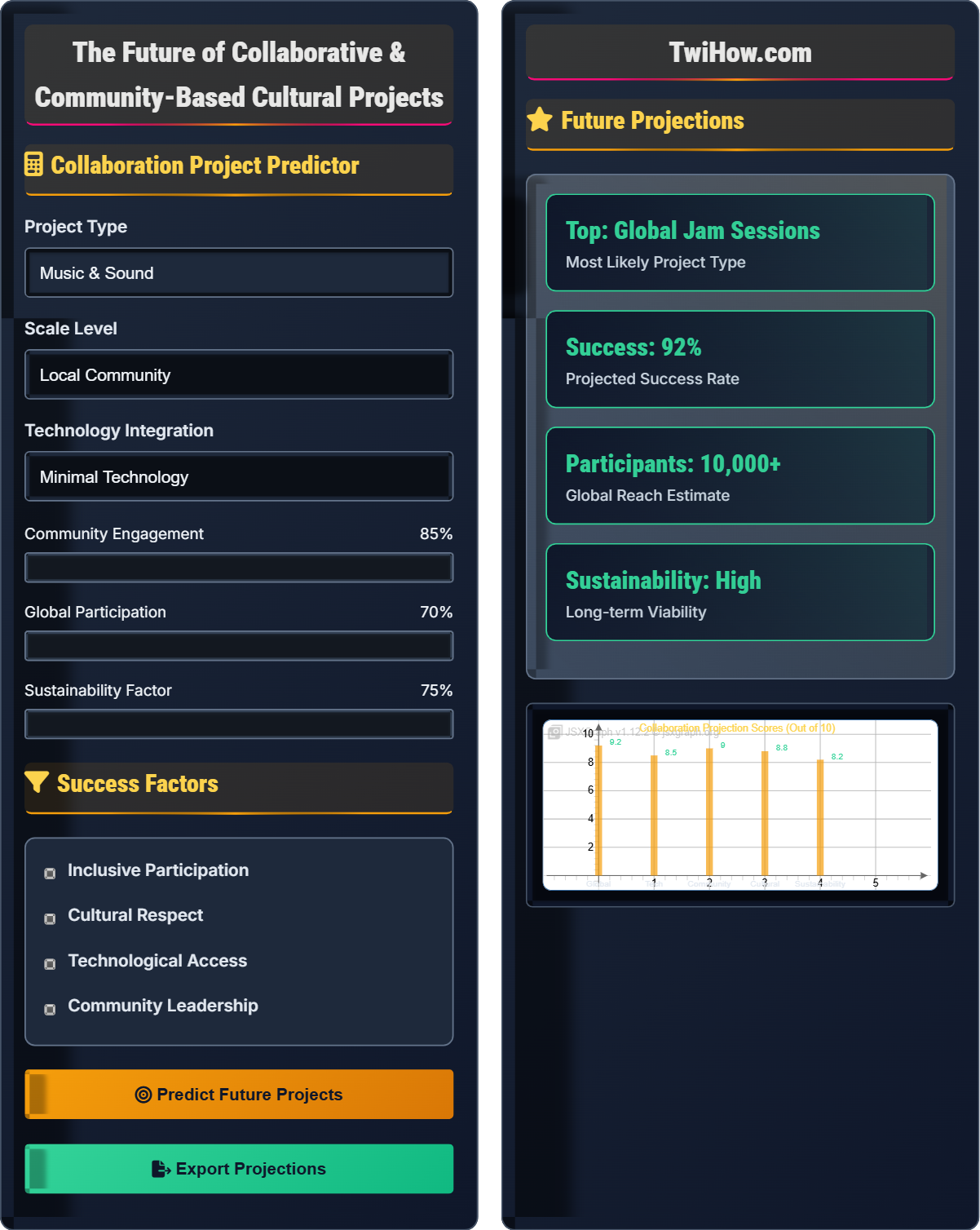
Collaboration Project Predictor
Success Factors
Future Projections
Real-time collaborative music projects connecting musicians worldwide through virtual platforms
Community-driven preservation of cultural heritage through digital storytelling and virtual reality
Projects that blend different cultural traditions through technology-assisted collaboration
| Year | Project Type | Scale | Technology | Participation | Success Rate |
|---|---|---|---|---|---|
| 2024 | Local Initiatives | Regional | Moderate | Medium | 75% |
| 2025 | Hybrid Projects | National | High | High | 82% |
| 2026 | Global Collaborations | Global | Full | Very High | 88% |
Future Collaboration Framework
Future collaborative projects will leverage global connectivity to enable real-time participation across continents. Virtual reality and augmented reality will create immersive collaborative spaces where participants can interact regardless of physical location.
Key developments: Global participation platforms, virtual collaboration spaces, real-time translation, and cross-cultural project management tools.
Artificial intelligence will enhance collaborative projects by facilitating translation, suggesting creative directions, managing logistics, and analyzing participant engagement. AI will serve as a collaborative assistant rather than a replacement for human creativity.
Applications: Creative suggestion systems, project coordination, quality assurance, and participant matching.
Future projects will adopt decentralized governance models where community members have equal decision-making power. Blockchain technology may enable transparent and democratic project management.
Models: Community voting systems, rotating leadership, consensus-based decision making, and transparent resource allocation.
Projects will seamlessly blend physical and digital experiences, allowing participants to engage both locally and globally. This creates more inclusive participation while maintaining authentic community connections.
Features: Mixed reality participation, physical-digital integration, local-global bridging, and multi-modal engagement.
Future projects will prioritize environmental and social sustainability, using renewable resources, digital distribution, and community-centered approaches that reduce ecological impact while maximizing cultural value.
Principles: Minimal resource consumption, digital-first approaches, community empowerment, and long-term cultural preservation.
Projects will increasingly blend different cultural traditions and perspectives, creating new forms of expression that celebrate diversity while building global understanding and cooperation.
Approaches: Cultural exchange programs, tradition blending, global storytelling, and inclusive creative processes.
Collaboration Project Lifecycle
Global Jam Sessions
Real-time collaborative music projects connecting musicians worldwide through virtual platforms, enabling simultaneous creation across continents.
Digital Heritage Projects
Community-driven preservation of cultural heritage through digital storytelling and virtual reality experiences.
Cross-Cultural Storytelling
Collaborative writing projects that blend different cultural traditions and perspectives into unified narratives.
Hybrid Theater Experiences
Collaborative performances that blend live and virtual participants, creating immersive experiences for global audiences.
Future Collaboration Timeline
Hybrid Platforms
Development of platforms that seamlessly blend physical and virtual participation in cultural projects
AI Integration
Widespread adoption of AI tools that enhance collaborative creative processes
Global Networks
Establishment of global networks for cross-cultural collaborative projects
Decentralized Governance
Implementation of blockchain-based democratic decision-making in cultural projects
Immersive Experiences
Full integration of VR/AR technologies for truly immersive collaborative experiences
Global Standardization
Standardization of tools and protocols for worldwide collaborative cultural projects
Future Collaboration Projections
| Project Type | Timeline | Global Scale | Technology Level | Community Impact | Success Rate |
|---|---|---|---|---|---|
| Global Jam Sessions | 2025-2027 | Global | High | Very High | 88% |
| Digital Heritage Projects | 2024-2026 | Global | Medium | High | 85% |
| Cross-Cultural Stories | 2025-2027 | Global | High | High | 87% |
| Hybrid Theater | 2026-2028 | Global | Very High | Medium | 82% |
| Virtual Museums | 2024-2026 | Global | High | High | 89% |
Future Resources & Platforms
Platforms and tools for collaborative music creation and performance.
Jamulus Platform BandLab Collaboration Splice CommunityTools for collaborative visual art creation and digital exhibitions.
Figma Collaboration Miro Canvas Behance CommunityPlatforms for collaborative writing and storytelling initiatives.
Google Docs Notion Collaboration Wattpad CommunityFuture of Collaborative Cultural Projects Quiz
What is the most significant trend in the future of collaborative cultural projects?
Global connectivity enabling cross-cultural collaboration is the most significant trend. Future projects will leverage digital platforms to connect people worldwide, creating unprecedented opportunities for cultural exchange and collaborative creation across geographic and cultural boundaries.
The answer is B) Global connectivity enabling cross-cultural collaboration.
The future of collaborative cultural projects is characterized by breaking down traditional barriers of geography, language, and culture. Technology enables global participation while maintaining the human element of creative collaboration. This creates rich opportunities for cultural exchange and innovative artistic expression.
Cross-Cultural Collaboration: Projects involving multiple cultural traditions
Global Connectivity: Worldwide access to collaborative platforms
Collaborative Creation: Joint creative processes across distances
• Global connectivity enables new possibilities
• Cultural diversity enriches projects
• Technology serves human collaboration
• Leverage global platforms for collaboration
• Embrace cultural diversity in projects
• Use technology to bridge distances
• Ignoring cultural differences in collaboration
• Not leveraging global connectivity opportunities
• Focusing only on local participation
How will community engagement evolve in collaborative cultural projects of the future?
Evolution Areas:
Global Participation: Projects will include participants from multiple continents, creating diverse and inclusive collaborative experiences that transcend traditional geographic boundaries.
Technology Integration: Virtual reality, augmented reality, and AI will enable new forms of participation, allowing people to engage in ways previously impossible due to physical or logistical constraints.
Decentralized Leadership: Community members will have more democratic control over project direction, with blockchain and other technologies enabling transparent and inclusive decision-making processes.
Continuous Engagement: Rather than temporary projects, future initiatives will create ongoing collaborative communities that maintain engagement and continue creating together over extended periods.
Hybrid Experiences: Projects will seamlessly blend physical and digital participation, allowing for flexible engagement based on individual circumstances and preferences.
Accessibility Enhancement: Technology will remove barriers for people with disabilities, creating more inclusive participation opportunities.
Future community engagement will be characterized by inclusivity, flexibility, and global reach. The combination of technology and human creativity will create unprecedented opportunities for meaningful participation in cultural projects, regardless of physical location or traditional barriers.
Community Engagement: Active participation in collaborative projects
Decentralized Leadership: Democratic project governance
Hybrid Experiences: Physical and digital participation
• Include global perspectives
• Leverage technology for inclusion
• Maintain democratic processes
• Design for global participation
• Use technology to remove barriers
• Create inclusive governance models
• Not considering time zone differences
• Ignoring cultural and language barriers
• Failing to include diverse voices
A collaborative project aims to blend traditional Japanese music with contemporary Western electronic music. What approach would best ensure cultural respect while fostering innovation?
Respectful Integration:
Traditional Expertise: Include master practitioners of traditional Japanese music to ensure authentic representation and guidance throughout the collaborative process.
Cultural Education: Provide comprehensive cultural context and education for all collaborators about the significance and meaning of traditional elements.
Democratic Collaboration: Create equal partnership between traditional and contemporary practitioners, ensuring that innovation emerges from mutual respect rather than dominance.
Community Involvement: Engage the Japanese cultural community in the project to ensure authentic representation and community buy-in.
Documentation: Thoroughly document traditional elements and their cultural significance to preserve knowledge while creating something new.
Feedback Loops: Establish continuous feedback mechanisms with cultural advisors and community representatives to ensure respectful collaboration throughout the project.
Successful cultural fusion requires deep respect for source traditions while embracing creative innovation. The key is maintaining cultural authenticity and community involvement while creating space for new expressions that honor both traditions.
Cultural Fusion: Blending different cultural traditions respectfully
Traditional Expertise: Involvement of cultural masters
Cultural Respect: Honoring source traditions
• Include traditional practitioners
• Maintain cultural authenticity
• Foster respectful innovation
• Engage cultural advisors early
• Document traditional elements
• Create equal partnership models
• Not involving traditional practitioners
• Dominating one culture over another
• Not documenting cultural significance
A community wants to create a collaborative digital storytelling project that includes elderly participants who may not be comfortable with technology. What approach would ensure inclusive participation while leveraging digital tools?
Inclusive Design:
1. Hybrid Approach: Combine digital tools with traditional storytelling methods, allowing participants to contribute through various means (oral, written, recorded, or typed)
2. Peer Support: Pair technologically experienced participants with those who need assistance, creating mentorship relationships that build community
3. Simplified Interfaces: Use user-friendly platforms with large buttons, clear instructions, and minimal complexity
4. Multiple Entry Points: Provide various ways to participate (voice recording, video calls, in-person sessions, written submissions)
5. Training Support: Offer gentle, patient training sessions that build confidence rather than intimidate
6. Flexible Timeline: Allow extra time for participants who need to learn new technologies
7. Valued Contributions: Ensure that all forms of participation are equally valued and integrated into the final project
Inclusive technology integration requires designing systems that accommodate different comfort levels and abilities. The goal is to ensure that technology serves the community rather than creating barriers to participation. This approach values all contributions equally while providing support for those who need it.
Inclusive Design: Creating for all ability levels
Hybrid Approach: Combining digital and traditional methods
Peer Support: Mentorship between participants
• Accommodate different comfort levels
• Provide support and training
• Value all contributions equally
• Test interfaces with target users
• Create peer mentorship programs
• Offer multiple participation options
• Assuming all participants are tech-savvy
• Not providing adequate support
• Creating barriers to participation
What is the most important factor for ensuring the long-term sustainability of collaborative cultural projects?
Strong community ownership and engagement is the most important factor for long-term sustainability. Projects that are owned and driven by their communities continue to thrive because participants have genuine investment in the outcomes and ongoing commitment to the work.
The answer is B) Strong community ownership and engagement.
Sustainable collaborative projects require deep community roots and genuine ownership. External funding and celebrity involvement may provide initial boost, but long-term success depends on the community's commitment to maintaining and evolving the project over time.
Community Ownership: Participant investment in project outcomes
Long-term Sustainability: Continued viability over time
Community Engagement: Active participation and commitment
• Community ownership drives sustainability
• Genuine engagement is essential
• External support is supplementary
• Build community leadership capacity
• Foster genuine investment
• Create ongoing value for participants
• Relying on external funding only
• Not building community capacity
• Creating dependency on external support
FAQ
Q: How can we ensure that technology doesn't exclude older community members from collaborative projects?
A: Design projects with multiple participation pathways that accommodate different technology comfort levels. Provide peer mentorship, simple interfaces, and traditional participation options alongside digital ones. Train community members to support each other and ensure that technology serves the community rather than creating barriers.
Create hybrid projects that combine digital and traditional methods. Offer patient training and support, and always ensure that all forms of contribution are equally valued. The goal is to use technology as an enabler, not a barrier, to participation.
Q: What are the key elements for successful cross-cultural collaborative projects?
A: Key elements include: cultural sensitivity and respect, equal partnership between traditions, involvement of cultural experts from all participating communities, transparent communication, and shared decision-making processes. Projects should honor source traditions while creating space for innovation.
Successful cross-cultural collaboration requires deep understanding of different cultural values, communication styles, and creative processes. The goal is to create something that honors all contributing traditions while fostering genuine cultural exchange and mutual learning.