The Role of Nostalgia and Revival in Contemporary Culture
Complete cultural analysis guide • Step-by-step explanations
Cultural Revival:
Show Nostalgia Trend AnalyzerNostalgia and revival play crucial roles in contemporary culture, shaping everything from entertainment and fashion to technology and social movements. This phenomenon represents our collective desire to reconnect with the past while adapting it to modern contexts.
Contemporary nostalgia operates on multiple levels: personal memories, generational experiences, and cultural touchstones that resonate across time periods. Revival movements breathe new life into past trends while often updating them for current audiences.
Key characteristics of nostalgia and revival in culture:
- Emotional Connection: Deep psychological ties to past experiences
- Cultural Recycling: Repurposing past elements for new contexts
- Generational Bridging: Connecting different age groups
- Commercial Appeal: Marketability of familiar elements
- Identity Formation: Constructing identity through cultural references
These phenomena reflect our need for continuity and meaning in rapidly changing times, while also serving as creative inspiration for contemporary cultural production.
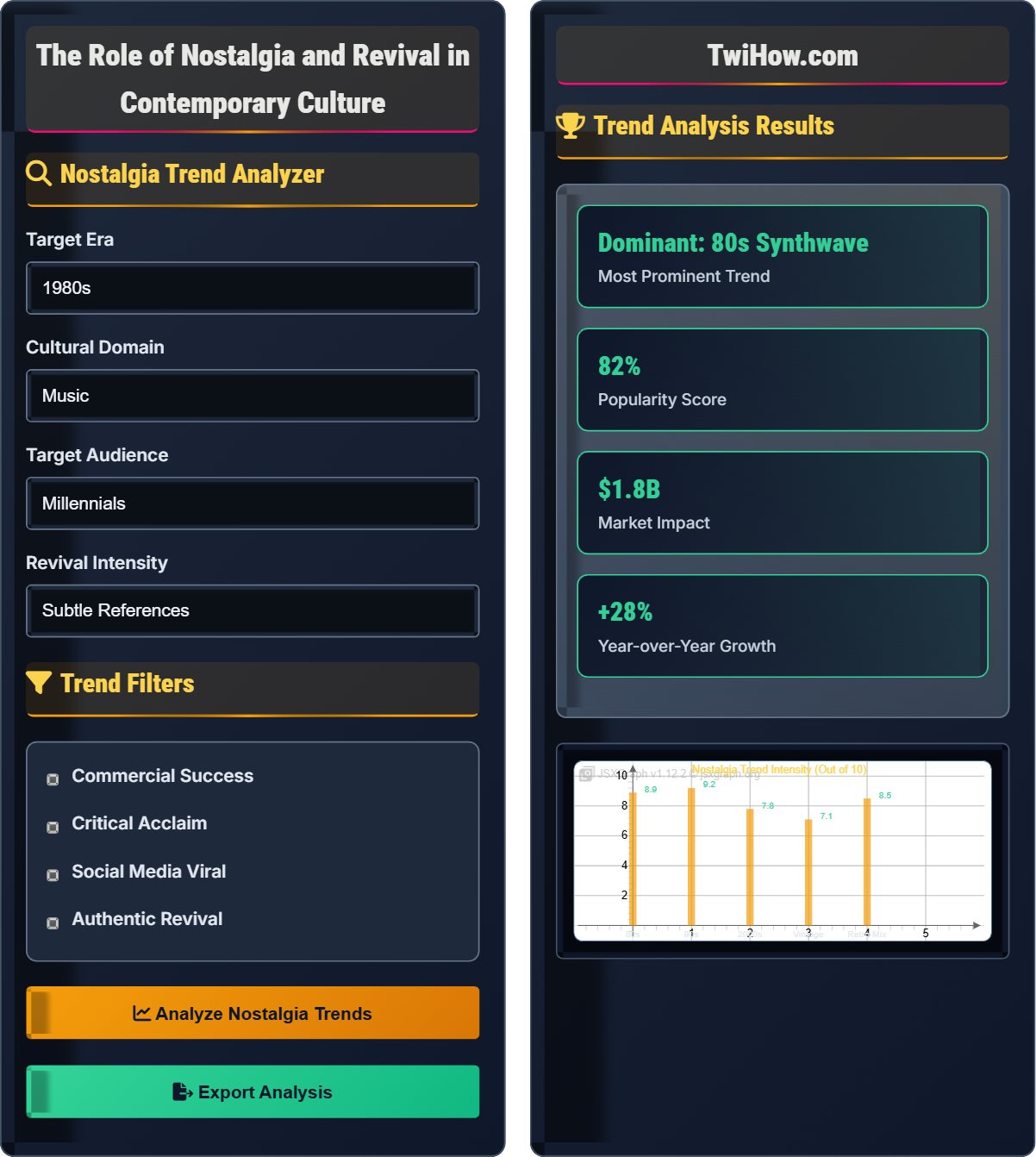
Nostalgia Trend Analyzer
Trend Filters
Trend Analysis Results
Flannel shirts, combat boots, and minimalist accessories dominate contemporary fashion
Electronic music inspired by 80s aesthetics and sounds gains mainstream popularity
Vintage consoles and classic games experience renewed interest and sales
| Example | Era | Domain | Revival Type | Impact | Score |
|---|---|---|---|---|---|
| Stranger Things | 80s | Television | Direct Revival | Massive | 9.5/10 |
| Y2K Fashion | 2000s | Fashion | Hybrid | High | 8.8/10 |
| Retrowave | 80s | Music | Modern Interpretation | Moderate | 9.0/10 |
Understanding Nostalgia and Revival
Nostalgia serves as a psychological coping mechanism, helping individuals maintain continuity of identity and find meaning during uncertain times. It selectively remembers positive aspects of the past while filtering out negative experiences.
Key psychological functions: emotional regulation, identity maintenance, and social bonding through shared memories.
Companies strategically leverage nostalgia as a marketing tool, creating products and experiences that tap into collective memory. This involves careful balance between authenticity and modern adaptation.
Commercial strategies: licensing old IPs, remaking classic content, reviving discontinued products, and incorporating period-appropriate aesthetics.
Cultural revivals tend to follow cyclical patterns, often returning to eras from approximately 20-30 years prior. This timing allows for generational turnover and sufficient distance for idealization.
Cycle characteristics: 20-year rule, generational inheritance, and cultural recycling patterns. Each revival adds contemporary elements while preserving core nostalgic appeal.
Successful revivals adapt past elements to contemporary contexts without losing their nostalgic essence. This requires understanding what made the original appealing while addressing modern sensibilities.
Adaptation principles: preserve core elements, update for modern audiences, and maintain authentic spirit while embracing new possibilities.
Nostalgia and revival transcend generational boundaries through cultural transmission. Younger generations discover and reinterpret older cultural elements, creating new forms of appreciation.
Transmission methods: family sharing, media discovery, cultural institutions, and social media platforms that facilitate cross-generational exposure.
Nostalgia operates differently across cultures, with some trends having universal appeal while others remain regionally specific. Global connectivity influences local revival patterns.
Global patterns: universal childhood experiences, international media, and shared cultural moments. Local variations: regional music, television, and culturally specific experiences.
Nostalgia and Revival Manifestations
Music Revival Movements
Music genres experience periodic revivals, with contemporary artists drawing inspiration from past decades. From 80s synthwave to 90s grunge influences, musical nostalgia shapes contemporary soundscapes.
Fashion Cycle Revivals
Fashion operates on approximately 20-year cycles, with past styles regularly returning in updated forms. Y2K fashion, 90s minimalism, and 70s bohemian styles exemplify this pattern.
Media Revival Phenomenon
Television, film, and gaming experience frequent revivals of classic franchises. Shows like Stranger Things, remakes of classic movies, and reboots of beloved video games demonstrate this trend.
Retro Technology Revival
Older technologies experience renewed interest, from vinyl records to vintage cameras. This reflects both aesthetic appreciation and dissatisfaction with digital overstimulation.
Historical Timeline of Revival Movements
Early Television Revival
Shows like "Happy Days" began the trend of nostalgic programming
New Wave and Retro Music
Post-punk bands drew inspiration from earlier rock eras
Grunge and Alternative Revival
Rock and punk influences resurfaced in new forms
Digital Nostalgia Begins
Early internet nostalgia for pre-digital eras
Social Media Revival Culture
Instagram filters and meme culture accelerate nostalgia
Multi-Generational Revival
Simultaneous revivals across multiple decades
Nostalgia Impact Across Domains
| Revival | Era | Domain | Peak Period | Current Status | Impact Score |
|---|---|---|---|---|---|
| 90s Grunge Fashion | 90s | Fashion | 2020-2022 | High | 9.2/10 |
| Synthwave Music | 80s | Music | 2015-2020 | Sustained | 8.9/10 |
| Y2K Aesthetic | 2000s | Design | 2021-2023 | High | 8.7/10 |
| Stranger Things | 80s | Television | 2016-2020 | Enduring | 9.5/10 |
| Retro Gaming | 80s-90s | Technology | 2018-2024 | Explosive | 9.1/10 |
Cultural Impact and Resources
Research and analysis on nostalgia and cultural revival.
Nostalgia Studies Journal Cultural Memory Research Media Archaeology StudiesExplore the musical aspects of nostalgia and revival.
Synthwave Community Retro Music Archives Genre Revival ChartsDocumentation of fashion trends and revival movements.
Fashion Cycle Analysis Vintage Style Guides Trend ForecastingNostalgia and Revival Quiz
What is the primary psychological function of nostalgia in contemporary culture?
Nostalgia primarily functions as a psychological coping mechanism that helps individuals maintain continuity of identity during periods of rapid change. It provides emotional stability by connecting present experiences with meaningful past experiences.
The answer is B) To maintain identity continuity during change.
Psychological research shows that nostalgia serves adaptive functions, particularly during times of uncertainty or stress. Rather than being purely escapist, it helps people feel grounded by connecting their present selves to their past experiences and values. This creates a sense of continuity and meaning that enhances psychological well-being.
Nostalgia: Sentimental longing for past experiences
Identity Continuity: Maintaining sense of self across time
Psychological Coping: Strategies for managing stress
• Nostalgia serves adaptive functions
• It connects past and present selves
• Healthy nostalgia enhances well-being
• Recognize nostalgia as normal psychological process
• Balance past appreciation with future focus
• Use nostalgia to strengthen personal identity
• Viewing nostalgia as purely escapist
• Equating it with depression
• Ignoring its psychological benefits
How do companies strategically leverage nostalgia in their marketing, and what ethical considerations arise from this practice?
Strategic Leverage:
Product Revival: Companies reintroduce discontinued products, reformulate classic items, or create new products with nostalgic branding.
Media Licensing: Reviving classic TV shows, movies, or music through remakes, reboots, or sampling.
Design Aesthetics: Using period-appropriate colors, fonts, and design elements to evoke specific eras.
Emotional Marketing: Creating advertisements that tap into shared cultural memories and experiences.
Ethical Considerations:
Authenticity: Balancing faithful recreation with modern adaptations without misleading consumers.
Exploitation: Avoiding manipulation of genuine emotional attachments for profit.
Cultural Sensitivity: Respecting the cultural significance of nostalgic elements and avoiding appropriation.
Generational Equity: Ensuring nostalgic marketing doesn't exclude younger or older demographics.
Commercial nostalgia represents a sophisticated marketing strategy that taps into deep psychological needs. Companies invest heavily in understanding which cultural elements resonate most strongly with target audiences. The ethical dimension lies in whether the nostalgic appeal serves genuine consumer needs or merely manipulates emotions for profit.
Emotional Marketing: Marketing that appeals to feelings and memories
Cultural Memory: Shared recollections of cultural experiences
Brand Heritage: Historical associations with brand identity
• Respect cultural significance
• Maintain authenticity
• Avoid exploitative practices
• Research target audience's nostalgic triggers
• Balance authenticity with innovation
• Consider cross-generational appeal
• Over-relying on nostalgia without quality
• Ignoring cultural sensitivities
• Misrepresenting historical elements
You observe that your teenage child has developed an appreciation for 80s music and fashion, despite never experiencing that era firsthand. Explain the mechanisms through which nostalgia and revival culture transcends generational boundaries, and what this suggests about cultural transmission in the digital age.
Transcendence Mechanisms:
Media Exposure: Streaming platforms, YouTube, and social media expose young people to classic content that adults share or recommend.
Cultural Filtering: Parents and older relatives pass down their favorite cultural elements, creating cross-generational appreciation.
Visual Appeal: Retro aesthetics often appear fresh and unique to younger generations who haven't experienced them.
Counter-Cultural Appeal: Vintage elements provide alternatives to contemporary trends and mainstream culture.
Algorithmic Curation: Digital platforms suggest related content, creating pathways to historical cultural elements.
Implications: This demonstrates that cultural transmission now occurs through multiple channels simultaneously. Digital platforms accelerate and democratize access to historical cultural content, allowing rapid spread of nostalgic elements across age groups. It suggests that nostalgia is becoming more fluid and less tied to direct personal experience.
The digital age has fundamentally altered how cultural elements move between generations. Traditional vertical transmission (parent to child) now competes with horizontal transmission through peer networks and algorithmic recommendations. This creates a more complex ecosystem where nostalgia can emerge organically across generational lines without direct personal experience of the original era.
Cultural Transmission: Passing cultural elements between groups
Vertical Transmission: Parent to child cultural transfer
Horizontal Transmission: Peer-to-peer cultural transfer
• Digital platforms accelerate cultural exchange
• Nostalgia transcends generational boundaries
• Multiple transmission channels operate simultaneously
• Observe how cultural elements spread across platforms
• Note generational differences in nostalgic appreciation
• Consider the role of algorithms in cultural discovery
• Assuming nostalgia requires direct experience
• Ignoring digital transmission mechanisms
• Underestimating cross-generational appeal
A company is planning to revive a popular 90s video game franchise for modern audiences. They want to balance authentic nostalgia with contemporary gameplay expectations. What strategies should they employ to satisfy both nostalgic fans and new players, and what risks do they face in this approach?
Strategies:
1. Core Element Preservation: Maintain iconic characters, themes, and visual elements that defined the original
2. Modern Gameplay Integration: Update controls, graphics, and mechanics for contemporary expectations
3. Progressive Difficulty: Offer options for both casual and hardcore players
4. Canon Integration: Develop storylines that respect original lore while advancing narratives
5. Community Involvement: Engage original fanbase in development feedback
Risks:
• Authenticity Backlash: Changes may alienate original fans who expect exact reproduction
• Compromise Pitfalls: Attempting to satisfy everyone may please no one
• Quality Issues: Focus on nostalgia may compromise actual gameplay quality
• Legal Complications: Rights and licensing issues with original intellectual property
The key is creating a product that honors the original while delivering modern entertainment value.
Successful revival projects must walk a delicate balance between honoring the past and meeting present expectations. The challenge lies in identifying which elements are essential to the nostalgic appeal versus which can be updated without losing the core experience. This requires deep understanding of what made the original appealing and how contemporary audiences consume media differently.
Core Elements: Essential features that define cultural products
Canon Integration: Maintaining consistency with original storylines
Community Feedback: Input from original fanbase
• Preserve essential nostalgic elements
• Update for contemporary expectations
• Balance old and new audience needs
• Conduct extensive market research
• Create beta programs with original fans
• Test different approaches before finalizing
• Over-modernizing to the point of losing identity
• Under-modernizing and alienating new players
• Not involving original fanbase in process
According to cultural analysis, what is the typical time interval between cultural revivals of the same era?
Cultural analysis reveals that revivals typically occur every 20-30 years, coinciding with generational turnover. This timing allows for sufficient distance from the original era while still having living memory of it. The 20-30 year cycle represents the time needed for a new generation to reach cultural influence while the original participants remain alive to validate authenticity.
The answer is B) 20-30 years - Generational cycle.
The 20-30 year cycle reflects the psychological and social dynamics of cultural memory. This timeframe allows for: 1) Sufficient distance to idealize the past, 2) Generational turnover bringing new perspectives, 3) Living memory to authenticate the experience, and 4) Economic cycles that support revival investments. Shorter cycles may feel too immediate, while longer cycles lose connection to lived experience.
Generational Cycle: Time needed for cultural influence shift
Cultural Memory: Collective recollection of past experiences
Distance Idealization: Positive bias toward distant past
• Timing affects authenticity perception
• Generational turnover enables new perspectives
• Memory fades but becomes idealized
• Observe patterns in cultural revivals
• Consider generational perspectives
• Track economic and social factors
• Assuming random timing of revivals
• Ignoring generational factors
• Not considering economic cycles
FAQ
Q: Is nostalgia always a healthy psychological response, or can it become problematic?
A: Moderate nostalgia can be psychologically beneficial, providing emotional stability and meaning. However, excessive nostalgia can become problematic when it leads to rumination, prevents engagement with present realities, or creates unrealistic comparisons with the past.
Healthy nostalgia involves selective positive memory recall that enhances current well-being. Problematic nostalgia occurs when individuals become stuck in the past, unable to engage with present challenges or future opportunities. The key is balance—using nostalgic reflection to inform present choices rather than escaping from them.
Q: How does digital media affect the speed and scope of nostalgia and revival movements?
A: Digital media accelerates nostalgia cycles through instant access to historical content, algorithmic recommendation systems, and viral sharing mechanisms. Where traditional nostalgia took decades to develop, digital platforms can create nostalgic revivals within years or even months.
Additionally, digital media expands the scope of nostalgia by exposing people to multiple cultural eras simultaneously, creating "retro mashups" and hybrid nostalgic experiences. The global reach of digital platforms also means that nostalgia can transcend geographic and cultural boundaries more easily than ever before.