What is the Role of Social Media in Promoting Artists and Cultural Movements?
Complete social media guide • Step-by-step explanations
Social Media Promotion Fundamentals:
Show Promotion CalculatorSocial media has revolutionized how artists and cultural movements gain visibility, connect with audiences, and build communities. These platforms provide unprecedented access to global audiences, enabling creators to bypass traditional gatekeepers and directly share their work with the world.
Key social media roles in cultural promotion:
- Amplification: Exponential reach through shares, likes, and comments
- Community Building: Direct engagement with fans and supporters
- Content Distribution: Immediate sharing of artwork, music, and cultural content
- Movement Formation: Uniting like-minded individuals around causes
Successful social media promotion combines strategic content creation, consistent engagement, and authentic storytelling to build lasting connections between artists and their audiences.
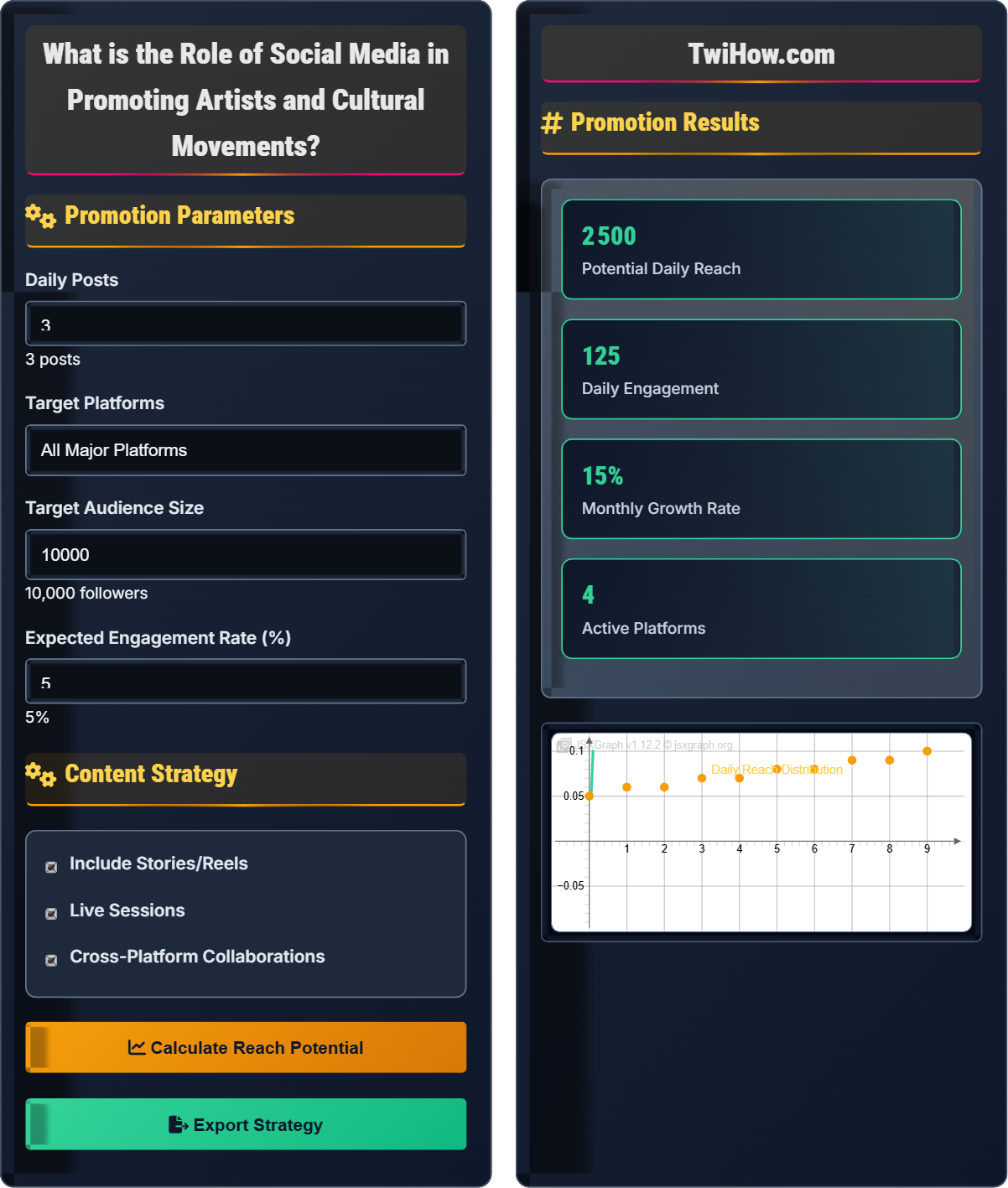
Promotion Parameters
Content Strategy
Promotion Results
| Platform | Reach | Engagement | Growth |
|---|---|---|---|
| 20K | 1K | 12% | |
| TikTok | 15K | 800 | 18% |
| YouTube | 10K | 500 | 8% |
| 5K | 200 | 5% |
Personalized Strategies
Based on your parameters:
- Create 3 daily posts across platforms with consistent messaging
- Focus on video content for maximum engagement
- Engage actively with your community within 2 hours of posting
- Use trending hashtags strategically without overuse
Social Media's Role in Cultural Promotion Explained
Social media has fundamentally transformed how artists connect with audiences, distribute content, and build careers. These platforms democratize access to cultural markets, allowing creators to reach global audiences without traditional gatekeepers like record labels, galleries, or publishers.
Social media amplification follows exponential growth patterns:
Where:
- Follower Base: Number of active followers
- Engagement Rate: Percentage of followers interacting with content
- Viral Multiplier: Amplification through shares and algorithmic distribution
Each platform serves different promotional purposes:
- Instagram: Visual storytelling, behind-the-scenes content, aesthetic presentation
- TikTok: Viral content, trend participation, short-form videos
- YouTube: Long-form content, tutorials, documentaries, music videos
- Twitter: Real-time updates, thought leadership, community building
- LinkedIn: Professional networking, industry insights, B2B connections
- Facebook: Community building, event promotion, older demographic reach
- Hashtag Campaigns: Unite conversations under memorable tags
- Visual Identity: Consistent imagery and symbols across platforms
- Storytelling: Share personal narratives that resonate with broader themes
- Collaborative Content: Partner with other artists and influencers
- Real-Time Documentation: Live coverage of events and developments
- Call-to-Action: Direct followers to participate in the movement
Social Media Platforms
Instagram, TikTok, YouTube, Twitter, Facebook, LinkedIn, Pinterest, Snapchat.
Engagement Strategies
Engagement Rate Calculator
Hashtag Generator
Cultural Movement Hashtags
Trending Topics
Success Metrics
Reach Analysis
Social Media & Cultural Promotion Learning Quiz
Which platform is most effective for promoting visual artists and their work?
Instagram is the most effective platform for visual artists due to its photo-centric design, visual discovery features, and engaged creative community. The platform's algorithm favors visual content, and features like Stories, Reels, and IGTV provide multiple formats for showcasing artwork.
The answer is B) Instagram.
Platform selection should align with content type and target audience. Visual artists benefit from Instagram's emphasis on imagery, built-in shopping features, and discoverability through hashtags. The platform's format naturally showcases visual work and facilitates direct sales through integrated commerce features.
Visual Content: Images, videos, and graphics that showcase artistic work
Algorithm Favorability: Platform prioritization of certain content types
Discoverability: Ease of finding content through search and recommendations
• Match content type to platform strengths
• Consider target audience demographics
• Evaluate monetization opportunities
• Use high-quality, well-lit photos
• Include behind-the-scenes content
• Engage with other artists in your niche
• Using text-heavy content on visual platforms
• Not optimizing for mobile viewing
• Ignoring platform-specific best practices
Explain the key elements that make content go viral on social media, particularly for cultural movements. Provide specific examples of successful viral campaigns.
Key Elements for Viral Content:
1. Emotional Resonance: Content that evokes strong emotions (joy, anger, inspiration) gets shared more frequently
2. Relatability: Audiences share content that reflects their values or experiences
3. Visual Impact: Eye-catching images or videos stop scrolling behavior
4. Simplicity: Clear, concise messages that are easily understood
5. Timing: Relevance to current events or trends
Successful Examples:
- #IceBucketChallenge raised awareness and funds for ALS research
- #MeToo created a global conversation about sexual harassment
- #BlackLivesMatter amplified voices and mobilized support for racial justice
Viral content combines emotional triggers with shareability factors. Cultural movements succeed when they tap into universal emotions while providing clear calls to action. The most successful campaigns simplify complex issues into shareable moments that others can easily participate in.
Virality: Rapid spread of content through sharing
Emotional Trigger: Content that provokes strong emotional responses
Shareability: Ease with which content can be distributed
• Emotions drive sharing behavior
• Simplicity enables rapid adoption
• Clear calls to action boost participation
• Create content that inspires action
• Use universal symbols and colors
• Make participation easy and low-effort
• Creating overly complex campaigns
• Failing to provide clear participation steps
• Not considering cultural sensitivities
An artist collective wants to launch a hashtag campaign to promote environmental consciousness in the art world. They have 5,000 followers across platforms and want to reach 100,000 people within 30 days. Calculate the required daily engagement rate and suggest a content strategy to achieve this goal.
Current Reach: 5,000 followers × 10 (average engagement multiplier) = 50,000
Target Reach: 100,000
Required Growth: 100% increase in reach
Daily Engagement Rate: To reach 100,000 in 30 days, they need approximately 3,333 daily impressions.
Content Strategy:
1. Daily Posts: 2-3 posts per day featuring eco-friendly art practices
2. Collaboration: Partner with 10 environmental organizations for cross-promotion
3. Challenge: Launch #EcoArtChallenge encouraging followers to create sustainable art
4. Storytelling: Share stories of artists using recycled materials
5. Live Events: Host weekly live sessions discussing environmental art
Hashtag campaign success depends on calculating realistic reach goals and developing content strategies that encourage participation. The key is to create shareable content that provides value to participants while advancing the campaign message.
Engagement Multiplier: Average number of people reached per follower
Impressions: Total views of content
Participation Rate: Percentage of audience engaging with campaign
• Set realistic reach targets
• Encourage user-generated content
• Track engagement metrics consistently
• Use trending topics strategically
• Create branded visual elements
• Engage with all campaign participants
• Setting unrealistic reach goals
• Not monitoring hashtag usage
• Failing to engage with participants
An emerging musician notices their engagement rate dropping on TikTok despite consistent posting. Their content receives fewer views and likes compared to similar artists. Analyze possible algorithm-related causes and propose optimization strategies.
Possible Causes:
1. Timing: Posts may not align with peak audience activity
2. Audio: Not using trending sounds or original music
3. Thumbnails: Low visual appeal in feed preview
4. Completion Rate: Videos too long or not engaging initially
5. Hashtags: Overuse or irrelevant tag selection
Optimization Strategies:
1. Test Timing: Post at different times to find optimal engagement windows
2. Sound Strategy: Use trending audio and create unique hooks
3. Thumbnail Design: Create eye-catching, high-contrast thumbnails
4. Hook Optimization: Capture attention within first 3 seconds
5. Hashtag Research: Use mix of popular and niche tags
Social media algorithms prioritize content that keeps users engaged. Understanding platform-specific algorithm factors helps optimize content for maximum reach. Success comes from balancing creative authenticity with algorithmic requirements.
Algorithm Factors: Metrics that influence content distribution
Completion Rate: Percentage of viewers watching full video
Engagement Velocity: Speed at which content accumulates interactions
• Algorithms favor engaging content
• Consistency improves algorithm performance
• Quality over quantity in posting
• Analyze competitors' successful content
• Test different content formats
• Engage with audience comments quickly
• Ignoring platform analytics
• Posting without understanding algorithm
• Not adapting to algorithm changes
Which metric best indicates the cultural impact of a social media campaign promoting a cultural movement?
User-generated content and participation best indicate cultural impact because they demonstrate that the movement has inspired others to create and share related content. This shows genuine adoption and integration into culture, rather than passive consumption.
The answer is B) User-generated content and participation.
Cultural impact extends beyond metrics like likes and follows to actual behavioral change and cultural adoption. When people create their own content inspired by a movement, it indicates genuine influence and potential for lasting cultural change.
User-Generated Content: Content created by audience members
Cultural Adoption: Integration of ideas into mainstream culture
Behavioral Change: Actions taken as result of cultural influence
• Engagement doesn't equal impact
• Cultural change takes time to measure
• Authentic participation matters most
• Track user-generated content creation
• Monitor mentions beyond official hashtags
• Look for offline manifestations
• Confusing engagement with cultural impact
• Not tracking organic participation
• Focusing only on quantitative metrics
FAQ
Q: How can I promote my art on social media without spending money on ads?
A: Organic growth is possible through strategic content creation:
1. Consistent Posting: Maintain a regular schedule to stay visible in feeds
2. Engage Authentically: Comment on other artists' posts and respond to your audience
3. Use Relevant Hashtags: Mix popular and niche tags to improve discoverability
4. Collaborate: Partner with other artists for cross-promotion
5. Share Process: Show your creative journey, not just finished pieces
6. Post at Peak Times: When your audience is most active
Quality content and genuine engagement often outperform paid advertising!
Q: What's the difference between social media activism and performative allyship?
A: The key difference lies in action versus appearance:
Social Media Activism: Combines online awareness with offline action, supports affected communities, and advocates for systemic change.
Performative Allyship: Focuses on appearance rather than impact, centers the ally rather than affected communities, and lacks sustained commitment.
Genuine activism includes listening to affected communities, donating resources, attending events, and advocating for policy changes beyond social media posts.