How do I support diverse and underrepresented voices in media?
Complete media inclusion guide • Step-by-step strategies
Media Inclusion Fundamentals:
Show Media Inclusion SimulatorSupporting diverse and underrepresented voices in media involves intentional actions by content creators, distributors, and consumers to ensure equitable representation across all forms of entertainment. This includes actively seeking out stories from marginalized communities, amplifying voices that have been historically excluded, and creating pathways for authentic storytelling.
Media inclusion encompasses multiple dimensions: racial and ethnic diversity, gender representation, LGBTQ+ visibility, disability representation, socioeconomic backgrounds, and cultural authenticity. It requires both systemic changes in industry practices and individual consumer choices.
Key strategies include:
- Consumption Choices: Actively watching, reading, and supporting diverse content
- Industry Support: Advocating for inclusive hiring and funding practices
- Platform Promotion: Sharing and recommending diverse voices
- Feedback Mechanisms: Providing constructive feedback to creators and platforms
Effective media inclusion creates more authentic, representative narratives that reflect the true diversity of our society while providing economic opportunities for underrepresented creators and performers.
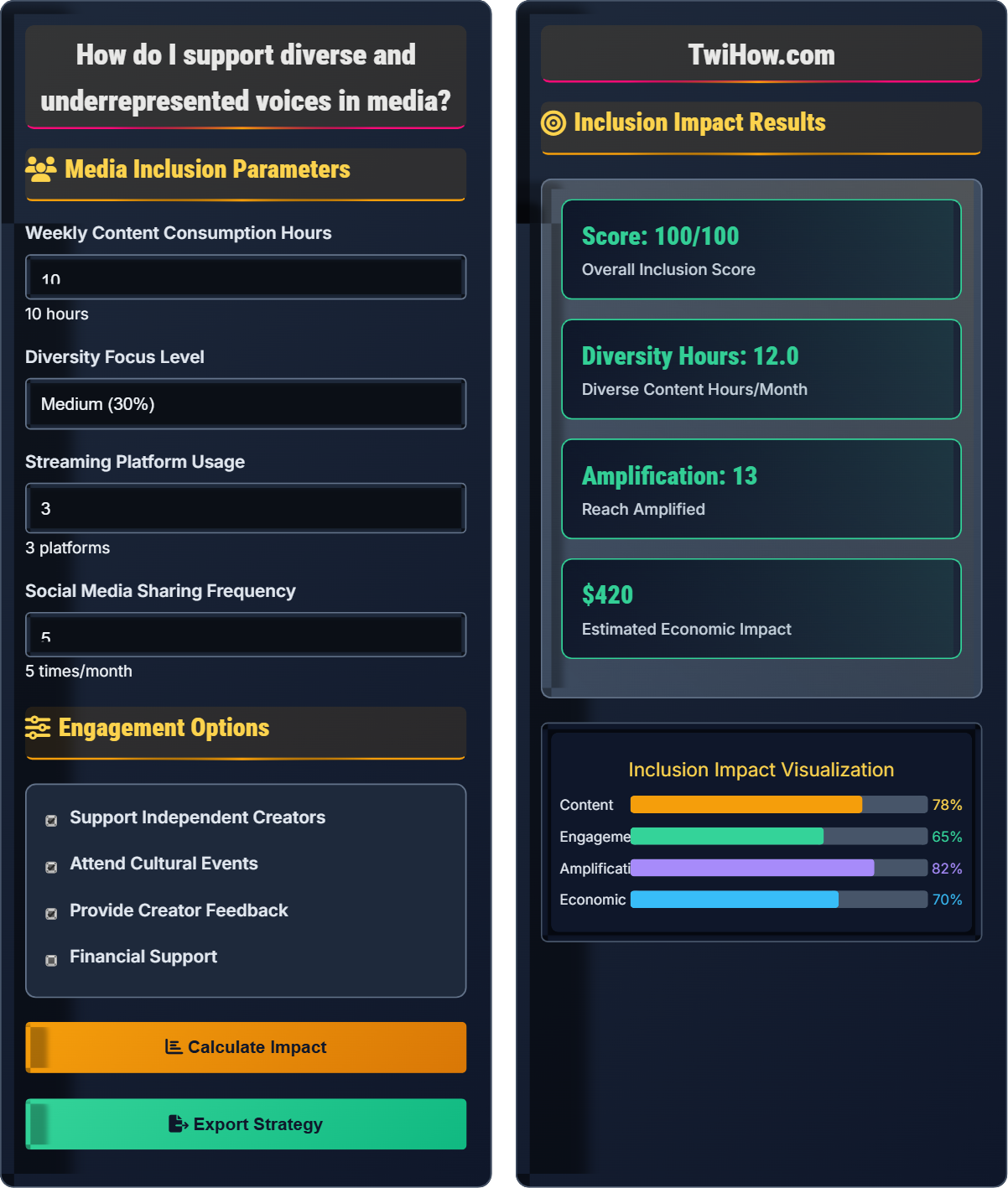
Media Inclusion Parameters
Engagement Options
Inclusion Impact Results
| Action | Impact | Frequency | Priority |
|---|---|---|---|
| Watch Diverse Content | High | Daily | 1 |
| Share on Social Media | Medium | Weekly | 2 |
| Support Indie Creators | High | Monthly | 3 |
| Provide Feedback | Medium | Weekly | 4 |
Impact Breakdown
Content Impact
Increased consumption of diverse content drives demand and funding for more inclusive projects.
Social Impact
Sharing and amplifying diverse voices increases visibility and reach.
Economic Impact
Direct financial support and increased viewership create sustainable revenue streams.
Community Impact
Building audiences for diverse content creates demand for more inclusive programming.
Media Inclusion Strategies Explained
Media inclusion is the active practice of supporting, promoting, and consuming content created by and featuring underrepresented voices in entertainment and media. This encompasses racial minorities, women, LGBTQ+ individuals, people with disabilities, and other marginalized communities who have historically been excluded from mainstream media representation.
Where:
- Consumption: Amount of diverse content consumed
- Amplification: Sharing and promotion activities
- Economic Support: Direct financial contributions
- Feedback: Constructive engagement with creators
Comprehensive media inclusion addresses multiple dimensions:
- Racial & Ethnic Diversity: Representation across all racial and ethnic groups
- Gender Representation: Equal opportunities for all genders
- LGBTQ+ Visibility: Authentic and respectful representation
- Disability Inclusion: Representation and accessibility
- Socioeconomic Backgrounds: Stories from diverse economic circumstances
- Cultural Authenticity: Respectful and accurate cultural representation
- Quality Over Quantity: Seek authentic, well-crafted content
- Behind-the-Scenes Support: Advocate for diverse creators and crew
- Ongoing Commitment: Make inclusion a consistent practice
- Constructive Feedback: Support growth through positive engagement
- Intersectional Approach: Recognize overlapping identities
- Platform Diversification: Explore various distribution channels
Inclusion Fundamentals
Diversity, representation, inclusion, equity, cultural authenticity, amplification, economic support.
Inclusion Impact = Consumption × Amplification × Economic Support × Feedback
Where Impact = measurable contribution to diverse media ecosystem.
- Authentic representation matters more than tokenism
- Sustainable support requires ongoing commitment
- Diverse perspectives enhance creativity and innovation
Practical Applications
Content consumption, social sharing, financial support, feedback provision, advocacy, community building.
- Assess current media consumption habits
- Identify and seek diverse content
- Provide financial support to creators
- Amplify voices through sharing
- Engage constructively with content
- Consistent action over time
- Quality engagement with content
- Systemic advocacy efforts
- Community building around inclusion
Media Inclusion Learning Quiz
Which of the following represents the most impactful way to support diverse and underrepresented voices in media?
While all options contribute to inclusion efforts, consistent consumption combined with financial support creates the most direct and measurable impact. Financial support provides sustainable revenue streams for diverse creators, while consistent consumption signals market demand to platforms and studios. This combination creates economic incentives for more diverse content creation.
The answer is B) Consistent consumption and financial support.
Understanding the economic drivers of media production helps prioritize the most effective support strategies. The entertainment industry operates on supply and demand dynamics—when audiences consistently consume and pay for diverse content, producers receive clear signals about market preferences. Financial support through subscriptions, purchases, or donations directly enables creators to continue producing content and invest in future projects.
Market Demand: Consumer behavior that signals interest in specific content types
Economic Sustainability: Revenue streams that enable continued content creation
Consumer Power: Audience influence through purchasing and consumption choices
• Financial support creates direct impact
• Consistency builds sustainable demand
• Consumption patterns drive industry decisions
• Subscribe to diverse creators' platforms
• Purchase content directly when possible
• Recommend quality diverse content to others
• Assuming awareness alone creates change
Explain how to measure the effectiveness of your support for diverse and underrepresented voices in media. What metrics matter most?
Quantitative Metrics: Track your consumption of diverse content (hours watched, books read, podcasts listened), frequency of sharing diverse content on social media, and amount spent supporting diverse creators. Monitor the growth of creators you support.
Qualitative Metrics: Assess the depth of engagement with diverse content, quality of feedback provided to creators, and influence on others' media consumption habits. Evaluate whether your support contributes to meaningful representation rather than tokenism.
Long-term Indicators: Observe changes in mainstream platform offerings, increased funding for diverse projects, and broader industry conversations about inclusion. The most important metrics are consistent consumption patterns and measurable financial support that creates sustainable opportunities for underrepresented creators.
Measuring impact requires both immediate behavioral tracking and long-term trend observation. Individual actions aggregate into market signals that influence industry decisions. The most effective measurement combines personal accountability (tracking your own actions) with systemic awareness (observing industry changes). Sustainable impact comes from consistent, measurable actions rather than occasional high-profile gestures.
Quantitative Metrics: Numerical measurements of support activities
Qualitative Metrics: Assessment of engagement quality and depth
Long-term Indicators: Systemic changes resulting from sustained efforts
• Combine quantitative and qualitative measures
• Focus on sustainability over short-term impact
• Track both personal actions and industry trends
• Keep a monthly log of diverse content consumption
• Set specific goals for supporting creators
• Join communities focused on media inclusion
• Measuring only personal feelings of satisfaction
• Focusing solely on consumption without financial support
• Neglecting to track consistency over time
You're a streaming platform subscriber who wants to maximize support for diverse and underrepresented voices in media. You currently spend 20 hours per week consuming content across 3 platforms. How would you redesign your consumption strategy to significantly increase support for underrepresented creators while maintaining entertainment value? Include specific tactics and expected outcomes.
Strategy Redesign: Allocate 40% of weekly consumption time (8 hours) specifically to diverse content, research platforms with strong commitments to inclusion, and prioritize content created by underrepresented groups. Use platform discovery features, follow diverse critics and reviewers, and join online communities focused on inclusive recommendations.
Specific Tactics: Dedicate specific days for diverse content exploration, set up separate watchlists for underrepresented creators, engage actively with diverse content through ratings and reviews, and share discoveries with friends and family. Consider subscribing to platforms that specifically focus on diverse voices.
Expected Outcomes: Increased exposure to authentic diverse narratives, stronger support for underrepresented creators, expanded personal perspective and cultural understanding, and measurable impact on platform algorithms that promote diverse content.
Redesigning media consumption requires strategic planning and intentional allocation of time and resources. The key is balancing purposeful inclusion efforts with genuine enjoyment—forcing oneself to consume content that isn't engaging won't create sustainable habits. Instead, the goal is to discover high-quality diverse content that provides both entertainment value and meaningful representation. This approach creates positive reinforcement cycles that encourage continued support.
Intentional Consumption: Deliberate selection of diverse content
Algorithm Influence: How viewing patterns affect platform recommendations
Sustainable Habits: Long-term practices that support inclusion
• Balance intentionality with enjoyment
• Use platform features to aid discovery
• Maintain consistency in support efforts
• Follow diverse critics and content curators
• Use platform "diverse voices" sections
• Join online communities for recommendations
• Forcing consumption of unenjoyable content
• Assuming all diverse content is equal in quality
• Neglecting to diversify platform usage
You've discovered an amazing independent film created by an underrepresented filmmaker. How would you develop a comprehensive amplification strategy to increase the film's visibility and economic success? Consider multiple channels, audience targeting, and potential partnerships.
Multi-Channel Approach: Share on all social media platforms with tailored messaging for each audience, write detailed reviews on IMDb and Letterboxd, recommend to friends and family across different demographics, and suggest to local theaters or film festivals for screening opportunities.
Audience Targeting: Identify communities likely to appreciate the film's themes and message, engage with cultural organizations that support diverse creators, and connect with other fans of similar films or creators. Create specific content highlighting the film's unique qualities and cultural significance.
Partnerships: Collaborate with book clubs, cultural centers, and advocacy groups that align with the film's themes. Reach out to local media outlets for potential coverage. Consider organizing group viewings or discussions to create buzz and demonstrate audience interest.
The comprehensive strategy combines organic sharing, strategic outreach, and community building to maximize the film's reach and economic impact.
Effective amplification requires understanding how information spreads through different networks and communities. The most successful amplification strategies leverage multiple touchpoints and create momentum through coordinated efforts. It's not enough to simply share content once—sustained, multi-channel promotion with authentic enthusiasm creates lasting impact. The key is matching the right message to the right audience while maintaining authenticity in recommendations.
Amplification: Increasing visibility and reach of content
Multi-Channel Strategy: Using various platforms and methods simultaneously
Community Building: Creating networks around shared interests
• Maintain authenticity in recommendations
• Use multiple channels for maximum reach
• Target relevant audiences for best response
• Create compelling content about the film
• Engage with the creator directly
• Build coalitions with other supporters
• One-time sharing without sustained effort
• Generic messaging that doesn't resonate
• Failing to engage with creator's community
Which of the following represents the most sustainable approach to supporting diverse and underrepresented voices in media?
Sustainable change requires consistent, long-term behavioral changes rather than sporadic efforts. Daily consumption and support habits create ongoing market demand and provide stable revenue streams for diverse creators. While awareness campaigns and criticism have value, they don't create the economic incentives necessary for systemic change. Consistent habits also help normalize diverse content consumption and reduce barriers to entry for new audiences.
The answer is B) Consistent daily consumption and support habits.
Systemic change in media requires shifts in consumer behavior that become normalized over time. One-time actions, while valuable, don't create the sustained market pressure needed for industry transformation. Consistent habits create compound effects—small daily actions accumulate into significant market influence. This approach also builds personal capacity for engagement and reduces the burden of having to remember to take action during specific campaigns or events.
Systemic Change: Fundamental transformation of industry practices
Compound Effects: Small actions accumulating into significant impact
Market Normalization: Making inclusive practices standard
• Consistency creates sustainable impact
• Daily habits compound over time
• Normalization requires ongoing effort
• Integrate inclusion into regular routines
• Set up automatic discovery of diverse content
• Build accountability systems with others
• Relying on campaign-based activism only
• Expecting immediate results from efforts
• Focusing on symbolic actions over practical ones
FAQ
Q: How can I find quality content from underrepresented creators without spending countless hours searching?
A: There are several efficient strategies for discovering quality diverse content:
1. Follow Curated Sources: Subscribe to newsletters and websites that specialize in highlighting diverse creators (like Remezcla, Colorlines, or Autostraddle)
2. Use Platform Features: Many platforms now have "voices and viewpoints" sections or diversity-focused categories
3. Join Communities: Online communities like Goodreads lists, Reddit forums, or Discord servers focused on diverse content
4. Follow Critics: Literary and entertainment critics who specialize in diverse voices
5. Set Up Alerts: Use Google Alerts for keywords related to your interests and diversity
These approaches help you discover quality content efficiently while building ongoing discovery habits.
Q: What's the difference between supporting diverse content and practicing tokenism?
A: The key differences lie in intention, depth, and sustainability:
Supporting Diversity: Involves genuine appreciation for diverse perspectives, consistent engagement with quality content, financial support for creators, and advocacy for systemic change. It seeks to address historical inequities and create sustainable opportunities.
Tokenism: Involves surface-level acknowledgment without meaningful commitment, often driven by public relations rather than genuine support, and typically focuses on appearance rather than substantive change. Tokenistic efforts are often inconsistent and fail to address underlying structural issues.
Genuine support involves ongoing engagement, quality assessment, and systemic advocacy, while tokenism tends to be performative and temporary.
Q: How can I ensure the diverse content I'm supporting is authentic and respectful?
A: Evaluating authenticity involves several key considerations:
1. Creator Identity: Research whether the content is created by members of the communities it represents
2. Community Response: Check reactions from community members and advocacy groups
3. Consultation Practices: Look for evidence of consultation with community representatives
4. Narrative Complexity: Authentic content typically presents nuanced, multifaceted portrayals rather than stereotypes
5. Behind-the-Scenes Diversity: Consider the diversity of the production team and decision-makers
6. Ongoing Dialogue: Authentic creators often engage in ongoing dialogue with their communities
Truly authentic content demonstrates deep understanding and respect for the communities it represents.