Best Foods for Health?
Complete health guide • Step-by-step explanations
Healthiest Foods Guide:
Discover Your FoodsThe best foods for health are nutrient-dense, whole foods that provide essential vitamins, minerals, antioxidants, and other beneficial compounds. These foods support immune function, reduce inflammation, promote longevity, and prevent chronic diseases. A diet rich in these foods can significantly improve overall health, energy levels, and quality of life.
Key categories of health-promoting foods:
- Antioxidant-Rich: Berries, leafy greens, nuts
- Omega-3 Sources: Fatty fish, walnuts, flaxseeds
- Fiber-Rich: Whole grains, legumes, vegetables
- Anti-Inflammatory: Turmeric, ginger, green tea
- Probiotic: Fermented foods, yogurt, kefir
- Phytonutrient Dense: Colorful fruits and vegetables
Choosing the right foods can optimize nutrition, support the immune system, and reduce the risk of numerous chronic diseases.
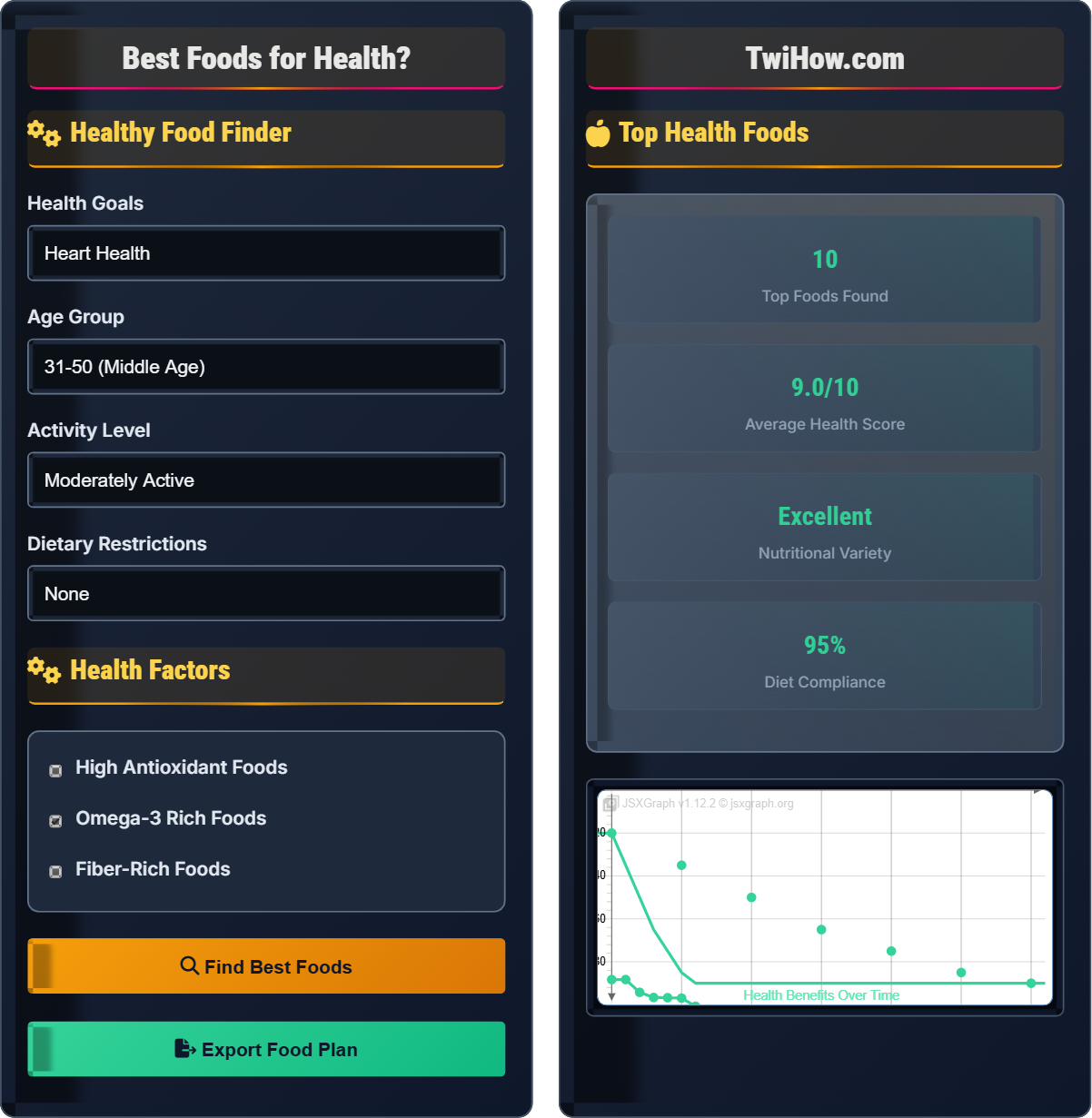
Healthy Food Finder
Health Factors
Top Health Foods
Omega-3 rich foods like salmon, nuts, and seeds support cardiovascular health and reduce inflammation.
Antioxidant-rich foods like berries, dark chocolate, and leafy greens support cognitive function.
Vitamin C-rich foods like citrus, berries, and leafy greens strengthen immune function.
Healthiest Foods Explained
Healthy foods are those that provide essential nutrients while being low in harmful substances. They are typically whole, unprocessed foods that contain high concentrations of vitamins, minerals, antioxidants, fiber, and beneficial compounds. These foods support optimal bodily functions, reduce inflammation, and help prevent chronic diseases.
The healthiest foods are nutrient-dense, meaning they provide more nutrients per calorie.
Where:
- Essential Nutrients: Vitamins, minerals, antioxidants, fiber
- ORAC: Oxygen Radical Absorbance Capacity
- Calories: Energy content per serving
Benefits of consuming the healthiest foods:
- Reduced Inflammation: Antioxidants combat free radicals
- Improved Heart Health: Omega-3s and fiber support cardiovascular function
- Enhanced Brain Function: Nutrients support cognitive health
- Stronger Immunity: Vitamins and minerals boost immune response
- Better Digestion: Fiber supports gut health
- Longevity: Nutrient-dense foods promote healthy aging
- Antioxidant-Rich: Berries, dark chocolate, green tea
- Omega-3 Sources: Fatty fish, walnuts, chia seeds
- Fiber-Rich: Legumes, whole grains, vegetables
- Probiotic: Yogurt, kefir, fermented vegetables
- Detoxifying: Cruciferous vegetables, garlic, onions
- Anti-Inflammatory: Turmeric, ginger, fatty fish
Nutrition Essentials
Antioxidants, omega-3s, fiber, vitamins, minerals, probiotics, phytonutrients.
Nutrient Density = (Essential Nutrients / Calories) × 100
Higher values indicate more nutritious foods.
- Choose whole foods over processed
- Eat variety of colors
- Include omega-3 sources
- Focus on fiber-rich foods
Implementation Guide
Assessment, planning, shopping, preparation, monitoring.
- Assess current diet
- Identify nutrient gaps
- Plan healthy meals
- Shop for whole foods
- Read food labels
- Prepare meals at home
- Include variety
- Stay hydrated
Healthy Foods Learning Quiz
Which of the following foods has the highest antioxidant content per serving?
Dark chocolate has one of the highest antioxidant contents of any food, with an ORAC (Oxygen Radical Absorbance Capacity) value of over 20,000 per 100g. This is significantly higher than blueberries (9,019), kale (1,770), and green tea (2,900). The antioxidants in dark chocolate, particularly flavonoids, provide cardiovascular benefits and anti-inflammatory effects.
The answer is B) Dark Chocolate.
Antioxidants protect cells from damage caused by free radicals. ORAC values measure the antioxidant capacity of foods. Dark chocolate's high antioxidant content comes from cocoa flavonoids, which are preserved in dark chocolate with high cocoa content (70%+). However, portion control is important due to calories and sugar content.
ORAC: Oxygen Radical Absorbance Capacity
Antioxidants: Compounds that neutralize free radicals
Flavonoids: Plant compounds with antioxidant properties
• Choose dark chocolate with 70%+ cocoa
• Moderate portions (1-2 squares)
• Balance with other antioxidants
• Include a variety of colorful foods
• Eat berries daily
• Add spices like turmeric
• Thinking only berries are antioxidants
• Overconsuming high-calorie sources
• Not including variety
Explain the different types of omega-3 fatty acids, their sources, and the health benefits of each. Include recommendations for daily intake and the best food sources.
Types of Omega-3s:
• ALA (Alpha-linolenic acid): Plant-based, found in flaxseeds, chia seeds, walnuts
• EPA (Eicosapentaenoic acid): Marine-based, found in fatty fish, algae
• DHA (Docosahexaenoic acid): Marine-based, crucial for brain development
Health Benefits:
• EPA: Anti-inflammatory, cardiovascular support
• DHA: Brain function, eye health, fetal development
• ALA: Precursor to EPA/DHA (limited conversion)
Recommendations: 250-500mg EPA+DHA daily, 1.6g ALA for men, 1.1g for women.
Best Sources: Salmon, sardines, mackerel, walnuts, flaxseeds, chia seeds.
Omega-3 fatty acids are essential fats that the body cannot produce in sufficient quantities. EPA and DHA are more bioavailable than ALA from plants. The conversion of ALA to EPA/DHA is inefficient (2-10%), so marine sources are preferred for optimal benefits. Omega-3s support brain health, reduce inflammation, and improve cardiovascular function.
Omega-3: Essential fatty acids
EPA: Eicosapentaenoic acid
DHA: Docosahexaenoic acid
• 250-500mg EPA+DHA daily
• Include marine sources regularly
• Balance with omega-6s
• Eat fatty fish twice weekly
• Add ground flax to meals
• Store nuts in refrigerator
• Relying only on plant sources
• Not storing properly
• Confusing omega-3 with omega-6
A person currently consumes 10 grams of fiber daily but needs to reach the recommended 25-35 grams for optimal digestive and cardiovascular health. Calculate how many additional servings of high-fiber foods (like beans, lentils, or bran cereal) providing 5-8 grams of fiber each would be needed to reach the target. Also determine the percentage increase required.
Calculate Required Fiber:
Current intake: 10g
Target intake: 25-35g (let's use 30g average)
Additional fiber needed: 30 - 10 = 20g
Calculate Servings Needed:
High-fiber food: 5-8g per serving
Using 6g average per serving: 20g ÷ 6g = 3.33 servings
Rounding up: 4 servings daily
Calculate Percentage Increase:
Percentage increase: (20 ÷ 10) × 100% = 200%
Gradual Implementation:
Add 1-2g of fiber per day to avoid digestive discomfort
The person needs approximately 4 additional high-fiber servings daily for a 200% increase in fiber intake.
This calculation demonstrates the significant increase needed to meet fiber recommendations. The 200% increase highlights why gradual implementation is crucial. The gut microbiome needs time to adapt to increased fiber, and rushing can cause gas, bloating, and digestive discomfort. Proper hydration is also important when increasing fiber intake.
Soluble Fiber: Dissolves in water, feeds bacteria
Insoluble Fiber: Adds bulk to stool
Prebiotics: Fiber that feeds beneficial bacteria
• Increase gradually
• Drink more water
• Mix fiber types
• Add 2-4g weekly
• Include variety of sources
• Drink plenty of water
• Increasing too quickly
• Not drinking enough water
• Only focusing on one type
Explain how combining certain foods can enhance nutrient absorption and health benefits. Provide specific examples of beneficial food combinations and the mechanisms behind their synergistic effects.
Food Synergy Examples:
1. Vitamin C + Iron: Adding lemon juice to spinach increases non-heme iron absorption by 3-4x
2. Fat + Fat-Soluble Vitamins: Eating avocado with salad increases carotenoid absorption
3. Allium + Cruciferous: Garlic with broccoli enhances sulforaphane formation
4. Tomato + Olive Oil: Lycopene absorption increases significantly
Mechanisms:
• Enhanced Absorption: Certain compounds improve nutrient uptake
• Antioxidant Synergy: Combined antioxidants work better than alone
• Enzyme Activation: Foods activate beneficial enzymes
• Anti-Nutrient Reduction: Combining foods reduces inhibitors
These synergistic effects demonstrate why whole foods are superior to isolated supplements.
Food synergy refers to the enhanced health benefits that occur when foods are eaten together rather than separately. This concept supports the idea that whole foods provide benefits beyond individual nutrients. The interactions between compounds in different foods can enhance absorption, increase bioavailability, and create new beneficial compounds that wouldn't exist otherwise.
Synergy: Combined effect greater than sum of parts
Bioavailability: Amount absorbed and utilized
Antioxidant: Compound that neutralizes free radicals
• Combine complementary foods
• Eat varied meals
• Include healthy fats
• Add citrus to iron-rich foods
• Include healthy fats with vegetables
• Eat rainbow-colored foods
• Not considering absorption
• Eating nutrients in isolation
• Missing synergistic combinations
Which phytonutrient gives tomatoes their red color and provides cardiovascular benefits?
Lycopene is the carotenoid pigment that gives tomatoes their distinctive red color. It's a powerful antioxidant that has been extensively studied for its cardiovascular benefits, including reducing LDL cholesterol oxidation and supporting arterial health. Lycopene is fat-soluble and its bioavailability increases when tomatoes are cooked or consumed with healthy fats.
The answer is B) Lycopene.
Phytonutrients are bioactive compounds found in plants that provide health benefits beyond basic nutrition. Lycopene is concentrated in the skin of tomatoes and is more bioavailable in processed tomato products like sauce and paste. This demonstrates how food preparation can affect nutrient availability. Phytonutrients work synergistically with vitamins and minerals to provide protective health effects.
Phytonutrients: Plant compounds with health benefits
Carotenoids: Pigments with antioxidant properties
Bioavailability: Amount absorbed and utilized
• Eat colorful foods
• Include variety
• Consider preparation methods
• Eat cooked tomatoes with olive oil
• Include different colored vegetables
• Choose organic when possible
• Only eating raw vegetables
• Not considering variety
• Ignoring preparation effects
FAQ
Q: What's the difference between superfoods and regular healthy foods?
A: Superfoods are marketing terms for foods with exceptional nutrient density or high concentrations of specific beneficial compounds. However, all whole, unprocessed foods provide health benefits. The key is variety and consistency:
• Superfoods: Higher concentrations of specific nutrients (blueberries, kale, quinoa)
• Regular healthy foods: Still provide essential nutrients (apples, carrots, oats)
Focus on a diverse diet of whole foods rather than relying on specific "superfoods." The most important factor is eating a variety of colorful, nutrient-dense foods consistently.
Q: How should I store healthy foods to preserve their nutrients?
A: Proper storage preserves nutrient content:
• Fresh Produce: Store in refrigerator crisper drawers, avoid washing until use
• Leafy Greens: Wrap in paper towels, store in sealed containers
• Nuts & Seeds: Refrigerate or freeze to prevent rancidity
• Herbs: Store like flowers in water, refrigerate
• Omega-3 Foods: Protect from light and air, consume quickly
• Whole Grains: Store in cool, dry places in airtight containers
Minimize exposure to light, heat, and oxygen to preserve vitamins and antioxidants.
Q: Can I get all essential nutrients on a plant-based diet?
A: Yes, a well-planned plant-based diet can provide all essential nutrients. Focus on:
• Protein: Legumes, quinoa, hemp seeds, soy products
• Vitamin B12: Fortified foods or supplements
• Iron: Legumes, dark leafy greens, paired with vitamin C
• Omega-3s: Flaxseeds, chia seeds, walnuts, algae oil
• Vitamin D: Sun exposure or supplements
• Zinc: Legumes, nuts, seeds (soak to improve absorption)
Plan meals carefully and consider supplements for B12, vitamin D, and potentially omega-3s.