How to Detox Body?
Complete health guide • Step-by-step explanations
Body Detox Guide:
Assess Your Toxin LoadBody detoxification is the process of supporting the body's natural elimination systems to remove toxins and waste products. The body has sophisticated detoxification mechanisms, primarily through the liver, kidneys, lungs, skin, and colon. Supporting these systems with proper nutrition, hydration, and lifestyle choices can enhance the body's natural detoxification processes.
Primary detoxification organs:
- Liver: Primary detoxification organ
- Kidneys: Filter waste from blood
- Lungs: Expel gaseous toxins
- Skin: Eliminate toxins through sweat
- Colon: Eliminate solid waste
True detoxification focuses on supporting the body's natural processes rather than extreme cleanses that can be harmful.
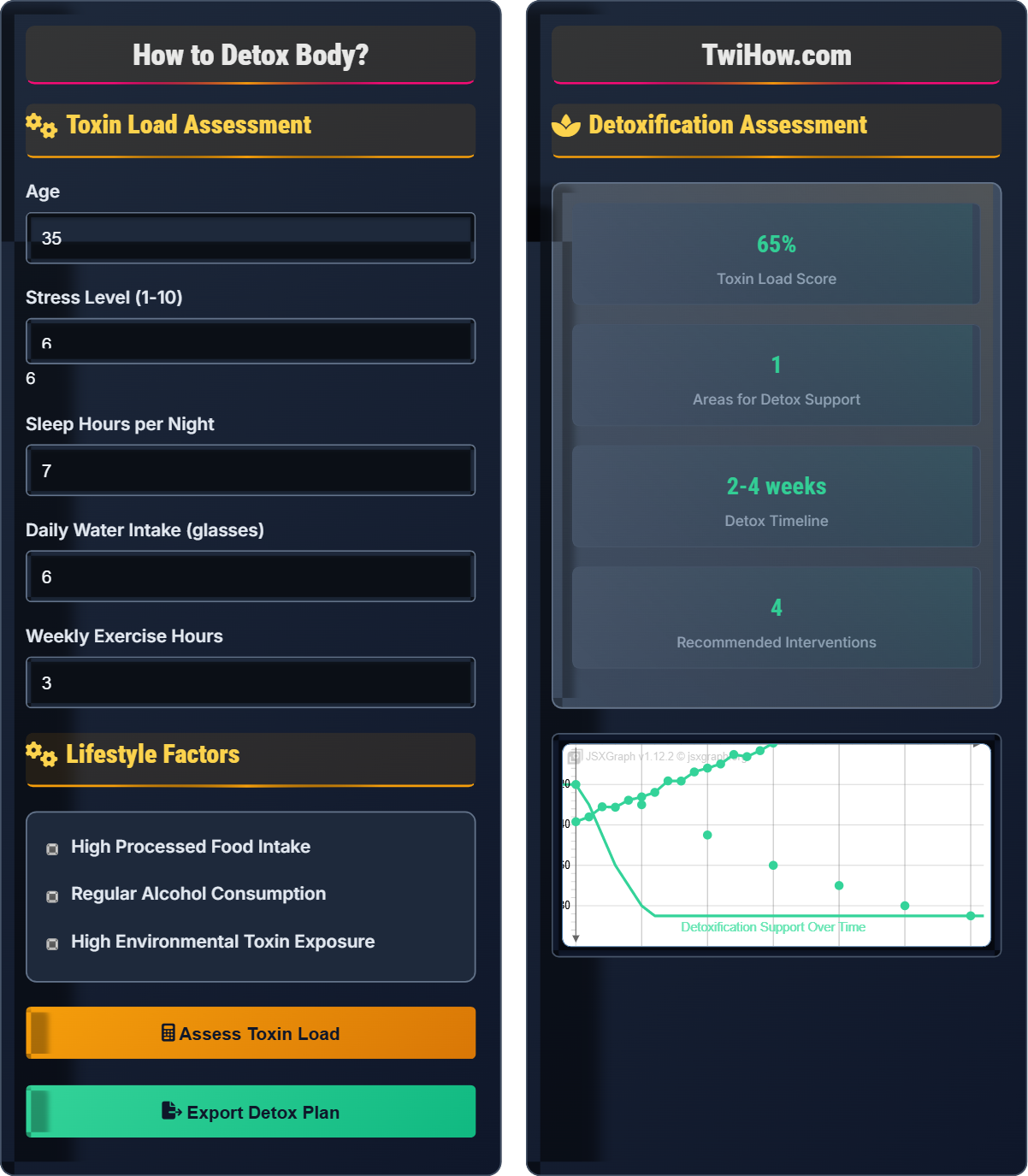
Toxin Load Assessment
Lifestyle Factors
Detoxification Assessment
Focus on whole, unprocessed foods: cruciferous vegetables, berries, garlic, green tea, and herbs that support liver function
Regular movement promotes circulation, sweating, and lymphatic drainage
Reduce environmental toxin exposure, manage stress, optimize sleep, and stay hydrated
Body Detoxification Explained
Body detoxification is the process of supporting the body's natural elimination systems to remove toxins and waste products. The human body has sophisticated detoxification mechanisms primarily handled by the liver, kidneys, lungs, skin, and colon. Rather than relying on extreme cleanses, true detoxification focuses on supporting these natural processes through proper nutrition, hydration, and lifestyle choices.
Detoxification is a continuous process that occurs naturally in the body.
Where:
- Toxin Elimination: Rate of toxin removal by organs
- Toxin Exposure: Daily toxin intake from environment
- Enzyme Activity: Function of detoxifying enzymes
Toxins that can burden the body's systems:
- Environmental: Air pollution, pesticides, heavy metals
- Dietary: Processed foods, additives, preservatives
- Lifestyle: Alcohol, tobacco, medications
- Internal: Metabolic waste, free radicals
- Industrial: Chemicals, solvents, plastics
- Biological: Bacterial toxins, fungal toxins
- Antioxidants: Neutralize free radicals
- Sulfur Compounds: Support liver enzymes
- Hydration: Facilitate elimination
- Fiber: Bind toxins in the gut
- Probiotics: Support gut health
- Sleep: Enable cellular repair
Detox Support Methods
Hydration, nutrition, exercise, sleep, stress management, environmental reduction.
Efficiency = (Toxin Elimination / Toxin Exposure) × 100%
Goal: Increase numerator, decrease denominator.
- Support natural detox pathways
- Reduce toxin exposure
- Maintain proper hydration
- Eat nutrient-dense foods
Implementation Guide
Assessment, planning, dietary changes, lifestyle modifications, monitoring.
- Assess current toxin load
- Identify improvement areas
- Develop support plan
- Monitor progress regularly
- Eat organic when possible
- Drink filtered water
- Use natural cleaning products
- Exercise regularly
Detox Knowledge Learning Quiz
Which phase of liver detoxification makes toxins more water-soluble for elimination?
Phase II of liver detoxification involves conjugation reactions that make toxins more water-soluble for elimination. Phase I primarily oxidizes, reduces, or hydrolyzes toxins, which can sometimes create more reactive intermediates. Phase II then conjugates these intermediates with compounds like glutathione, sulfate, or glycine to make them water-soluble for excretion by the kidneys.
The answer is B) Phase II only.
The liver detoxification process occurs in two main phases. Phase I enzymes (like cytochrome P450) make toxins more reactive but not necessarily more eliminable. Phase II enzymes conjugate these reactive intermediates with water-soluble compounds, making them ready for excretion. Both phases are important, but Phase II is crucial for actual elimination.
Phase I: Oxidation/reduction/hydrolysis
Phase II: Conjugation for elimination
Glutathione: Major detoxifying compound
• Both phases are necessary
• Phase II makes toxins eliminable
• Nutrients support both phases
• Eat sulfur-rich foods (cruciferous)
• Include antioxidants
• Support with B vitamins
• Thinking only Phase I matters
• Not supporting Phase II
• Confusing the phases
Explain how cruciferous vegetables support liver detoxification, including the specific compounds involved, their mechanisms of action, and the health benefits of including these foods in a detoxification protocol.
Compounds in Cruciferous Vegetables:
• Glucosinolates: Sulfur-containing compounds
• Indole-3-carbinol: Supports estrogen metabolism
• Sulforaphane: Potent detox enzyme activator
Mechanisms:
1. Phase II Enzyme Induction: Activate GST, UGT, and other enzymes
2. Antioxidant Support: Boost glutathione levels
3. Anti-inflammatory: Reduce oxidative stress
4. Estrogen Metabolism: Promote healthier estrogen pathways
Health Benefits: Enhanced detoxification, reduced cancer risk, improved liver function, anti-inflammatory effects.
Cruciferous vegetables are powerful supporters of Phase II detoxification. When these vegetables are chopped or chewed, the enzyme myrosinase converts glucosinolates to active compounds like sulforaphane. These compounds activate transcription factors like Nrf2, which turn on genes encoding detoxifying enzymes. This is a prime example of how whole foods provide multiple synergistic benefits.
Glucosinolates: Sulfur compounds in cruciferous veggies
Sulforaphane: Detox enzyme activator
Nrf2: Transcription factor for detox genes
• Eat fresh, raw for maximum compounds
• Include variety of cruciferous
• Steam lightly if cooking
• Eat 2-3 servings daily
• Chew thoroughly to activate compounds
• Add mustard seed for myrosinase
• Overcooking destroys compounds
• Not eating enough variety
• Relying only on supplements
An individual weighs 70 kg and is moderately active. Calculate their daily water needs for optimal detoxification support. Also determine how much additional water they would need during a detoxification protocol, and explain why hydration is crucial for detoxification.
Basic Water Needs:
Standard recommendation: 30-35ml per kg body weight
70kg × 30ml = 2,100ml (2.1 liters)
70kg × 35ml = 2,450ml (2.45 liters)
Range: 2.1-2.45 liters daily
Additional for Detox:
Plus 25-50% more: 0.5-1.2 liters
Total: 2.6-3.6 liters daily
Importance for Detox:
1. Kidney Function: Filters toxins from blood
2. Transport: Carries toxins to elimination organs
3. Phase II: Required for water-soluble compound formation
4. Sweating: Elimination through skin
5. Metabolism: Supports all biochemical reactions
For optimal detoxification, this individual should aim for 2.6-3.6 liters of water daily.
Water is essential for all detoxification processes. The kidneys filter about 180 liters of blood daily, requiring adequate hydration to function optimally. Water-soluble toxins can only be eliminated when properly hydrated. Additionally, many Phase II detoxification reactions require water as a substrate. Dehydration can significantly impair detoxification capacity.
Glomerular Filtration: Kidney filtering process
Water-Soluble: Toxins that dissolve in water
Substrate: Substance acted upon by enzymes
• 30-35ml per kg body weight
• More during detox protocols
• Monitor urine color
• Start with 8 glasses daily
• Add lemon for alkalinity
• Drink before meals
• Not drinking enough water
• Waiting until thirsty
• Counting caffeine as water
Explain how dietary fiber supports detoxification, including the mechanisms of action, types of fiber that are most beneficial, and how fiber interacts with other detoxification processes. Include specific foods that are high in detox-supporting fiber.
Mechanisms of Fiber in Detox:
1. Bile Binding: Soluble fiber binds bile acids, promoting cholesterol conversion
2. Toxin Binding: Binds toxins in the gut to prevent reabsorption
3. Microbiome Support: Feeds beneficial bacteria that support detox
4. Regular Elimination: Ensures timely waste removal
Beneficial Fiber Types:
• Soluble: Psyllium, oats, apples (binds toxins)
• Insoluble: Whole grains, vegetables (adds bulk)
• Prebiotic: Jerusalem artichoke, garlic, onions (feeds bacteria)
High-Fiber Detox Foods: Chia seeds, flaxseeds, berries, leafy greens, legumes.
Fiber works synergistically with other detox processes by ensuring toxins aren't reabsorbed from the gut.
Fiber plays a crucial role in the final step of detoxification by preventing enterohepatic circulation, where toxins are reabsorbed from the intestines. Without adequate fiber, conjugated toxins can be broken down by gut bacteria and reabsorbed, defeating the purpose of liver detoxification. This is why fiber is considered essential for complete detoxification.
Enterohepatic Circulation: Toxin recycling between liver and gut
Conjugation: Making toxins water-soluble
Prebiotic: Fiber that feeds beneficial bacteria
• 25-35g fiber daily
• Include both types
• Gradual increase to avoid gas
• Soak seeds overnight
• Include variety of sources
• Drink more water with fiber
• Not increasing water with fiber
• Only focusing on one type
• Too much too quickly
Which antioxidant is most important for Phase II detoxification and is often depleted during detoxification processes?
Glutathione is the most important antioxidant for Phase II detoxification. It's a tripeptide that serves as a cofactor for glutathione S-transferases (GSTs), which are key Phase II enzymes that conjugate toxins with glutathione for elimination. Glutathione is often depleted during detoxification processes, making its support crucial for optimal detox function.
The answer is B) Glutathione.
Glutathione is known as the "master antioxidant" because it's essential for Phase II detoxification and is recycled by the body. It's used by multiple detox pathways and is particularly important for neutralizing reactive intermediates produced in Phase I. Supporting glutathione levels through diet (sulfur foods) or precursors (NAC) is crucial for effective detoxification.
Glutathione: Master antioxidant and detox cofactor
GST: Glutathione S-transferase enzyme
Tripeptide: Three amino acids linked together
• Glutathione supports Phase II
• Can be depleted during detox
• Support with sulfur foods
• Eat sulfur-rich foods
• Include selenium for recycling
• Consider precursors if needed
• Not supporting glutathione during detox
• Confusing antioxidants
• Forgetting cofactors
FAQ
Q: Do I need to do a special detox diet or cleanse?
A: The body has sophisticated natural detoxification systems that work continuously. Extreme detox diets can be unnecessary and potentially harmful. Instead, focus on supporting these natural processes:
• Hydration: Adequate water intake
• Nutrition: Whole, nutrient-dense foods
• Sleep: 7-9 hours for cellular repair
• Exercise: Promotes circulation and sweating
• Stress Management: Reduces inflammatory burden
Gradual lifestyle changes are more sustainable and effective than extreme cleanses.
Q: How long does it take to see results from detox support?
A: Detoxification results vary by individual:
• Immediate (1-3 days): Improved energy, better digestion
• Short-term (1-2 weeks):strong> Clearer skin, mental clarity
• Medium-term (2-4 weeks): Better sleep, improved immunity
• Long-term (1-3 months):strong> Hormonal balance, weight management
Consistency is more important than intensity. Sustainable changes provide lasting benefits.
Q: How does age affect detoxification ability?
A: Aging affects detoxification in several ways:
• Reduced Liver Function: Slower enzyme activity
• Decreased Kidney Function: Reduced filtration capacity
• Lower Antioxidant Levels: Less protection against toxins
• Slower Metabolism: Longer processing times
• Medication Interactions: Multiple drugs affect detox
Older adults may need more targeted support through nutrition and lifestyle modifications.