How to Improve Digestion?
Complete health guide • Step-by-step explanations
Digestive Health Guide:
Assess Your DigestionDigestion is the process by which food is broken down in the gastrointestinal tract to be absorbed into the bloodstream. Proper digestion is essential for nutrient absorption, immune function, and overall health. The digestive system includes the mouth, esophagus, stomach, small intestine, large intestine, and accessory organs like the liver and pancreas.
Key components of healthy digestion:
- Enzymes: Break down food into absorbable components
- Stomach Acid: Aids protein digestion and kills pathogens
- Probiotics: Beneficial bacteria in the gut
- Prebiotics: Fiber that feeds beneficial bacteria
- Hydrochloric Acid: Optimal pH for digestion
- Peristalsis: Wave-like muscle contractions
Improving digestion can alleviate bloating, gas, constipation, and other digestive discomforts while enhancing nutrient absorption and overall well-being.
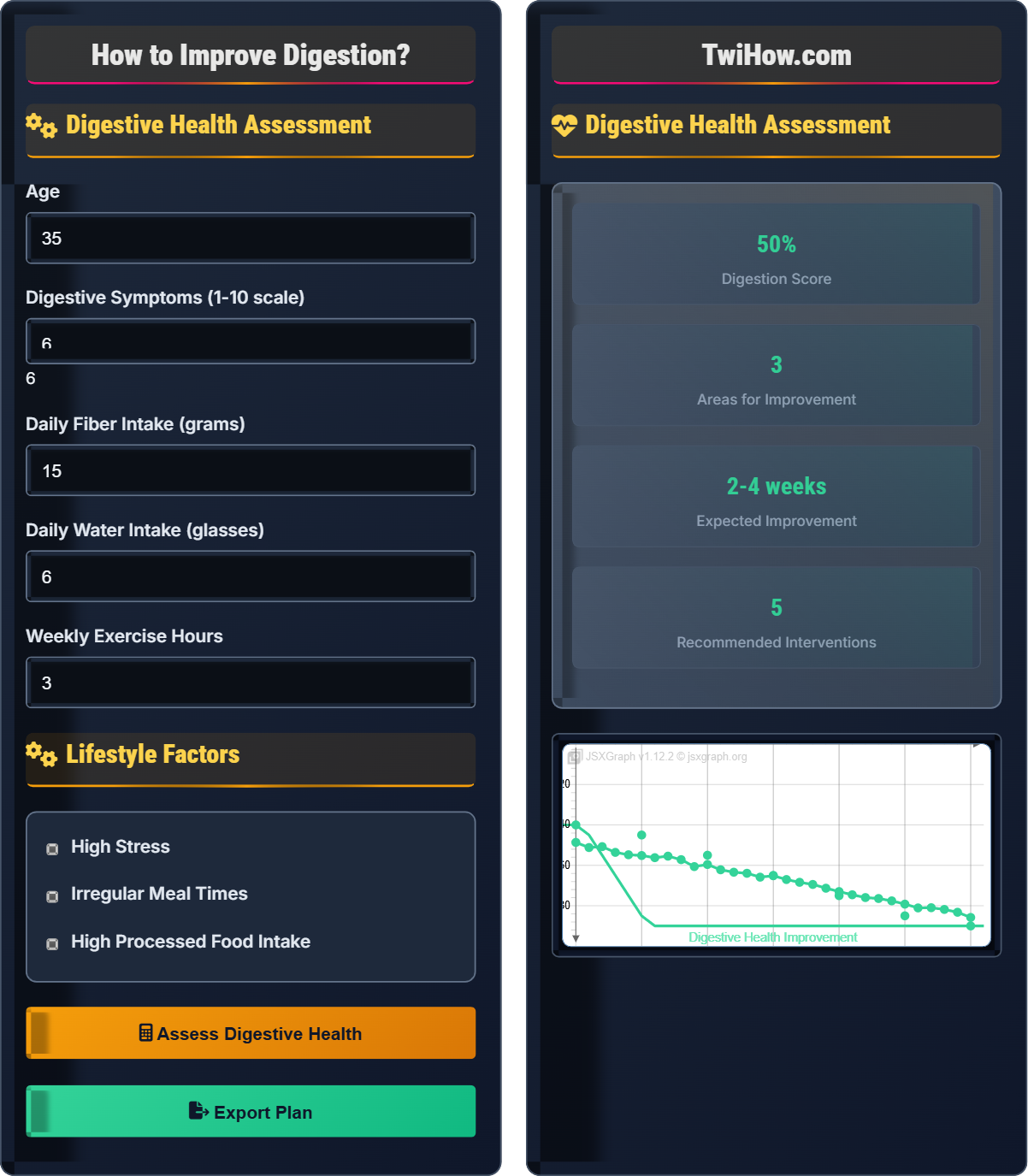
Digestive Health Assessment
Lifestyle Factors
Digestive Health Assessment
Follow anti-inflammatory diet: fermented foods, fiber-rich vegetables, lean proteins, and healthy fats
Regular movement promotes gut motility and digestive health
Manage stress, maintain regular sleep, avoid late-night eating
Digestive Health Explained
Digestion is the process by which food and drink are broken down into smaller molecules that can be absorbed and assimilated by the body. This complex process involves mechanical and chemical breakdown of food, nutrient absorption, and waste elimination. The digestive system includes the mouth, esophagus, stomach, small intestine, large intestine, and accessory organs like the liver, pancreas, and gallbladder.
Optimal digestion is crucial for nutrient absorption, immune function, and overall health.
Where:
- Nutrients Absorbed: Bioavailable nutrients entering bloodstream
- Gastric Motility: Rate of stomach emptying
- Enzyme Activity: Efficiency of digestive enzymes
Issues that can impair digestion:
- Low Stomach Acid: Poor protein digestion, bacterial overgrowth
- Enzyme Deficiency: Incomplete food breakdown
- Dysbiosis: Imbalanced gut bacteria
- Leaky Gut: Compromised intestinal barrier
- Constipation: Slow transit time
- Food Intolerances: Inflammatory responses to certain foods
- Age: Digestive function declines with age
- Stress: Inhibits digestive enzyme production
- Medications: Antibiotics, PPIs affect gut health
- Sleep: Affects gut microbiome composition
- Hydration: Essential for digestive secretions
- Exercise: Promotes healthy gut motility
Digestive Health Components
Stomach acid, enzymes, microbiome, peristalsis, barrier function.
Efficiency = (Absorbed Nutrients / Consumed Nutrients) × 100%
Optimal efficiency: 80-90%
- Maintain proper pH
- Support enzymatic activity
- Nourish beneficial bacteria
- Promote healthy motility
Implementation Guide
Assessment, planning, dietary changes, lifestyle modifications, monitoring.
- Assess current digestive health
- Identify problem areas
- Develop intervention plan
- Monitor progress regularly
- Eat mindfully
- Stay hydrated
- Include probiotics
- Manage stress
Digestive Health Learning Quiz
What is the optimal pH range for stomach acid to facilitate proper protein digestion?
The optimal pH range for stomach acid is 1.5-3.5, which is highly acidic. This acidic environment is crucial for protein digestion, as it activates pepsinogen to pepsin (the active enzyme that breaks down proteins) and helps kill harmful bacteria ingested with food. The low pH also aids in mineral absorption and creates an optimal environment for digestive enzymes to function.
The answer is B) 1.5-3.5 (highly acidic).
Stomach acid (hydrochloric acid) plays a critical role in digestion. The highly acidic environment denatures proteins, making them easier to break down, and activates digestive enzymes. Many people with digestive issues actually have low stomach acid (hypochlorhydria) rather than high acid, which can lead to bacterial overgrowth, poor nutrient absorption, and digestive discomfort.
pH: Measure of acidity/alkalinity (0-14 scale)
Pepsin: Active enzyme for protein digestion
Hypochlorhydria: Low stomach acid condition
• Stomach pH: 1.5-3.5
• Acid activates enzymes
• Kills harmful bacteria
• Avoid drinking during meals
• Eat slowly and chew well
• Consider bitter foods to stimulate acid
• Assuming all digestive issues are high acid
• Overusing antacids
• Not considering acid levels
Explain the role of probiotics in digestive health, including specific strains that are beneficial, mechanisms of action, and how they interact with the gut microbiome.
Role of Probiotics: Probiotics are live beneficial bacteria that help maintain a healthy gut microbiome. They support digestion, immune function, and protect against harmful bacteria.
Beneficial Strains:
• Lactobacillus acidophilus: Supports lactose digestion and produces lactic acid
• Bifidobacterium longum: Helps break down complex carbohydrates
• Lactobacillus rhamnosus: Supports intestinal barrier function
• Saccharomyces boulardii: Yeast probiotic that survives antibiotics
Mechanisms:
1. Competitive Exclusion: Compete with harmful bacteria for binding sites
2. Barrier Enhancement: Strengthen intestinal tight junctions
3. Immune Modulation: Influence immune responses
4. Short-Chain Fatty Acid Production: Feed intestinal cells
Probiotics work through multiple mechanisms to improve digestive health. They help restore microbial balance disrupted by antibiotics, stress, poor diet, or illness. Different strains have specific functions, so a diverse probiotic blend is often more effective than single strains. The gut microbiome contains trillions of bacteria that play crucial roles in digestion, immunity, and even mental health.
Probiotics: Live beneficial bacteria
Microbiome: Community of gut microbes
SCFAs: Short-chain fatty acids produced by bacteria
• Take with food for survival
• Refrigerate if not shelf-stable
• Include prebiotic foods
• Take consistently
• Rotate strains occasionally
• Taking on empty stomach
• Not continuing long enough
• Not feeding with prebiotics
An individual currently consumes 12 grams of fiber daily but needs to reach the recommended 25-35 grams for digestive health. Calculate the percentage increase needed and determine how many additional servings of high-fiber foods (like beans, lentils, or bran cereal) providing 5-8 grams of fiber each would be needed to reach the target. Also explain the importance of gradual fiber increase.
Calculate Percentage Increase:
Current intake: 12g
Target intake: 25-35g (let's use 30g average)
Additional fiber needed: 30 - 12 = 18g
Percentage increase: (18 ÷ 12) × 100% = 150%
Calculate Servings Needed:
High-fiber food: 5-8g per serving
Using 6g average per serving: 18g ÷ 6g = 3 servings daily
Gradual Increase Importance:
Increasing fiber too quickly can cause gas, bloating, and digestive discomfort. The gut bacteria need time to adapt to increased fiber intake. Gradual increase (2-4g per week) allows the digestive system to adjust and prevents adverse effects.
The individual needs a 150% increase in fiber intake, requiring approximately 3 additional high-fiber servings daily.
Fiber is essential for digestive health as it feeds beneficial bacteria, promotes regular bowel movements, and supports the intestinal barrier. The dramatic 150% increase highlights why gradual implementation is crucial. The gut microbiome needs time to adapt to increased fiber intake, and rushing the process can cause significant digestive discomfort.
Soluble Fiber: Dissolves in water, feeds bacteria
Insoluble Fiber: Adds bulk to stool
Prebiotics: Fiber that feeds beneficial bacteria
• Increase gradually
• Drink more water
• Mix fiber types
• Add 2-4g weekly
• Include variety of sources
• Drink plenty of water
• Increasing too quickly
• Not drinking enough water
• Only focusing on one type
Explain how mindful eating practices improve digestion, including the physiological mechanisms involved. Describe specific mindful eating techniques and how they affect digestive enzyme production and stomach acid secretion.
Mindful Eating Benefits:
1. Parasympathetic Activation: Eating in relaxed state triggers "rest and digest" mode
2. Saliva Production: Thorough chewing increases saliva containing amylase
3. Stomach Acid Secretion: Relaxed state promotes optimal acid production
4. Enzyme Release: Pancreatic enzymes released more effectively
Techniques:
• Chew thoroughly: 20-30 chews per bite to mix with saliva
• Slow eating: 20-30 minutes per meal
• Eliminate distractions: No phones, TV during meals
• Focus on flavors: Enhances cephalic phase response
The cephalic phase of digestion begins before food enters the stomach, triggered by sight, smell, and taste, preparing digestive organs for incoming food.
Mindful eating activates the parasympathetic nervous system, which optimizes digestive function. The cephalic phase response is crucial - when we see, smell, and anticipate food, our body begins releasing digestive enzymes and stomach acid. Eating too quickly or while distracted prevents this optimal preparation, leading to poor digestion.
Cephalic Phase: Digestion preparation phase
Parasympathetic: Rest and digest nervous system
Amaylase: Starch-digesting enzyme in saliva
• Eat in calm environment
• Chew thoroughly
• Take time for meals
• Put utensils down between bites
• Focus on flavors and textures
• Practice gratitude for food
• Eating too quickly
• Distracted eating
• Not chewing properly
Which digestive enzyme is responsible for breaking down proteins in the stomach?
Pepsin is the enzyme responsible for breaking down proteins in the stomach. It's formed from pepsinogen, which is activated by the acidic environment of the stomach (pH 1.5-3.5). Amylase breaks down carbohydrates, lipase breaks down fats, and lactase breaks down lactose. Pepsin works optimally in the highly acidic stomach environment.
The answer is B) Pepsin.
Different enzymes work in different parts of the digestive system under specific pH conditions. Pepsin is crucial for protein digestion in the stomach, while other enzymes like pancreatic proteases work in the small intestine. Understanding enzyme specificity helps explain why digestive health depends on proper pH and enzyme function throughout the digestive tract.
Pepsinogen: Inactive precursor of pepsin
Protease: Protein-digesting enzyme
Enzyme Specificity: Enzymes work under specific conditions
• Enzymes need proper pH
• Stomach acid activates pepsin
• Different enzymes in different locations
• Support stomach acid levels
• Consider enzyme supplements if needed
• Eat protein with adequate acid
• Confusing different enzymes
• Not considering pH requirements
• Overlooking acid-enzyme relationship
FAQ
Q: How long does it take to see improvements in digestion after making changes?
A: Digestive improvements typically occur in stages:
• Immediate (1-3 days): Reduced bloating, better regularity
• Short-term (1-2 weeks): Improved energy, reduced discomfort
• Medium-term (2-4 weeks): Gut microbiome changes
• Long-term (1-3 months): Significant gut health improvements
Individual results vary based on starting point, consistency, and specific interventions. Consistency is key for lasting improvements.
Q: How does aging affect digestive function?
A: Aging affects digestion in several ways:
• Decreased stomach acid: Reduced protein digestion and B12 absorption
• Slower motility: Increased constipation risk
• Enzyme reduction: Less efficient food breakdown
• Microbiome changes: Less diverse beneficial bacteria
• Medication effects: Many drugs affect digestion
Older adults may need digestive support through diet, supplements, or lifestyle modifications to maintain optimal digestive health.
Q: What cooking methods best preserve digestive health?
A: Cooking methods that support digestion:
• Steaming: Preserves nutrients and makes food easier to digest
• Boiling/Simmering: Creates soups and broths that are gentle on digestion
• Roasting: Enhances flavors without adding unhealthy fats
• Slow cooking: Breaks down tough fibers, making food more digestible
• Avoid: High-heat frying, charred foods, excessive processing
Gentle cooking methods help preserve digestive enzymes and nutrients while making food easier for the digestive system to process.