How to Lower Blood Pressure?
Complete health guide • Step-by-step explanations
Blood Pressure Management:
Assess Your BPBlood pressure is the force of blood pushing against the walls of your arteries as the heart pumps blood. High blood pressure (hypertension) occurs when this force is consistently too high. Normal blood pressure is less than 120/80 mmHg. Managing blood pressure is crucial for preventing heart disease, stroke, and other serious health problems.
Blood pressure categories:
- Normal: Less than 120/80 mmHg
- Elevated: 120-129/<80 mmHg
- Stage 1 Hypertension: 130-139/80-89 mmHg
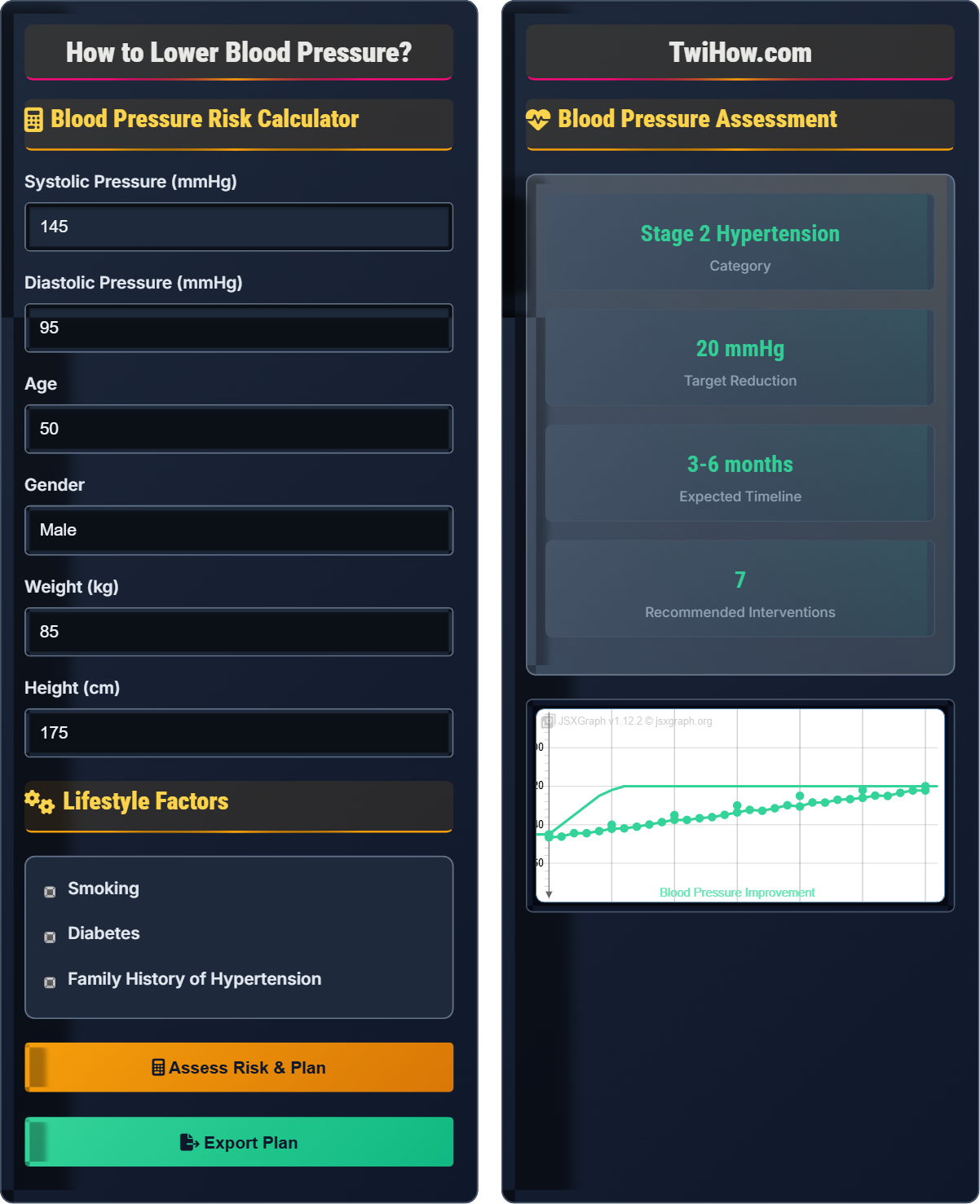
- Stage 2 Hypertension: 140+/90+ mmHg
- Hypertensive Crisis: Higher than 180/120 mmHg
Effective blood pressure management can significantly reduce the risk of cardiovascular disease and improve overall health outcomes.
Blood Pressure Risk Calculator
Lifestyle Factors
Blood Pressure Assessment
Follow DASH diet: low sodium, high potassium, plenty of fruits and vegetables
Aerobic exercise 150+ minutes weekly plus resistance training
Quit smoking, limit alcohol, manage stress, monitor BP regularly
Blood Pressure Management Explained
Blood pressure is the force of blood pushing against the walls of your arteries as the heart pumps blood. It's measured in millimeters of mercury (mmHg) and recorded as two numbers: systolic (top number) and diastolic (bottom number). Systolic pressure measures the force when the heart beats and pumps blood, while diastolic pressure measures the force when the heart rests between beats.
High blood pressure forces the heart to work harder and can lead to serious health problems including heart disease, stroke, and kidney disease.
Where:
- Systolic: Pressure during heart contraction
- Diastolic: Pressure during heart relaxation
- MAP: Average pressure throughout cardiac cycle
Factors that can raise blood pressure:
- Unhealthy Diet: High sodium, low potassium
- Physical Inactivity: Sedentary lifestyle
- Obesity: Excess weight increases workload
- Age and Gender: Risk increases with age
- Genetics: Family history of hypertension
- Medical Conditions: Diabetes, kidney disease
- Stress: Chronic stress affects BP
- Alcohol: Excessive consumption
- Potassium-Rich: Bananas, oranges, potatoes
- Omega-3 Fatty Acids: Salmon, walnuts, flaxseed
- Antioxidants: Berries, dark chocolate, green tea
- Low Sodium: Fresh vegetables, herbs instead of salt
- Whole Grains: Oats, brown rice, quinoa
- Leafy Greens: Spinach, kale, lettuce
Blood Pressure Management
Normal: <120/80, Elevated: 120-129/<80, Stage 1: 130-139/80-89, Stage 2: 140+/90+.
MAP = Diastolic + 1/3(Systolic - Diastolic)
Pulse Pressure = Systolic - Diastolic
- Target <130/80 for most adults
- Reduce sodium to <2300mg daily
- Exercise 150+ minutes weekly
- Monitor regularly
Implementation Guide
Testing, assessment, planning, intervention, monitoring.
- Get BP measured regularly
- Assess risk factors
- Develop intervention plan
- Monitor progress regularly
- Follow DASH diet
- Exercise regularly
- Take medications as prescribed
- Monitor BP at home
Blood Pressure Management Learning Quiz
According to current guidelines, what blood pressure reading constitutes Stage 1 Hypertension?
According to the American College of Cardiology/American Heart Association (ACC/AHA) 2017 guidelines, Stage 1 Hypertension is defined as systolic blood pressure between 130-139 mmHg OR diastolic blood pressure between 80-89 mmHg. This represents a change from previous guidelines and emphasizes earlier intervention for cardiovascular risk reduction.
The answer is B) 130-139/80-89 mmHg.
The 2017 ACC/AHA guidelines lowered the threshold for hypertension diagnosis to emphasize early intervention and reduce cardiovascular risk. This change means that more people are now classified as having hypertension and may benefit from lifestyle modifications or medication. The rationale is that even mild elevations in blood pressure significantly increase cardiovascular risk.
Systolic: Pressure during heart contraction
Diastolic: Pressure during heart relaxation
ACC/AHA: Major cardiology organizations
• Stage 1: 130-139/80-89
• Stage 2: 140+/90+
• Normal: <120/80
• Know current guidelines
• Monitor regularly
• Take multiple readings
• Using outdated thresholds
• Single reading diagnosis
• Not considering white coat effect
Explain the DASH diet, its components, and how it helps lower blood pressure. Include the mechanism of action, specific foods to include and avoid, and expected outcomes.
DASH Diet Components:
• Fruits: 4-5 servings daily (potassium, magnesium)
• Vegetables: 4-5 servings daily (fiber, antioxidants)
• Whole Grains: 6-8 servings daily (fiber, nutrients)
• Lean Protein: Fish, poultry, legumes (less saturated fat)
• Low-fat Dairy: 2-3 servings daily (calcium, protein)
Mechanism of Action:
1. Potassium: Counteracts sodium effects, relaxes blood vessels
2. Calcium: Helps regulate vascular tone
3. Magnesium: Vasodilation and blood pressure regulation
4. Fiber: Improves insulin sensitivity
5. Antioxidants: Reduce oxidative stress
Expected Outcomes: 8-14 mmHg systolic reduction, 4-9 mmHg diastolic reduction within 2-4 weeks.
The DASH (Dietary Approaches to Stop Hypertension) diet works through multiple mechanisms. The high potassium content counteracts sodium's hypertensive effects, while calcium and magnesium help regulate vascular smooth muscle. The diet's high fiber content improves insulin sensitivity, which indirectly affects blood pressure. The combination of nutrients works synergistically to lower blood pressure more effectively than individual nutrients alone.
DASH: Dietary Approaches to Stop Hypertension
Vasodilation: Widening of blood vessels
Vascular Tone: Diameter regulation of blood vessels
• Limit sodium to <2300mg daily
• Increase potassium intake
• Include all food groups
• Start gradually
• Replace processed foods
• Use herbs instead of salt
• Not reducing sodium enough
• Skipping food groups
• Expecting immediate results
A patient with a baseline blood pressure of 150/95 mmHg starts an exercise program consisting of 30 minutes of moderate-intensity aerobic exercise 5 days per week. Studies show that regular aerobic exercise can reduce systolic pressure by 4-9 mmHg and diastolic pressure by 3-5 mmHg. Calculate the expected BP range after 8-12 weeks of consistent exercise. Also determine the percentage reduction in systolic pressure.
Expected BP Range After Exercise:
Systolic: 150 - (4 to 9) = 141 to 146 mmHg
Diastolic: 95 - (3 to 5) = 90 to 92 mmHg
Expected range: 141-146/90-92 mmHg
Percentage Reduction in Systolic:
Minimum reduction: (150 - 146) ÷ 150 × 100% = 2.7%
Maximum reduction: (150 - 141) ÷ 150 × 100% = 6.0%
Expected percentage reduction: 2.7% to 6.0%
This exercise program would move the patient from Stage 2 to Stage 1 hypertension, significantly reducing cardiovascular risk.
This calculation demonstrates the significant impact of regular exercise on blood pressure. The 4-9 mmHg reduction in systolic pressure represents 2.7-6.0% reduction from baseline, which is clinically meaningful. The exercise-induced improvements in endothelial function, sympathetic nervous system activity, and body weight contribute to these reductions. Consistency is key to maintaining these benefits.
Aerobic Exercise: Cardiovascular activities
Endothelial Function: Blood vessel lining health
Sympathetic Nervous System: Stress response system
• 150 min moderate exercise weekly
• Consistency is crucial
• Results take 8-12 weeks
• Start gradually
• Find enjoyable activities
• Combine with resistance training
• Expecting immediate results
• Not being consistent
• Stopping once BP normalizes
Explain how ACE inhibitors work to lower blood pressure, including the mechanism of action, expected onset of action, and potential side effects. Compare with other antihypertensive classes and discuss when ACE inhibitors are preferred.
ACE Inhibitor Mechanism:
1. Block Conversion: Prevents angiotensin I to angiotensin II conversion
2. Reduce Angiotensin II: Decreases vasoconstriction and aldosterone release
3. Vasodilation: Relaxes blood vessels
4. Sodium Excretion: Reduces fluid retention
Onset of Action:
• Initial effect: 1-2 hours
• Peak effect: 3-6 hours
• Full effect: 2-4 weeks
Expected Reduction: 10-15 mmHg systolic, 5-10 mmHg diastolic
Side Effects: Dry cough, hyperkalemia, angioedema, dizziness
Preferred When: Diabetes, heart failure, post-MI, CKD, African American patients
ACE inhibitors work by blocking the renin-angiotensin-aldosterone system (RAAS), which is a key regulator of blood pressure. By preventing angiotensin II formation, they reduce vasoconstriction and aldosterone-mediated sodium retention. This dual mechanism makes them particularly effective. The delayed full effect reflects the time needed for complete RAAS suppression and structural adaptations.
ACE: Angiotensin-Converting Enzyme
RAAS: Renin-Angiotensin-Aldosterone System
Angiotensin II: Potent vasoconstrictor
• Monitor kidney function
• Check potassium levels
• Watch for cough
• Take consistently daily
• Monitor BP regularly
• Report persistent cough
• Not monitoring kidney function
• Stopping suddenly
• Not reporting side effects
Which stress management technique has been shown to be most effective for blood pressure reduction?
Research shows that multiple stress management techniques can effectively lower blood pressure. Transcendental meditation has shown particularly strong evidence with reductions of 5-10 mmHg in systolic pressure. However, progressive muscle relaxation, mindfulness meditation, and cognitive behavioral therapy have also demonstrated significant blood pressure reductions. The key is finding a technique that the individual can practice consistently.
The answer is D) All of the above are equally effective.
Stress management is an important component of blood pressure control. The sympathetic nervous system activation during stress increases blood pressure through multiple mechanisms. Different stress reduction techniques work through various pathways but ultimately achieve similar results. The most important factor is finding a technique that the individual enjoys and can maintain long-term, as consistency is key to sustained benefits.
Transcendental Meditation: Specific meditation technique
Sympathetic Nervous System: Fight-or-flight response
Stress Response: Body's reaction to stressors
• Consistency is key
• Practice regularly
• Combine with other therapies
• Start with 10-15 minutes daily
• Find a quiet space
• Be patient with results
• Expecting immediate results
• Not practicing regularly
• Giving up too soon
FAQ
Q: How long does it take to see blood pressure improvements with lifestyle changes?
A: Blood pressure improvements with lifestyle changes typically occur over 2-12 weeks:
• Dietary changes (DASH): 2-4 weeks for initial improvements
• Exercise program: 4-8 weeks for significant changes
• Weight loss: 4-12 weeks for measurable effects
• Sodium reduction: 1-2 weeks for initial response
• Combination approach: 2-8 weeks for optimal results
Medications like ACE inhibitors show effects within hours to days, with maximum benefit at 2-4 weeks. Regular monitoring every 2-4 weeks is recommended during initial treatment.
Q: How do blood pressure medications affect older adults differently?
A: Blood pressure medications affect older adults differently:
• Orthostatic hypotension: Greater risk of dizziness when standing
• Drug interactions: More medications increase interaction risk
• Renal function: May affect kidney function differently
• Target pressures: May be less aggressive (130-140/80-90)
• Frailty considerations: Balance benefits vs. risks
• Compliance: Simplified regimens improve adherence
Older adults often require lower starting doses and slower titration. The SPRINT trial showed benefits of intensive BP control in older adults without diabetes or stroke.
Q: How does diabetes affect blood pressure management?
A: Diabetes significantly affects blood pressure management:
• Higher prevalence: 2-3x more common in diabetics
• Target pressures: Often more aggressive (<130/80)
• ACE/ARB preference: Protect kidney function
• Complementary benefits: Both conditions accelerate each other
• Cardiovascular risk: Combined effect increases risk significantly
• Monitoring: More frequent checks needed
Patients with diabetes and hypertension require coordinated care to manage both conditions optimally and reduce cardiovascular and renal complications.