How to Reduce Cholesterol?
Complete health guide • Step-by-step explanations
Cholesterol Management:
Assess Your RiskCholesterol is a waxy substance that's vital for building healthy cells but can increase the risk of heart disease when levels are high. High cholesterol can lead to the buildup of plaques in arteries, restricting blood flow and increasing the risk of heart attack and stroke. Managing cholesterol involves lifestyle changes, diet modifications, exercise, and sometimes medications.
Cholesterol components:
- LDL ("Bad") Cholesterol: Should be low (under 100 mg/dL)
- HDL ("Good") Cholesterol: Should be high (above 40 mg/dL for men, 50 mg/dL for women)
- Triglycerides: Blood fat levels (should be under 150 mg/dL)
- Total Cholesterol: Sum of all cholesterol types (should be under 200 mg/dL)
Effective cholesterol management can significantly reduce cardiovascular disease risk and improve overall health.
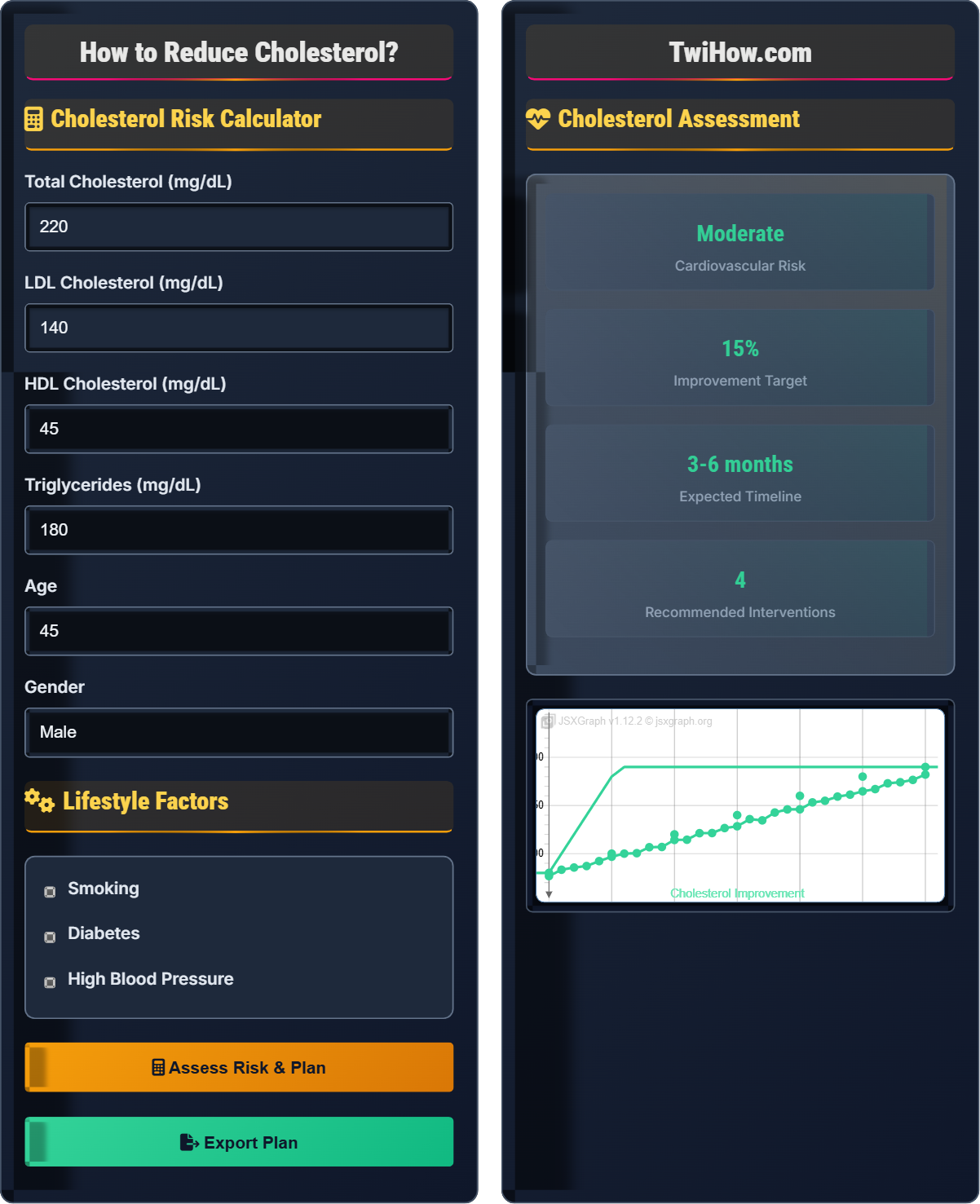
Cholesterol Risk Calculator
Lifestyle Factors
Cholesterol Assessment
Follow Mediterranean diet: olive oil, nuts, fish, fruits, vegetables
Combination of aerobic and resistance training
Quit smoking, limit alcohol, manage stress
Cholesterol Management Explained
Cholesterol is a waxy, fat-like substance that's found in all cells of the body. Your body needs cholesterol to make hormones, vitamin D, and substances that help you digest foods. However, too much cholesterol in your blood can increase your risk of coronary artery disease.
There are two main sources of cholesterol: your body makes all the cholesterol it needs, and you get cholesterol from animal-based foods you eat.
Where:
- LDL: Low-density lipoprotein (bad cholesterol)
- HDL: High-density lipoprotein (good cholesterol)
- Triglycerides: Blood fat levels
Factors that can raise cholesterol levels:
- Unhealthy Diet: High in saturated fats, trans fats, and cholesterol
- Physical Inactivity: Lack of exercise lowers HDL
- Obesity: Excess weight affects cholesterol metabolism
- Age and Gender: Risk increases with age
- Genetics: Family history of high cholesterol
- Medical Conditions: Diabetes, hypothyroidism
- Soluble Fiber: Oats, beans, apples, citrus fruits
- Omega-3 Fatty Acids: Salmon, mackerel, walnuts
- Plant Sterols: Avocados, nuts, seeds
- Monounsaturated Fats: Olive oil, avocados, nuts
- Whole Grains: Brown rice, quinoa, whole wheat
- Legumes: Beans, lentils, chickpeas
Cholesterol Management
LDL < 100, HDL > 40/50, Total < 200, Triglycerides < 150.
Total = LDL + HDL + Triglycerides/5
TC/HDL Ratio = Total/HDL
- Lower LDL cholesterol
- Increase HDL cholesterol
- Reduce saturated fats
- Exercise regularly
Implementation Guide
Testing, assessment, planning, intervention, monitoring.
- Get lipid panel tested
- Assess risk factors
- Develop intervention plan
- Monitor progress regularly
- Follow Mediterranean diet
- Exercise 30+ minutes daily
- Take medications as prescribed
- Monitor regularly
Cholesterol Management Learning Quiz
According to current guidelines, what is the optimal LDL cholesterol level for someone at high cardiovascular risk?
For patients at very high cardiovascular risk (those with established cardiovascular disease, diabetes, or multiple risk factors), current guidelines recommend an LDL cholesterol target of less than 70 mg/dL. For high-risk patients, the target is typically less than 100 mg/dL. These aggressive targets are based on evidence showing that intensive LDL reduction provides significant cardiovascular benefits.
The answer is D) Less than 70 mg/dL.
Cholesterol targets vary based on individual cardiovascular risk levels. The more risk factors a person has, the more aggressive the cholesterol-lowering targets become. This reflects the understanding that people at higher risk benefit more from intensive cholesterol management. Risk factors include age, family history, smoking, diabetes, hypertension, and existing cardiovascular disease.
LDL: Low-density lipoprotein (bad cholesterol)
Cardiovascular Risk: Probability of heart disease/stroke
Intensive Therapy: Aggressive cholesterol lowering
• Higher risk = lower targets
• Individualize treatment
• Consider multiple factors
• Know your risk category
• Set appropriate targets
• Monitor regularly
• Using same targets for everyone
• Not considering risk factors
• Not following guidelines
Explain how soluble fiber helps reduce cholesterol levels. Include the mechanism of action, recommended daily intake, and specific food sources that are effective.
Mechanism of Action:
1. Bile Binding: Soluble fiber binds to bile acids in the intestines, preventing their reabsorption
2. Cholesterol Depletion: The liver uses cholesterol to make more bile acids
3. Cholesterol Reduction: This process depletes circulating cholesterol
4. Cholesterol Synthesis: The liver increases cholesterol uptake from blood
Recommended Intake: 25-35 grams daily, with 10-15 grams from soluble fiber
Effective Food Sources:
• Oats: Beta-glucan is particularly effective
• Beans and Legumes: High in pectin and other fibers
• Apples and Citrus: Rich in pectin
• Barley: Contains beta-glucan
• Psyllium: Most effective soluble fiber supplement
Studies show 3-4 grams of soluble fiber daily can reduce LDL cholesterol by 5-10%.
Soluble fiber's cholesterol-lowering effect works through the enterohepatic circulation of bile acids. When bile acids are bound by fiber and excreted, the liver must synthesize more, using cholesterol from the blood. This creates a pathway for removing excess cholesterol from the body. This natural mechanism makes dietary fiber an important tool for cholesterol management.
Soluble Fiber: Dissolves in water, forms gel-like substance
Bile Acids: Digestive compounds made from cholesterol
Enterohepatic Circulation: Bile recycling process
• 25-35g fiber daily
• Include soluble fiber
• Gradual increase to avoid gas
• Start with oats for breakfast
• Add beans to meals
• Include fruits and vegetables
• Not enough fiber intake
• Sudden increase causing GI upset
• Not including soluble fiber specifically
A patient with an LDL cholesterol of 160 mg/dL starts taking a moderate-dose statin. Studies show moderate-dose statins reduce LDL by 30-50%. Calculate the expected LDL range after 6-8 weeks of therapy. Also calculate the percentage reduction needed to reach the target of 100 mg/dL.
Expected LDL Range After Statin:
30% reduction: 160 × (1 - 0.30) = 160 × 0.70 = 112 mg/dL
50% reduction: 160 × (1 - 0.50) = 160 × 0.50 = 80 mg/dL
Expected range: 80-112 mg/dL
Reduction Needed to Reach 100 mg/dL:
Target reduction: 160 - 100 = 60 mg/dL
Percentage reduction: (60 ÷ 160) × 100% = 37.5%
Based on this calculation, a moderate-dose statin should be sufficient to reach the 100 mg/dL target, as it would provide 30-50% reduction, which exceeds the required 37.5%.
This calculation demonstrates how statins work and what to expect. Moderate-dose statins typically provide 30-50% LDL reduction, while high-dose statins provide 50-60% reduction. The effectiveness depends on the baseline LDL level - the higher the starting level, the greater the absolute reduction. This is why statins are particularly effective in patients with very high baseline LDL.
Statins: HMG-CoA reductase inhibitors
LDL Reduction: Percentage decrease from baseline
Baseline: Starting cholesterol level
• Moderate statins: 30-50% reduction
• High statins: 50-60% reduction
• Monitor after 6-8 weeks
• Check lipids after 6-8 weeks
• Consider combination therapy
• Monitor for side effects
• Not checking effectiveness
• Not monitoring side effects
• Assuming all patients respond equally
Explain how regular exercise affects cholesterol levels, including specific mechanisms and expected outcomes. Discuss the type, frequency, and duration of exercise that provides optimal cholesterol benefits.
Mechanisms of Exercise on Cholesterol:
1. HDL Increase: Exercise stimulates enzymes that help move cholesterol from tissues to the liver
2. Lipoprotein Lipase: Increases activity, enhancing fat breakdown
3. Weight Loss: Improves overall lipid profile
4. Insulin Sensitivity: Better glucose metabolism affects lipid processing
Expected Outcomes:
• HDL increase: 5-10% with regular exercise
• LDL reduction: 5-15% depending on intensity and baseline
• Triglyceride reduction: 10-30% with consistent activity
Optimal Exercise Prescription:
• Type: Combination of aerobic and resistance training
• Frequency: 5-7 days per week
• Duration: 30-60 minutes per session
• Intensity: Moderate to vigorous (65-85% max heart rate)
Consistency is more important than intensity for cholesterol benefits.
Exercise improves cholesterol primarily by increasing HDL cholesterol and decreasing triglycerides. The effect on LDL is more variable and modest compared to HDL improvements. The combination of aerobic exercise and resistance training appears to provide the most comprehensive lipid benefits. Exercise also helps with weight management, which further improves lipid profiles.
Aerobic Exercise: Cardiovascular activities
Resistance Training: Strength-building exercises
Lipoprotein Lipase: Enzyme that breaks down fats
• 150 min moderate exercise weekly
• Include resistance training
• Consistency is key
• Start gradually
• Find enjoyable activities
• Combine different types
• Expecting immediate results
• Not being consistent
• Focusing only on cardio
Which type of cholesterol does omega-3 fatty acid supplementation primarily affect?
Omega-3 fatty acid supplementation primarily affects triglyceride levels, typically reducing them by 15-30%. The effect on LDL and HDL cholesterol is much smaller and more variable. EPA and DHA (the main omega-3 fatty acids) work by reducing triglyceride synthesis in the liver and increasing triglyceride clearance from the blood.
The answer is C) Triglycerides.
Omega-3 fatty acids (EPA and DHA) have the most pronounced effect on triglyceride levels rather than cholesterol. This makes them particularly useful for patients with elevated triglycerides (>150 mg/dL). The mechanism involves reducing hepatic triglyceride synthesis and increasing lipoprotein lipase activity. For patients with very high triglycerides (>500 mg/dL), prescription omega-3 preparations may be used.
EPA: Eicosapentaenoic acid
DHA: Docosahexaenoic acid
Triglycerides: Blood fat levels
• Primarily affects triglycerides
• Modest effects on cholesterol
• Useful for high triglycerides
• Eat fatty fish 2x weekly
• Consider supplements for high triglycerides
• Use prescription-grade for very high levels
• Expecting major cholesterol effects
• Not targeting triglycerides specifically
• Using for LDL reduction
FAQ
Q: How long does it take to see cholesterol improvements with lifestyle changes?
A: Cholesterol improvements with lifestyle changes typically occur over 6-12 weeks:
• Dietary changes: 4-6 weeks for initial improvements
• Exercise program: 8-12 weeks for significant changes
• Weight loss: 6-8 weeks for measurable effects
• Combination approach: 6-12 weeks for optimal results
For medications like statins, effects are typically seen within 2-4 weeks, with maximum benefit at 6-8 weeks. Regular monitoring every 3-6 months is recommended to assess progress and adjust treatment as needed.
Q: How do cholesterol levels change with age?
A: Cholesterol levels tend to increase with age:
• LDL cholesterol: Gradually increases until age 60-65
• HDL cholesterol: Peaks in 20s-30s, then gradually decreases
• Triglycerides: Increase with age, especially after menopause in women
• Hormonal changes: Estrogen decline affects cholesterol patterns
• Liver function: May affect cholesterol metabolism with age
Regular screening becomes more important with age, especially after 45 for men and 55 for women. Treatment targets may be adjusted based on overall health and life expectancy.
Q: How does diabetes affect cholesterol management?
A: Diabetes significantly affects cholesterol management:
• Increased risk: People with diabetes are considered equivalent to those with established heart disease
• Altered patterns: Lower HDL, higher triglycerides, small dense LDL particles
• Aggressive targets: More stringent LDL goals (often <70 mg/dL)
• Medication response: May require combination therapy
• Metformin effect: May improve lipid profile slightly
People with diabetes and established cardiovascular disease often require the most intensive cholesterol management. Statin therapy is typically recommended for most diabetic patients regardless of baseline cholesterol levels.