What are Superfoods?
Complete superfoods guide • Step-by-step explanations
Superfoods Fundamentals:
Explore SuperfoodsSuperfoods are nutrient-rich foods considered to be especially beneficial for health and wellbeing. They are packed with vitamins, minerals, antioxidants, and other compounds that support various bodily functions and may help prevent chronic diseases.
While the term "superfood" isn't scientifically defined, it generally refers to foods that offer exceptional nutritional value relative to their calorie content. These foods can play an important role in a balanced diet by providing concentrated sources of essential nutrients.
Key superfood characteristics:
- High Nutrient Density: Rich in vitamins and minerals
- Antioxidant Properties: Protect cells from oxidative damage
- Anti-inflammatory Effects: Reduce inflammation in the body
- Functional Benefits: Support specific health functions
Superfoods work best as part of an overall healthy diet rather than as standalone miracle foods.
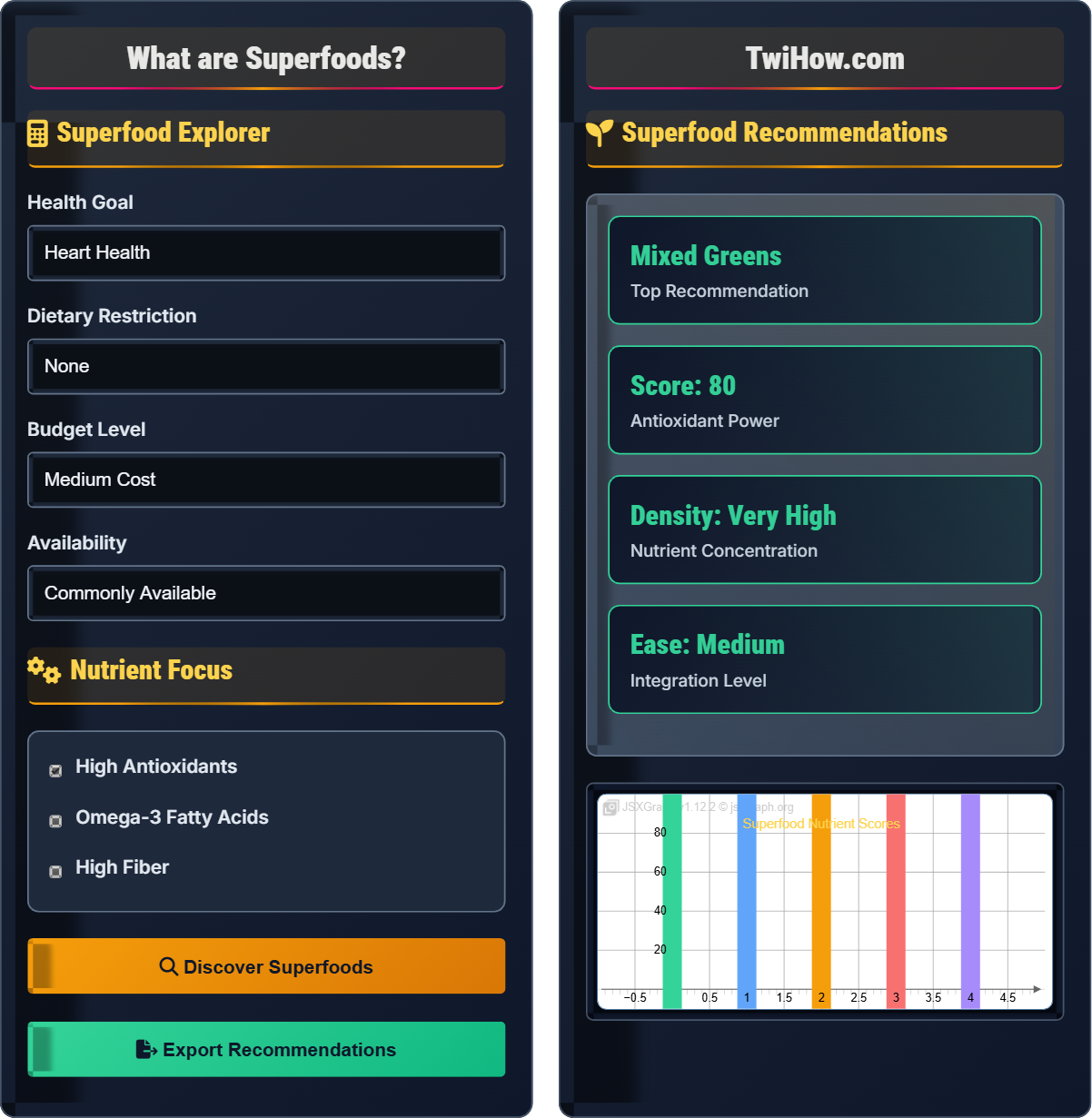
Superfood Explorer
Nutrient Focus
Superfood Recommendations
| Food | Benefits | Score |
|---|---|---|
| Blueberries | Antioxidants, Brain Health | 95 |
| Spinach | Iron, Vitamins | 92 |
| Salmon | Omega-3, Protein | 90 |
| Avocado | Healthy Fats | 88 |
| Nuts | Protein, Fiber | 85 |
How Superfoods Work Explained
Superfoods are nutrient-dense foods that are rich in vitamins, minerals, antioxidants, and other beneficial compounds. While not scientifically defined, the term generally refers to foods that offer exceptional nutritional value relative to their calorie content and provide health benefits beyond basic nutrition.
The concept of nutrient density:
Where:
- Total Nutrients: Sum of essential vitamins and minerals
- Calories: Energy content of the food
- Higher Ratio: Indicates more nutrients per calorie
Types of superfoods and their benefits:
- Fruits: Berries, citrus, tropical fruits (antioxidants, vitamins)
- Vegetables: Leafy greens, cruciferous, colorful varieties (minerals, fiber)
- Seafood: Salmon, sardines, mackerel (omega-3 fatty acids)
- Nuts & Seeds: Almonds, walnuts, chia seeds (healthy fats, protein)
- Whole Grains: Quinoa, oats, brown rice (fiber, B vitamins)
- Variety: Include different colored foods for diverse nutrients
- Seasonality: Choose seasonal options for peak nutrition
- Preparation: Use cooking methods that preserve nutrients
- Combination: Pair foods to enhance nutrient absorption
- Consistency: Regular consumption for sustained benefits
Superfood Fundamentals
Nutrient density, antioxidants, phytonutrients, bioavailability, functional foods.
Compare nutrient content per calorie against standard foods
- Superfoods complement, not replace, a balanced diet
- Focus on whole foods over supplements
- Consider bioavailability of nutrients
- Include variety for comprehensive nutrition
Top Superfoods
Blueberries, kale, salmon, quinoa, chia seeds, dark chocolate, green tea.
- Start with 1-2 superfoods per week
- Gradually increase variety
- Find enjoyable preparation methods
- Pair with familiar foods
- Make sustainable dietary changes
- Don't expect miraculous results
- Consider individual dietary needs
- Be aware of potential interactions
- Source quality foods when possible
Superfoods Learning Quiz
Which characteristic best defines a superfood?
Superfoods are characterized by having high nutrient density relative to their calorie content. They provide a concentrated source of vitamins, minerals, antioxidants, and other beneficial compounds. The key is the high concentration of nutrients per calorie, making them nutritionally efficient choices. This is why foods like leafy greens, berries, and fatty fish are considered superfoods.
The answer is B) High nutrient density relative to calories.
The concept of nutrient density is fundamental to understanding superfoods. It's not about eliminating calories or finding exotic foods, but rather about maximizing the nutritional value of the calories you consume. This principle applies to all healthy eating, not just superfoods. Foods with high nutrient density provide more vitamins, minerals, and beneficial compounds per calorie than standard foods.
Nutrient Density: Nutrients per calorie of food
Antioxidants: Compounds that protect cells from damage
Phytonutrients: Plant compounds with health benefits
• Focus on nutrient content per calorie
• Consider bioavailability of nutrients
• Variety is important for comprehensive nutrition
• Choose colorful fruits and vegetables
• Include both plant and animal sources
• Consider seasonal availability
• Believing all expensive foods are superfoods
• Expecting miraculous results from single foods
• Ignoring preparation methods
Explain how antioxidants in superfoods protect the body and provide examples of superfoods rich in antioxidants. Include the mechanism of action and health benefits.
Antioxidant Mechanism: Antioxidants neutralize free radicals (unstable molecules with unpaired electrons) that can damage cells, proteins, and DNA. Free radicals are produced naturally during metabolism and through environmental exposure (pollution, UV radiation, cigarette smoke).
Protection Process: Antioxidants donate electrons to free radicals, stabilizing them and preventing cellular damage. This process helps prevent oxidative stress, which is linked to aging and chronic diseases.
Superfood Examples:
• Blueberries: Rich in anthocyanins, which give them their blue color and potent antioxidant properties
• Dark Chocolate: Contains flavonoids, particularly epicatechin
• Green Tea: High in catechins, especially EGCG (epigallocatechin gallate)
• Spinach: Contains lutein, zeaxanthin, and beta-carotene
• Pecans: Rich in vitamin E and phenolic compounds
Health Benefits: Reduced risk of heart disease, cancer, neurodegenerative diseases, and improved immune function.
Understanding the biochemical basis of antioxidant action helps appreciate why certain foods are considered beneficial. The free radical theory of aging suggests that accumulated oxidative damage contributes to aging and disease. Antioxidants act as cellular protectors, helping maintain the balance between oxidative damage and repair mechanisms.
Free Radicals: Unstable molecules that can damage cells
EGCG: Epigallocatechin gallate, a powerful green tea antioxidantOxidative Stress: Imbalance between free radicals and antioxidants
• Antioxidants work synergistically
• More is not always better
• Focus on food sources over supplements
• Eat a variety of colorful fruits and vegetables
• Include both raw and cooked preparations
• Combine different antioxidant sources
• Taking high-dose antioxidant supplements
• Focusing on single antioxidant types
• Ignoring other important nutrients
A busy professional wants to incorporate more superfoods into their diet but has limited time for meal preparation. They currently eat fast food for lunch and rarely consume fruits or vegetables. Develop a practical plan for integrating superfoods into their routine, considering time constraints and budget limitations.
Practical Integration Plan:
1. Smoothie Solution: Prepare nutrient-packed smoothies with frozen berries, spinach, banana, and protein powder. Can be made in advance and consumed on-the-go.
2. Snack Substitution: Replace processed snacks with nuts, seeds, or dried fruits. Keep almonds, walnuts, or dried berries at work.
3. Quick Additions: Add spinach, tomatoes, or avocado to existing meals. Many fast food restaurants offer healthy additions.
4. Meal Prep: Spend 30 minutes Sunday preparing overnight oats with chia seeds, berries, and nuts for breakfast throughout the week.
5. Smart Choices: Choose superfood-rich options when ordering: salmon, quinoa bowls, green salads with nuts/seeds.
6. Convenient Options: Purchase pre-cut vegetables, frozen fruits, and canned fish for easy preparation.
Budget-Friendly Superfoods: Frozen berries, canned salmon, eggs, beans, sweet potatoes, and seasonal vegetables.
This scenario demonstrates how to make sustainable changes within realistic constraints. Rather than overhauling the entire diet, the approach focuses on strategic substitutions and additions that fit into existing routines. The key is identifying convenient, accessible superfood options that don't require major lifestyle changes.
Nutrient Timing: Strategic consumption of nutrients
Convenience Foods: Prepared foods that save time
Dietary Integration: Incorporating new foods into existing patterns
• Start with small, manageable changes
• Focus on sustainability over perfection
• Consider individual lifestyle constraints
• Keep portable superfood snacks handy
• Choose frozen options for convenience
• Batch prepare for the week
• Trying to change everything at once
• Choosing expensive options that aren't sustainable
• Not considering practical constraints
You're comparing two forms of the same superfood: raw kale versus cooked spinach. Raw kale has higher concentrations of certain nutrients, but cooked spinach has better bioavailability. Explain the concept of bioavailability and how preparation methods affect nutrient absorption, using these examples.
Bioavailability: The proportion of a nutrient that is absorbed and utilized by the body after consumption. It's influenced by food matrix, preparation methods, and individual factors.
Kale vs Spinach Comparison:
Raw Kale: High in vitamin K, C, and antioxidants, but contains oxalic acid that can bind minerals like calcium and iron, reducing their absorption. The tough cell walls also make some nutrients less accessible.
Cooked Spinach: Cooking breaks down oxalic acid and cell walls, improving the bioavailability of iron, calcium, and folate. However, some heat-sensitive vitamins like vitamin C may be reduced.
Preparation Effects:
• Steaming: Preserves water-soluble vitamins while breaking down anti-nutrients
• Blanching: Reduces oxalates while maintaining nutrient content
• Adding Fat: Enhances absorption of fat-soluble vitamins (A, D, E, K)
• Combining Foods: Vitamin C enhances iron absorption from plant sources
Recommendation: Both foods offer benefits, and variety in preparation methods maximizes overall nutrient intake.
This example illustrates why simply comparing nutrient content isn't sufficient for evaluating food quality. Bioavailability is crucial for understanding how much of a nutrient the body can actually use. Preparation methods can significantly impact the nutritional value of foods, sometimes making cooked versions more beneficial than raw ones.
Bioavailability: Proportion of nutrient absorbed and utilized
Anti-nutrients: Compounds that interfere with nutrient absorption
Food Matrix: Physical structure affecting nutrient release
• Consider preparation methods
• Diversity in cooking techniques
• Combination with other foods
• Steam rather than boil to preserve nutrients
• Add healthy fats to fat-soluble vitamins
• Combine iron-rich plants with vitamin C
• Assuming raw is always better
• Ignoring preparation effects
• Not considering nutrient combinations
Which of the following is a common myth about superfoods?
Option B is the myth. Superfoods cannot cure diseases. While they may help reduce the risk of certain diseases and support overall health, they are not medicines and cannot cure diseases. This is a common misconception that can lead to unrealistic expectations and potentially dangerous health decisions.
All other options are facts: superfoods are indeed rich in antioxidants, nutrient-dense, and provide various health benefits when consumed as part of a balanced diet.
The answer is B) They can cure diseases.
This myth reflects the danger of "miracle food" thinking that can overshadow the importance of a balanced diet and medical treatment. While superfoods can contribute to overall health and potentially reduce disease risk, they should not be viewed as replacements for medical treatment or as cures for diseases. This understanding is crucial for maintaining realistic expectations about nutrition.
Prevention vs Cure: Superfoods prevent, not cure
Complementary Role: Supports, not replaces, medical care
Realistic Expectations: Health benefits within context
• Superfoods support, not replace, medical care
• Part of overall healthy lifestyle
• Manage expectations appropriately
• View as health support, not magic bullets
• Maintain balanced perspective
• Consult healthcare providers for health concerns
• Expecting miraculous healing
• Replacing medical treatment
• Overemphasizing single foods
FAQ
Q: Are expensive superfoods worth the cost compared to affordable options?
A: Often, common, affordable foods provide similar or better nutritional benefits than expensive "superfood" imports:
Cost-Effective Superfoods:
• Blueberries: Comparable to acai berries at fraction of cost
• Spinach: Similar nutrients to expensive leafy greens
• Black Beans: High in antioxidants, protein, and fiber
• Eggs: Complete protein with choline for brain health
• Walnuts: Omega-3s comparable to expensive supplements
Marketing vs Reality: Many expensive superfoods are marketed as exotic or rare, but local alternatives often provide similar nutritional profiles at lower cost. Focus on nutrient density per dollar rather than marketing claims.
Priority: Consistent consumption of any nutritious food is better than occasional expensive superfood treats.
Q: How many superfoods should I eat per day?
A: There's no official recommendation for "superfood" consumption, but the principle is about incorporating nutrient-dense foods throughout your diet:
Practical Guidelines:
• Color Variety: Aim for 5-9 servings of fruits and vegetables daily (including superfood varieties)
• Substitution Approach: Replace less nutritious foods with superfood alternatives
• Meal Integration: Include 1-2 superfood items per meal when possible
• Snacking: Choose nutrient-dense options like nuts, berries, or dark chocolate
Quality Over Quantity: It's better to consistently eat a variety of nutritious whole foods than to obsess over specific "superfood" counts.
Balance: Superfoods should complement, not dominate, your diet. The goal is to create a pattern of eating that includes many nutrient-dense options throughout the day.