How Do I Deal with Loneliness and Isolation?
Complete connection guide • Step-by-step explanations
Overcoming Loneliness & Isolation:
Show Connection BuilderLoneliness and isolation are serious health concerns that affect millions of people. Dealing with these feelings requires a multifaceted approach including building social connections, engaging in meaningful activities, practicing self-care, and seeking professional support when needed. The key is taking proactive steps to create connection while being patient with the process.
Overcoming loneliness involves understanding the difference between being alone and feeling lonely, developing social skills, finding communities of interest, and creating meaningful relationships. Technology can be a bridge to connection, but genuine relationships require vulnerability and mutual support.
Key strategies include:
- Social Engagement: Joining clubs, volunteering, attending community events
- Technology Connection: Using social media, video calls, online communities
- Personal Development: Pursuing hobbies, learning new skills, self-improvement
- Mental Health Support: Therapy, counseling, support groups
- Physical Activities: Exercising with others, joining fitness groups
With patience and persistence, meaningful connections can be built that significantly improve quality of life and mental health.
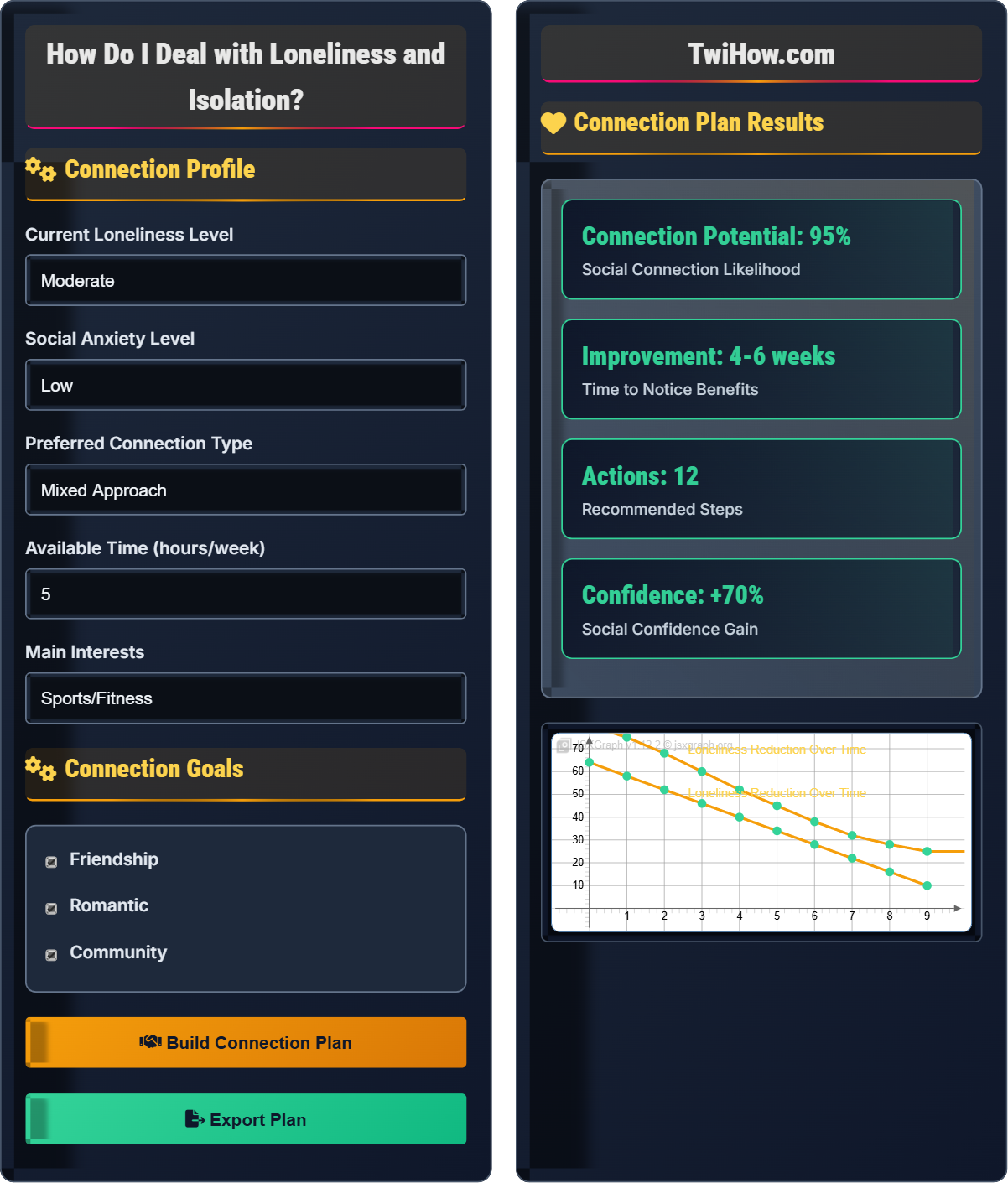
Connection Profile
Connection Goals
Connection Plan Results
| Strategy | Method | Frequency | Difficulty |
|---|---|---|---|
| Join Groups | Interest-based clubs | Weekly | Medium |
| Volunteer | Local organizations | Bi-weekly | Easy |
| Exercise | Group fitness classes | 3x/week | Medium |
| Online | Social platforms | Daily | Easy |
Dealing with Loneliness and Isolation Explained
Loneliness is the subjective feeling of being disconnected from others, while solitude is the objective state of being alone. It's possible to feel lonely surrounded by people or to enjoy solitude and feel fulfilled. Loneliness occurs when there's a discrepancy between desired and actual social connections.
Loneliness can be categorized as situational (temporary, like moving to a new city), developmental (part of life stages), or chronic (long-term pattern). Understanding which type you're experiencing helps determine the most effective coping strategies.
Connection Success = (Social Readiness × Available Opportunities × Vulnerability) ÷ (Barriers + Anxiety)
Where:
- Social Readiness: Willingness and preparation to connect
- Available Opportunities: Access to social situations and groups
- Vulnerability: Openness to authentic connection
- Barriers: Physical, psychological, or circumstantial obstacles
- Anxiety: Fear or nervousness about social interaction
Proven strategies for overcoming loneliness include:
- Volunteering: Provides purpose and connects you with like-minded individuals
- Interest Groups: Join clubs based on hobbies or passions
- Fitness Activities: Exercise groups offer social and physical benefits
- Community Events: Attend local festivals, classes, or gatherings
- Online Communities: Virtual groups based on shared interests
- Service Organizations: Rotary, Toastmasters, religious groups
- Learning Classes: Educational settings provide natural conversation starters
- Animal Companionship: Pet ownership or volunteering with animals
- Self-Compassion: Be patient with yourself during the process
- Small Steps: Start with low-pressure interactions
- Quality over Quantity: Focus on meaningful connections
- Professional Support: Consider therapy for persistent loneliness
- Self-Care: Maintain physical and emotional health
- Patience: Building relationships takes time
Loneliness Connection Fundamentals
Loneliness, isolation, social connection, vulnerability, community, belonging.
Connection Success = (Opportunities × Readiness × Effort) ÷ (Barriers × Anxiety)
Where Connection Success indicates likelihood of forming meaningful relationships, components are weighted by effectiveness.
- Start small and build gradually
- Focus on shared interests
- Be patient with the process
Applications
Volunteering, hobby groups, fitness classes, online communities, professional networking.
- Assess current social situation
- Identify interests and preferences
- Find compatible opportunities
- Take consistent action
- Individual preferences matter
- Consistency builds relationships
- Quality over quantity
- Professional help available
Loneliness Connection Learning Quiz
Which of the following best describes the difference between loneliness and solitude?
Loneliness is the subjective feeling of being disconnected from others and lacking meaningful social relationships, while solitude is the objective state of being alone that can be chosen and enjoyed. You can feel lonely surrounded by people or enjoy solitude and feel fulfilled. The key difference is the emotional experience versus the physical state.
The answer is B) Loneliness is the feeling of disconnection, solitude is being alone by choice.
Understanding this distinction is crucial for addressing loneliness effectively. Many people mistakenly believe that being around people automatically prevents loneliness, but it's the quality of connections that matters. Similarly, some avoid solitude because they conflate it with loneliness, missing out on the benefits of reflection and self-care that solitude can provide.
Loneliness: Subjective feeling of disconnection
Solitude: Chosen state of being alone
Subjective: Based on personal experience
• Quality matters more than quantity
• Being alone ≠ Feeling lonely
• Meaningful connections are key
• Distinguish between alone and lonely
• Value quality relationships
• Embrace beneficial solitude
• Confusing being alone with loneliness
• Seeking quantity over quality
• Avoiding solitude entirely
Explain the step-by-step process for building social connections when dealing with loneliness, including strategies for overcoming social anxiety.
Step-by-Step Connection Building Process:
1. Self-Assessment: Identify your social needs, current patterns, and what types of relationships you're seeking (friendships, romantic connections, professional networking).
2. Goal Setting: Define specific, achievable social goals (e.g., "attend one social event per week," "initiate one conversation with a stranger per day").
3. Opportunity Identification: Find groups, activities, and places aligned with your interests and personality (clubs, volunteer opportunities, fitness classes, online communities).
4. Small Steps: Start with low-pressure interactions (smiling at strangers, commenting on shared experiences, asking simple questions).
5. Consistent Engagement: Regularly participate in chosen activities to increase familiarity and comfort.
Strategies for Overcoming Social Anxiety:
Gradual Exposure: Start with brief, low-stakes interactions and gradually increase complexity. Begin with simple greetings, then comments about shared experiences, then questions.
Focus on Others: Shift attention from self-conscious thoughts to curiosity about others. Ask questions and listen actively rather than worrying about self-presentation.
Preparation: Think of conversation starters or topics beforehand to reduce anxiety about what to say.
Accept Imperfection: Understand that awkward moments are normal and that others are usually more forgiving than you imagine.
Practice Self-Compassion: Be patient with yourself and celebrate small victories rather than expecting immediate perfection.
Start with Shared Activities: Engage in activities that provide natural conversation starters (hobbies, classes, volunteer work).
Online to Offline: Consider starting with online communities before transitioning to in-person interactions.
Professional Support: If social anxiety is severe, consider therapy or counseling to develop coping strategies.
Remember that building connections is a skill that improves with practice, and meaningful relationships take time to develop.
Building social connections is a skill that can be developed like any other. The key is starting with manageable steps and gradually increasing the complexity of interactions. Social anxiety often stems from unrealistic expectations and catastrophic thinking, which can be addressed through gradual exposure and perspective shifts.
Social Anxiety: Fear of social interactions
Gradual Exposure: Incremental increase in social challenges
Self-Compassion: Kindness toward oneself
• Start small and build gradually
• Focus on others, not yourself
• Accept imperfection as normal
• Prepare conversation starters
• Practice in low-stakes situations
• Celebrate small victories
• Expecting immediate results
• Focusing too much on self
• Avoiding all social situations
David has been feeling lonely since retiring and has social anxiety about meeting new people. He's considering volunteering but is unsure where to start. What types of volunteer opportunities would be most suitable for him, and how should he approach getting involved?
Appropriate Volunteer Opportunities for David:
1. Skills-Based Volunteering: Since David is retired, he likely has professional skills that could be valuable. Consider opportunities like mentoring, tutoring, or using business/administrative skills for nonprofits. This provides natural conversation topics and a sense of purpose.
2. Behind-the-Scenes Roles: Activities like filing, organizing, or data entry allow him to contribute while gradually becoming familiar with the organization before engaging in more social roles.
3. Animal Shelters: Working with animals can be less intimidating than direct human interaction and provides natural conversation starters.
4. Libraries or Museums: These environments attract like-minded people and provide structured interactions around books or cultural interests.
5. Environmental Groups: Cleanup activities or gardening projects offer shared tasks that naturally lead to conversation.
Approach Strategy:
Research First: Visit websites, call ahead, or attend orientation sessions to learn about the organization before committing.
Start Small: Begin with one shift per week or month to avoid feeling overwhelmed.
Choose Familiar Interests: Select opportunities related to his hobbies or interests to provide natural conversation topics.
Bring a Friend: If possible, start with a friend or spouse to reduce anxiety.
Set Realistic Goals: Focus on contributing rather than immediately making friends.
Be Patient: Allow relationships to develop naturally over time.
Follow Up: If he meets people he enjoys, suggest meeting for coffee or participating in the same activity outside of volunteering.
Volunteering provides a structured environment for social interaction while contributing to a meaningful cause, which can boost self-esteem and provide a sense of purpose.
Volunteering is particularly effective for overcoming loneliness because it provides a dual benefit: meaningful activity and social interaction. The shared purpose of helping others creates natural bonds and gives people something positive to focus on during interactions. For those with social anxiety, volunteering offers a "built-in" reason for interaction, making it feel less forced or artificial.
Skills-Based Volunteering: Using professional talents for nonprofit work
Social Interaction: Communication with others
Structured Environment: Organized setting with defined roles
• Choose meaningful activities
• Start with familiar interests
• Be patient with relationship development
• Use retirement skills for volunteering
• Start with behind-the-scenes roles
• Focus on contribution, not friendship
• Choosing overwhelming volunteer roles
• Expecting immediate friendships
• Not following up on connections
Sarah is an introvert who struggles with face-to-face interactions but wants to build friendships. How can she use technology as a bridge to meaningful in-person connections, and what precautions should she take?
Using Technology as a Bridge:
1. Interest-Based Online Communities: Join Facebook groups, Reddit forums, Discord servers, or Meetup groups focused on specific interests. These platforms allow for text-based communication before meeting in person.
2. Video Calls: Start with video calls with online connections before meeting in person. This provides a middle ground between text and face-to-face interaction.
3. Apps for Social Connection: Use apps like Meetup, Nextdoor, or local community apps to find nearby events and groups based on interests.
4. Online Classes: Participate in virtual classes (cooking, art, language) where you can interact with others who share interests.
5. Gaming Communities: For those interested in gaming, online multiplayer games can provide social interaction and teamwork experiences.
Transitioning to In-Person:
Start Local: Use technology to find local groups and events in your area before attending.
Virtual to Real-Life Events: Many online communities organize in-person meetups for members.
One-on-One Coffee Dates: Suggest meeting one person from online groups for a low-pressure coffee or walk.
Safety Precautions:
Meet in Public Places: Always meet new people in safe, public locations for initial meetings.
Tell Someone: Inform a trusted friend or family member about your plans and whereabouts.
Verify Information: Look up social media profiles or other information to verify authenticity.
Trust Your Instincts: If something feels off, trust your gut and remove yourself from the situation.
Protect Personal Information: Don't share addresses, financial information, or other sensitive details.
Go with a Friend: Initially, consider bringing a friend to meetups or events.
Gradual Progression: Don't rush the process of moving from online to offline relationships.
Technology can be an excellent bridge for introverts, providing time to process and prepare for interactions while building connections based on shared interests.
Technology serves as an excellent intermediary for those who find face-to-face interactions challenging. It allows for asynchronous communication, provides time to think before responding, and enables connections based on shared interests rather than proximity. The key is using technology as a stepping stone rather than a permanent substitute for in-person connections.
Introvert: Person energized by solitude
Bridge Connection: Using technology to facilitate in-person relationships
Asynchronous: Communication not requiring simultaneous presence
• Use technology as a bridge, not a replacement
• Prioritize safety in online-to-offline transitions
• Focus on shared interests for connections
• Start with interest-based communities
• Use video calls as transition step
• Always meet in public initially
• Relying solely on online interactions
• Not taking safety precautions
• Moving too quickly to in-person meetings
When should someone consider seeking professional help for persistent loneliness?
Professional help should be considered when loneliness significantly impacts daily functioning, quality of life, and overall well-being. This includes when loneliness interferes with work, relationships, self-care, sleep, appetite, or when it's accompanied by persistent negative thoughts, hopelessness, or thoughts of self-harm. Professional support can provide coping strategies, address underlying issues, and help develop social skills.
The answer is C) When loneliness significantly impacts daily functioning and quality of life.
While some level of loneliness is normal and can be addressed through self-help strategies, persistent and severe loneliness can indicate underlying issues that benefit from professional intervention. Therapists can help identify patterns, address social anxiety, develop communication skills, and work through past experiences that may contribute to current difficulties with connection.
Daily Functioning: Ability to perform everyday tasks
Quality of Life: Overall well-being and satisfaction
Professional Help: Support from trained mental health professionals
• Seek help when loneliness impacts daily life
• Professional support is available and effective
• Early intervention can prevent worsening
• Don't wait until crisis point
• Many therapists specialize in loneliness
• Support groups are also available
• Waiting too long to seek help
• Thinking loneliness isn't serious enough
• Believing it will resolve without intervention
FAQ
Q: I've tried joining groups before but felt awkward and didn't make any friends. How do I keep trying without getting discouraged?
A: It's completely normal to feel awkward initially, and most people don't form deep friendships immediately:
Adjust Your Expectations: Focus on making small connections rather than expecting immediate best friendships. Relationships develop gradually over time.
Be Patient with Yourself: Social skills, like any other skills, improve with practice. Each interaction is a learning opportunity.
Try Different Groups: Not every group will be the right fit. Different environments, activities, and group dynamics suit different personalities.
Focus on Shared Activities: Instead of putting pressure on conversation, engage in the activity itself. This provides natural conversation starters.
Small Wins Matter: Celebrate simple interactions like saying hello, asking a question, or staying for the entire meeting.
Consistency Helps: Regular attendance allows others to recognize and remember you, making connections more likely.
Prepare Conversation Starters: Think of questions related to the activity or current events before attending.
Consider Your Approach: Sometimes joining a group is less effective than starting one or participating in smaller, more intimate settings.
Remember that even extroverts sometimes feel awkward initially. The key is persistence and viewing each experience as practice rather than a test of your worthiness.
Q: Is it normal to feel lonely even when surrounded by people?
A: Yes, feeling lonely despite being around people is very common and normal:
Loneliness vs. Solitude: Loneliness is about the quality, not the quantity, of social connections. You can be surrounded by people but still feel disconnected.
Surface-Level Interactions: Brief or superficial interactions don't fulfill the need for meaningful connection.
Mismatched Needs: You might need deeper emotional intimacy than what's available in your current social environment.
Feeling Misunderstood: Even among people, you might feel like nobody truly understands you or shares your values.
Comparison to Others: Seeing others appear to have close relationships can intensify feelings of loneliness.
Life Transitions: Moving, changing jobs, or other transitions can create feelings of disconnection even when surrounded by new people.
Internal Factors: Depression, anxiety, or low self-esteem can create barriers to connection even when opportunities exist.
Authenticity: Feeling like you can't be your true self in social situations can lead to loneliness.
Recognizing that loneliness is about connection quality rather than quantity can help redirect efforts toward building more meaningful relationships rather than just increasing social activity.