How Do I Know If I Need Therapy?
Complete therapy needs assessment guide • Step-by-step explanations
Therapy Needs Assessment:
Show Therapy AssessmentKnowing when to seek therapy is an important step in maintaining mental health and overall well-being. Therapy can be beneficial for various reasons, from managing everyday stress to addressing more serious mental health concerns. Recognizing the signs that indicate you might benefit from professional support can lead to improved emotional stability, better relationships, and enhanced life satisfaction.
Therapy is not just for crisis situations; it can be a valuable tool for personal growth and development. Understanding when to seek help, what types of therapy are available, and how to find the right therapist can make a significant difference in your mental health journey.
Key indicators for therapy include:
- Emotional Signs: Persistent sadness, anxiety, mood swings, or overwhelming emotions
- Behavioral Changes: Changes in sleep, appetite, social withdrawal, or risky behaviors
- Functional Difficulties: Problems at work, school, or in relationships
- Life Transitions: Major life changes, grief, trauma, or significant stress
- Self-Perception: Negative self-image, hopelessness, or lack of purpose
Therapy provides a safe, confidential space to explore thoughts and feelings with a trained professional who can offer support, guidance, and evidence-based strategies for coping and growth.
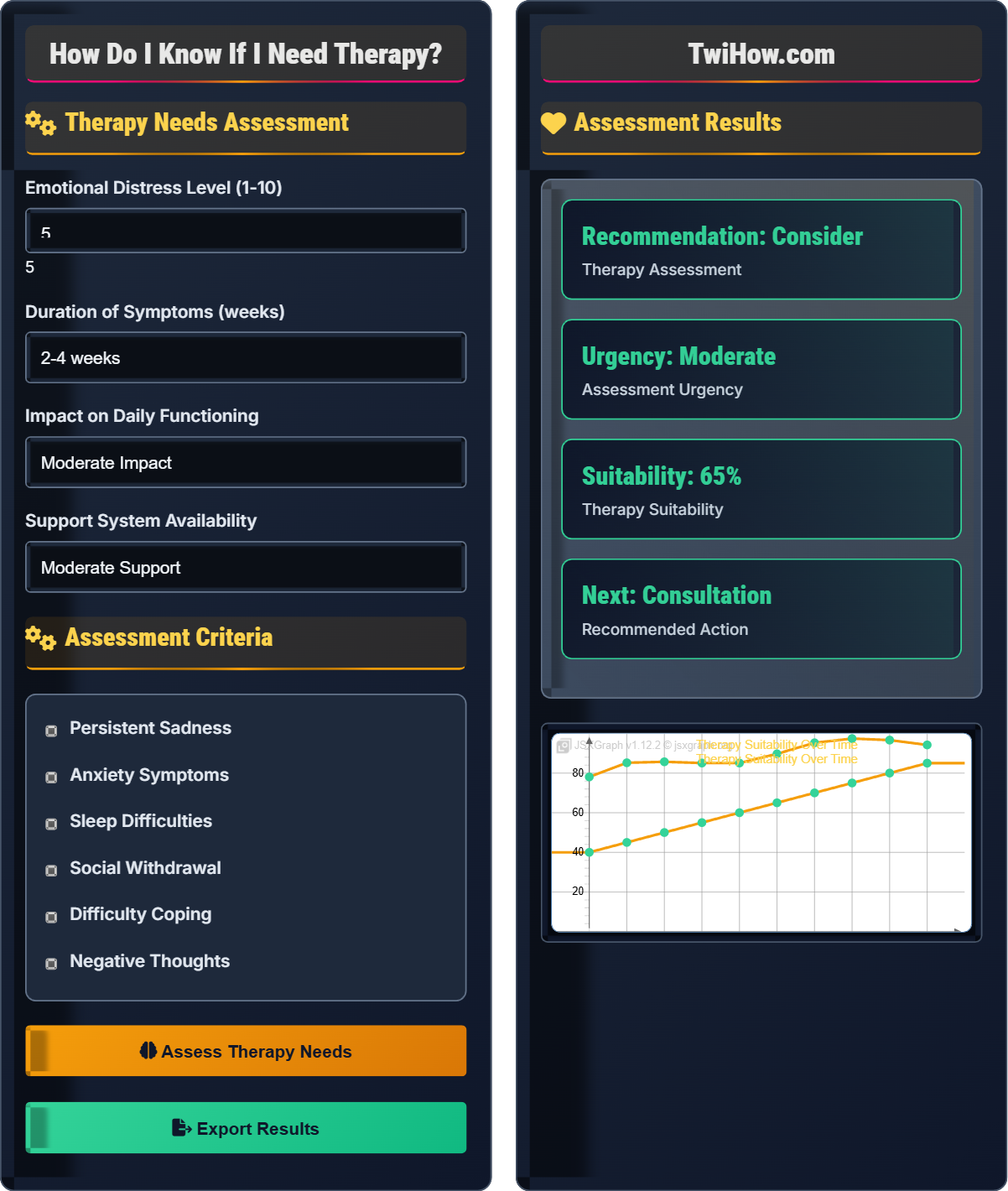
Therapy Needs Assessment
Assessment Criteria
Assessment Results
| Factor | Assessment | Impact | Recommendation |
|---|---|---|---|
| Emotional Distress | Moderate | Medium | Consider therapy |
| Symptom Duration | 2-4 weeks | Medium | Monitor closely |
| Functional Impact | Moderate | Medium | Therapy beneficial |
| Support System | Moderate | Low | Supplement support |
| Coping Ability | Challenged | Medium | Skills development |
Therapy Needs Assessment Explained
Therapy, also known as psychotherapy or counseling, is a collaborative process between an individual and a qualified mental health professional. It involves talking about thoughts, feelings, behaviors, and life experiences in a safe, confidential environment. Therapy aims to help people understand themselves better, develop coping strategies, improve relationships, and make positive changes in their lives.
Therapy needs assessment follows a comprehensive framework:
Where:
- Symptom Severity: Intensity of emotional or behavioral symptoms
- Functional Impairment: Impact on daily life activities and relationships
- Duration: Length of time symptoms have persisted
- Coping Resources: Available support systems and personal coping strategies
Therapy can be beneficial for various life situations and mental health concerns:
- Life Transitions: Moving, job changes, relationship changes, retirement
- Stress Management: Work stress, family conflicts, financial pressures
- Mental Health Conditions: Depression, anxiety, PTSD, bipolar disorder
- Relationship Issues: Communication problems, divorce, grief, family conflicts
- Personal Growth: Self-esteem, life goals, identity exploration
- Trauma Recovery: Abuse, accidents, natural disasters, loss
- Cognitive Behavioral Therapy (CBT): Focuses on thoughts and behaviors
- Psychodynamic Therapy: Explores unconscious patterns and past experiences
- Humanistic Therapy: Emphasizes personal growth and self-actualization
- Family Therapy: Addresses relationship dynamics and family systems
- Group Therapy: Provides support through shared experiences
Therapy Fundamentals
Therapy, psychotherapy, counseling, mental health, emotional well-being, coping strategies.
Therapy Need = (Symptom Severity + Functional Impairment + Duration) / Coping Resources
Where Symptom Severity = emotional/behavioral intensity, Functional Impairment = daily life impact.
- Therapy is for everyone, not just severe cases
- Early intervention is often more effective
- Therapy requires commitment and patience
Application Strategies
Stress management, relationship counseling, trauma therapy, life coaching, personal development.
- Recognize signs that indicate therapy may be helpful
- Research different types of therapy and therapists
- Make initial contact and schedule consultation
- Commit to the therapeutic process
- Therapy is a personal choice
- It takes time to see results
- Not all therapists are the same
- Confidentiality is protected
Therapy Needs Assessment Learning Quiz
Which of the following is NOT a valid reason to consider therapy?
Having no problems at all and feeling completely satisfied with life is NOT a valid reason to consider therapy. While therapy can be beneficial for personal growth and optimization, it's not typically necessary when someone is genuinely thriving and has no concerns. The other options are all valid reasons to consider therapy: persistent emotional distress indicates a need for support, wanting to improve self-understanding shows healthy self-reflection, and seeking to optimize performance and relationships demonstrates proactive mental health maintenance.
The answer is D) Having no problems at all and feeling completely satisfied with life.
This question helps distinguish between legitimate reasons for therapy and situations where therapy might not be necessary. Therapy is most beneficial when there's a clear need or desire for support, growth, or change. It's important to understand that therapy is a tool for addressing challenges and enhancing well-being, not a requirement for everyone at all times.
Therapy: Professional support for mental health and well-being
Personal Growth: Development of self-awareness and capabilities
Mental Health: Psychological and emotional well-being
• Therapy is for addressing challenges
• Personal growth is a valid goal
• Not everyone needs therapy
• Consider therapy for persistent issues
• Personal growth is a valid reason
• Therapy isn't always necessary
• Believing everyone needs therapy
• Thinking therapy is only for severe problems
• Not recognizing personal growth as valid
Explain the difference between therapy for ongoing mental health concerns and crisis intervention, and when each is appropriate.
Therapy for Ongoing Mental Health Concerns:
• Duration: Typically involves regular sessions over weeks, months, or years
• Focus: Addressing persistent symptoms, developing coping strategies, personal growth
• Approach: Gradual, exploratory, building skills and insights over time
• Examples: Depression, anxiety disorders, relationship issues, trauma processing
Crisis Intervention:
• Duration: Short-term, intensive support during acute crises
• Focus: Immediate stabilization, safety, connecting to resources
• Approach: Rapid assessment, immediate support, quick action
• Examples: Suicidal ideation, domestic violence, recent trauma, acute psychotic episodes
When Each is Appropriate:
Therapy is appropriate for ongoing concerns that affect daily functioning, persistent emotional distress, or personal development goals. Crisis intervention is needed when there's immediate danger to safety, severe mental health emergencies, or acute traumatic events requiring immediate support.
Understanding the distinction between therapy and crisis intervention is crucial for appropriate help-seeking. Both serve important but different functions in mental health care. Therapy provides ongoing support for chronic issues, while crisis intervention addresses immediate emergencies. Knowing the difference helps individuals access the right level of care for their specific needs.
Therapy: Ongoing professional mental health support
Crisis Intervention: Immediate support during emergencies
Acute Crisis: Immediate mental health emergency
• Different issues require different approaches
• Crisis intervention is for emergencies
• Therapy is for ongoing concerns
• Recognize when you need immediate help
• Therapy is for ongoing support
• Crisis hotlines are available 24/7
• Confusing therapy with crisis intervention
• Not seeking crisis help when needed
• Expecting therapy to solve emergencies
A 35-year-old person has been experiencing mild anxiety and difficulty sleeping for the past 3 months. They've tried self-help strategies but haven't seen significant improvement. They have a supportive family and good insurance coverage. Their work performance has declined slightly, but they're still able to maintain relationships. Design an assessment plan to determine if therapy would be beneficial.
Assessment Factors:
1. Symptom Duration: 3 months of persistent symptoms indicates chronic rather than temporary issues
2. Severity: Mild anxiety but affecting sleep and work performance
3. Self-Help Efforts: Attempted strategies without success suggests need for professional support
4. Functional Impact: Declining work performance indicates some functional impairment
5. Support System: Strong family support is beneficial for therapy
6. Insurance Coverage: Good access to professional services
Assessment Plan:
7. Initial Consultation: Schedule with a licensed therapist for comprehensive evaluation
8. Therapy Type: Consider CBT for anxiety and sleep issues
9. Duration: Short-term therapy (12-16 sessions) initially
10. Goals: Reduce anxiety, improve sleep, enhance work performance
Conclusion: Based on the assessment, therapy would likely be beneficial given the duration of symptoms, functional impact, and unsuccessful self-help attempts.
This example demonstrates how to systematically evaluate therapy needs by considering multiple factors. The combination of persistent symptoms, functional impact, and failed self-help efforts suggests professional intervention would be beneficial. Having supportive resources and good access to care makes therapy a viable option.
Functional Impact: Effect on daily life activities
Self-Help Strategies: Personal attempts to manage symptoms
Therapy Assessment: Evaluation of therapy needs
• Consider multiple factors
• Duration matters
• Failed self-help indicates need
• Evaluate symptoms systematically
• Consider functional impact
• Try self-help first
• Ignoring persistent symptoms
• Not considering functional impact
• Waiting too long to seek help
You're helping someone decide what type of therapy would be most appropriate for their situation. They're experiencing depression related to childhood trauma, have negative thought patterns, and want to understand how past experiences affect current relationships. Explain which therapy approaches would be most suitable and why.
Recommended Approaches:
1. Trauma-Focused Cognitive Behavioral Therapy (TF-CBT): Addresses both trauma and negative thought patterns. Helps process traumatic memories while developing healthier thinking patterns.
2. Psychodynamic Therapy: Explores how childhood experiences affect current relationships and behaviors. Provides deep understanding of unconscious patterns.
3. Eye Movement Desensitization and Reprocessing (EMDR): Specifically effective for processing traumatic memories and reducing their emotional impact.
4. Integrative Therapy: Combines elements from different approaches to address multiple aspects of the person's concerns.
Why These Approaches:
• TF-CBT directly addresses both trauma and negative thoughts
• Psychodynamic therapy explores past-present connections
• EMDR is evidence-based for trauma processing
• Integrative approaches can address multiple concerns simultaneously
Considerations: The person should consult with qualified therapists to determine which approach feels most suitable for their personality and preferences.
Therapy type selection should match the individual's specific concerns and needs. Different approaches have different strengths and are more effective for certain issues. It's important to consider both the presenting problems and the person's preferences when selecting a therapeutic approach.
TF-CBT: Trauma-focused cognitive behavioral therapy
EMDR: Eye movement desensitization and reprocessing
Psychodynamic Therapy: Focuses on unconscious patterns
• Match therapy to specific needs
• Consider personal preferences
• Evidence-based approaches work best
• Research different approaches
• Consult with therapists
• Consider combination approaches
• Assuming one therapy fits all
• Not considering specific needs
• Ignoring therapist recommendations
What is the most important factor for therapy effectiveness?
Research consistently shows that the therapeutic relationship between client and therapist is the most important factor for therapy effectiveness. This relationship, also called the therapeutic alliance, involves trust, collaboration, and mutual respect. While therapist credentials, therapy type, and session duration are important, the quality of the relationship between therapist and client is the strongest predictor of positive outcomes.
The answer is B) The therapeutic relationship between client and therapist.
This finding highlights the importance of finding a therapist with whom you feel comfortable and can build trust. The therapeutic relationship provides the foundation for all other therapeutic work. This is why it's important to consider personal compatibility when choosing a therapist, not just their credentials or approach.
Therapeutic Alliance: Collaborative relationship between client and therapist
Therapeutic Relationship: Professional connection built on trust
Therapy Effectiveness: Positive outcomes from therapy
• Relationship quality matters most
• Trust is essential
• Compatibility is important
• Prioritize relationship over credentials
• Trust your instincts
• Consider multiple consultations
• Focusing only on credentials
• Not considering personal fit
• Staying with incompatible therapist
FAQ
Q: Is it normal to feel anxious about starting therapy?
A: Yes, it's completely normal to feel anxious about starting therapy. Here's why:
Common Anxieties:
• Fear of judgment or being misunderstood
• Uncertainty about what to expect
• Vulnerability of sharing personal issues
• Concerns about therapist compatibility
• Stigma associated with seeking help
Why This is Normal:
• You're opening up to a stranger about personal matters
• It's a significant step that involves vulnerability
• You may have concerns about effectiveness
• Past negative experiences with authority figures
Managing the Anxiety:
• Remember therapists are trained to create safe spaces
• You can take the process at your own pace
• It's okay to ask questions and express concerns
• Many people feel the same way initially
• The anxiety typically decreases after a few sessions
Your anxiety about therapy is actually a positive sign that you're taking an important step toward self-care.
Q: How long does therapy typically take to be effective?
A: The timeline for therapy effectiveness varies greatly depending on several factors:
Short-term Therapy (1-16 sessions):
• Focused on specific issues or life transitions
• Cognitive Behavioral Therapy for anxiety/depression
• Crisis intervention or adjustment disorders
• Some people notice improvements within 4-6 sessions
Medium-term Therapy (16-24 sessions):
• More complex issues or multiple concerns
• Trauma therapy or relationship issues
• Personality pattern changes
• Significant improvements often seen after 3-6 months
Long-term Therapy (24+ sessions):
• Deep-seated personality patterns
• Complex trauma or personality disorders
• Personal growth and self-actualization
• Benefits accumulate over months to years
Factors Affecting Timeline:
• Severity and duration of symptoms
• Client motivation and engagement
• Therapeutic relationship quality
• Consistency of attendance
• Support system availability
• Realistic expectations
Remember that therapy is a collaborative process, and progress may be gradual with occasional setbacks.