How Do I Practice Mindfulness as a Beginner?
Complete mindfulness for beginners guide • Step-by-step explanations
Mindfulness for Beginners:
Show Mindfulness PlannerMindfulness is the practice of paying attention to the present moment without judgment. As a beginner, mindfulness involves developing awareness of your thoughts, feelings, bodily sensations, and surrounding environment. It's about observing your experience as it is, rather than trying to change it or judge it.
Mindfulness can be practiced formally through meditation or informally by bringing mindful awareness to everyday activities. The practice helps reduce stress, improve focus, enhance emotional regulation, and promote overall well-being.
Key mindfulness practices for beginners include:
- Basic Meditation: Focusing on breath, body sensations, or sounds
- Walking Meditation: Mindful awareness while walking
- Eating Mindfully: Paying attention to taste, texture, and sensations
- Body Scan: Systematic attention to different body parts
- Breathing Exercises: Conscious awareness of breath patterns
- Informal Practice: Bringing mindfulness to daily activities
Starting with just 5-10 minutes daily can lead to significant benefits and help establish a sustainable practice.
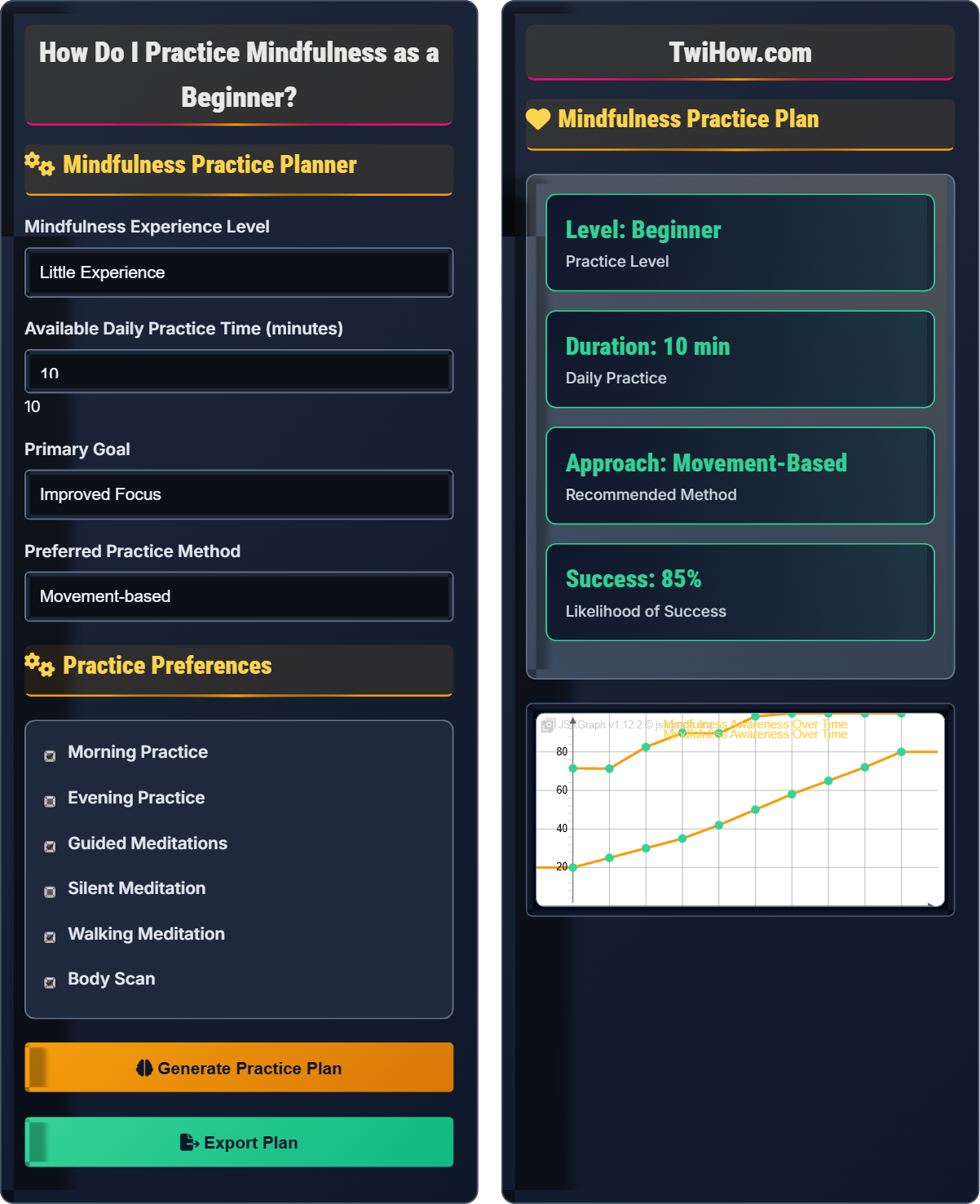
Mindfulness Practice Planner
Practice Preferences
Mindfulness Practice Plan
| Practice | Duration | Frequency | Benefits |
|---|---|---|---|
| Walking Meditation | 5 min | Daily | Focus, Grounding |
| Body Scan | 5 min | 3x/week | Relaxation, Awareness |
| Breathing Exercise | 3 min | Daily | Stress, Focus |
| Mindful Eating | 5 min | Daily | Enjoyment, Awareness |
| Informal Practice | 2 min | Throughout day | Continuity, Awareness |
Mindfulness for Beginners Explained
Mindfulness is the practice of paying attention to the present moment with openness, curiosity, and acceptance. It involves observing your thoughts, feelings, bodily sensations, and surroundings without judgment. The goal is to cultivate awareness of your experience as it unfolds, rather than getting caught up in thoughts about the past or future.
Mindfulness practice follows a structured approach:
Where:
- Attention: Focused awareness on the present moment
- Awareness: Noticing thoughts, feelings, and sensations
- Acceptance: Welcoming experiences without resistance
- Judgment: Critical evaluation that creates mental noise
Key areas where mindfulness provides significant benefits:
- Stress Reduction: Decreasing anxiety and stress responses
- Emotional Regulation: Managing difficult emotions more effectively
- Focus and Concentration: Improving attention and mental clarity
- Physical Health: Lowering blood pressure and reducing inflammation
- Sleep Quality: Improving sleep patterns and relaxation
- Relationships: Enhancing communication and empathy
- Formal Practice: Structured meditation sessions
- Informal Practice: Mindful awareness during daily activities
- Body-based: Focusing on physical sensations
- Breath-based: Using breathing as an anchor
- Movement-based: Mindful walking or yoga
Mindfulness Fundamentals
Mindfulness, meditation, awareness, present moment, acceptance, non-judgment, attention.
Mindfulness Quality = (Attention + Awareness + Acceptance) / Judgment
Where Attention = focused awareness, Awareness = noticing experiences.
- There's no "wrong" way to meditate
- It's normal for mind to wander
- Consistency matters more than duration
Application Strategies
Walking meditation, breathing exercises, body scan, mindful eating, informal practice, guided meditation.
- Start with short, manageable sessions
- Choose a consistent time and place
- Focus on your chosen anchor
- Return attention when distracted
- Progress takes time and patience
- Small daily practices are better than long sporadic ones
- Be kind to yourself during learning
- Practice is about awareness, not achievement
Mindfulness for Beginners Learning Quiz
What is the primary goal of mindfulness practice?
The primary goal of mindfulness practice is to pay attention to the present moment without judgment. Mindfulness is about observing your experience as it is, not trying to change it or escape from it. It involves developing awareness of thoughts, feelings, and sensations as they arise, without trying to control or eliminate them.
The answer is B) To pay attention to the present moment without judgment.
Understanding the true goal of mindfulness is crucial for beginners. Mindfulness is not about achieving a blank mind or escaping reality, but about developing a different relationship with your experience. It's about accepting what is present rather than fighting against it.
Mindfulness: Present-moment awareness without judgment
Non-judgment: Observing without evaluation
Present Moment: Awareness of current experience
• Awareness, not achievement
• Acceptance, not control
• Observation, not escape
• Notice thoughts without trying to change them
• Return attention to chosen focus
• Be patient with the process
• Expecting mental emptiness
• Trying to control thoughts
• Becoming frustrated with wandering mind
Explain what to do when your mind wanders during mindfulness practice and why this is a normal part of the process.
What to Do:
1. Notice the Wandering: Gently recognize that your mind has wandered without judgment.
2. Accept the Wandering: Acknowledge that mind-wandering is completely normal and expected.
3. Let Go: Release the thoughts or distractions without analyzing them.
4. Return Gently: Redirect attention back to your chosen focus point (breath, body, etc.).
5. Repeat: Continue this process throughout your practice.
Why It's Normal:
• Mind-wandering is the brain's natural tendency
• The mind is designed to think and plan
• Wandering and returning is the practice itself
• Each return strengthens attention muscles
Key Understanding: The act of noticing you've wandered and returning to your focus is the core practice. You're not failing when your mind wanders; you're practicing mindfulness by recognizing it and returning.
Understanding that mind-wandering is normal and part of the practice helps beginners avoid frustration. The "returning" aspect is actually the strengthening exercise for attention. Each time you notice and return, you're building mindfulness muscle.
Mind-Wandering: Natural tendency of thoughts to drift
Returning: Redirecting attention back to focus
Attention Training: Strengthening focus through practice
• Mind-wandering is normal
• Returning is the practice
• No judgment needed
• Thank your mind for sharing thoughts
• Gently return without criticism
• Notice patterns in wandering
• Getting frustrated with wandering
• Trying to force thoughts away
• Thinking it's a failure
A busy professional struggles with stress and finds it hard to sit still for meditation. They want to start practicing mindfulness but don't have time for long sessions. Design a beginner-friendly mindfulness plan that fits into their busy schedule and addresses their stress.
Movement-Based Approach:
1. Walking Meditation: 3-5 minute mindful walks during breaks or lunch
2. Transit Mindfulness: Mindful awareness during commutes (focusing on breath or sensations)
3. Desk Practice: 1-minute breathing exercises between meetings
Micro-Practices:
4. Transition Moments: 30-second mindful pause before entering new spaces
5. Phone Breaks: Mindful breathing before checking phone
6. Meal Awareness: 2-minute mindful eating practice
Evening Wind-Down:
7. Body Scan: 5-minute lying body scan before sleep
8. Breathing Exercise: 2-minute breath awareness to release stress
Total Daily Time: 15-20 minutes spread throughout the day, making mindfulness accessible and sustainable for busy professionals.
This approach demonstrates how mindfulness can be integrated into busy schedules through micro-practices. The key is consistency rather than duration, and finding moments throughout the day to bring awareness to the present moment.
Micro-Practices: Short mindfulness exercises throughout day
Integration: Bringing mindfulness into daily activities
Consistency: Regular practice over duration
• Small practices add up
• Consistency over duration
• Fit practice into life
• Use transitions as mindfulness cues
• Set phone reminders for practice
• Start with just one micro-practice
• Waiting for perfect conditions
• Expecting long practice sessions
• Not integrating into daily routine
You're helping someone understand body awareness in mindfulness. Explain how to practice body awareness and provide specific techniques that beginners can use to develop this skill.
What is Body Awareness:
Body awareness in mindfulness involves paying attention to physical sensations, tensions, and states without judgment. It helps develop connection between mind and body.
Specific Techniques:
1. Body Scan: Lie down and systematically focus on different body parts from toes to head, noticing sensations without changing them
2. Progressive Relaxation: Tense and release muscle groups to notice tension patterns
3. Posture Awareness: Notice sitting or standing posture, alignment, and comfort
4. Walking Awareness: Feel feet touching ground, weight shifting, body movement
5. Breath Awareness: Notice where you feel breathing in your body (chest, belly, nostrils)
6. Touch Awareness: Focus on sensations when touching objects, feeling textures
Beginner Tips:
• Start with 2-3 minute sessions
• Notice without trying to change anything
• Use "just noticing" language
• Expect some parts to feel "empty" of sensation
• Practice regularly for better sensitivity
Body awareness helps ground you in the present moment and increases self-awareness.
Body awareness is often easier for beginners than focusing on breath or thoughts. It provides a tangible anchor that helps develop the skill of present-moment awareness. The key is to notice sensations without trying to change them.
Body Awareness: Attention to physical sensations
Body Scan: Systematic attention to body parts
Physical Sensations: Feelings in the body
• Notice without changing
• Accept all sensations
• Start small and build
• Use "just noticing" language
• Start with obvious sensations
• Practice in different positions
• Trying to feel something specific
• Expecting intense sensations
• Getting frustrated with "empty" spots
Which breathing technique is most suitable for beginners to use as an anchor in mindfulness practice?
Natural, effortless breathing awareness is most suitable for beginners. This approach involves simply noticing the breath as it naturally flows in and out, without trying to control or change it. This creates a stable anchor that is always available and doesn't require special techniques or effort to maintain.
The answer is B) Natural, effortless breathing awareness.
For beginners, simplicity is key. Natural breathing provides a reliable anchor that doesn't require additional mental effort. Complex breathing patterns can become another source of distraction rather than a focus point. The goal is awareness, not control.
Natural Breathing: Uncontrolled, normal breathing pattern
Breath Awareness: Noticing breath without manipulation
Anchor: Focus point for attention
• No control, just awareness
• Natural is best for beginners
• Consistency over complexity
• Notice where you feel breath
• Don't try to change anything
• Use breath as gentle anchor
• Trying to control breathing
• Using complex patterns
• Focusing too intensely
FAQ
Q: How long should I practice mindfulness as a beginner?
A: As a beginner, start with short, manageable sessions:
Recommended Durations:
• 5-10 minutes for sitting meditation (start here)
• 3-5 minutes for walking meditation
• 1-2 minutes for micro-practices during day
Consistency vs. Duration:
• Daily 5-minute practice is better than weekly 30-minute sessions
• Consistency builds the habit and develops the skill
• You can gradually increase duration as comfort grows
Progression:
• Week 1-2: 5 minutes daily
• Week 3-4: 7-10 minutes daily
• Month 2+: 10-15 minutes as desired
Remember: any amount of practice is better than none. Start where you feel comfortable and build gradually.
Q: What if I don't feel anything during mindfulness practice?
A: Not feeling anything is completely normal and part of the practice:
Why This Happens:
• Your mind may be quieter than expected
• Sensations may be subtle
• You might be paying attention without dramatic experiences
• This is often a sign of settling into the practice
What to Do:
• Continue the practice without expectation
• Notice the "noticing" itself
• Observe the absence of sensation
• Appreciate the calm, even if subtle
Understanding:
• Mindfulness isn't about having dramatic experiences
• The practice is in the paying attention
• Subtle awareness is still awareness
• Trust the process even when nothing "happens"
The fact that you're noticing the "nothing" means you're practicing mindfulness successfully.