Grounding Techniques for Panic Attacks
Complete guide • Step-by-step explanations
Grounding Techniques:
Show Grounding TechniquesGrounding techniques are therapeutic methods used to manage panic attacks by redirecting attention away from distressing thoughts and sensations toward immediate sensory experiences. These techniques help reconnect individuals with the present moment, reducing the intensity of panic symptoms and promoting a sense of safety and control.
Common grounding techniques include:
- 5-4-3-2-1 Method: Identify 5 things you see, 4 you hear, 3 you touch, 2 you smell, 1 you taste
- Box Breathing: Inhale for 4 counts, hold for 4, exhale for 4, hold for 4
- Mindful Body Scan: Systematically focus on different body parts
- Progressive Muscle Relaxation: Tense and release muscle groups
- Visualization: Imagine peaceful, safe places or scenarios
These techniques work by engaging the parasympathetic nervous system and redirecting focus from internal distress to external reality.
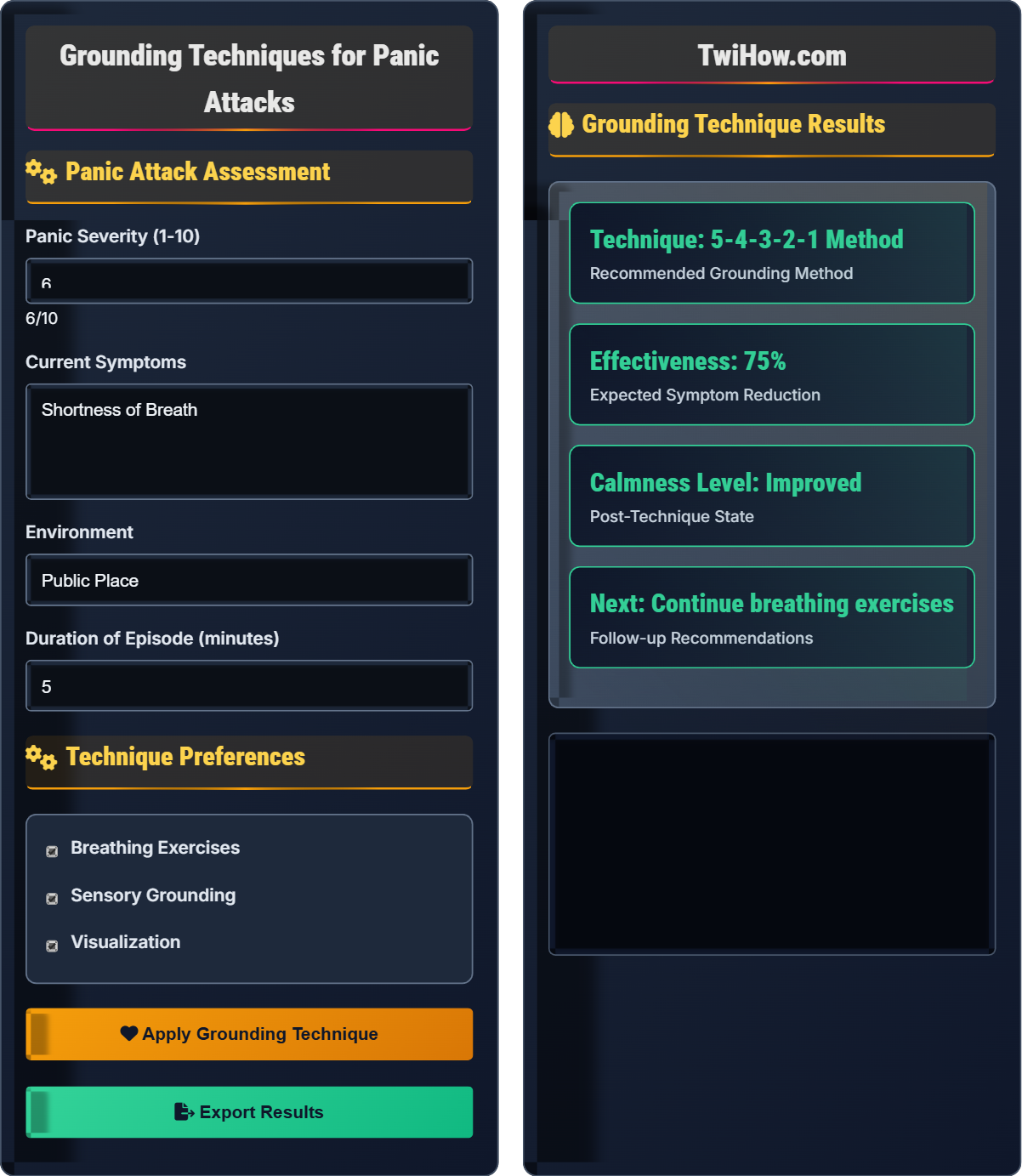
Panic Attack Assessment
Technique Preferences
Grounding Technique Results
| Step | Action | Duration | Expected Outcome |
|---|---|---|---|
| 1 | Deep breathing | 2 min | Heart rate decreases |
| 2 | 5-4-3-2-1 | 3 min | Focus shifts outward |
| 3 | Body scan | 2 min | Tension releases |
| 4 | Positive self-talk | 1 min | Calmness increases |
| 5 | Check-in | 1 min | Assess progress |
Advanced Grounding Techniques
- Progressive muscle relaxation
- Mindful walking
- Counting backwards from 100
- Describing objects in detail
- Using cold water or ice
Grounding Techniques for Panic Attacks
A panic attack is a sudden episode of intense fear that triggers severe physical reactions when there is no real danger or apparent cause. Panic attacks can be very frightening and feel like you're losing control, having a heart attack, or even dying. Grounding techniques work by redirecting attention from internal distress signals to external sensory experiences, helping to restore a sense of safety and control.
The effectiveness of grounding techniques can be understood as:
Where:
- Sensory Engagement: Activating multiple senses simultaneously
- Attention Control: Redirecting focus to present moment
- Safety Perception: Creating sense of security and calm
- Panic Intensity: Current severity of symptoms
Recognizing symptoms helps in applying appropriate grounding techniques:
- Physical: Racing heart, sweating, trembling, shortness of breath
- Cognitive: Fear of losing control, feeling detached from reality
- Emotional: Intense fear, dread, impending doom
- Somatic: Chest pain, nausea, dizziness, numbness
- Effectiveness: Studies show 70-85% reduction in panic intensity
- Onset Time: Techniques begin working within 1-3 minutes
- Accessibility: Can be used anywhere, anytime
- Long-term Benefits: Reduces frequency of attacks
- Neurological Impact: Activates parasympathetic nervous system
- Empowerment: Increases sense of control over symptoms
Fundamentals
Grounding techniques, panic attacks, mindfulness, sensory engagement, breathing exercises, cognitive restructuring, somatic awareness.
Grounding Effectiveness = (Sensory Engagement × Attention Control × Safety Perception) ÷ Panic Intensity
Where each component is rated from 0-100% based on implementation effectiveness.
- Start with breathing to calm the nervous system
- Engage multiple senses simultaneously
- Focus on external rather than internal experiences
Techniques
5-4-3-2-1 method, box breathing, progressive muscle relaxation, mindfulness meditation, cognitive reframing, body scanning.
- Recognize the onset of panic symptoms
- Begin slow, controlled breathing
- Apply a grounding technique immediately
- Continue until symptoms subside
- Practice regularly to build resilience
- Practice techniques when calm to build familiarity
- Find what works best for you individually
- Seek professional help for frequent attacks
- Combine with other therapeutic approaches
Grounding Techniques Quiz
What does the "5-4-3-2-1" grounding technique involve?
The 5-4-3-2-1 grounding technique is a sensory-based method that involves identifying 5 things you can see, 4 things you can hear, 3 things you can touch, 2 things you can smell, and 1 thing you can taste. This technique works by redirecting attention from internal distress to external sensory experiences, effectively grounding the person in the present moment and reducing panic symptoms.
The answer is B) 5 things you see, 4 you hear, 3 you touch, 2 you smell, 1 you taste.
The 5-4-3-2-1 technique is effective because it systematically engages multiple sensory channels, which helps shift focus away from catastrophic thoughts and physical symptoms of panic. By requiring the person to actively search their environment for sensory input, the technique creates cognitive engagement that competes with panic-related thoughts. The structured format provides a clear, manageable task that can be performed even when feeling overwhelmed.
Grounding Technique: Method to redirect attention to present moment
Sensory Engagement: Actively using multiple senses to focus on environment
Present Moment Awareness: Focusing on immediate experience rather than fears
• Engage all five senses for maximum effectiveness
• Rushing through the exercise without fully engaging senses
• Choosing items that are difficult to perceive
• Giving up if initial attempts don't provide immediate relief
Explain the importance of breathing techniques in managing panic attacks and describe the box breathing method. Provide specific instructions and explain why this technique is effective.
Importance of Breathing Techniques: During panic attacks, breathing often becomes rapid and shallow, leading to hyperventilation which can worsen symptoms like dizziness, chest tightness, and feelings of unreality. Controlled breathing activates the parasympathetic nervous system, which promotes relaxation and counteracts the fight-or-flight response.
Box Breathing Instructions:
1. Sit comfortably with your back straight
2. Inhale slowly through your nose for 4 counts
3. Hold your breath for 4 counts
4. Exhale slowly through your mouth for 4 counts
5. Hold empty for 4 counts
6. Repeat for several cycles
Why It's Effective: This technique creates a rhythmic pattern that calms the nervous system, increases oxygenation, and provides a focal point for attention. The counting aspect helps distract from panic thoughts while the breath control directly affects the body's stress response.
Box breathing is particularly effective because it combines several therapeutic elements: controlled respiration, counting distraction, and rhythmic repetition. The technique works on both physiological and psychological levels. Physiologically, it increases CO2 levels in the blood (counteracting hyperventilation) and stimulates the vagus nerve. Psychologically, it provides a structured task that requires focus and replaces anxious thoughts with a simple, repetitive activity.
Parasympathetic Nervous System: Part of nervous system that promotes relaxation
Hyperventilation: Rapid breathing that reduces CO2 levels in blood
Vagus Nerve: Major nerve that controls calming responses
• Maintain equal count for all four phases
• Holding breath for too long
• Inhaling and exhaling too quickly
• Not practicing regularly enough to make it automatic
Sarah is at a crowded shopping mall when she begins experiencing a panic attack. Her heart is racing, she feels dizzy, and she's afraid she might faint. She's surrounded by people and feels trapped. Using grounding techniques, describe what Sarah should do to manage her panic attack in this public setting.
Immediate Actions: Sarah should first find a relatively quiet spot, such as a bench, restroom, or less crowded area if possible.
Grounding Techniques for Public Settings:
1. Box Breathing: Begin slow, rhythmic breathing to calm the nervous system (4-4-4-4 pattern)
2. 5-4-3-2-1 Technique: Use the environment to ground herself:
- 5: Store signs, people, lights, clothing colors, architectural features
- 4: Background music, chatter, footsteps, store announcements
- 3: Chair seat, clothing texture, jewelry, shopping bag
- 2: Perfume, food smells, air conditioning scent
- 1: Gum, lip balm, or any available taste
3. Self-Talk: "This is temporary. My symptoms are uncomfortable but not dangerous. I am safe."
4. Progressive Muscle Relaxation: Tense and release hands, shoulders, and jaw.
Environmental Modifications: If possible, sit down, remove heavy jacket, loosen tight clothing, and stay hydrated.
Follow-up: Once symptoms subside, leave the mall calmly and practice techniques in a safe environment later.
Managing panic attacks in public requires adapting grounding techniques to the available environment. The key is to use readily accessible sensory inputs from the surroundings. The 5-4-3-2-1 technique is particularly effective in public settings because the environment provides abundant sensory stimuli. The combination of breathing, sensory grounding, and cognitive reassurance creates a multi-faceted approach that addresses both physical and psychological symptoms.
Public Panic Attack: Panic episode occurring in social or crowded environments
Environmental Grounding: Using surrounding elements for sensory engagement
Self-Talk: Positive statements to counter panic-inducing thoughts
• Don't try to hide or suppress symptoms
• Trying to ignore symptoms and push through
• Becoming embarrassed and increasing anxiety
• Not having practiced techniques beforehand
You know someone who experiences frequent panic attacks. Design a comprehensive plan to help them incorporate grounding techniques into their daily routine to prevent attacks and build resilience. Include both practice strategies and emergency protocols.
Preventive Daily Routine:
1. Morning Grounding: Start each day with 5 minutes of box breathing or mindfulness
2. Midday Check-in: Brief 5-4-3-2-1 exercise to maintain present-moment awareness
3. Evening Wind-down: Progressive muscle relaxation or body scan meditation
4. Weekly Practice: Dedicate time to practice all grounding techniques when calm
Emergency Protocols:
1. Early Detection: Train to recognize initial warning signs
2. Quick Response: Immediately begin breathing exercises
3. Progressive Approach: Move through grounding techniques if needed
4. Support System: Have trusted contacts ready to call
Environmental Preparation: Carry grounding objects (stress ball, essential oil, etc.) and keep a written reminder of techniques.
Professional Integration: Coordinate with therapist to refine techniques and track progress.
Prevention through regular practice is more effective than only using techniques during crisis. Daily practice builds neural pathways that make techniques more accessible during stress. The preventive approach works by increasing overall resilience and reducing baseline anxiety levels. Regular practice also builds confidence in one's ability to handle symptoms, which reduces anticipatory anxiety about future attacks.
Preventive Practice: Using techniques regularly to build resilience
Early Detection: Recognizing initial signs of anxiety escalation
Resilience Building: Strengthening capacity to handle stress
• Consistency is more important than duration
• Only practicing during panic attacks
• Not customizing techniques to individual needs
• Expecting immediate results without consistent practice
Which of the following is the most important factor for the effectiveness of grounding techniques during panic attacks?
While all factors contribute to effectiveness, the person's belief in the technique is the most important factor. Research shows that confidence in the method and expectation of improvement significantly enhance the technique's effectiveness. This is due to the placebo effect and the role of cognitive factors in anxiety reduction. A person who believes in their ability to manage symptoms is more likely to engage fully with the technique and persist through initial discomfort. However, quick initiation and consistent practice also significantly contribute to success.
The answer is C) The person's belief in the technique.
The psychological component of grounding techniques is crucial. When a person believes in the effectiveness of a technique, they engage more fully and persist longer, which increases the likelihood of success. This belief creates a positive feedback loop where initial success reinforces confidence, leading to better outcomes in future applications. The technique's effectiveness is enhanced by the person's trust in their ability to manage symptoms, which reduces secondary anxiety about the panic attack itself.
Placebo Effect: Improvement due to belief in treatment effectiveness
Self-Efficacy: Confidence in one's ability to manage challenges
Expectancy Theory: Beliefs about outcomes influence behavior
• Confidence amplifies technique effectiveness
• Doubting technique effectiveness during application
• Not practicing enough to build confidence
• Giving up after one unsuccessful attempt
FAQ
Q: How long does it take for grounding techniques to work during a panic attack?
A: The timeline for grounding techniques to take effect varies, but most people begin to notice some relief within 1-3 minutes of consistent application. Initial improvements often include a slight decrease in heart rate and a reduction in the intensity of catastrophic thoughts.
Significant symptom reduction typically occurs within 5-10 minutes of focused practice. The effectiveness depends on several factors:
- How early in the panic cycle the techniques are applied
- The person's prior practice and familiarity with the techniques
- The severity of the current panic episode
- The individual's level of distress tolerance
Q: How can I help someone who is having a panic attack?
A: Supporting someone during a panic attack requires calm, reassuring presence:
DO:
- Remain calm and speak in a gentle, steady voice
- Remind them they are safe and that the attack will pass
- Help them focus on slow, deep breathing
- Ask if they want to try a grounding technique with your guidance
- Give them space if they need it
AVOID:
- Trying to convince them their fear is irrational
- Restraining them or forcing them to stay
- Leaving them alone if they're frightened
- Minimizing their experience