What Is the Role of Exercise in Managing Mental Health?
Complete exercise-mental health guide • Step-by-step explanations
Exercise-Mental Health Connection:
Show Exercise-Mental Health CalculatorExercise plays a crucial role in mental health management by releasing endorphins, reducing stress hormones, and promoting neuroplasticity. Regular physical activity has been shown to be as effective as antidepressant medications for some individuals with mild to moderate depression, and significantly reduces anxiety, stress, and improves overall mood.
Exercise benefits mental health through multiple biological and psychological mechanisms including the release of endorphins and endocannabinoids, increased BDNF (brain-derived neurotrophic factor) production, improved sleep quality, enhanced self-esteem, and stress reduction. These effects create lasting improvements in mood, cognitive function, and emotional regulation.
Key mental health benefits include:
- Mood Enhancement: Release of endorphins and neurotransmitters that improve mood
- Stress Reduction: Decreased cortisol and improved stress response
- Anxiety Relief: Reduced anxiety symptoms and improved coping
- Depression Management: Antidepressant effects comparable to some medications
- Neuroplasticity: Enhanced brain function and cognitive performance
Research consistently shows that even moderate exercise can significantly improve mental health outcomes across all age groups.
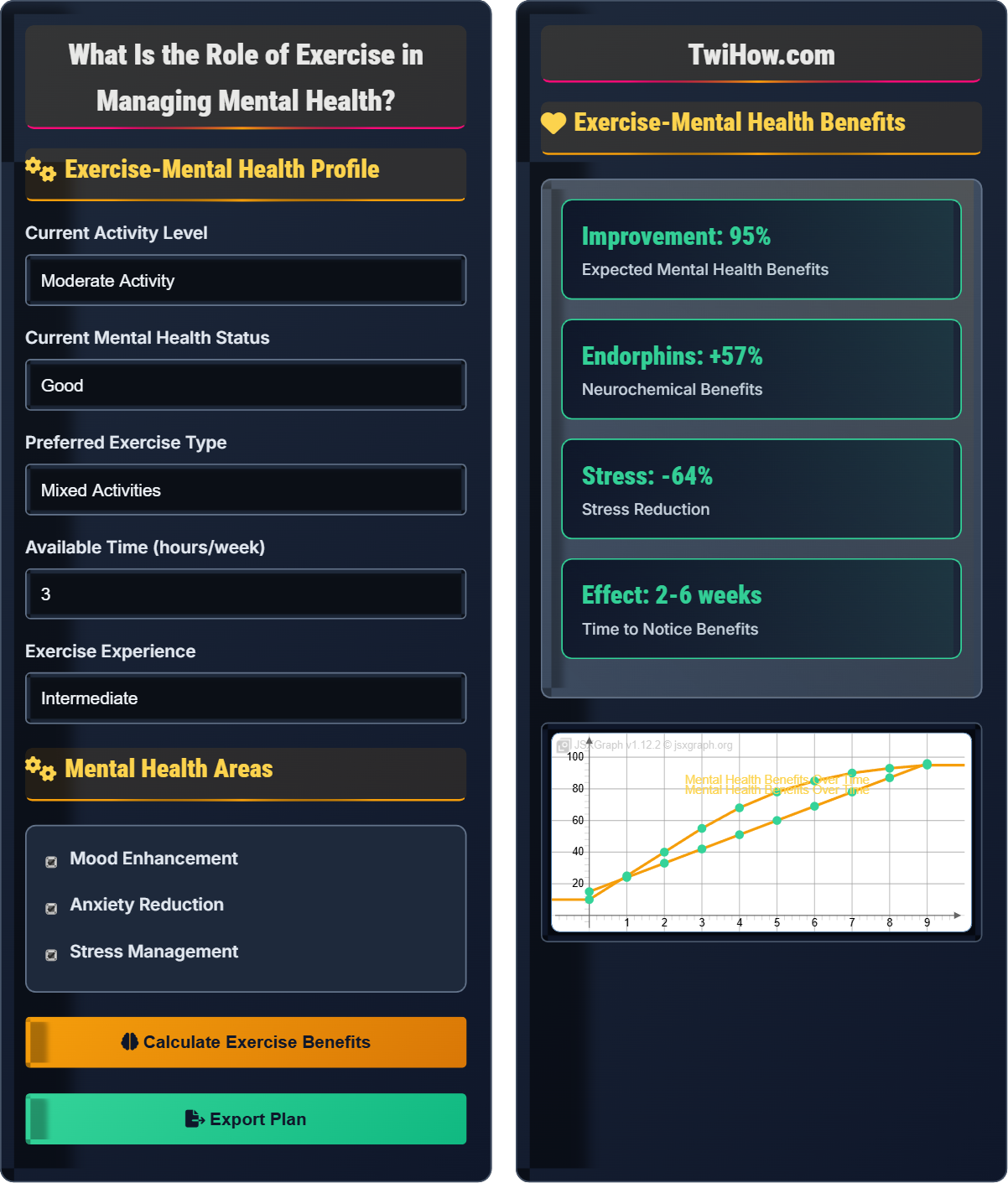
Exercise-Mental Health Profile
Mental Health Areas
Exercise-Mental Health Benefits
| Exercise | Frequency | Mental Health Benefit | Duration |
|---|---|---|---|
| Brisk Walking | 5x/week | Mood Enhancement | 30 min |
| Yoga | 3x/week | Stress Reduction | 45 min |
| Strength Training | 2x/week | Self-Esteem | 45 min |
| Swimming | 2x/week | Anxiety Relief | 30 min |
Exercise-Mental Health Connection Explained
Exercise positively impacts mental health through multiple interconnected biological and psychological mechanisms. Physical activity stimulates the release of endorphins, often called "feel-good" hormones, which create feelings of euphoria and pain relief. Exercise also increases the production of neurotransmitters like serotonin, dopamine, and norepinephrine, which play crucial roles in mood regulation.
Additionally, exercise promotes neuroplasticity by increasing BDNF (brain-derived neurotrophic factor), which supports the growth and survival of neurons. Regular physical activity also reduces inflammation, improves sleep quality, and enhances self-esteem through achievement and physical capability.
Mental Health Improvement = (Exercise Intensity × Duration × Frequency) × (Neurochemical Boost + Stress Reduction + Self-Esteem Enhancement)
Where:
- Exercise Intensity: Moderate to vigorous activity level
- Duration: Minutes per session
- Frequency: Sessions per week
- Neurochemical Boost: Endorphin and neurotransmitter release
- Stress Reduction: Cortisol decrease and relaxation
- Self-Esteem Enhancement: Achievement and capability
Exercise provides targeted benefits for various mental health conditions:
- Depression: Studies show exercise can be as effective as antidepressants for mild-moderate depression
- Anxiety: Reduces anxiety symptoms and improves coping mechanisms
- Stress: Decreases cortisol levels and activates parasympathetic nervous system
- ADHD: Improves focus, attention, and executive function
- Dementia Prevention: Supports cognitive health and neuroplasticity
- Sleep Quality: Regulates circadian rhythms and promotes restorative sleep
- Endorphins: Natural opioids that create feelings of euphoria and pain relief
- Serotonin: Mood-regulating neurotransmitter that improves well-being
- Dopamine: Reward pathway activator that enhances motivation
- Norepinephrine: Alertness and attention enhancer
- BDNF: Brain growth factor that supports neuron health
- GABA: Inhibitory neurotransmitter that reduces anxiety
Exercise-Mental Health Fundamentals
Endorphins, neuroplasticity, BDNF, neurotransmitters, exercise therapy, mental health benefits.
Mental Health Score = (Exercise Volume × Consistency) + (Neurochemical Response × Individual Factors)
Where Mental Health Score indicates improvement level, components are weighted by research evidence.
- Even light exercise provides benefits
- Consistency is more important than intensity
- Effects are cumulative over time
Applications
Depression management, anxiety reduction, stress relief, ADHD support, cognitive enhancement.
- Assess current fitness level
- Choose enjoyable activities
- Start gradually and build consistency
- Track progress and adjust
- Individual responses vary
- Combination with other treatments
- Medical clearance may be needed
- Gradual progression is safest
Exercise-Mental Health Learning Quiz
Which neurotransmitter is most directly associated with the "runner's high" phenomenon?
Endorphins are the neurotransmitters most directly associated with the "runner's high" phenomenon. These natural opioids are released during prolonged exercise and create feelings of euphoria and pain relief. While other neurotransmitters are also released during exercise, endorphins are specifically responsible for the euphoric feeling associated with intense or prolonged physical activity.
The answer is B) Endorphins.
The "runner's high" is a well-documented phenomenon where prolonged exercise creates feelings of euphoria and reduced pain perception. This occurs because endorphins bind to opioid receptors in the brain, similar to morphine but naturally produced. Understanding this mechanism helps explain why exercise can be so effective for mood enhancement and pain management.
Endorphins: Natural opioids released during exercise
Runner's High: Euphoric feeling during prolonged exercise
Neurotransmitters: Chemical messengers in the brain
• Endorphins create euphoria
• Released during prolonged exercise
• Bind to opioid receptors
• Prolonged activity triggers endorphins
• Not immediate - takes time
• Creates natural pain relief
• Confusing with other neurotransmitters
• Thinking it's immediate
• Not understanding opioid effect
Explain how exercise can be as effective as antidepressant medication for some individuals with depression, and what the research shows regarding exercise as a treatment option.
Research on Exercise vs. Antidepressants:
Blumenthal Study (2007): A landmark study found that exercise was as effective as antidepressant medication (sertraline) for treating major depression in older adults. The study showed that 41% of participants in the exercise group achieved remission compared to 40% in the medication group.
Mechanisms of Action:
1. Neurotransmitter Regulation: Exercise increases serotonin, dopamine, and norepinephrine levels, similar to how antidepressants work. Regular physical activity can normalize neurotransmitter imbalances associated with depression.
2. Neuroplasticity: Exercise increases BDNF (brain-derived neurotrophic factor), which supports neuron growth and repair. Depression is associated with reduced BDNF, so exercise helps reverse this process.
3. Stress Response: Exercise reduces cortisol levels and improves the body's response to stress, which often contributes to depression.
4. Self-Efficacy: Regular exercise provides a sense of accomplishment and control, which are often diminished in depression.
Meta-Analyses: Multiple meta-analyses have confirmed that exercise has moderate to large antidepressant effects, with the strongest evidence for aerobic exercise. The effect sizes are comparable to psychotherapy and medication for mild to moderate depression.
Population-Specific Benefits: Exercise appears particularly effective for older adults, pregnant women, and those who prefer non-pharmacological interventions.
Important Note: While exercise can be highly effective, it should be used as part of a comprehensive treatment plan and under medical supervision for severe depression.
This research challenges the traditional view that depression requires medication. Exercise works through similar biological pathways as antidepressants, demonstrating that lifestyle interventions can have profound effects on brain chemistry. The key is understanding that exercise is a legitimate medical intervention with measurable physiological effects.
BDNF: Brain-derived neurotrophic factor
Remission: Absence of depressive symptomsNeuroplasticity: Brain's ability to adapt and grow
• Exercise equals medication for mild-moderate depression
• Works through similar mechanisms
• Should be supervised for severe cases
• Consistent aerobic exercise is most effective
• Combine with other treatments
• Start gradually and build consistency
• Thinking exercise is less legitimate
• Not taking it seriously as treatment
• Expecting immediate results
Sarah has been diagnosed with generalized anxiety disorder and experiences constant worry and physical tension. She wants to incorporate exercise to manage her symptoms but is unsure which type would be most effective. What exercise recommendations should she follow, and why?
Recommended Exercise Approach for Anxiety:
1. Aerobic Exercise: Activities like brisk walking, jogging, swimming, or cycling are highly effective for anxiety. These activities provide rhythmic, repetitive movements that can have a meditative quality and help reduce physical tension.
2. Yoga and Tai Chi: These mind-body exercises are particularly effective for anxiety because they combine physical movement with mindfulness and controlled breathing. The focus on breath and body awareness helps interrupt anxious thought patterns.
3. Progressive Muscle Relaxation: Strength training and resistance exercises can help release physical tension held in the muscles, which often accompanies anxiety.
Specific Recommendations:
Frequency: 3-5 times per week
Duration: 30-45 minutes per session
Intensity: Moderate (able to talk but not sing during activity)
Timing: Morning or afternoon exercise is generally better than evening, as it can interfere with sleep if done too close to bedtime.
Why These Work:
Physical Tension Release: Exercise helps release the physical symptoms of anxiety like muscle tension and restlessness.
Stress Hormone Reduction: Regular exercise reduces cortisol levels and helps regulate the stress response system.
Mindfulness Component: Focusing on movement and breath provides a break from anxious thoughts.
Self-Efficacy: Successfully completing exercise sessions builds confidence and a sense of control over one's body and emotions.
Important Note: Sarah should start gradually and consult with her healthcare provider before beginning any new exercise program, especially if she's taking anxiety medications.
Anxiety management through exercise works on multiple levels - physical, psychological, and neurological. The key is matching the exercise type to the specific symptoms of anxiety. Mind-body exercises are particularly effective because they address both the physical tension and the mental worry components of anxiety disorders.
Generalized Anxiety Disorder: Persistent worry about various topics
Mind-Body Exercise: Activities combining physical and mental focus
Cortisol: Stress hormone reduced by exercise
• Start gradually
• Mind-body exercises are effective
• Consistency is key
• Focus on rhythmic movements
• Combine with breathing exercises
• Choose enjoyable activities
• Starting too intensely
• Not considering mind-body benefits
• Ignoring medical consultation
Mark works in a high-stress corporate environment and experiences chronic stress, poor sleep, and irritability. He has 30 minutes available before work each morning. What type of exercise would be most beneficial for his stress management, and what are the expected benefits?
Recommended Exercise for Morning Stress Management:
Option 1: Moderate Cardio (20-25 minutes): Brisk walking, light jogging, or stationary cycling. This will help reduce cortisol levels, increase endorphins, and improve mood for the day ahead.
Option 2: Yoga or Tai Chi (25-30 minutes): These practices combine physical movement with mindfulness and controlled breathing, providing immediate stress relief and setting a calm tone for the day.
Option 3: High-Intensity Interval Training (HIIT) (15-20 minutes): Short bursts of intense activity followed by recovery periods. This can be efficient and provides significant stress relief through endorphin release.
Expected Benefits:
Immediate (during/after exercise):
• Reduced cortisol levels
• Increased endorphins and endocannabinoids
• Improved mood and reduced irritability
• Enhanced focus and mental clarity
Short-term (days-weeks):
• Better sleep quality
• Improved stress response
• Enhanced resilience to daily stressors
• Better emotional regulation
Long-term (weeks-months):
• Reduced baseline stress levels
• Improved cardiovascular health
• Enhanced cognitive function
• Better work-life balance
Implementation Strategy:
Start Small: Begin with 10-15 minutes and gradually increase to 30 minutes.
Consistency: Aim for 5-6 days per week to maximize stress management benefits.
Listen to Your Body: Adjust intensity based on how you feel and your stress levels.
Recovery: Include rest days and consider gentle activities like stretching on those days.
Research shows that even brief morning exercise can significantly improve stress management and cognitive performance throughout the day.
Morning exercise is particularly effective for stress management because it helps regulate the body's stress response system from the start of the day. The exercise acts as a "stress inoculation," making the body more resilient to subsequent stressors. This approach also provides a consistent routine that can serve as an anchor during chaotic times.
Stress Inoculation: Building resilience through manageable stress
Endocannabinoids: Neurochemicals released during exercise
Cortisol: Primary stress hormone
• Morning exercise sets positive tone
• Consistency is more important than intensity
• Start small and build gradually
• Prepare equipment the night before
• Choose enjoyable activities
• Track stress levels to see improvement
• Starting too intense for morning
• Not maintaining consistency
• Ignoring proper warm-up
According to research, what is the minimum amount of exercise needed to see significant mental health benefits?
Research shows that mental health benefits can be seen with as little as 10-15 minutes of physical activity. Studies have demonstrated that even brief periods of exercise can improve mood, reduce anxiety, and enhance cognitive function. While the standard recommendation is 150 minutes per week for overall health, mental health benefits can be achieved with much less, making exercise accessible even for those with busy schedules.
The answer is C) As little as 10-15 minutes of any physical activity.
This is an important finding that removes barriers to exercise for mental health. Many people believe they need to engage in lengthy, structured workouts to see benefits, but research shows that even small amounts of physical activity can have immediate positive effects on mood and stress levels. This makes exercise a practical tool for mental health management regardless of schedule constraints.
Mental Health Benefits: Improvements in mood and cognitive function
Physical Activity: Any bodily movement that expends energy
Accessibility: Ease of participation regardless of constraints
• Benefits start with minimal activity
• More is better but some is sufficient
• Consistency matters more than intensity
• Start with small amounts
• Build gradually
• Focus on consistency over perfection
• Thinking large amounts are required
• Not starting because of time constraints
• Overcomplicating the approach
FAQ
Q: How long does it take to see mental health benefits from exercise?
A: The timeline for mental health benefits from exercise varies:
Immediate Effects (during/within 30 minutes after exercise): Improved mood, reduced anxiety, increased energy. These are due to endorphin release and changes in neurotransmitter levels.
Short-term (1-2 weeks): Noticeable improvements in sleep quality, stress management, and overall mood stability.
Medium-term (2-8 weeks): Significant reductions in anxiety and depression symptoms, improved self-esteem, and enhanced cognitive function.
Long-term (2-6 months): Structural brain changes including increased hippocampal volume, improved neuroplasticity, and enhanced resilience to stress.
Important Notes:
Consistency Matters: Regular exercise provides more benefits than sporadic intense sessions.
Individual Variation: Some people notice benefits within days, while others may take longer.
Exercise Type: Aerobic exercise tends to show faster mood improvements, while strength training may take longer for mental health benefits to emerge.
Research consistently shows that even a single session of exercise can improve mood, but sustained benefits require regular activity.
Q: Is there a difference in mental health benefits between different types of exercise?
A: Different types of exercise offer somewhat different mental health benefits:
Aerobic Exercise (running, swimming, cycling):
• Strongest evidence for reducing depression and anxiety
• Significant endorphin release leading to mood enhancement
• Improves cardiovascular fitness which supports brain health
• Best for stress reduction and energy improvement
Strength Training (weight lifting, resistance exercises):
• Particularly effective for self-esteem and body image
• Improves cognitive function and executive control
• Builds confidence through achievement of goals
• May be especially beneficial for older adults
Mind-Body Exercises (yoga, tai chi, qigong):
• Superior for anxiety reduction and stress management
• Combines physical benefits with mindfulness practices
• Excellent for emotional regulation and present-moment awareness
• Particularly effective for trauma recovery
Team Sports and Social Exercise:
• Provides social support and connection
• Reduces isolation and loneliness
• Builds community and accountability
Key Finding: All forms of exercise provide mental health benefits, but the specific benefits may vary. The most important factor is finding an activity you enjoy and can maintain consistently. A combination of different types often provides the most comprehensive benefits.