How to Make Healthy Eating Enjoyable, Not Restrictive?
Complete nutrition guide • Step-by-step explanations
Healthy Eating Fundamentals:
Show Meal Planning SimulatorMaking healthy eating enjoyable transforms it from a chore into a lifestyle. Instead of focusing on restrictions, shift to abundance—adding nutritious foods rather than subtracting beloved ones. Focus on variety, flavors, colors, and mindful eating practices that enhance satisfaction.
Key principles:
- Flavor Enhancement: Using herbs, spices, and cooking techniques
- Balance: Including all food groups in moderation
- Flexibility: Adapting to your preferences and lifestyle
- Mindful Eating: Savoring and enjoying meals
Successful healthy eating involves creating sustainable habits that fit your life while maximizing nutritional value and taste satisfaction.
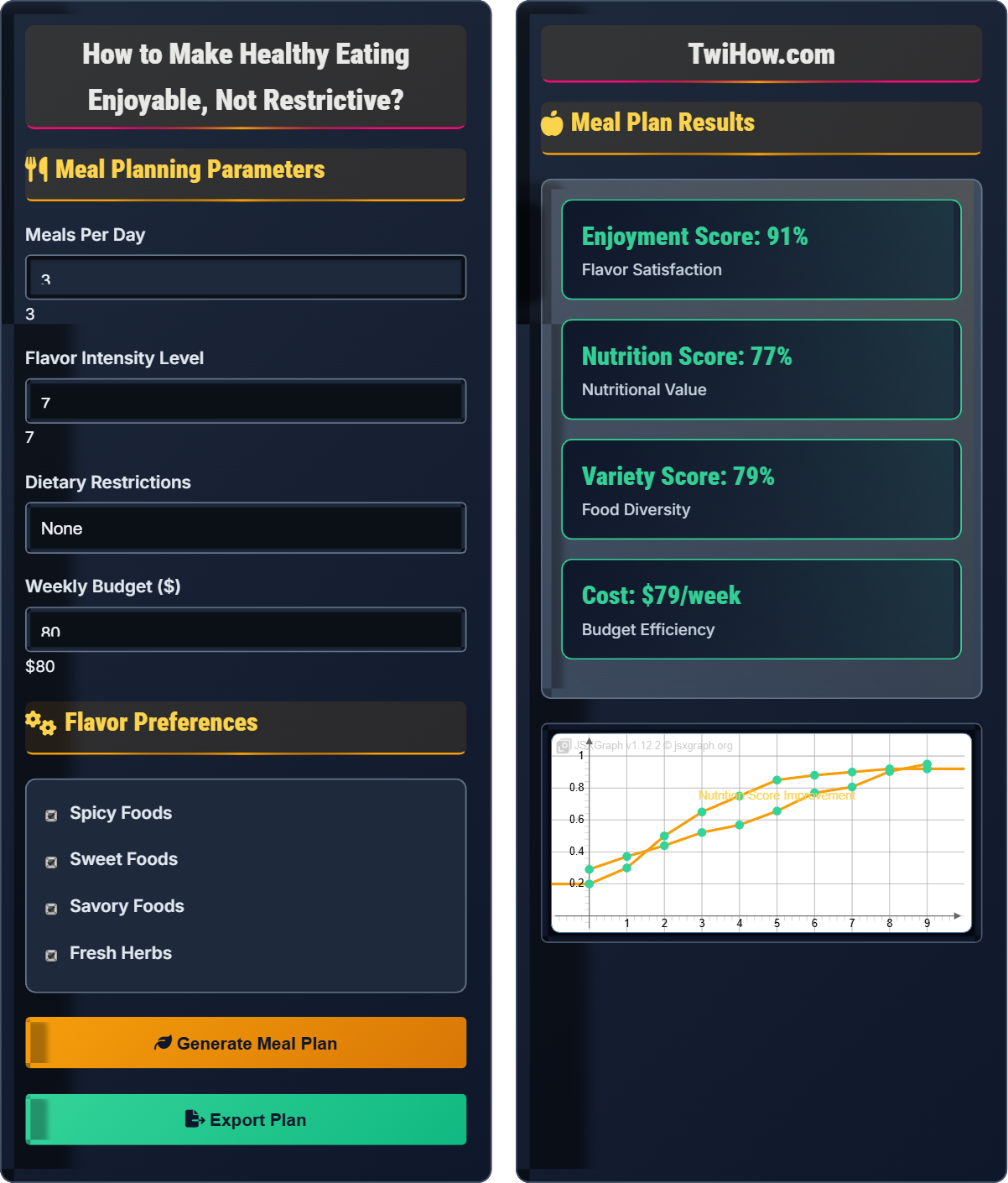
Meal Planning Parameters
Flavor Preferences
Meal Plan Results
| Day | Breakfast | Lunch | Dinner |
|---|---|---|---|
| Monday | Oatmeal w/ Berries | Quinoa Salad | Herb-Roasted Chicken |
| Tuesday | Greek Yogurt Bowl | Avocado Wrap | Spicy Salmon |
| Wednesday | Smoothie Bowl | Chickpea Stew | Vegetable Stir-fry |
| Thursday | Whole Grain Toast | Green Salad | Herb Crusted Fish |
| Friday | Fruit Parfait | Veggie Burger | Mediterranean Bowl |
Flavor Recommendations:
- Herbs: Basil, cilantro, oregano
- Spices: Cumin, paprika, turmeric
- Cooking Methods: Roasting, grilling, steaming
- Texture Enhancers: Nuts, seeds, crunchy vegetables
Making Healthy Eating Enjoyable Explained
Healthy eating doesn't have to be restrictive. The key is shifting from deprivation to abundance—focusing on adding nutritious, flavorful foods rather than eliminating favorite items. This approach creates a positive relationship with food that's sustainable long-term.
Healthy eating follows a simple balance principle:
Where:
- Flavor: Taste enhancement through herbs, spices, and cooking techniques
- Variety: Diverse ingredients, colors, and textures
- Satisfaction: Feeling fulfilled and energized
- Restriction Level: Minimal food group exclusions
Key advantages of enjoyable healthy eating:
- Sustainability: Long-term adherence without feeling deprived
- Nutrition: Better nutrient intake and absorption
- Energy: Consistent energy levels throughout the day
- Mood: Improved mental health and wellbeing
- Immunity: Stronger immune system
- Weight Management: Natural weight regulation
- Herbs & Spices: Add complexity without calories
- Acids: Lemon juice, vinegar for brightness
- Umami Boosters: Nutritional yeast, miso, mushrooms
- Cooking Methods: Roasting, grilling for caramelization
- Texture Contrast: Crunchy toppings, creamy bases
Nutrition Fundamentals
Flavor enhancement, mindful eating, flexible dieting, variety, satisfaction, sustainability.
Enjoyment Factor = (Flavor + Variety + Satisfaction) / Restriction Level
Where higher scores indicate more enjoyable and sustainable eating.
- Add nutritious foods instead of restricting
- Focus on taste enhancement
- Include variety to prevent boredom
Practical Applications
Meal planning, flavor enhancement, mindful eating, flexible approaches, cooking techniques.
- Start with small additions
- Experiment with flavors
- Practice mindful eating
- Allow flexibility
- Personal taste preferences
- Budget constraints
- Cultural food traditions
- Dietary restrictions
Healthy Eating Learning Quiz
Which approach best supports making healthy eating enjoyable rather than restrictive?
The best approach to making healthy eating enjoyable is to focus on adding nutritious foods rather than restricting beloved items. This creates a positive relationship with food and prevents feelings of deprivation that often lead to binge eating or abandoning healthy habits.
The answer is B) Adding more nutritious foods gradually.
Psychologically, humans respond better to positive reinforcement than negative restriction. When we focus on adding beneficial foods, we're creating abundance rather than scarcity. This approach builds sustainable habits because it doesn't trigger rebellion against perceived deprivation. Gradual addition allows our taste buds and preferences to adapt naturally.
Positive Reinforcement: Rewarding behaviors to increase their frequency
Gradual Addition: Slowly incorporating healthy foods over time
Sustainable Habits: Behaviors that can be maintained long-term
• Focus on adding rather than subtracting
• Make gradual changes
• Maintain flexibility
• Start with one new healthy food per week
• Find healthy alternatives to favorite foods
• Celebrate small wins
• Eliminating foods completely
• Making too many changes at once
• Not allowing flexibility
Explain how flavor enhancement can make healthy foods more appealing and provide at least 5 specific techniques.
Flavor enhancement transforms healthy foods from bland to delicious by adding taste complexity without significantly increasing calories. When healthy foods taste good, people are more likely to consume them consistently.
Five Specific Techniques:
1. Herbs and Spices: Use fresh or dried herbs like basil, cilantro, or oregano, and spices like cumin, paprika, or turmeric to add depth and complexity.
2. Acidic Elements: Add citrus juices, vinegars, or fermented foods to brighten dishes and enhance other flavors.
3. Umami Boosters: Incorporate ingredients like nutritional yeast, miso paste, mushrooms, or tomatoes to create savory satisfaction.
4. Texture Contrast: Combine creamy bases with crunchy toppings like nuts, seeds, or croutons to make dishes more interesting.
5. Proper Cooking Methods: Use roasting, grilling, or sautéing to develop caramelization and concentrate flavors.
Our taste buds respond to five basic tastes: sweet, sour, salty, bitter, and umami. By combining these flavors strategically, we can make any dish more appealing. The goal is to create complex, satisfying flavors that make healthy choices naturally preferred over less nutritious options.
Umami: Savory taste sensation from glutamates
Acidity: Bright, tart flavors that enhance others
Caramelization: Browning process that creates complex flavors
• Balance all five taste categories
• Use minimal added salt/sugar
• Focus on natural flavor enhancers
• Build flavor layers gradually
• Taste as you cook
• Keep herbs fresh for maximum potency
• Overcooking vegetables until bland
• Not seasoning adequately
• Using only salt and pepper
Jennifer loves pizza but wants to eat healthier. She finds healthy foods boring and struggles to stick to her diet. Using the principles of enjoyable healthy eating, design a strategy that helps Jennifer incorporate more nutritious foods while still enjoying her favorite foods.
Strategy for Jennifer:
1. Add Nutritious Toppings: Encourage Jennifer to add vegetables to her pizza - bell peppers, mushrooms, spinach, or tomatoes. These add flavor, texture, and nutrients without removing what she enjoys.
2. Healthy Pizza Alternatives: Suggest cauliflower crust, whole grain crust, or portobello mushroom bases as nutritious alternatives that still satisfy pizza cravings.
3. Flavor Enhancement: Recommend herbs like oregano, basil, or garlic to boost the flavor of vegetables, making them more appealing when combined with pizza.
4. Balanced Approach: Advise Jennifer to enjoy pizza regularly but add a side salad or vegetable soup to increase overall nutrition without restriction.
5. Gradual Transition: Start with one healthy addition per week, allowing her palate to adapt while maintaining satisfaction.
This approach demonstrates the principle of "addition over subtraction." Rather than telling Jennifer to stop eating pizza, we're helping her enhance it with nutritious elements. This preserves the pleasure of pizza while improving its nutritional profile. The gradual approach prevents resistance and builds sustainable habits.
Addition Over Subtraction: Focusing on adding healthy foods rather than restricting
Gradual Transition: Slow changes that allow adaptation
Sustainable Habits: Changes that can be maintained long-term
• Preserve foods that bring joy
• Make incremental improvements
• Maintain flexibility and balance
• Start with favorite foods and enhance them
• Experiment with cooking methods
• Focus on flavor first, nutrition second
• Completely eliminating favorite foods
• Making too drastic changes
• Not considering cultural preferences
Alex tends to eat quickly while working and often feels unsatisfied after meals, leading to snacking later. Explain how mindful eating practices can help Alex enjoy meals more and improve satisfaction without changing the food itself.
Mindful Eating Practices for Alex:
1. Eat Without Distractions: Encourage Alex to eat away from screens and work, focusing solely on the meal experience.
2. Chew Slowly: Suggest chewing each bite 20-30 times to fully experience flavors and textures while allowing satiety signals to register.
3. Engage All Senses: Have Alex notice colors, aromas, textures, and temperatures of food before and during eating.
4. Pause Between Bites: Recommend putting utensils down between bites to slow consumption and increase awareness.
5. Hunger Scale Awareness: Teach Alex to rate hunger from 1-10 before eating and satisfaction afterward to tune into body cues.
These practices increase satisfaction by allowing the brain to properly register the eating experience, leading to better portion control and reduced post-meal snacking.
Mindful eating connects the mind and body during meals, enhancing the satisfaction derived from food. It takes advantage of the psychological component of eating, where attention and intentionality can dramatically affect how satisfied we feel. This approach maximizes enjoyment without changing the food itself.
Mindful Eating: Conscious awareness of eating experience
Satiety Signals: Body's fullness cues
Hunger Scale: Rating system from 1-10 for hunger levels
• Eliminate distractions during meals
• Eat slowly and chew thoroughly
• Pay attention to hunger cues
• Set a timer for 20 minutes per meal
• Use smaller plates
• Take breaths between bites
• Eating while distracted
• Not paying attention to fullness
• Rushing through meals
Which factor is most important for making healthy eating enjoyable and sustainable long-term?
Flexibility and allowing favorite foods is crucial for sustainable healthy eating. When people feel they can enjoy occasional treats, they're less likely to experience deprivation and more likely to maintain healthy habits long-term. Rigid rules often lead to rebellion and abandonment of healthy practices.
The answer is B) Allowing flexibility and treating favorite foods.
Psychological research shows that overly restrictive approaches to eating often backfire. The "what-the-hell effect" occurs when people abandon healthy habits after minor deviations. Flexible approaches that include treats in moderation create sustainable patterns that can be maintained indefinitely without constant struggle.
Flexible Dieting: Moderate approach allowing treats occasionally
What-the-Hell Effect: Abandoning restraint after minor deviation
Sustainable Habits: Patterns maintainable long-term
• Allow for flexibility
• Don't eliminate all favorite foods
• Focus on 80/20 rule
• Plan treats in advance
• Practice moderation, not elimination
• Focus on overall patterns, not perfection
• Pursuing perfection
• Eliminating foods completely
• Following unsustainable trends
FAQ
Q: How can I make vegetables taste better so I'll actually want to eat them?
A: There are several ways to make vegetables delicious:
1. Roasting: Toss vegetables in olive oil and roast at 425°F until caramelized. This brings out natural sweetness.
2. Seasoning: Use herbs like rosemary, thyme, or oregano, and spices like paprika or cumin.
3. Acids: Add lemon juice, balsamic vinegar, or citrus zest to brighten flavors.
4. Umami boosters: Sprinkle nutritional yeast, parmesan cheese, or add mushrooms for savory flavor.
5. Texture contrast: Top with nuts, seeds, or crispy onions for interest.
Start with vegetables you already like and gradually introduce new flavors.
Q: How can I encourage my family to eat more vegetables without making it feel like punishment?
A: Make vegetables fun and appealing:
Lead by example: Eat vegetables yourself and express genuine enjoyment.
Involve the family: Let everyone help prepare vegetables, making it a shared activity.
Make it convenient: Pre-cut vegetables and keep them visible as snacks.
Hide in favorites: Blend vegetables into sauces, soups, or smoothies.
Try new preparations: If raw vegetables aren't liked, try roasted, grilled, or steamed.
Positive language: Call them "superhero foods" or "energy boosters" instead of "healthy."
Be patient—it can take multiple exposures before acceptance.