How Do I Stay Hydrated Throughout the Day?
Complete hydration guide • Step-by-step explanations
Hydration Fundamentals:
Show Hydration CalculatorStaying hydrated is crucial for maintaining optimal health and bodily functions. Water is essential for temperature regulation, joint lubrication, nutrient transport, and waste removal. The human body loses water through breathing, sweating, urination, and bowel movements, so it's important to replenish fluids regularly throughout the day.
Proper hydration supports cognitive function, physical performance, and overall well-being. Dehydration can lead to fatigue, headaches, reduced concentration, and various health complications.
Key hydration concepts:
- Daily Water Needs: Recommended intake varies by individual factors
- Hydration Timing: Consistent intake throughout the day
- Fluid Sources: Water, beverages, and water-rich foods
- Symptoms of Dehydration: Thirst, fatigue, dizziness, dark urine
Modern hydration tracking helps individuals monitor their fluid intake and maintain optimal hydration levels for peak performance and health.
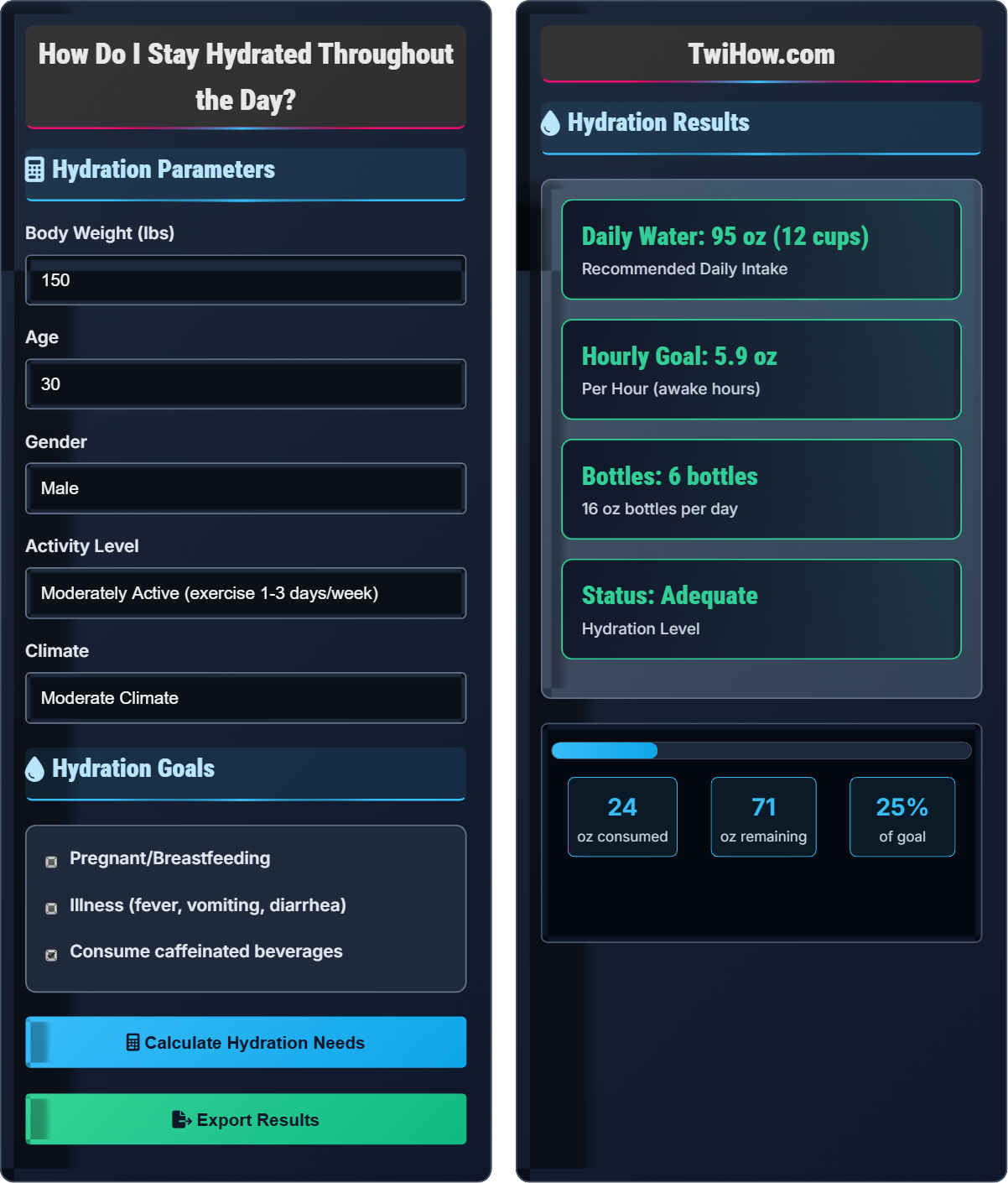
Hydration Parameters
Hydration Goals
Hydration Results
| Time | Amount (oz) | Goal | Notes |
|---|---|---|---|
| 7:00 AM | 8 | 8 oz | Start of day |
| 10:00 AM | 8 | 16 oz total | Mid-morning |
| 1:00 PM | 8 | 24 oz total | Lunch time |
| 4:00 PM | 8 | 32 oz total | Afternoon |
| 7:00 PM | 8 | 40 oz total | Dinner time |
Fluid Sources
Water isn't the only source of hydration:
- Foods: Fruits (watermelon, oranges), vegetables (cucumber, lettuce)
- Beverages: Coffee, tea, milk, fruit juices
- Supplements: Electrolyte drinks during intense activity
About 20% of daily fluid intake comes from food sources.
How to Stay Hydrated Throughout the Day
Water is essential for every cell, tissue, and organ in your body. It helps regulate body temperature, lubricates joints, transports nutrients, and removes waste products. Proper hydration is crucial for maintaining optimal physical and mental performance.
Dehydration occurs when you lose more fluids than you take in. Even mild dehydration can cause fatigue, headaches, and reduced cognitive function.
The general recommendation is about 8 glasses (64 oz) of water per day, but individual needs vary based on several factors:
Where:
- Base Requirement: 0.5 oz per pound of body weight
- Activity Level: +12-24 oz for moderate to intense activity
- Climate: +8-16 oz for hot/humid conditions
- Special Conditions: Additional requirements for pregnancy, illness, etc.
Indicators of adequate hydration include:
- Clear or pale yellow urine
- Moist lips and skin
- Steady energy levels
- Clear thinking and focus
- No persistent thirst
Signs that indicate insufficient hydration:
- Dark yellow or amber-colored urine
- Dry mouth and lips
- Headaches
- Fatigue and drowsiness
- Dizziness or lightheadedness
- Reduced urination frequency
Hydration Fundamentals
Water balance, electrolytes, fluid distribution, osmoregulation.
Daily Water (oz) = Body Weight (lbs) × 0.5 + Activity Adjustment + Climate Adjustment
Where Activity Adjustment = 12-24 oz for moderate to intense activity.
- Drink before you're thirsty
- Consistency beats large volumes
- Monitor urine color
Practical Strategies
Timed drinking, water tracking apps, flavor enhancement, scheduled breaks.
- Upon waking: 1-2 glasses
- Before meals: 1 glass
- During work breaks: 1 glass
- After exercise: 1-2 glasses
- Before bed: Small amount
- Individual variations matter
- Adjust for activity level
- Consider climate effects
- Account for medications
Hydration Knowledge Quiz
According to standard recommendations, how much water should an average adult consume daily?
The commonly recommended daily water intake is 8 glasses of water (about 64 ounces), often referred to as the "8x8 rule" (eight 8-ounce glasses). However, individual needs can vary significantly based on factors like body weight, activity level, climate, and overall health. The Institute of Medicine suggests about 11.5 cups (2.7 liters) for women and 15.5 cups (3.7 liters) for men from all beverages and food combined.
The answer is B) 8 glasses (64 oz).
While the "8 glasses a day" rule is widely cited, it's important to understand that this is a general guideline rather than a one-size-fits-all recommendation. Individual hydration needs depend on multiple factors including body size, activity level, environmental conditions, and health status. The key principle is to listen to your body's signals and adjust accordingly.
Hydration: The process of providing adequate water to body tissues
Dehydration: Deficiency of water in body tissues
Osmoregulation: The control of water and salt concentration in body fluids
• Individual needs vary significantly
• Adjust for activity and climate
• Monitor urine color as indicator
• Start the day with water to break overnight dehydration
• Keep a water bottle visible and accessible
• Set reminders to drink regularly
• Waiting until thirsty to drink water
• Ignoring individual needs variations
• Not accounting for activity level
Explain the optimal timing for water consumption throughout the day and the physiological reasons behind this schedule.
Optimal Hydration Schedule:
Upon Waking: Drink 1-2 glasses of water to replenish fluids lost during sleep and kickstart metabolism.
30 Minutes Before Meals: Consume water to aid digestion and prevent overeating.
Between Meals: Sip water consistently to maintain steady hydration levels.
During Exercise: Drink water before, during, and after physical activity to replace lost fluids.
Before Bed: Moderate amount to prevent dehydration overnight without disrupting sleep.
Physiological Reasons: The body continues to lose water through respiration, perspiration, and cellular processes even during sleep. Consistent hydration supports kidney function, maintains blood volume, regulates body temperature, and ensures efficient nutrient transport.
Timing of water consumption matters because the body has varying hydration needs throughout the day. Morning hydration compensates for overnight fluid loss and helps restore normal cellular function. Pre-meal hydration prepares the digestive system and can help with portion control. Consistent sipping maintains steady hydration levels rather than overwhelming the system with large volumes at once.
Diuresis: Increased urine production
Homeostasis: Maintenance of stable internal conditions
Thermoregulation: Body temperature maintenance
• Consistency is more effective than large volumes
• Pre-hydrate before anticipated losses
• Maintain baseline throughout the day
• Set hourly reminders to drink
• Use a marked water bottle to track intake
• Flavor water with lemon or cucumber if plain water is unappealing
• Drinking only when extremely thirsty
• Consuming large amounts at once
• Neglecting pre-hydration before activities
Sarah is a 140-pound woman who works out at the gym 4 times per week for 1 hour each session. She lives in a warm climate and consumes 2-3 cups of coffee daily. Based on her profile, calculate her daily water needs and create a hydration plan for her workout days versus rest days.
Base Calculation: 140 lbs × 0.5 = 70 oz
Activity Adjustment: 140 lbs × 0.15 = 21 oz (for moderate activity)
Climate Adjustment: +12 oz (warm climate)
Caffeine Adjustment: +8 oz (to offset diuretic effect)
Total Daily Need: 70 + 21 + 12 + 8 = 111 oz (about 14 cups)
Workout Days: Add 16-24 oz for exercise = 127-135 oz total
Rest Days: 111 oz total
Hydration Plan: Start with 16-20 oz upon waking, drink 8-10 oz every 2 hours during awake hours, consume 16-20 oz 30 minutes before workout, sip 6-8 oz every 15-20 minutes during exercise, and finish with 16-20 oz post-workout.
This scenario demonstrates how individual factors compound to determine hydration needs. Sarah's combination of regular exercise, warm climate, and caffeine consumption significantly increases her water requirements beyond the standard recommendation. The calculation accounts for each factor's contribution to fluid loss or retention, showing why personalized hydration plans are more effective than generic advice.
Diuretic: Substance that promotes urine production
Evaporative Cooling: Heat loss through water evaporation
Electrolyte Balance: Proper mineral concentrations in body fluids
• Account for all contributing factors
• Adjust for daily activity variations
• Monitor hydration status regularly
• Track intake with smartphone app
• Prepare extra water for workout days
• Include water-rich foods in diet
• Underestimating needs for active individuals
• Not accounting for environmental factors
• Ignoring cumulative effects of lifestyle factors
You notice a colleague experiencing fatigue, headaches, and irritability during an afternoon meeting. Their coffee cup has been empty for hours and the office air conditioning is running strongly. Analyze the situation and recommend immediate and ongoing actions to address potential dehydration.
Situation Analysis: The symptoms (fatigue, headache, irritability) combined with low fluid intake and dry environment strongly suggest mild dehydration. The brain is particularly sensitive to fluid imbalances, which can impair cognitive function and mood.
Immediate Actions: Encourage the colleague to drink water immediately, starting with small sips to avoid nausea. Suggest a short break to hydrate properly.
Ongoing Actions: Recommend establishing a regular drinking schedule, keeping water accessible, and considering the effects of caffeine. Advise monitoring urine color as a hydration indicator.
Prevention: Suggest setting phone reminders to drink water and bringing a large water bottle to meetings.
This scenario illustrates how dehydration can be misattributed to other causes, especially in workplace settings. Cognitive symptoms like irritability and difficulty concentrating are often the first signs of inadequate hydration. The connection between fluid status and mental performance is often overlooked, making it important to recognize these early warning signs.
Dehydration: Excessive loss of body water
Hypohydration: Reduced body water content
Cognitive Performance: Mental functioning including attention and memory
• Recognize early signs of dehydration
• Rehydrate gradually
• Address underlying causes
• Keep water at your desk throughout the day
• Use smartphone apps to remind you to drink
• Recognize that thirst indicates beginning dehydration
• Attributing symptoms to other causes
• Delaying hydration when busy
• Ignoring environmental factors
Which of the following is a common myth about hydration?
Option B is the myth. The "8 glasses a day" rule is a general guideline, not a universal requirement. Individual water needs vary based on body size, activity level, climate, health status, and other factors. Some people may need significantly more or less than 8 glasses. Options A, C, and D are factual statements about hydration.
The answer is B) You should drink 8 glasses of water daily regardless of circumstances.
While the "8 glasses a day" rule provides a simple target, it's important to understand that hydration needs are highly individual. The body has sophisticated mechanisms for regulating fluid balance, and individual requirements can vary significantly. A more personalized approach considers body weight, activity level, climate, and health status to determine optimal intake.
Myth: Widely held but false belief
Individual Variation: Differences in requirements between people
Personalized Nutrition: Tailored dietary recommendations
• Hydration needs are individual
• Adjust for specific circumstances
• Listen to your body's signals
• Use body weight as a starting point for calculations
• Adjust for activity and environmental factors
• Monitor personal indicators like urine color
• Following rigid guidelines without adjustment
• Not accounting for individual differences
• Ignoring contextual factors
FAQ
Q: How much water should I drink before, during, and after my workouts?
A: Proper hydration around exercise is crucial for performance and recovery:
Before: Drink 16-20 oz of water 2-3 hours before exercise, then another 8-10 oz 10-15 minutes before starting.
During: Consume 6-8 oz every 15-20 minutes during exercise, especially if lasting longer than 30 minutes or in hot conditions.
After: Replace 150% of fluid lost through sweat. Weigh yourself before and after exercise - for every pound lost, drink 16-24 oz of fluid.
For workouts longer than an hour, consider a sports drink to replace electrolytes lost through sweat.
Q: I spend most of my day at a desk and don't feel thirsty. How can I remember to drink enough water?
A: Many people don't recognize thirst cues, especially when focused on work. Here are practical strategies:
1. Set reminders: Use phone alarms or computer notifications every hour
2. Visual cues: Keep a large water bottle on your desk in sight
3. Habit stacking: Drink water with every bathroom break, meal, or coffee refill
4. Mark your bottle: Use a water bottle with time markers
5. Replace beverages: Substitute one caffeinated drink with water each day
Remember that by the time you feel thirsty, you're already mildly dehydrated. Proactive hydration is more effective than reactive drinking.