How to Support Nutrition Goals While Traveling
Complete nutrition guide • Step-by-step explanations
Travel Nutrition Fundamentals:
Show Travel Nutrition PlannerMaintaining nutrition goals while traveling requires preparation, flexibility, and smart strategies. The key is creating a balance between sticking to your healthy habits and adapting to new environments. Success comes from planning ahead and having backup options.
Key principles:
- Preparation: Research destinations and pack healthy snacks
- Flexibility: Adapt to local cuisines while making healthy choices
- Planning: Know your accommodation options for meal preparation
- Hydration: Prioritize fluid intake during travel
Successful travel nutrition focuses on maintaining core healthy habits while being adaptable to changing circumstances.
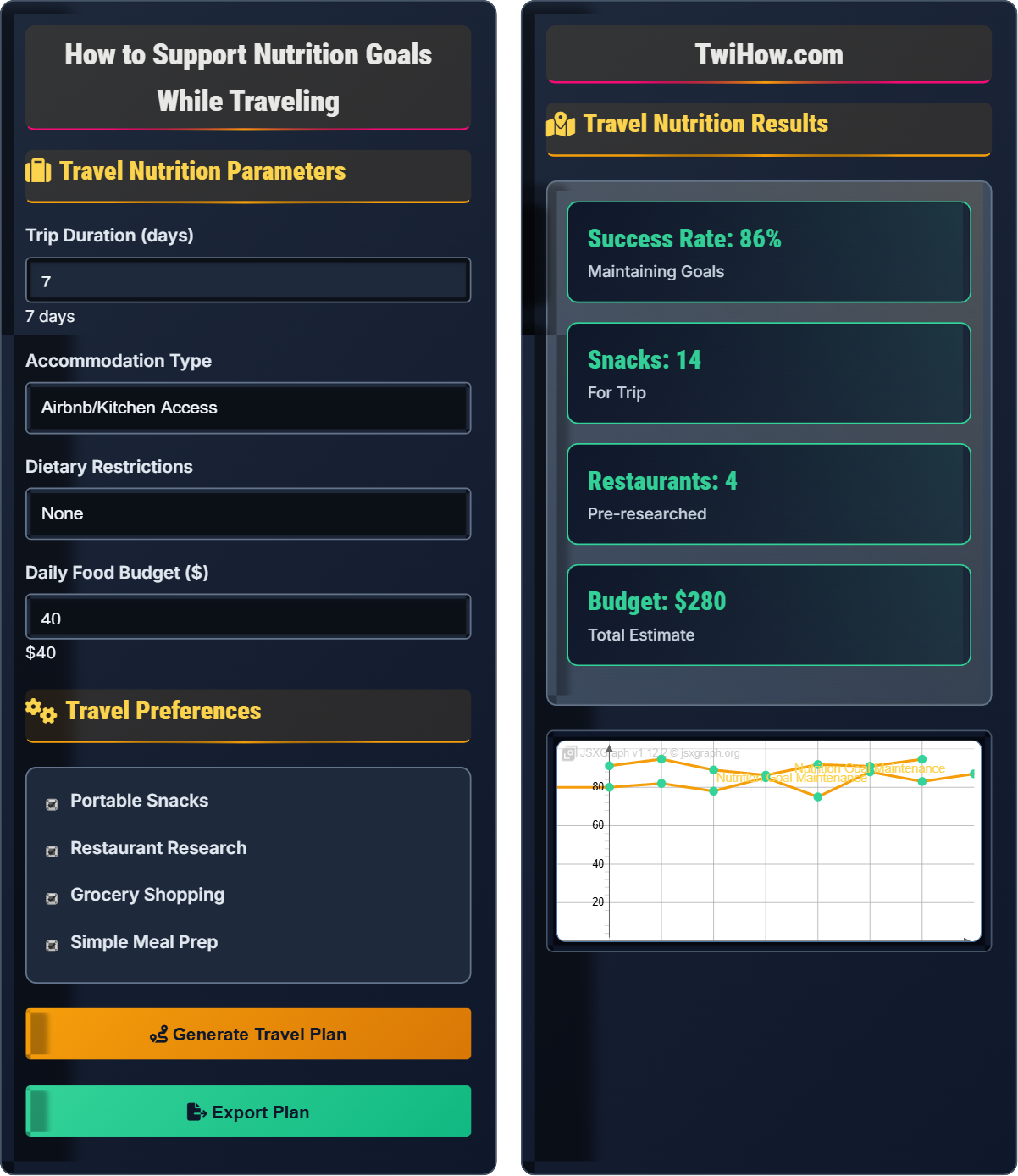
Travel Nutrition Parameters
Travel Preferences
Travel Nutrition Results
| Item | Type | Quantity | Notes |
|---|---|---|---|
| Trail Mix | Snack | 7 bags | Portion controlled |
| Protein Bars | Snack | 7 bars | High protein |
| Reusable Water Bottle | Hydration | 1 | Insulated |
| Electrolyte Packets | Hydration | 7 packets | For travel days |
| Shake Powder | Meal Replacement | 3 servings | Quick breakfast |
Travel Strategies:
- Pre-trip Research: Find grocery stores and healthy restaurants near destination
- Smart Snacking: Pack nutrient-dense portable foods
- Hydration Priority: Drink water before, during, and after flights
- Flexibility: Allow for local cuisine while making healthy choices
- Backup Plans: Know where to buy healthy foods if needed
Supporting Nutrition Goals While Traveling Explained
Travel disrupts normal eating patterns and food availability. Maintaining nutrition goals requires preparation and adaptability. Success comes from creating a balance between flexibility and structure that allows you to enjoy your trip while staying aligned with your health goals.
Effective travel nutrition follows this equation:
Where:
- Preparation: Planning, packing, and research done before travel
- Flexibility: Ability to adapt to new situations and food options
- Resources: Portable foods, money, and access to healthy options
- Disruption Level: How much the travel changes normal routine
Key advantages of supporting nutrition goals while traveling:
- Energy Maintenance: Sustained energy levels throughout your trip
- Immune Support: Better protection against illness during travel
- Wellbeing: Maintained physical and mental health
- Recovery: Faster recovery from jet lag and travel fatigue
- Continuity: Easier return to routine after travel
- Enjoyment: Better ability to enjoy activities without digestive discomfort
- Snack Packing: Bring nuts, dried fruit, protein bars, and other portable foods
- Restaurant Research: Find healthy options at chain restaurants before traveling
- Hydration Focus: Drink water before, during, and after flights
- Smart Ordering: Choose grilled over fried, ask for dressings on the side
- Local Markets: Shop for fresh produce and healthy prepared foods
- Balance Approach: Allow for treats while maintaining overall healthy patterns
Nutrition Fundamentals
Travel nutrition, preparation, flexibility, hydration, portable foods, research, planning.
Travel Success = (Preparation + Flexibility + Resources) / Disruption Level
Where higher scores indicate greater success in maintaining goals.
- Prepare in advance for your specific situation
- Focus on hydration during travel
- Allow for flexibility while maintaining core goals
Practical Applications
Research, snack packing, hydration, restaurant selection, grocery shopping, meal prep.
- Research destination food options
- Pack appropriate portable foods
- Plan meal timing and locations
- Establish backup plans
- Accommodation type and kitchen access
- Dietary restrictions and preferences
- Budget constraints
- Travel duration and location
Travel Nutrition Learning Quiz
What is the most important preparation strategy for maintaining nutrition goals while traveling?
Researching food options at your destination is the most important preparation strategy. Knowing where to find healthy foods, grocery stores, and restaurants that meet your needs gives you a foundation to maintain your nutrition goals. This preparation provides options and reduces the likelihood of making poor food choices out of desperation.
The answer is B) Researching food options at your destination.
Preparation is key to maintaining any goal during challenging circumstances. When traveling, your normal food environment is disrupted, making it essential to research alternatives in advance. This strategy reduces decision fatigue and provides a roadmap for healthy eating while away from home.
Preparation: Planning and gathering resources before travel
Destination Research: Identifying food options at travel location
Decision Fatigue: Mental exhaustion from making too many choices
• Research food options in advance
• Know where to find healthy alternatives
• Prepare for your specific dietary needs
• Use apps to find healthy restaurants nearby
• Look up grocery store locations
• Check hotel room service menus in advance
• Not researching food options before travel
• Relying solely on airport/hotel food
• Forgetting dietary restrictions while traveling
Explain why hydration is particularly important during travel and provide specific strategies for maintaining adequate fluid intake.
Hydration is particularly important during travel because:
1. Altitude and Air Pressure: Cabin pressure and altitude can cause dehydration, as the air in airplanes is extremely dry.
2. Climate Changes: Traveling to different climates can increase fluid needs.
3. Increased Activity: Travel often involves more walking, sightseeing, and physical activity.
4. Alcohol Consumption: Travel often involves social drinking, which increases dehydration.
Specific Hydration Strategies:
1. Water Bottle: Carry a reusable, insulated water bottle throughout your journey.
2. Flight Protocol: Drink 8 oz of water for every hour of flight time.
3. Electrolytes: Use electrolyte packets or drinks to replenish minerals lost during travel.
4. Timing: Drink water before, during, and after flights, not just when thirsty.
5. Monitoring: Check urine color as an indicator of hydration status.
Dehydration during travel can compound the effects of jet lag, reduce energy levels, and impair cognitive function. The dry cabin air, stress of travel, and changes in routine make hydration a critical but often overlooked aspect of travel nutrition. Proactive hydration strategies help maintain energy and well-being throughout the journey.
Dehydration: Excessive loss of body fluids
Electrolytes: Minerals that regulate fluid balance
Jet Lag: Fatigue from crossing time zones
• Drink water proactively, not reactively
• Increase fluid intake during flights
• Monitor hydration status regularly
• Set phone reminders to drink water
• Start each day with a glass of water
• Choose water over caffeinated beverages
• Waiting until thirsty to drink water
• Consuming only caffeinated beverages
• Not accounting for climate changes
Jennifer is traveling internationally for a 10-day business trip with no kitchen access. She has a gluten-free diet and a tight schedule with meetings. She's worried about maintaining her nutrition goals. Using the principles of travel nutrition, design a strategy that helps Jennifer eat healthily while managing her busy schedule and dietary restrictions.
Strategy for Jennifer:
1. Pre-trip Research: Contact the hotel to verify gluten-free options and identify nearby specialty grocery stores that carry gluten-free products.
2. Portable Foods: Pack gluten-free snacks like rice cakes, nuts, seeds, and protein bars that don't require refrigeration.
3. Restaurant Planning: Research restaurants with gluten-free menus and call ahead to confirm cross-contamination protocols.
4. Meeting Strategy: Request gluten-free options for meeting lunches and snacks, or bring your own if needed.
5. Backup Options: Locate nearby grocery stores that stock gluten-free items in case of limited options.
6. Communication: Inform hosts about dietary restrictions in advance and carry a dietary card in the local language.
These approaches ensure Jennifer maintains her dietary requirements while managing her demanding schedule.
This strategy demonstrates the importance of thorough preparation for special dietary needs while traveling. Having a comprehensive plan addresses both the dietary restriction and time constraints, ensuring Jennifer can maintain her nutrition goals without compromising her professional obligations.
Pre-trip Research: Investigation before departure
Cross-contamination: Gluten exposure in otherwise safe foods
Dietary Card: Translation of dietary restrictions• Communicate restrictions in advance
• Have backup options ready
• Plan for busy schedules
• Pack extra snacks for delays
• Research gluten-free apps for restaurants
• Choose hotels with kitchenettes when possible
• Not communicating dietary needs in advance
• Not having backup options
• Relying on standard hotel breakfast options
David frequently travels for work and struggles with airport food options that don't align with his nutrition goals. He often ends up eating processed snacks and fast food during layovers. Explain how David can make better food choices in airports and provide specific strategies.
Strategies for David:
1. Pre-travel Planning: Research airport food options using apps or websites to identify healthier choices before arriving.
2. Portable Foods: Pack nutrient-dense snacks like nuts, dried fruit, and protein bars that will tide him over during layovers.
3. Smart Ordering: At airport restaurants, choose grilled proteins, salads with dressing on the side, and skip fried foods.
4. Hydration Focus: Prioritize water over sugary drinks, and consider bringing an empty water bottle to fill after security.
5. Market Research: Look for airport markets or food halls that offer fresh options like sushi, wraps, or prepared salads.
These approaches help David make better choices even in the challenging airport environment.
Airports present unique challenges for healthy eating due to limited options and time constraints. The key is combining preparation (bringing your own foods) with smart choices (selecting the best available options). This dual approach ensures David has healthy alternatives regardless of what's available.
Pre-travel Planning: Research before departure
Smart Ordering: Making healthier menu choices
Food Halls: Areas with diverse food vendors
• Always have backup snacks
• Research options in advance
• Choose the best of available options
• Download airport food apps
• Pack foods that don't require refrigeration
• Look for sushi or salad bars in food courts
• Relying solely on fast-food options
• Not bringing any backup foods
• Skipping meals and overeating later
Why is it important to maintain a balance between healthy choices and flexibility while traveling?
Maintaining balance is important because it prevents feelings of deprivation and maintains long-term adherence to healthy eating patterns. When travelers allow for some flexibility and local cuisine experiences, they're more likely to maintain their nutrition goals both during and after travel, rather than falling into cycles of restriction and overindulgence.
The answer is B) To prevent feelings of deprivation and maintain long-term adherence.
The balance approach recognizes that travel is a special time when some deviation from normal routines is expected and can be enjoyable. By allowing for treats and local cuisine while maintaining overall healthy patterns, travelers avoid the "what-the-hell effect" where minor deviations lead to complete abandonment of healthy habits. This approach supports sustainable long-term nutrition goals.
Balance Approach: Moderation with flexibility
What-the-Hell Effect: Abandoning restraint after minor deviation
Sustainable Patterns: Long-term maintainable habits
• Allow for special experiences
• Focus on overall patterns, not perfection
• Maintain core healthy habits while traveling
• Practice the 80/20 rule while traveling
• Choose one special treat per day
• Return to healthy patterns after indulgences
• Pursuing perfection while traveling
• Not allowing for any flexibility
• Abandoning all healthy habits
FAQ
Q: How can I eat healthily while on a road trip with limited food options?
A: For road trips, preparation is key:
1. Stock your car: Pack a cooler with fruits, vegetables, nuts, hard-boiled eggs, and other healthy snacks.
2. Choose wisely at stops: Look for gas stations with fresh fruit, yogurt, or healthy grab-and-go options.
3. Fast food modifications: Order salads, grilled items, and ask for dressings on the side.
4. Stay hydrated: Bring plenty of water and limit sugary drinks.
5. Plan stops: Research grocery stores or markets along your route for restocking.
Remember to balance healthy choices with some flexibility for the occasional treat during the trip.
Q: How can I maintain nutrition goals while traveling with children?
A: Traveling with children requires extra planning:
Bring familiar foods: Pack some of your children's favorite healthy snacks to reduce stress and ensure they eat.
Involve kids in planning: Let them help choose healthy options at restaurants or grocery stores.
Stick to routines: Try to maintain regular meal and snack times when possible.
Buffer extra time: Allow more time for meals to accommodate children's pace and preferences.
Lead by example: Demonstrate healthy eating choices while remaining flexible about occasional treats.
Remember: It's okay if nutrition isn't perfect during travel - focus on maintaining general healthy patterns.