Easy Ways to Increase Fruit and Vegetable Intake
Complete nutrition guide • Step-by-step explanations
Fruit & Vegetable Fundamentals:
Show Intake PlannerIncreasing fruit and vegetable intake is one of the most impactful dietary changes you can make. The recommended daily intake is 5-9 servings, but most people fall short. Small, consistent changes can significantly boost your intake without major lifestyle disruptions.
Key principles:
- Convenience First: Keep prepped fruits and vegetables easily accessible
- Gradual Addition: Incrementally add more servings over time
- Variety Matters: Mix different colors, textures, and flavors
- Smart Substitutions: Replace less healthy options with fruits/vegetables
Successful fruit and vegetable integration focuses on making healthy choices easier and more appealing than less nutritious alternatives.
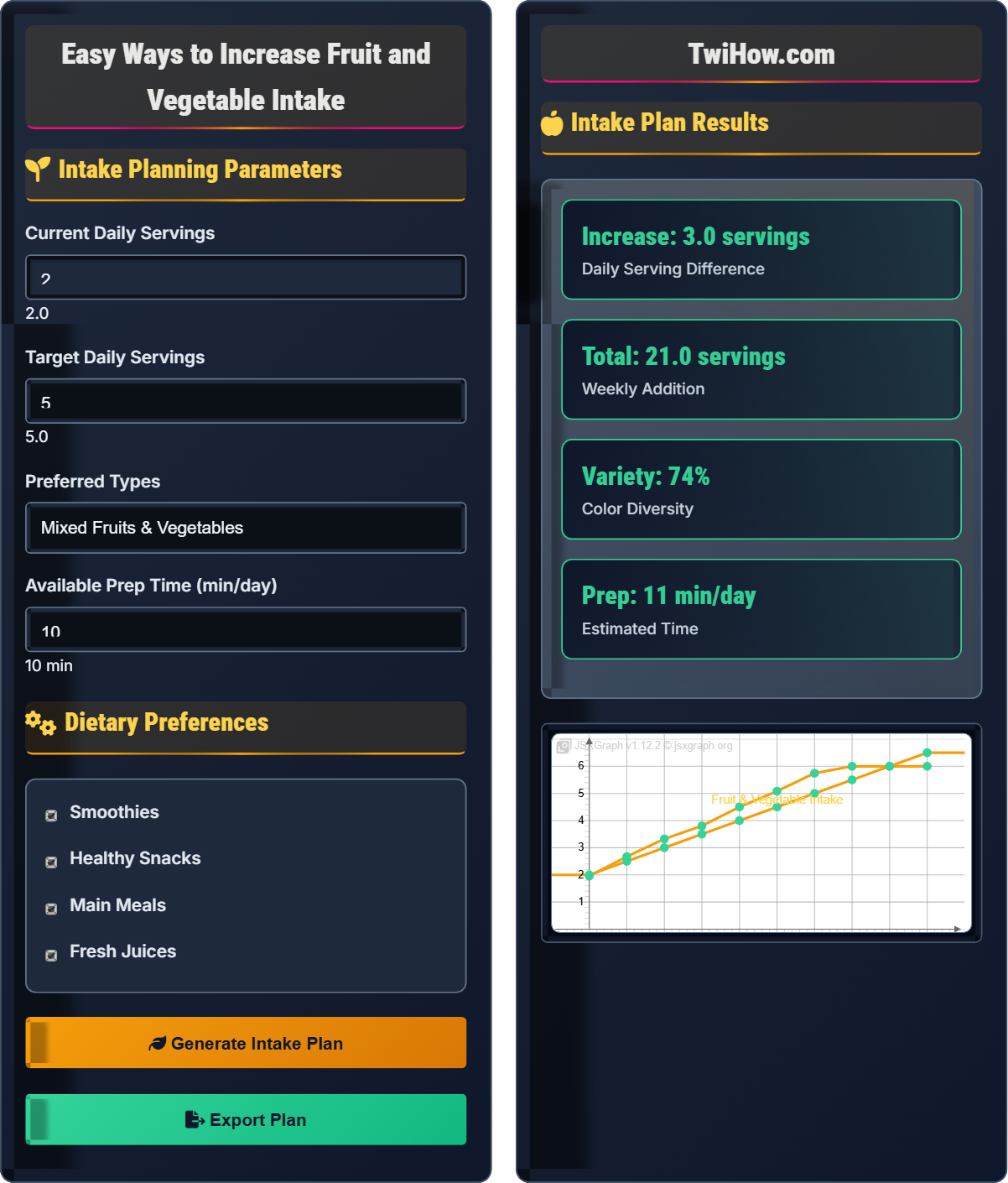
Intake Planning Parameters
Dietary Preferences
Intake Plan Results
| Time | Food | Servings | Prep Method |
|---|---|---|---|
| Breakfast | Blueberry Smoothie | 1.5 | Blender |
| Snack | Apple Slices | 1 | Wash & Slice |
| Lunch | Spinach Salad | 2 | Pre-washed |
| Snack | Carrot Sticks | 1 | Pre-cut |
| Dinner | Roasted Vegetables | 1.5 | Oven |
Simple Recipes:
- Quick Smoothie: Spinach, banana, berries, almond milk
- Power Salad: Mixed greens, cherry tomatoes, cucumber, avocado
- Roasted Veggies: Broccoli, carrots, bell peppers with olive oil
- Crunchy Snack: Apple slices with almond butter
Increasing Fruit and Vegetable Intake Explained
Fruits and vegetables are packed with essential nutrients, fiber, and antioxidants. They support immune function, heart health, digestive wellness, and may reduce the risk of chronic diseases. The key to success is finding approaches that fit your lifestyle and preferences.
Successful fruit and vegetable intake follows a simple formula:
Where:
- Accessibility: How easy it is to get fruits/vegetables
- Variety: Different types, colors, and preparation methods
- Taste Appeal: How enjoyable the foods are
- Effort Required: Minimal prep and convenience
Key advantages of increased fruit and vegetable intake:
- Vitamins & Minerals: Essential nutrients for optimal health
- Fiber: Supports digestive health and satiety
- Antioxidants: Protects against cellular damage
- Hydration: Many fruits have high water content
- Weight Management: Low calorie, high volume foods
- Disease Prevention: Reduced risk of chronic conditions
- Smoothies: Blend fruits and vegetables into drinks
- Prep Ahead: Wash and cut produce on weekends
- Substitutions: Replace pasta with zucchini noodles
- Snack Swaps: Choose fruits instead of processed snacks
- Meat Mix-ins: Add vegetables to meat dishes
- Color Challenge: Eat a rainbow of colors daily
Nutrition Fundamentals
Fiber, antioxidants, vitamins, minerals, accessibility, variety, habit stacking, substitution.
Success Rate = (Accessibility + Variety + Taste Appeal) / Effort Required
Where higher scores indicate more successful integration.
- Start with small, manageable changes
- Focus on accessibility and convenience
- Gradually increase variety
Practical Applications
Prep ahead, smoothies, substitutions, snack swaps, meal integration, variety challenges.
- Track current intake
- Set realistic goals
- Make produce accessible
- Replace unhealthy options
- Personal taste preferences
- Time constraints
- Budget limitations
- Storage capacity
Fruit & Vegetable Learning Quiz
Which strategy is most effective for increasing fruit and vegetable intake sustainably?
The most effective strategy is to gradually add one serving per day. This approach creates sustainable habits without overwhelming the individual. Sudden, dramatic changes are difficult to maintain, while small, consistent additions become natural over time.
The answer is B) Add one serving per day gradually.
Behavior change research consistently shows that gradual modifications are more sustainable than radical transformations. The "foot-in-the-door" technique works because small changes build confidence and establish new behavioral patterns. Each small success reinforces the desire to continue making positive changes.
Gradual Integration: Slowly adding servings over time
Behavior Change: Establishing new, lasting habits
Sustainability: Maintaining changes long-term
• Make small, manageable changes
• Focus on consistency over perfection
• Build gradually over time
• Start with favorite fruits/vegetables
• Use pre-cut options for convenience
• Track progress to stay motivated
• Making too many changes at once
• Being too restrictive
• Not considering convenience factors
Explain at least 5 strategies to make fruits and vegetables more accessible and convenient in daily life.
Five Convenience Strategies:
1. Prep Ahead: Wash and cut fruits and vegetables on weekends for easy grab-and-go options throughout the week.
2. Strategic Placement: Keep washed fruits and cut vegetables in visible places like the front of the refrigerator.
3. Smoothie Integration: Blend fruits and vegetables into quick, portable smoothies that can be made in minutes.
4. Smart Shopping: Buy pre-cut, frozen, or canned varieties when fresh options are inconvenient.
5. Habit Stacking: Attach fruit/vegetable consumption to existing routines like morning coffee or evening snacks.
These strategies reduce the effort barrier and make healthy choices the path of least resistance.
Convenience is a critical factor in behavior adoption. When healthy options require less effort than unhealthy ones, people naturally gravitate toward them. Environmental design plays a significant role in shaping behavior, making strategic placement and preparation powerful tools for habit formation.
Environmental Design: Structuring surroundings to promote healthy choices
Habit Stacking: Attaching new habits to existing routines
Path of Least Resistance: Defaulting to easiest option
• Reduce barriers to healthy choices
• Make healthy options visible
• Prepare in advance when possible
• Keep a fruit bowl on the counter
• Use mason jars for overnight oats with fruits
• Pre-portion snacks in containers
• Storing produce in hard-to-reach places
• Not preparing in advance
• Choosing options that require extensive prep
Mark works long hours and often skips meals or eats fast food. He wants to increase his fruit and vegetable intake but claims he doesn't have time to shop, prep, or cook. Using the principles of convenience and accessibility, design a strategy that fits Mark's busy lifestyle.
Strategy for Mark:
1. Batch Preparation: Spend 30 minutes every Sunday washing, cutting, and storing fruits and vegetables in clear containers.
2. Smart Shopping: Purchase pre-cut vegetables, frozen fruits, and single-serving portions to eliminate prep time.
3. Portable Options: Keep pre-cut vegetables with hummus and whole fruits in his car, office, and bag for easy snacking.
4. Quick Smoothies: Blend frozen fruits and vegetables with protein powder and milk for a complete meal replacement.
5. Strategic Substitutions: Replace vending machine snacks with dried fruits or nuts, and add vegetables to takeout orders.
These approaches require minimal daily effort while significantly increasing intake.
This approach demonstrates the principle of "effort minimization." By front-loading preparation time on weekends, Mark can access healthy options during his busy weekdays with minimal effort. The key is to invest time upfront to save time later, making healthy choices effortless during peak stress periods.
Batch Preparation: Preparing multiple servings at once
Effort Minimization: Reducing daily action stepsFront Loading: Investing time upfront for later savings
• Invest time upfront for ongoing benefits
• Make healthy options readily available
• Choose low-effort preparation methods
• Use frozen produce when fresh isn't available
• Keep backup options in desk drawers
• Order healthy sides with takeout
• Waiting until hungry to make healthy choices
• Not planning for busy days
• Choosing options that require cooking when pressed for time
Sarah finds vegetables taste bland and unappealing, which prevents her from eating them regularly. She prefers strongly flavored, seasoned foods. Explain how flavor enhancement can make vegetables more appealing and provide specific techniques she can use.
Flavor Enhancement Techniques for Sarah:
1. Roasting: Toss vegetables in olive oil and roast at 425°F until caramelized. This brings out natural sweetness and creates appealing textures.
2. Spice Blends: Use flavorful combinations like Italian herbs, curry powder, or Cajun seasoning to coat vegetables before cooking.
3. Acidic Elements: Add balsamic glaze, lemon juice, or vinegar to brighten flavors and enhance other seasonings.
4. Umami Boosters: Sprinkle nutritional yeast, parmesan cheese, or soy sauce to add savory depth.
5. Texture Contrast: Top with toasted nuts, seeds, or crispy onions for added interest and flavor.
These techniques transform vegetables from bland to delicious while maintaining their nutritional value.
Taste preferences play a crucial role in food acceptance. By leveraging flavor science—combining sweet, salty, sour, bitter, and umami tastes—vegetables can be transformed to match individual preferences. The goal is to respect personal taste preferences while promoting nutritious choices.
Umami: Savory taste sensation from glutamates
Caramelization: Browning process that creates complex flavors
Flavor Enhancement: Improving taste without adding excessive calories
• Respect individual taste preferences
• Use natural flavor enhancers
• Balance all five taste categories
• Start with familiar flavors and gradually expand
• Try one new preparation method per week
• Use herbs fresh for maximum potency
• Overcooking vegetables until mushy
• Not seasoning adequately
• Expecting immediate taste preference changes
Which substitution strategy is most likely to successfully increase fruit and vegetable intake without requiring major dietary changes?
Adding vegetables to existing favorite dishes is the most successful strategy because it maintains familiar foods while increasing nutritional value. This approach doesn't require changing established eating patterns, making it more likely to be sustained long-term.
The answer is B) Add vegetables to existing favorite dishes.
This strategy leverages the principle of "habit modification" rather than "habit replacement." By incorporating vegetables into familiar foods, individuals can maintain comfort while gradually increasing intake. This reduces resistance to change and increases the likelihood of adoption.
Habit Modification: Changing existing behaviors incrementally
Gradual Integration: Adding elements to existing patterns
Behavioral Sustainability: Maintaining changes long-term
• Modify rather than replace existing habits
• Maintain familiar foods while adding healthy elements
• Focus on gradual, sustainable changes
• Add spinach to pasta sauce
• Mix vegetables into omelets
• Blend fruits into yogurt
• Replacing all familiar foods at once
• Making too many changes simultaneously
• Not considering cultural preferences
FAQ
Q: How can I get my kids to eat more fruits and vegetables?
A: Here are effective strategies for kids:
1. Lead by example: Children often mimic adult eating behaviors, so eat fruits and vegetables yourself.
2. Make it fun: Cut fruits and vegetables into interesting shapes, arrange them in colorful patterns.
3. Get them involved: Let kids help wash, prepare, or choose fruits and vegetables.
4. Start small: Offer tiny portions without pressure to finish them.
5. Be patient: It can take 10+ exposures to a new food before acceptance.
6. Mix with favorites: Add vegetables to pasta, smoothies, or other liked foods.
Remember, persistence pays off—don't give up after initial rejection.
Q: Are frozen fruits and vegetables as nutritious as fresh ones?
A: Yes, frozen fruits and vegetables are often just as nutritious as fresh ones!
Benefits of frozen:
- Harvested and frozen at peak ripeness, preserving nutrients
- Often more affordable than fresh
- Longer shelf life, reducing waste
- Convenient and ready to use
Storage tip: Fresh produce loses nutrients over time, while frozen maintains nutritional value for months. Choose frozen when fresh isn't available or practical.
The key is consuming more fruits and vegetables overall, regardless of whether they're fresh or frozen.