What Are Healthy Alternatives to Processed Foods?
Complete guide to whole foods • Step-by-step explanations
Healthy Food Alternatives Overview:
Show Substitution GuideProcessed foods are convenient but often contain additives, preservatives, high sodium, and added sugars. Healthy alternatives focus on whole, minimally processed foods that retain their natural nutrients and provide optimal health benefits. Transitioning to whole foods can improve energy, support weight management, and reduce the risk of chronic diseases.
Understanding how to identify and substitute processed foods with healthier options is crucial for long-term wellness. The key is gradual replacement and building sustainable habits.
Key principles of healthy alternatives:
- Whole Foods Focus: Fruits, vegetables, whole grains, lean proteins
- Minimal Processing: Foods closest to their natural state
- Home Preparation: Cooking from scratch when possible
- Smart Shopping: Reading labels and choosing wisely
Successful substitution requires planning, preparation, and gradual implementation to ensure sustainability.
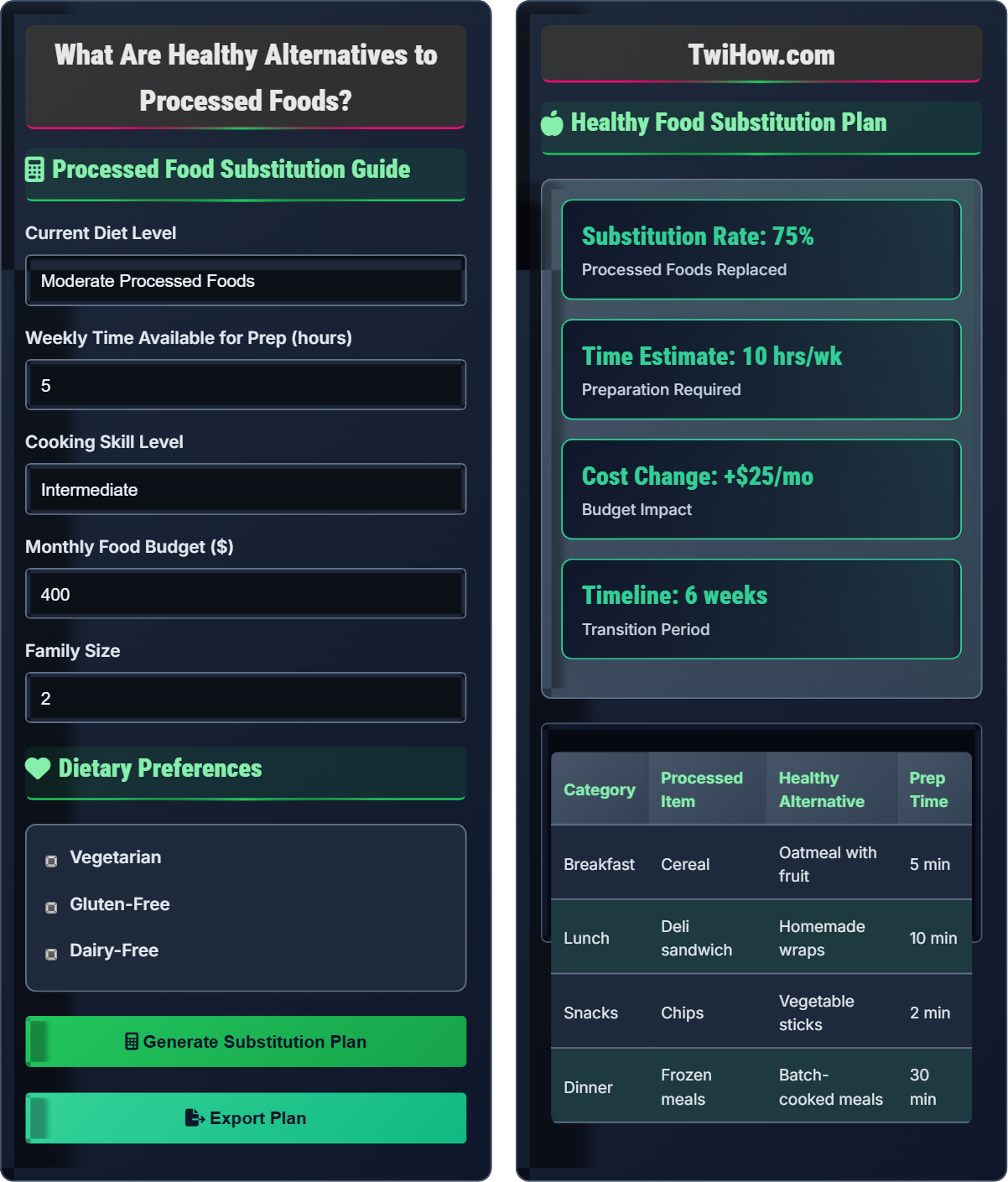
Processed Food Substitution Guide
Dietary Preferences
Healthy Food Substitution Plan
| Category | Processed Item | Healthy Alternative | Prep Time |
|---|---|---|---|
| Breakfast | Cereal | Oatmeal with fruit | 5 min |
| Lunch | Delicious sandwich | Homemade wraps | 10 min |
| Snacks | Chips | Vegetable sticks | 2 min |
| Dinner | Frozen meals | Batch-cooked meals | 30 min |
Top Substitutions
Based on your profile, here are the most effective substitutions:
- Breakfast: Replace sugary cereals with oatmeal or smoothies
- Lunch: Swap deli meats for grilled chicken or fish
- Snacks: Choose nuts and fruits over packaged snacks
- Dinner: Cook from scratch instead of using frozen meals
Start with 2-3 substitutions per week to build sustainable habits.
Preparation Strategies
- Batch Cooking: Prepare proteins and grains in bulk
- Wash & Chop: Pre-cut vegetables for easy access
- Marinade Ahead: Prepare proteins in advance
- Freeze Options: Make extra portions for later
Invest 2-3 hours weekly in preparation to save time daily.
Healthy Alternatives to Processed Foods
Processed foods are any food that has been altered from its natural state. While some processing is necessary (like freezing or canning), ultra-processed foods contain additives, preservatives, high sodium, and added sugars. These foods often lack essential nutrients and can contribute to health problems when consumed regularly.
Healthy alternatives focus on whole foods that are minimally processed and retain their natural nutrients, fiber, and beneficial compounds.
Effective substitution follows a simple formula:
Where:
- Nutritional Value: Improved vitamins, minerals, fiber, and protein
- Taste Satisfaction: Palatability and enjoyment of the alternative
- Preparation Effort: Time and complexity required to prepare
Popular processed food alternatives:
- Breakfast Cereals: Steel-cut oats, smoothies with whole fruits
- Delicious Meats: Grilled chicken, fish, legume-based proteins
- Frozen Dinners: Batch-cooked meals, one-pot recipes
- Snack Bars: Homemade granola bars, nuts, fresh fruits
- Sauces: Homemade versions with fresh herbs and spices
- Drinks: Water infused with fruits, herbal teas
- Batch Cooking: Prepare proteins and grains in large quantities
- Wash & Chop: Pre-process vegetables for easy access
- Marinade Ahead: Prepare proteins in advance for quick cooking
- Freezer Meals: Make extra portions to freeze for later
- Convenient Storage: Use proper containers for freshness
- Spice Organization: Organize seasonings for easy access
Food Alternatives Fundamentals
Processed foods, whole foods, nutrient density, food preparation, cooking methods.
Substitution Success = (Nutritional Value + Taste Satisfaction) / Preparation Effort
Where higher scores indicate more successful alternatives.
- Choose minimally processed foods
- Read ingredient labels carefully
- Focus on whole food groups
Practical Implementation
Meal planning, batch cooking, shopping strategies, food storage.
- Plan meals around whole foods
- Shop for fresh ingredients
- Batch cook proteins and grains
- Prep vegetables for easy access
- Make healthy snacks available
- Gradual transition is sustainable
- Balance convenience with nutrition
- Consider budget constraints
Food Alternatives Knowledge Quiz
Which of the following represents the lowest level of processing?
Fresh apples represent the lowest level of processing - they are whole foods that have undergone no processing beyond harvesting and washing. Canned vegetables have been processed (heated and preserved), frozen dinners are ultra-processed with multiple ingredients and additives, and deli meats have been cured, seasoned, and processed with preservatives.
Processing levels from lowest to highest: fresh whole foods, minimally processed (frozen/canned), processed (cheese/bread), ultra-processed (frozen dinners).
The answer is B) Fresh apples.
Understanding processing levels helps consumers make informed food choices. The NOVA classification system divides foods into four groups based on processing extent. Fresh, whole foods provide the most nutrients and fiber while requiring minimal processing.
Ultra-processed: Industrial formulations with multiple ingredients
Minimally processed: Basic preservation methods only
Whole foods: Foods in their natural state
• Prioritize whole foods over processed options
• Understand processing levels
• Read ingredient lists
• Shop the perimeter of grocery stores
• Choose foods with fewer ingredients
• Focus on recognizable ingredients
• Confusing "natural" with "unprocessed"
• Assuming all frozen foods are processed
• Not reading ingredient lists carefully
Explain the most effective strategy for substituting processed snacks with healthy alternatives. Include preparation methods, timing, and practical implementation.
Preparation Strategy:
Wash & Chop: Wash and cut vegetables (carrots, bell peppers, cucumbers) and fruits (apples, grapes) at the beginning of the week. Store in airtight containers for easy access.
Batch Preparation: Prepare trail mix with unsalted nuts, seeds, and dried fruits. Portion into small bags for grab-and-go options.
Timing: Dedicate 30-60 minutes on a weekend day to preparation. This investment saves time throughout the week and ensures healthy options are readily available.
Practical Implementation:
• Replace potato chips with roasted chickpeas or vegetable sticks
• Substitute candy with fresh fruits or homemade energy balls
• Choose nuts over processed crackers
• Prepare hummus or guacamole for dipping
Success Factors: Make alternatives as convenient as processed snacks and ensure they satisfy taste preferences.
The key to successful substitution is making healthy options as convenient as processed foods. Preparing snacks in advance removes the barrier of time and effort, making it more likely that people will choose healthier options when hunger strikes.
Batch Preparation: Making large quantities at once
Convenience Factor: Ease of access and consumption
Prep Time: Time invested upfront for future benefits
• Prepare snacks in advance
• Make healthy options convenient
• Match taste preferences
• Pre-portion snacks into containers
• Keep a cooler with healthy options
• Involve family in preparation
• Not preparing in advance
• Making healthy options inconvenient
• Ignoring taste preferences
You currently spend $50 per week on processed snacks and ready-made meals. Calculate the cost difference if you switch to whole food alternatives, and create a weekly meal plan that replaces these items while staying within a 20% budget increase. Include preparation time estimates.
Current Spending: $50 per week
Allowable Budget Increase: $50 × 1.20 = $60 per week
Substitution Plan:
Breakfast: Replace instant oatmeal packets ($8/wk) with steel-cut oats and fresh fruit ($5/wk)
Lunch: Replace deli sandwiches ($15/wk) with homemade wraps with grilled chicken ($12/wk)
Dinner: Replace frozen meals ($20/wk) with batch-cooked meals ($18/wk)
Snacks: Replace processed snacks ($7/wk) with nuts and fruits ($10/wk)
New Total: $5 + $12 + $18 + $10 = $45 per week
Savings: $5 per week (actually 10% decrease in cost)
Preparation Time: 2-3 hours on weekends for batch cooking and prep
Answer: The substitution plan costs $45 per week (10% decrease) and requires 2-3 hours of weekly prep time.
This problem demonstrates that whole food alternatives can actually be more economical than processed foods when purchased strategically. Bulk buying, seasonal purchasing, and efficient preparation methods can reduce costs while improving nutrition.
Cost-Benefit Analysis: Comparing expense to nutritional value
Batch Cooking: Preparing large quantities at once
Seasonal Purchasing: Buying produce when in season• Compare unit prices when shopping
• Buy in bulk when economical
• Plan meals around sales
• Shop sales and use coupons
• Buy generic brands when possible
• Choose seasonal produce
• Assuming whole foods are always more expensive
• Not considering bulk savings
• Ignoring seasonal price variations
You work full-time and have limited time for meal preparation. Design a time-efficient system to replace your processed breakfast cereal and lunch sandwiches with whole food alternatives. Include specific recipes and time-saving techniques.
Breakfast Solution:
Overnight Oats: Combine oats, milk, chia seeds, and fruit in jars the night before. Ready to grab in the morning. Preparation: 5 minutes on Sunday, ready daily.
Lunch Solution:
Batch-Cooked Grain Bowls: On Sunday, cook quinoa, roast vegetables, and grill proteins. Assemble different combinations in containers for the week. Preparation: 1 hour on Sunday, 2 minutes daily assembly.
Time-Saving Techniques:
• Use slow cooker for grains and proteins
• Pre-cut vegetables when shopping
• Cook proteins in bulk and freeze portions
• Use sheet pan cooking for multiple components
Weekly Time Investment: 2 hours on weekends for 5 days of healthy meals
This system replaces processed foods with whole food alternatives while minimizing daily preparation time.
Time management is crucial for maintaining healthy eating habits. The key is front-loading preparation time during less busy periods to create convenience during busy times. Batch preparation and make-ahead meals maximize efficiency.
Time Front-Loading: Investing time upfront for future benefits
Batch Preparation: Making large quantities at once
Convenience Factor: Ease of access and consumption
• Invest time on weekends
• Prepare for busy weekdays
• Make healthy options convenient
• Use slow cooker for easy prep
• Freeze individual portions
• Pre-portion ingredients
• Not preparing in advance
• Underestimating preparation time
• Not making healthy options convenient
Which of the following ingredients is most likely to indicate a highly processed food?
Sodium benzoate is a synthetic preservative commonly used in processed foods to extend shelf life. It's not a naturally occurring ingredient and indicates significant processing. Natural ingredients like apple, spinach, and olive oil are found in their original form and suggest minimal processing.
Other indicators of high processing include: artificial colors, high fructose corn syrup, hydrogenated oils, and ingredients you can't pronounce.
The answer is B) Sodium benzoate.
Learning to read ingredient lists is essential for identifying processed foods. Generally, the longer and more complex the ingredient list, the more processed the food. Ingredients should be recognizable and pronounceable.
Synthetic Preservatives: Man-made chemicals added to foods
Ingredient List: Ordered by quantity in the product
Recognizable Ingredients: Items you can identify and pronounce
• Read ingredient lists carefully
• Look for recognizable ingredients
• Fewer ingredients usually mean less processing
• Choose products with 5 ingredients or less
• Avoid artificial preservatives
• Look for organic options
• Assuming "natural" means unprocessed
• Not reading ingredient lists
• Being misled by marketing terms
FAQ
Q: How can I get my family to eat more whole foods instead of processed snacks?
A: Getting families to embrace whole foods requires a gradual, positive approach:
Start Gradually:
• Replace one processed item at a time with a whole food alternative
• Introduce new foods alongside familiar favorites
• Make changes slowly to allow taste preferences to adapt
Make It Fun:
• Involve children in food preparation and shopping
• Create colorful, visually appealing presentations
• Try themed nights (Mexican with fresh ingredients, etc.)
Lead by Example:
• Parents should model healthy eating behaviors
• Make healthy foods easily accessible
• Avoid labeling foods as "good" or "bad"
Make Convenient:
• Pre-cut fruits and vegetables for easy snacking
• Keep healthy options visible and accessible
• Prepare whole food snacks in advance
Patience and consistency are key to changing family eating habits.
Q: What are the best whole food options for a busy college student on a budget?
A: Budget-friendly whole foods for busy students include:
Staples:
• Rice, oats, and pasta (long-lasting, filling)
• Dried beans and lentils (cheap protein source)
• Eggs (inexpensive and versatile)
Fresh Options:
• Bananas, apples, and seasonal fruits
• Carrots, cabbage, onions (long-lasting vegetables)
• Frozen vegetables (nutrient-dense, long shelf life)
Preparation Tips:
• Cook large batches on weekends
• Use slow cooker or microwave for convenience
• Buy generic brands to save money
Sample Meals:
• Overnight oats with banana
• Bean and rice bowls
• Scrambled eggs with vegetables
Whole foods can be more economical than processed alternatives when purchased strategically.