What Are the Effects of Artificial Sweeteners?
Complete sweetener guide • Step-by-step explanations
Artificial Sweetener Overview:
Show Sweetener Effects CalculatorArtificial sweeteners are sugar substitutes that provide sweetness without the calories of sugar. They are widely used in diet sodas, sugar-free products, and as tabletop sweeteners. While generally recognized as safe by regulatory agencies, artificial sweeteners have both beneficial and controversial effects on health, metabolism, and behavior.
These compounds are significantly sweeter than sugar, meaning only small amounts are needed to achieve desired sweetness levels. Understanding their effects is crucial for making informed dietary choices.
Key sweetener categories:
- Non-Nutritive Sweeteners: Aspartame, Sucralose, Stevia, Saccharin
- Caloric Sweeteners: Sugar alcohols like xylitol and erythritol
- Natural Alternatives: Stevia, monk fruit extract
- Metabolic Effects: Impact on glucose, insulin, and gut microbiome
Modern research continues to evaluate the long-term effects of artificial sweeteners on various aspects of health and wellness.
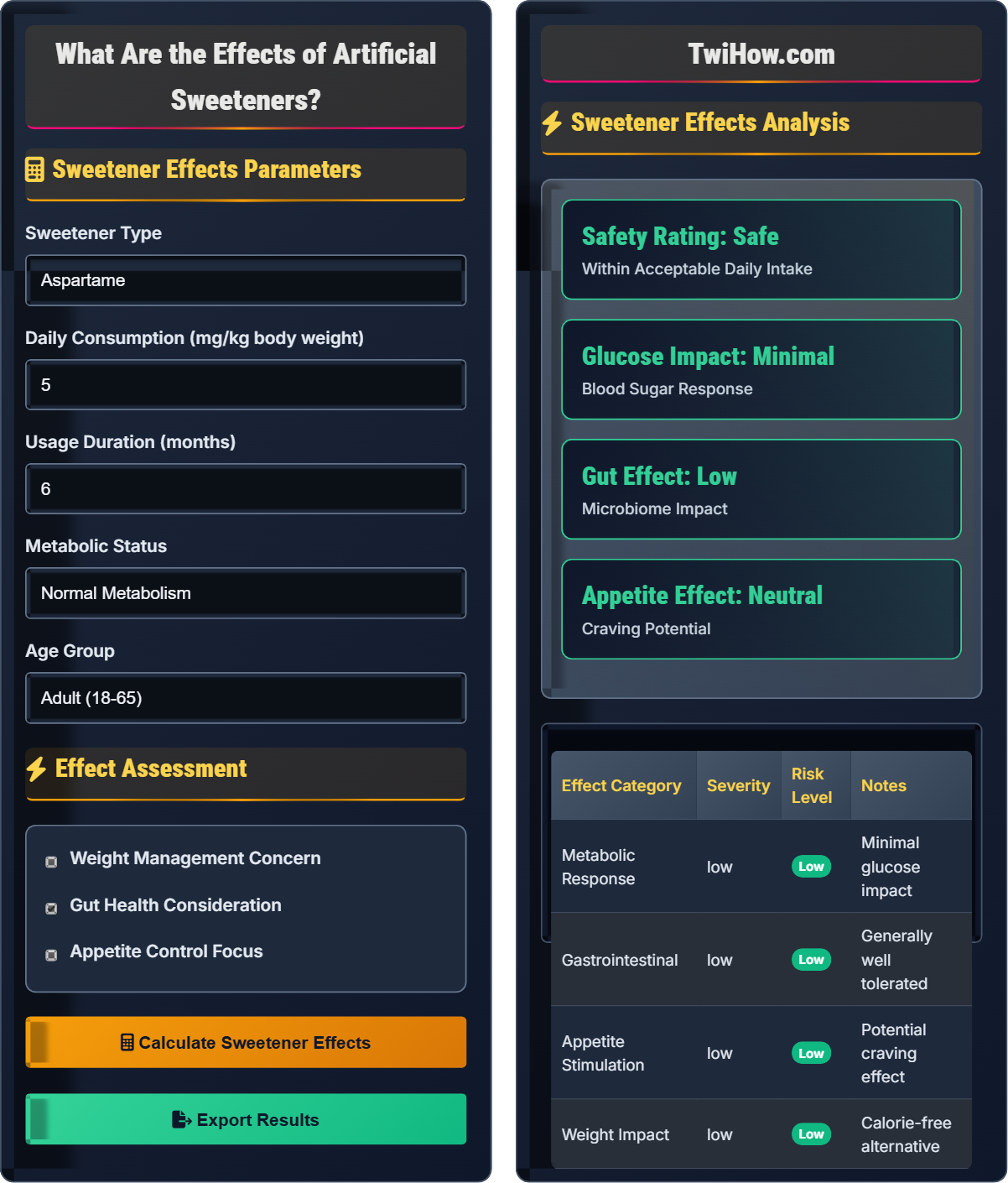
Sweetener Effects Parameters
Effect Assessment
Sweetener Effects Analysis
| Effect Category | Severity | Risk Level | Notes |
|---|---|---|---|
| Metabolic Response | Low | Minimal glucose impact | |
| Gastrointestinal | Low | Generally well tolerated | |
| Appetite Stimulation | Medium | Potential craving effect | |
| Weight Impact | Low | Calorie-free alternative |
Effect Summary
Based on your selected parameters, the effects of your chosen sweetener appear to be:
- Metabolic Impact: Generally minimal effect on blood glucose
- Gastrointestinal Tolerance: Well-tolerated in normal doses
- Weight Management: Calorie-free alternative to sugar
- Long-term Safety: Within established safety margins
Remember that individual responses may vary based on genetics, gut microbiome, and overall health status.
| Sweetener | Sweetness | Calories | Safety | Notes |
|---|---|---|---|---|
| Aspartame | 200x | 0 | Breaks down at high temperatures | |
| Sucralose | 600x | 0 | Heat-stable | |
| Stevia | 200x | 0 | Naturally derived | |
| Saccharin | 300x | 0 | Historical safety concerns | |
| Acesulfame-K | 200x | 0 | Often blended with others |
Effects of Artificial Sweeteners Explained
Artificial sweeteners are sugar substitutes that provide sweetness without the calories of sugar. They are typically hundreds of times sweeter than sugar, so only tiny amounts are needed to achieve the desired sweetness level. These compounds are categorized as non-nutritive sweeteners because they provide virtually no calories.
Common artificial sweeteners include aspartame, sucralose, saccharin, acesulfame potassium, and newer alternatives like stevia and monk fruit extract.
Artificial sweeteners vary significantly in their sweetness intensity compared to sugar:
Where:
- Aspartame: ~200 times sweeter than sugar
- Sucralose: ~600 times sweeter than sugar
- Saccharin: ~300 times sweeter than sugar
- Stevia: ~200-300 times sweeter than sugar
- Acesulfame-K: ~200 times sweeter than sugar
Research has identified several potential effects of artificial sweeteners:
- Positive Effects: Zero calories, blood sugar control, dental health
- Neutral Effects: Short-term metabolic impact in healthy individuals
- Controversial Effects: Appetite regulation, gut microbiome changes, weight management
- Individual Variations: Genetic differences in taste perception and metabolism
- Aspartame: Made from two amino acids, breaks down at high temperatures
- Sucralose: Derived from sugar, heat-stable, passes through body largely unchanged
- Saccharin: One of the oldest artificial sweeteners, intensely sweet
- Stevia: Natural sweetener derived from stevia plant leaves
- Acesulfame K: Often blended with other sweeteners, heat-stable
- Neotame: Newest FDA-approved sweetener, extremely potent
Sweetener Fundamentals
Non-nutritive sweeteners, sweetness intensity, acceptable daily intake (ADI), glycemic index.
Sweetness Ratio = Sweetness of Sweetener / Sweetness of Sucrose
Where Sweetness is measured relative to sucrose (table sugar) = 1.
- Stay within ADI limits
- Monitor individual responses
- Consider overall diet context
Potential Benefits
Calorie reduction, blood sugar control, dental health, weight management.
- Calorie-free sweetness
- Diabetes-friendly option
- Reduced tooth decay risk
- Weight management support
- Individual tolerance varies
- May affect taste preferences
- Long-term effects still studied
- Not suitable for all cooking
Sweetener Knowledge Quiz
Which regulatory agency is primarily responsible for evaluating the safety of artificial sweeteners in the United States?
The FDA (Food and Drug Administration) is responsible for evaluating and approving artificial sweeteners in the United States. Before any artificial sweetener can be sold commercially, it must undergo rigorous safety testing and receive FDA approval. The FDA establishes Acceptable Daily Intake (ADI) levels for each approved sweetener based on comprehensive toxicological studies.
The answer is B) FDA (Food and Drug Administration).
Understanding regulatory oversight is important for evaluating the safety of artificial sweeteners. The FDA uses a multi-step process that includes preclinical studies, clinical trials, and long-term safety assessments. The ADI represents the amount that can be safely consumed daily over a lifetime without adverse effects.
ADI (Acceptable Daily Intake): Maximum amount considered safe for daily consumption
GRAS (Generally Recognized as Safe): Food substance deemed safe by experts
Toxicological Studies: Tests to determine harmful effects of substances
• All approved sweeteners meet FDA safety standards
• ADI levels include safety margins
• Long-term studies continue after approval
• Look for FDA approval statements on products
• Understand that ADI is very conservative
• Most people consume far below ADI levels
• Assuming all sweeteners have equal safety profiles
• Misunderstanding ADI calculations
• Not distinguishing between different regulatory agencies
Explain the potential metabolic effects of artificial sweeteners on blood glucose and insulin response. Compare and contrast with regular sugar.
Artificial Sweeteners: Most artificial sweeteners do not raise blood glucose levels since they are not metabolized as carbohydrates. However, some studies suggest they may trigger a conditioned response where the brain anticipates glucose after tasting sweetness, potentially leading to subtle insulin release.
Regular Sugar: Causes direct elevation in blood glucose, triggering proportional insulin release to facilitate cellular glucose uptake.
Comparison: While artificial sweeteners have minimal acute glucose effects, long-term consumption may influence glucose tolerance through several mechanisms: altered gut microbiome composition, changes in GLP-1 (glucagon-like peptide-1) secretion, and potential disruption of learned associations between sweet taste and caloric intake.
Research Findings: Population studies show mixed results - some suggest potential glucose intolerance with heavy consumption, while controlled studies often show minimal effects in healthy individuals.
The relationship between artificial sweeteners and glucose metabolism is complex. While they don't directly raise blood sugar, the sweet taste itself can trigger cephalic phase insulin release (insulin response to sensory stimuli). The gut-brain axis also plays a role, as sweet taste receptors in the gut can influence hormone secretion independently of absorption.
Cephalic Phase Response: Physiological response triggered by sensory stimuli
GLP-1: Hormone that stimulates insulin release and suppresses appetite
Glucose Tolerance: Body's ability to handle glucose loads
• Direct glucose effects are minimal
• Indirect effects may occur with chronic use
• Individual responses vary significantly
• Monitor personal glucose response if diabetic
• Consider timing of consumption
• Combine with fiber to slow absorption
• Assuming zero metabolic impact
• Ignoring individual variability
• Not considering cumulative effects
A 70kg adult consumes 450mg of aspartame daily through diet sodas. The FDA's Acceptable Daily Intake (ADI) for aspartame is 50mg/kg body weight. Calculate the percentage of ADI being consumed and assess the safety of this intake level. Also determine how many 12oz cans of diet soda (containing 180mg aspartame each) would exceed the ADI.
Step 1 - Calculate ADI: 70kg × 50mg/kg = 3,500mg per day
Step 2 - Calculate Percentage: (450mg ÷ 3,500mg) × 100 = 12.9%
Step 3 - Safety Assessment: At 12.9% of ADI, this intake is well within safe limits with a significant safety margin.
Step 4 - Cans to exceed ADI: 3,500mg ÷ 180mg per can = 19.4 cans
Answer: The person is consuming 12.9% of their ADI, which is safe. They would need to drink approximately 20 cans of diet soda to exceed the ADI limit.
This demonstrates the substantial safety margin built into ADI calculations, as consuming 20 cans of soda daily is physiologically impractical and dangerous for other reasons.
This calculation illustrates the conservative nature of ADI values. The ADI includes a 100-fold safety factor, meaning it's set at 1/100th of the dose that showed no adverse effects in animal studies. This provides a large buffer for human consumption, even with daily intake over a lifetime.
ADI: Acceptable Daily Intake - maximum safe daily consumption
Safety Factor: Built-in margin to protect consumers
Chronic Exposure: Long-term daily consumption
• ADI includes substantial safety margins
• Actual consumption is usually much lower
• Regulatory standards are conservative
• Most people consume far below ADI levels
• Check ingredient labels for sweetener content
• Spread intake across different sweeteners
• Confusing mg with g measurements
• Not accounting for body weight
• Misunderstanding safety margins
A patient with irritable bowel syndrome (IBS) has been experiencing increased bloating and gas after switching to diet sodas containing sucralose and acesulfame-K. Explain the potential mechanisms for these gastrointestinal symptoms and suggest alternatives that might be better tolerated.
Potential Mechanisms:
Sucralose: Although not absorbed in the small intestine, some studies suggest it may alter gut microbiome composition, potentially affecting digestive comfort. At high concentrations, it may draw water into the intestines (osmotic effect).
Acesulfame-K: Generally well-tolerated, but individual sensitivities can occur. Combined with other ingredients in diet sodas, it may contribute to digestive upset.
Alternative Recommendations:
1. Stevia-based sweeteners: May be better tolerated by sensitive individuals
2. Erythritol: Sugar alcohol that's generally well-tolerated (though some IBS patients may be sensitive)
3. Monk fruit extract: Natural alternative with good digestive tolerance
4. Gradual introduction: Start with smaller amounts to assess tolerance
Additional Considerations: The carbonation in diet sodas may contribute to bloating independently of sweeteners.
Gastrointestinal effects of artificial sweeteners can be mediated through multiple pathways: osmotic effects, microbiome alterations, and individual sensitivities. People with pre-existing GI conditions like IBS may be more susceptible to these effects. The gut microbiome is particularly sensitive to dietary changes, and long-term effects of artificial sweeteners on microbial communities are still being researched.
Gut Microbiome: Community of microorganisms in the digestive tract
Osmotic Effect: Water movement due to solute concentration
IBS: Irritable Bowel Syndrome - functional GI disorder
• Individual tolerance varies significantly
• Start with small amounts when trying new sweeteners
• Consider overall dietary pattern
• Keep a food diary to track symptoms
• Try one sweetener at a time to identify triggers
• Consider probiotics for gut health
• Assuming all sweeteners have equal GI effects
• Not considering individual sensitivity
• Ignoring other ingredients in products
What does current scientific evidence suggest about the relationship between artificial sweetener consumption and weight management?
Current scientific evidence suggests that the relationship between artificial sweeteners and weight management is complex and context-dependent. Randomized controlled trials generally show modest weight loss benefits when artificial sweeteners replace caloric sweeteners. However, observational studies sometimes show associations between artificial sweetener consumption and higher BMI, though this may reflect reverse causality (overweight individuals choosing diet products).
When used appropriately as part of a calorie-controlled diet, artificial sweeteners can help reduce overall calorie intake and support weight management goals.
The answer is C) Evidence is mixed with potential benefits when replacing sugar.
This exemplifies the complexity of nutrition science, where experimental and observational studies can yield different results. Controlled trials show benefits of replacing sugar with artificial sweeteners, while population studies reveal correlations that may be influenced by confounding factors. The key is understanding that artificial sweeteners are tools that work best within an overall healthy eating pattern.
Randomized Controlled Trial: Gold standard for determining causation
Observational Study: Shows associations but not causation
Reverse Causality: Outcome influences exposure rather than vice versa
• Context matters for effectiveness
• Part of overall dietary pattern
• Individual responses vary
• Use as sugar replacement, not addition
• Combine with other weight management strategies
• Monitor actual results over time
• Expecting automatic weight loss
• Adding to existing high-calorie diet
• Not considering behavioral aspects
FAQ
Q: Are artificial sweeteners safe for people with diabetes, and how do they affect blood sugar levels?
A: Artificial sweeteners are generally safe and beneficial for people with diabetes because they provide sweetness without raising blood glucose levels. Most artificial sweeteners are not metabolized as carbohydrates and have minimal to no impact on blood sugar.
However, some important considerations:
1. Direct Effects: Approved sweeteners like aspartame, sucralose, stevia, and saccharin have minimal acute glucose effects.
2. Indirect Effects: Some studies suggest long-term use might subtly affect glucose tolerance through changes in gut microbiota or learned associations between sweet taste and caloric intake.
3. Individual Variability: Responses can vary between individuals, so monitoring your own glucose response is valuable.
4. Product Formulations: Some products containing artificial sweeteners may still have added sugars or carbohydrates.
Overall, artificial sweeteners are considered safe for diabetes management when used within recommended limits.
Q: Will switching to artificial sweeteners help me lose weight, and are there any potential drawbacks?
A: Research shows mixed results for weight loss with artificial sweeteners:
Potential Benefits:
• Significant calorie reduction when replacing sugar-sweetened beverages and foods
• Maintains sweet taste preferences without caloric consequences
• Supports adherence to reduced-calorie diets
Potential Drawbacks:
• May increase appetite in some individuals (sweet taste without calories)
• Could maintain cravings for sweet foods
• Some observational studies link high consumption with higher BMI (though causation unclear)
Best Practices:
1. Use as part of an overall calorie-controlled diet
2. Gradually reduce sweet taste preferences
3. Combine with whole foods and balanced nutrition
4. Monitor your individual response
Artificial sweeteners can be helpful tools for weight management, but they're not magic solutions and work best within a comprehensive approach.