What is Intuitive Eating and How to Practice It
Complete nutrition guide • Step-by-step explanations
Intuitive Eating:
Show Intuitive Eating TrackerIntuitive eating is a mindful approach to food that encourages listening to your body's natural hunger and satiety cues. Developed by dietitians Evelyn Tribole and Elyse Resch, this philosophy promotes developing a healthy relationship with food without restrictive diets or calorie counting.
Intuitive eating emphasizes honoring your body's signals, rejecting diet culture, and making peace with food. It's based on ten core principles that guide individuals toward a more natural and sustainable way of eating.
Key principles of intuitive eating:
- Reject Diet Mentality: Abandon restrictive dieting approaches
- Honor Hunger: Eat when your body signals hunger
- Make Peace with Food: Give yourself unconditional permission to eat
- Challenge Food Police: Silence the critical inner voice about "good" or "bad" foods
Research shows that intuitive eating can improve psychological wellbeing, reduce disordered eating behaviors, and promote sustainable eating habits. It shifts focus from weight loss to overall health and body acceptance.
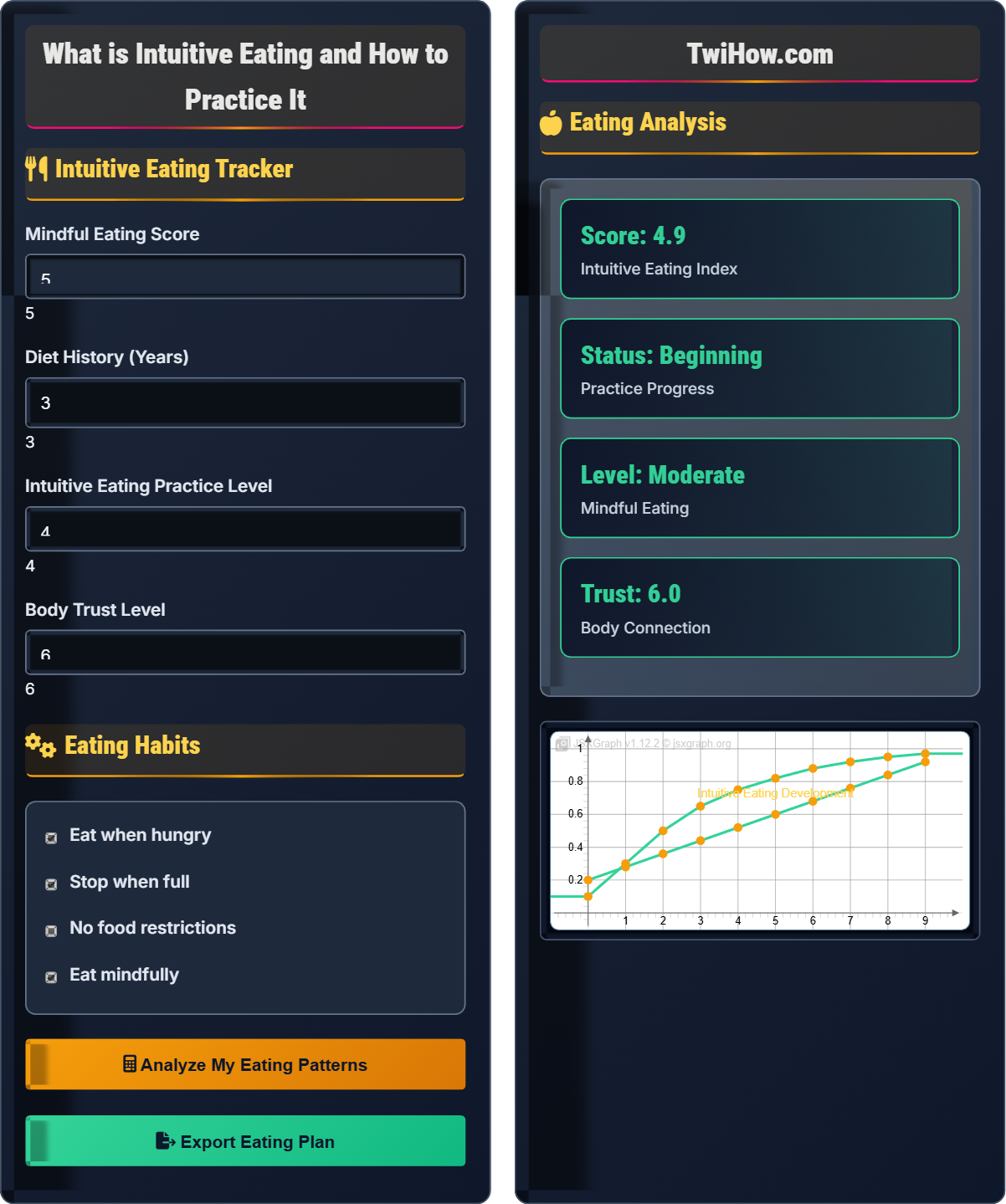
Intuitive Eating Tracker
Eating Habits
Eating Analysis
| Aspect | Score | Progress | Focus Area |
|---|---|---|---|
| Mindfulness | 5 | Developing | Meditation |
| Hunger Awareness | 7 | Good | None |
| Satiety Recognition | 6 | Developing | Eating Speed |
| Food Freedom | 4 | Beginning | Permission |
Recommended Practices
- Practice mindful eating exercises
- Keep a hunger/satiety journal
- Challenge food rules and restrictions
- Engage in gentle movement
- Practice body acceptance
Understanding and Practicing Intuitive Eating
Intuitive eating is an evidence-based approach that promotes developing a healthy relationship with food, mind, and body. It's a non-diet philosophy that encourages individuals to become the expert of their own body by listening to internal cues rather than external rules about what, when, and how much to eat.
The foundational principles that guide intuitive eating practice:
Where:
- Principle 1: Reject the Diet Mentality
- Principle 2: Honor Your Hunger
- Principle 3: Make Peace with Food
- Principle 4: Challenge the Food Police
- Principle 5: Discover the Satisfaction Factor
- Principle 6: Feel Your Fullness
- Principle 7: Cope with Emotions with Kindness
- Principle 8: Respect Your Body
- Principle 9: Exercise—Feel the Difference
- Principle 10: Honor Your Health—Gentle Nutrition
Research-backed advantages of practicing intuitive eating:
- Improved Psychological Health: Reduced anxiety around food and eating
- Better Body Image: Increased body acceptance and self-esteem
- Enhanced Metabolic Health: Improved cholesterol levels and blood pressure
- Reduced Disordered Eating: Decreased binge eating and restrictive behaviors
- Increased Self-Care: Better self-compassion and emotional regulation
- Sustainable Habits: Long-term healthy eating patterns
- Slow Down: Take time to chew and savor each bite
- Check In: Pause mid-meal to assess hunger and satisfaction
- Remove Distractions: Eat without screens or multitasking
- Notice Sensations: Pay attention to taste, texture, and smell
- Honor Cravings: Allow yourself to eat foods you desire
- Respect Fullness: Stop eating when comfortably satisfied
Intuitive Eating Fundamentals
Hunger cues, satiety signals, body wisdom, mindful eating, non-diet approach, food freedom.
Hunger Recognition + Satiety Response + Emotional Awareness = Intuitive Eating Success
Where Success = sustainable, satisfying, and nourishing eating patterns.
- Listen to your body's signals
- Reject external food rules
- Practice self-compassion
Implementation Strategies
Mindful eating, hunger tracking, emotional awareness, body acceptance, gentle nutrition.
- Learn intuitive eating principles
- Identify personal hunger cues
- Practice mindful eating
- Challenge diet mentality
- Build body trust
- Maintain long-term habits
- Patience with the process
- Self-compassion during setbacks
- Professional support when needed
- Individual variation in progress
Intuitive Eating Learning Quiz
Which of the following is the FIRST principle of intuitive eating?
The ten principles of intuitive eating were developed by Evelyn Tribole and Elyse Resch in their book "Intuitive Eating." The first and most fundamental principle is "Reject the Diet Mentality," which involves abandoning the pursuit of dieting and restrictive eating plans. This principle is listed first because it sets the foundation for all other principles by removing the external rules that interfere with internal eating cues.
The answer is B) Reject the Diet Mentality.
Understanding the order of intuitive eating principles is important because they build upon each other. The first principle addresses the mindset shift needed to embrace intuitive eating. Without rejecting diet mentality first, individuals may continue to apply external rules while trying to practice internal awareness, which creates conflicting signals and reduces effectiveness.
Diet Mentality: The belief that restrictive eating rules lead to health and happiness
Intuitive Eating: A non-diet approach based on internal body cues
External Cues: Outside factors that influence eating (time, calories, rules)
• Mindset shift precedes behavioral change
• External rules interfere with internal cues
• Foundation principles support subsequent ones
• Notice thoughts about "good" vs "bad" foods
• Identify personal diet rules to release
• Focus on health rather than weight
• Trying intuitive eating while still dieting
Explain the difference between physical hunger and emotional hunger. Why is it important to distinguish between these two types of hunger when practicing intuitive eating?
Physical Hunger: Develops gradually over time, accompanied by physical sensations like stomach growling, energy drops, or lightheadedness. It can be satisfied by various foods and is accompanied by fullness cues.
Emotional Hunger: Appears suddenly and intensely, often craving specific comfort foods (sweet, salty, crunchy). It bypasses normal fullness signals and is usually followed by guilt or shame.
Importance of Distinction: Distinguishing between these types of hunger is crucial because intuitive eating aims to honor physical hunger while developing healthy ways to cope with emotions. When emotional hunger is misinterpreted as physical hunger, it can lead to overeating and perpetuate the cycle of emotional eating. Recognizing emotional hunger allows for addressing underlying emotional needs through appropriate coping strategies rather than food.
One of the most challenging aspects of intuitive eating is learning to differentiate between physical and emotional hunger. This skill takes practice and patience. Physical hunger builds gradually and can be satisfied by various nutritious foods, while emotional hunger is often triggered by stress, boredom, sadness, or other emotional states. Developing this awareness is essential for breaking free from the diet-restrict-binge cycle.
Physical Hunger: Biological need for food signaled by body sensations
Emotional Hunger: Desire to eat driven by emotional needs
Hunger Cues: Internal signals indicating need for nourishment
• Physical hunger builds gradually
• Emotional hunger appears suddenly
• Address emotions separately from food needs
• Pause before eating to assess hunger type
• Keep an emotion-food diary
• Find alternative emotional coping strategies
• Confusing emotional needs with physical hunger
• Using food as primary emotional regulator
• Ignoring emotional eating patterns
Emma has been following various diets for years and struggles with food restriction and binge eating cycles. She wants to try intuitive eating but is concerned about weight gain and lacks trust in her body's signals. Emma also has a busy schedule and often eats while working. Describe a gradual approach Emma could take to transition from dieting to intuitive eating, considering her specific concerns and lifestyle factors.
Phase 1 - Mindset Shift: Begin by reading about intuitive eating principles and identifying personal diet rules to release. Address fears about weight gain by focusing on health rather than appearance.
Phase 2 - Basic Awareness: Start noticing physical hunger and fullness cues during easier meal times. Begin with small, manageable changes like taking 5 minutes to eat breakfast mindfully.
Phase 3 - Practical Integration: Schedule regular meal breaks even with a busy schedule. Prepare simple, satisfying meals in advance to reduce reliance on distracted eating.
Phase 4 - Trust Building: Gradually extend mindful eating to other meals. Practice self-compassion during setbacks and focus on the process rather than outcomes.
Phase 5 - Long-term Integration: Develop a consistent routine that honors both hunger cues and schedule demands.
Transitioning from chronic dieting to intuitive eating requires patience and a gradual approach. For someone with a history of dieting and binge cycles, the body's hunger and fullness signals may be temporarily dysregulated. Emma's approach should prioritize rebuilding trust in her body's signals while accommodating her lifestyle constraints. The focus should be on developing a peaceful relationship with food rather than weight outcomes.
Chronic Dieting: Repeated cycles of restricting and overeating
Body Trust: Confidence in internal hunger and satiety signals
Gradual Integration: Slow incorporation of new eating practices
• Progress gradually with intuitive eating
• Focus on health over weight outcomes
• Practice self-compassion throughout
• Start with easier meals for practice
• Schedule mindful eating breaks
• Prepare simple satisfying options
• Expecting immediate results
• Judging body changes during transition
• Trying to rush the process
Michael often eats quickly while watching TV or working, leading to overeating and discomfort. He recognizes that he doesn't pay attention to his food and wants to develop mindful eating skills. Michael works long hours and often eats alone. Propose three specific mindfulness techniques that Michael can implement immediately to slow down his eating pace and increase awareness of satiety cues.
Technique 1 - Conscious Chewing: Commit to chewing each bite at least 20-30 times before swallowing. This slows eating pace and increases awareness of food taste and texture.
Technique 2 - Fork Down Method: Put the fork down between bites and take a breath before picking it up again. This creates natural pauses to check in with hunger/fullness levels.
Technique 3 - Hunger Check-ins: Take a moment halfway through the meal to pause, breathe, and assess current hunger/satisfaction levels on a scale of 1-10.
Additional strategies include setting a timer for meals (aim for 20+ minutes) and creating a designated eating area separate from work or entertainment spaces.
Mindful eating techniques are practical tools that interrupt automatic eating patterns. The key is slowing down the eating process to allow time for satiety signals to register. It takes approximately 20 minutes for the brain to receive fullness signals from the stomach, so eating slowly is essential for recognizing satiety. These techniques help create conscious awareness of the eating experience.
Mindful Eating: Conscious awareness of the eating experience
Satiety Signals: Internal cues indicating fullness
Eating Pace: Speed at which food is consumed
• Satiety signals take 20 minutes to register
• Slower eating increases awareness
• Conscious eating breaks automatic patterns
• Use smaller utensils to slow eating
• Drink water between bites
• Eliminate distractions during meals
• Eating too quickly to notice fullness
• Multitasking while eating
• Not pausing to check hunger levels
What does "gentle nutrition" mean in the context of intuitive eating?
Gentle nutrition is the tenth principle of intuitive eating and represents a compassionate approach to food choices. It involves selecting foods that honor both health and taste preferences without rigid rules or restrictions. Unlike traditional nutrition advice that focuses on "good" and "bad" foods, gentle nutrition encourages making food choices that feel good physically and emotionally, while considering long-term health. It's about adding nourishing foods rather than restricting or eliminating foods.
The answer is B) Making food choices that honor both health and taste preferences.
Gentle nutrition is often misunderstood as permission to eat anything without consideration for health. In reality, it's about developing a balanced approach that considers both physical satisfaction and nutritional needs. It comes last in the intuitive eating principles because without the foundation of the previous nine principles, nutritional guidance can easily become another form of dieting. Gentle nutrition emerges naturally when individuals trust their bodies and have made peace with food.
Gentle Nutrition: Compassionate approach to food choices considering health and satisfaction
Non-Diet Approach: Focus on health without weight-centric goals
Food Harmony: Balance between nutrition and pleasure
• Health includes physical and mental wellbeing
• Food choices should satisfy both body and mind
• Nutrition guidance should not be restrictive
• Add nourishing foods rather than restrict
• Consider how foods make you feel
• Balance nutrition with enjoyment
• Applying nutrition rules as dieting tools
• Believing intuitive eating ignores health
• Thinking gentle nutrition means no consideration of nutrition
FAQ
Q: Will I gain weight if I start intuitive eating?
A: Intuitive eating doesn't focus on weight change, but rather on developing a healthy relationship with food and body. Some people may experience weight changes initially as their body adjusts to regular, adequate eating patterns. However, research shows that intuitive eating can lead to stable weight over time and improved metabolic health markers regardless of weight. The goal is health and wellbeing, not specific weight outcomes. Your body will find its natural set point when you stop restricting and start honoring your hunger and fullness cues.
Q: Isn't intuitive eating just an excuse to eat junk food?
A: No, intuitive eating is not about eating only "junk food." Initially, some people may eat more of previously restricted foods as they make peace with them, but this typically decreases over time. As you develop trust with food and your body, you'll naturally gravitate toward foods that make you feel energized and satisfied. Intuitive eating includes "gentle nutrition" which involves making food choices that honor both health and taste preferences. It's about finding a sustainable balance that works for your body and lifestyle.
Q: How do I know if I'm ready to try intuitive eating?
A: You may be ready for intuitive eating if you: experience guilt or shame around food choices, feel out of control around certain foods, have tried multiple diets without lasting success, or want to develop a healthier relationship with food. Readiness also involves accepting that this is a process that takes time and patience. You should be willing to challenge diet culture messages and focus on health rather than weight. If you have an active eating disorder, it's important to work with a qualified professional before attempting intuitive eating. Overall, readiness involves a commitment to self-compassion and a willingness to trust your body's wisdom.