Best Way to Stay Consistent with Healthy Eating
Complete nutrition guide • Step-by-step explanations
Healthy Eating Consistency Fundamentals:
Show Consistency PlannerStaying consistent with healthy eating requires building sustainable habits that fit your lifestyle. Success comes from gradual changes, environmental design, and systems that support your goals. The key is creating a supportive structure that makes healthy choices easier than unhealthy ones.
Key principles:
- Habit Formation: Building automatic behaviors over time
- Environment Design: Creating supportive physical spaces
- Systems Thinking: Developing processes, not just goals
- Flexibility: Allowing for occasional indulgences
Successful consistency focuses on creating sustainable routines that don't feel restrictive or overwhelming.
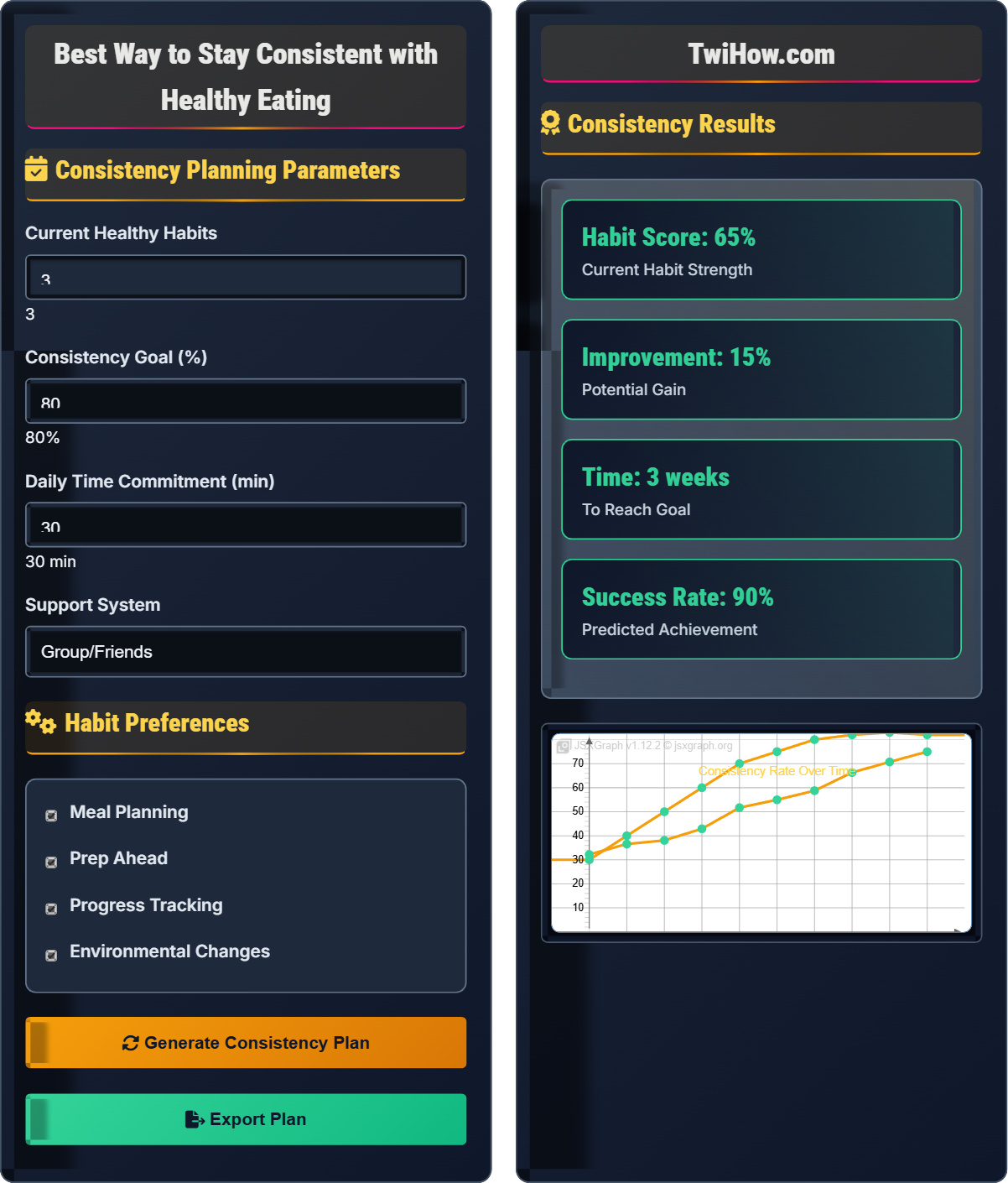
Consistency Planning Parameters
Habit Preferences
Consistency Results
| Habit | Frequency | Difficulty | Week 1 | Week 2 | Week 3 |
|---|---|---|---|---|---|
| Meal Planning | Weekly | Medium | ✓ | ✓ | ✓ |
| Prep Ahead | Weekly | Hard | ✓ | ✓ | ✓ |
| Track Intake | Daily | Easy | ✓ | ✓ | ✓ |
| Portion Control | Daily | Medium | ✓ | ✓ | ✗ |
| Hydration | Daily | Easy | ✓ | ✓ | ✓ |
Key Strategies:
- Start Small: Add one healthy habit at a time
- Environment Design: Keep healthy foods visible and accessible
- Plan Ahead: Prepare meals and snacks in advance
- Track Progress: Use apps or journals to monitor consistency
- Build Support: Share goals with friends or family
Staying Consistent with Healthy Eating Explained
Consistency in healthy eating isn't about perfection—it's about creating sustainable patterns that become automatic over time. Research shows that it takes approximately 66 days on average to form a new habit, but this varies greatly depending on the person and behavior.
Successful consistency follows this equation:
Where:
- Supportive Environment: Physical and social surroundings that promote healthy choices
- Habit Strength: Automatic nature of healthy behaviors
- Motivation: Internal drive and external accountability
- Barriers: Obstacles that prevent healthy choices
- Complexity: Difficulty of implementing healthy behaviors
Key advantages of maintaining consistency:
- Improved Health: Better nutrition, weight management, and disease prevention
- Increased Energy: Stable blood sugar and nutrient intake
- Mental Clarity: Better cognitive function and mood stability
- Reduced Stress: Less decision fatigue and anxiety about food choices
- Long-term Success: Sustainable habits that last beyond short-term diets
- Confidence Building: Self-efficacy in managing health and wellness
- Meal Planning: Dedicate time weekly to plan and prepare meals
- Batch Cooking: Prepare large quantities of healthy foods in advance
- Smart Shopping: Create lists focused on whole, nutritious foods
- Portion Control: Pre-portion snacks and meals to avoid overeating
- Flexibility: Allow occasional treats to prevent feelings of deprivation
- Accountability: Use apps, journals, or partners to track progress
Nutrition Fundamentals
Habit formation, consistency, routine, environment design, motivation, barriers, support systems.
Consistency Rate = (Supportive Environment + Habit Strength + Motivation) / (Barriers + Complexity)
Where higher scores indicate greater consistency potential.
- Start with small, manageable changes
- Focus on building sustainable habits
- Reduce barriers to healthy choices
Practical Applications
Meal planning, prep ahead, environment design, tracking, accountability, support systems.
- Assess current habits and challenges
- Set realistic consistency goals
- Create supportive environments
- Build accountability systems
- Personal lifestyle and schedule
- Family dynamics and preferences
- Time and resource constraints
- Previous experience with habit change
Consistency Learning Quiz
What is the most effective approach to building consistency with healthy eating habits?
Starting with one small, achievable change is the most effective approach. Research shows that trying to make multiple changes at once often leads to overwhelm and failure. Small changes are easier to maintain and can compound over time to create significant improvements.
The answer is B) Start with one small, achievable change.
Habit formation research indicates that starting small and building gradually creates stronger, more sustainable habits. This approach respects the brain's capacity for change and allows for the development of automatic behaviors without triggering resistance. Small wins build confidence and momentum for larger changes.
Habit Formation: Process of creating automatic behaviors through repetition
Small Wins: Minor achievements that build momentum
Behavior Change: Modifying actions to achieve desired outcomes
• Start with manageable changes
• Focus on one habit at a time
• Build gradually over time
• Choose changes that require minimal effort
• Link new habits to existing routines
• Celebrate small victories
• Trying to change too much at once
• Setting unrealistic expectations
• Not accounting for setbacks
Explain how environmental design can support consistency with healthy eating and provide specific examples.
Environmental design involves structuring your physical and social surroundings to make healthy choices easier than unhealthy ones. This approach reduces reliance on willpower by making good decisions the default option.
Specific Examples:
1. Refrigerator Organization: Place healthy snacks at eye level and store unhealthy items in less accessible locations.
2. Kitchen Setup: Keep fruits and vegetables visible on counters and prepare healthy options in advance.
3. Shopping Habits: Create lists focused on whole foods and avoid impulse purchases of processed items.
4. Workspace Design: Keep healthy snacks at your desk instead of relying on vending machines.
5. Social Environment: Choose restaurants that offer healthy options and engage with people who support your goals.
Environmental design works by reducing friction for healthy choices and increasing friction for unhealthy ones. This approach is more effective than relying solely on willpower because it addresses the decision-making process at a structural level, making consistency automatic rather than dependent on conscious effort.
Environmental Design: Structuring surroundings to influence behavior
Decision Friction: Barriers that make choices more difficult
Default Options: Automatic choices when no action is taken
• Make healthy choices more convenient
• Reduce visibility of unhealthy options
• Create supportive physical spaces
• Prepare healthy snacks in advance
• Use smaller plates for portion control
• Remove or hide unhealthy temptations
• Keeping unhealthy foods visible and accessible
• Not preparing for high-risk situations
• Relying solely on willpower
Sarah works long hours and often eats unhealthy foods due to time constraints. She wants to eat more consistently healthy but claims she doesn't have time to cook. Using the principles of consistency, design a strategy that helps Sarah maintain healthy eating habits within her time constraints.
Strategy for Sarah:
1. Batch Preparation: Spend 1-2 hours every Sunday preparing meals and snacks for the week ahead. Cook large batches of grains, proteins, and vegetables.
2. Quick Assembly Meals: Create simple meal components that can be quickly assembled (grain bowls, wraps, salads) using pre-prepared ingredients.
3. Healthy Convenience Foods: Stock the kitchen with healthy frozen vegetables, canned beans, and pre-cut fruits that require minimal preparation.
4. Time-Saving Techniques: Use slow cookers, instant pots, or sheet pan cooking to minimize active cooking time while maximizing nutrition.
5. Strategic Snacking: Pre-portion healthy snacks in grab-and-go containers to prevent impulsive food choices during busy periods.
These approaches reduce the daily decision-making burden while maintaining nutritional quality.
This strategy exemplifies the principle of "front-loading" preparation time to save time later. By investing time upfront in batch cooking and organization, Sarah can maintain healthy eating habits without requiring extensive daily cooking time. This approach addresses the time constraint barrier while building sustainable systems.
Batch Preparation: Cooking large quantities in advance
Front-Loading: Investing time upfront for future savings
System Building: Creating processes that support goals
• Address time constraints proactively
• Build systems that work consistently
• Focus on efficiency and sustainability
• Cook once, eat multiple times
• Use kitchen tools to save time
• Keep a repertoire of quick healthy recipes
• Expecting to cook elaborate meals daily
• Not planning for busy periods
• Relying on willpower during stressful times
Michael has tried to eat healthier multiple times but always falls back to old habits after a few weeks. He struggles with maintaining consistency despite knowing what to eat. Explain how accountability systems can help Michael stay consistent and provide specific strategies.
Accountability Strategies for Michael:
1. Food Journaling: Track meals, snacks, and emotions to identify patterns and triggers for inconsistent eating.
2. Progress Apps: Use smartphone applications that send reminders, track goals, and provide feedback on consistency.
3. Social Accountability: Partner with a friend, family member, or online community to share goals and progress regularly.
4. Professional Support: Work with a registered dietitian or nutrition coach for ongoing guidance and accountability.
5. Regular Check-ins: Schedule weekly or bi-weekly reviews to assess progress, celebrate successes, and address challenges.
These systems provide external motivation and structure that complement internal motivation, helping Michael maintain consistency even during challenging periods.
Accountability systems work by providing external structure and motivation when internal motivation fluctuates. They create commitment mechanisms that make it harder to abandon healthy habits and provide regular touchpoints for reflection and course correction. External accountability can bridge the gap between intention and action.
Accountability: Taking responsibility for actions and outcomes
External Motivation: Drive from outside sources
Commitment Mechanisms: Structures that increase follow-through
• Choose accountability methods that feel supportive
• Regular check-ins are essential
• Combine internal and external motivation
• Find an accountability partner with similar goals
• Use apps with gentle reminders
• Celebrate small wins publicly
• Relying solely on internal motivation
• Not setting up accountability systems
• Choosing accountability methods that feel punitive
Why is flexibility important for maintaining long-term consistency with healthy eating?
Flexibility is crucial because it prevents feelings of deprivation and rebellion that often lead to abandoning healthy habits entirely. When people feel they can enjoy occasional treats without guilt, they're more likely to maintain healthy patterns long-term rather than falling into cycles of restriction and overindulgence.
The answer is B) It prevents feelings of deprivation and rebellion.
Psychological research shows that overly rigid approaches to eating often backfire through the "what-the-hell effect," where minor deviations lead to complete abandonment of healthy habits. Flexibility allows for imperfection and normalizes occasional indulgences, creating a sustainable middle ground that supports long-term consistency.
Flexibility: Allowing for variations and exceptions
What-the-Hell Effect: Abandoning restraint after minor deviation
Sustainable Middle Ground: Balanced approach to eating
• Allow for occasional treats
• Don't aim for perfection
• Focus on overall patterns, not daily perfection
• Plan treats in advance
• Practice the 80/20 rule
• Focus on progress, not perfection
• Pursuing perfection in eating
• Not allowing for flexibility
• Being too harsh with oneself
FAQ
Q: How can I stay consistent with healthy eating when I'm stressed or emotional?
A: Managing emotional eating requires preparation and alternative coping strategies:
1. Prepare in advance: Have healthy comfort foods ready when stress hits.
2. Identify triggers: Recognize situations that lead to emotional eating.
3. Alternative activities: Exercise, meditation, or calling a friend instead of eating.
4. Stay hydrated: Sometimes thirst is mistaken for hunger.
5. Keep a journal: Track emotions alongside eating patterns to identify patterns.
Remember, occasional emotional eating is normal—focus on getting back on track rather than being perfect.
Q: How can I maintain consistency when dining out or attending social events?
A: Plan ahead for social situations:
Before going out: Look up restaurant menus online and decide what you'll order in advance.
At the restaurant: Ask for dressings on the side, substitute vegetables for fries, and consider sharing entrees.
At parties: Eat a healthy snack beforehand to prevent overindulging, and focus on socializing rather than grazing.
Special occasions: Enjoy treats mindfully and return to your routine afterward without guilt.
Remember: Consistency means 80% of the time, so 20% flexibility is perfectly acceptable for social situations.