What Is the Mediterranean Diet and Is It Right for Me?
Complete Mediterranean diet guide • Step-by-step explanations
Mediterranean Diet Overview:
Show Suitability CalculatorThe Mediterranean diet is a traditional eating pattern inspired by the dietary habits of countries bordering the Mediterranean Sea. It emphasizes whole foods, plant-based ingredients, healthy fats, and moderate consumption of fish and poultry. This diet has been extensively studied and linked to numerous health benefits including improved heart health, reduced inflammation, and longevity.
Research consistently shows that the Mediterranean diet is one of the healthiest dietary patterns, with benefits extending beyond physical health to include cognitive function and mental wellbeing.
Key components of the Mediterranean diet:
- Plant-Based Focus: Abundant fruits, vegetables, legumes, nuts, and seeds
- Healthy Fats: Olive oil as primary fat source, omega-3 fatty acids
- Whole Grains: Whole wheat, oats, brown rice, quinoa
- Moderate Protein: Fish, poultry, beans, with limited red meat
The Mediterranean diet is considered one of the most sustainable and enjoyable eating patterns for long-term health.
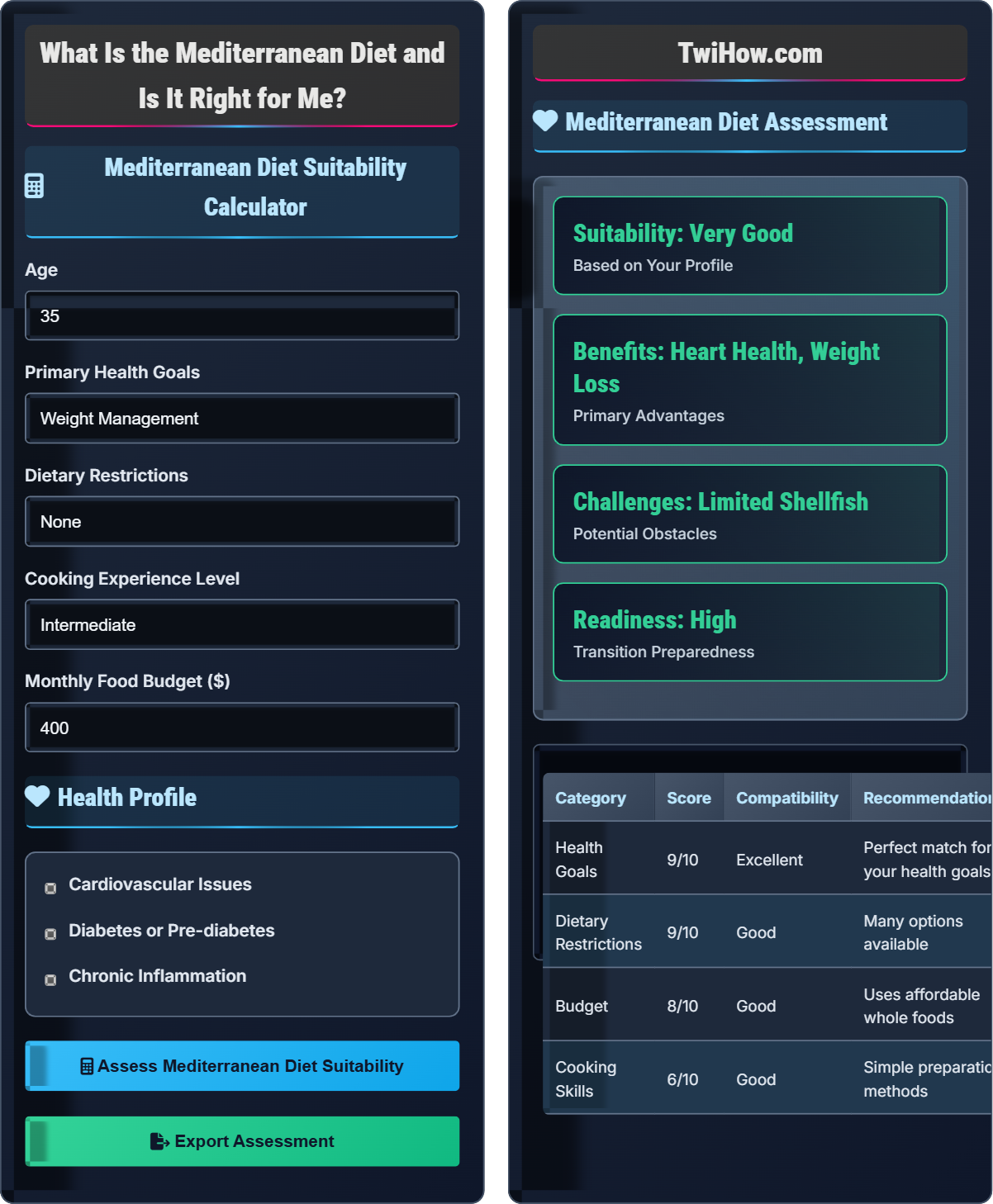
Mediterranean Diet Suitability Calculator
Health Profile
Mediterranean Diet Assessment
| Category | Score | Compatibility | Recommendations |
|---|---|---|---|
| Health Goals | 9/10 | Excellent | Perfect match for weight management |
| Dietary Restrictions | 7/10 | Good | Many options available |
| Budget | 8/10 | Good | Uses affordable whole foods |
| Cooking Skills | 6/10 | Good | Simple preparation methods |
Mediterranean Diet Essentials
The Mediterranean diet emphasizes:
- Plant-based foods: Vegetables, fruits, whole grains, legumes, nuts
- Healthy fats: Olive oil as primary fat source
- Lean proteins: Fish, poultry, beans
- Moderate dairy: Cheese and yogurt in moderation
- Red wine: Optional, in moderation
This dietary pattern has been associated with reduced risk of heart disease, diabetes, and cognitive decline.
Your Personalized Approach
- Focus on: Weight management and heart health
- Emphasize: Plant-based foods and healthy fats
- Avoid: Shellfish and processed foods
- Include: Olive oil, fish, vegetables, and whole grains
Start with 1-2 Mediterranean meals per week and gradually increase.
Mediterranean Diet Explained
The Mediterranean diet is based on the traditional eating patterns of countries bordering the Mediterranean Sea, particularly Greece, Italy, and Spain. It emphasizes plant-based foods, healthy fats, and moderate consumption of fish and poultry. This dietary pattern has been extensively studied and is consistently ranked among the healthiest diets worldwide.
The diet is characterized by high consumption of fruits, vegetables, whole grains, legumes, and olive oil, with moderate consumption of fish, poultry, and wine, and limited consumption of red meat and processed foods.
The diet follows a specific proportion of food groups:
Where:
- Plant Foods: Vegetables, fruits, whole grains, legumes, nuts
- Healthy Proteins: Fish, poultry, beans, eggs
- Healthy Fats: Olive oil, nuts, seeds, avocados
- Limited: Red meat, processed foods, added sugars
Research has demonstrated numerous health benefits of the Mediterranean diet:
- Cardiovascular Health: Reduced risk of heart disease and stroke
- Weight Management: Effective for sustainable weight loss
- Diabetes Prevention: Improved insulin sensitivity
- Cognitive Function: Lower risk of cognitive decline
- Inflammation Reduction: Anti-inflammatory properties
- Longevity: Associated with increased lifespan
- Olive Oil: Primary source of fat, rich in monounsaturated fats
- Fish: Weekly consumption of fatty fish for omega-3 fatty acids
- Vegetables: Daily intake of diverse colorful vegetables
- Fruits: Fresh fruits as desserts and snacks
- Whole Grains: Brown rice, whole wheat, oats, quinoa
- Legumes: Beans, lentils, chickpeas for protein and fiber
- Nuts and Seeds: Daily handful for healthy fats and protein
Mediterranean Diet Fundamentals
Plant-based eating, healthy fats, whole foods, anti-inflammatory properties, sustainable nutrition.
Mediterranean Ratio = 60% Plant Foods + 25% Healthy Proteins + 15% Healthy Fats
Where emphasis is on minimally processed whole foods.
- Use olive oil as primary fat source
- Eat vegetables with every meal
- Limit processed foods
Practical Implementation
Meal planning, grocery shopping, cooking techniques, dining practices.
- Shop for fresh produce and quality olive oil
- Prepare grains and legumes in advance
- Plan 3-4 Mediterranean-style meals
- Include fish twice per week
- Snack on nuts and fresh fruit
- Gradual transition is sustainable
- Quality ingredients matter
- Enjoyment is key to adherence
Mediterranean Diet Knowledge Quiz
Which of the following is considered the primary source of fat in the Mediterranean diet?
Olive oil is the cornerstone of the Mediterranean diet and serves as the primary source of fat. It is rich in monounsaturated fats and antioxidants, particularly oleic acid and polyphenols, which contribute to the diet's cardiovascular benefits. The Mediterranean diet emphasizes extra virgin olive oil for cooking, dressing salads, and drizzling over prepared dishes.
The answer is B) Olive Oil.
The Mediterranean diet's emphasis on olive oil distinguishes it from other dietary patterns. Olive oil provides beneficial monounsaturated fats that help reduce inflammation and support heart health. The traditional use of olive oil in Mediterranean cuisine also contributes to the overall flavor profile that makes the diet enjoyable and sustainable.
Monounsaturated Fats: Healthy fats found in olive oil and nuts
Polyphenols: Antioxidant compounds in olive oil
Extra Virgin Olive Oil: Highest quality olive oil, cold-pressed
• Use olive oil as primary fat source
• Choose extra virgin when possible
• Replace other oils with olive oil
• Use for sautéing and roasting vegetables
• Drizzle over finished dishes
• Make salad dressings with olive oil
• Using refined oils instead of olive oil
• Not using enough olive oil
• Choosing low-quality olive oil
Explain the cardiovascular health benefits of the Mediterranean diet and the specific components responsible for these effects.
Cardiovascular Benefits: The Mediterranean diet has been shown to reduce the risk of heart disease by 30-40% in major studies. It lowers LDL cholesterol, reduces inflammation, improves endothelial function, and decreases blood pressure.
Key Components:
Olive Oil: Contains monounsaturated fats and polyphenols that reduce inflammation and improve cholesterol profiles.
Fish: Rich in omega-3 fatty acids that reduce triglycerides and prevent arrhythmias.
Nuts: Provide healthy fats, fiber, and arginine which support arterial health.
Vegetables: Supply antioxidants, fiber, and potassium that protect cardiovascular health.
Whole Grains: Provide fiber that helps lower cholesterol and stabilize blood sugar.
Mechanisms: The diet works through multiple pathways: reducing oxidative stress, improving lipid profiles, decreasing inflammatory markers, and supporting healthy blood vessel function.
The Mediterranean diet's cardiovascular benefits result from synergistic effects of multiple components rather than a single nutrient. This holistic approach demonstrates how whole foods work together to promote health. The diet's emphasis on anti-inflammatory foods helps explain its protective effects against atherosclerosis and other cardiovascular conditions.
Atherosclerosis: Hardening of arteries due to plaque buildup
LDL Cholesterol: "Bad" cholesterol that contributes to plaque formationOmega-3 Fatty Acids: Essential fats with anti-inflammatory properties
• Emphasize anti-inflammatory foods
• Include fish regularly
• Focus on whole, unprocessed foods
• Eat fish twice weekly
• Include nuts daily
• Use olive oil for cooking
• Not eating enough fish
• Using processed oils instead of olive oil
• Including too many processed foods
A 45-year-old man with high cholesterol wants to start the Mediterranean diet. He currently eats a lot of red meat and processed foods. Calculate his recommended weekly intake of fish, vegetables, and olive oil based on Mediterranean diet guidelines. Also suggest a 3-day meal plan that incorporates these recommendations.
Recommended Weekly Intake:
Fish: 2-3 servings per week (2-3 meals with fish as the protein source)
Vegetables: 3-5 servings daily (minimum 21 servings per week)
Olive Oil: 3-4 tablespoons daily for cooking and dressing
3-Day Meal Plan:
Day 1: Breakfast - Greek yogurt with berries and walnuts; Lunch - Mediterranean salad with olive oil dressing; Dinner - Grilled salmon with roasted vegetables
Day 2: Breakfast - Whole grain toast with avocado; Lunch - Lentil soup with vegetables; Dinner - Chicken with herbs and olive oil, served with quinoa and steamed broccoli
Day 3: Breakfast - Oatmeal with nuts and fruit; Lunch - Tuna salad with olive oil dressing; Dinner - Baked cod with ratatouille
Answer: Follow the recommended weekly intake and gradually replace processed foods with whole Mediterranean-style meals.
This problem demonstrates how to translate general dietary guidelines into specific, actionable recommendations. The Mediterranean diet emphasizes variety and balance, with particular attention to healthy fats, plant-based foods, and quality proteins. The meal plan shows how to incorporate key components while maintaining flavor and satisfaction.
Serving Size: Standard measure for food portions
Anti-inflammatory Foods: Foods that reduce inflammation in the body
Meal Planning: Organizing meals in advance
• Include fish 2-3 times weekly
• Eat vegetables with every meal
• Use olive oil as primary fat
• Prepare grains and legumes in advance
• Shop for fresh produce regularly
• Experiment with herbs and spices
• Not eating enough fish
• Using processed foods instead of whole foods
• Not incorporating enough vegetables
A vegetarian woman with gluten intolerance wants to follow the Mediterranean diet. How can she adapt the diet to meet her restrictions while maintaining its health benefits? What substitutions should she make?
Vegetarian Adaptations:
• Replace fish with legumes, nuts, seeds, and omega-3 rich foods like walnuts and flaxseeds
• Include eggs if ovo-lacto vegetarian
• Use algae-based supplements for DHA/EPA omega-3s
Gluten-Free Substitutions:
• Replace wheat-based grains with quinoa, brown rice, millet, buckwheat
• Use gluten-free oats
• Focus on naturally gluten-free whole foods
Combined Approach:
• Emphasize vegetables, fruits, legumes, nuts, seeds, and olive oil
• Include fish alternatives like seaweed for iodine
• Use quinoa and legumes for protein
Maintaining Benefits: The core principles remain: emphasize plants, healthy fats, and whole foods while avoiding processed items.
This question demonstrates the flexibility of the Mediterranean diet. The fundamental principles—emphasizing whole foods, healthy fats, and plant-based nutrition—can be adapted to accommodate various dietary restrictions while maintaining health benefits. The key is focusing on the core concepts rather than specific foods.
Vegetarian: Diet excluding meat and fish
Gluten-Free: Excluding wheat, barley, and rye
Substitution: Replacing foods while maintaining nutrition
• Focus on core principles, not specific foods
• Ensure adequate protein from plant sources
• Maintain healthy fat intake
• Include nuts and seeds for healthy fats
• Use quinoa and legumes for protein
• Focus on naturally gluten-free whole foods
• Not getting enough protein
• Using processed gluten-free products
• Missing essential omega-3 fatty acids
What makes the Mediterranean diet more sustainable long-term compared to restrictive diets?
The Mediterranean diet is sustainable because it emphasizes flexibility, variety, and the pleasure of eating. Unlike restrictive diets, it doesn't eliminate entire food groups but rather encourages balance and moderation. The diet includes flavorful foods like herbs, spices, olive oil, and seafood that make meals enjoyable. Additionally, it incorporates cultural aspects like sharing meals with family and friends, which supports long-term adherence.
The answer is B) It allows for flexibility and enjoyment of food.
Sustainability is a crucial factor in dietary success. The Mediterranean diet's emphasis on enjoyment and cultural practices makes it more likely to be maintained long-term. The diet's flexibility allows for adaptation to personal preferences and cultural traditions while maintaining health benefits.
Sustainability: Ability to maintain a behavior long-term
Dietary Adherence: Following dietary patterns consistently
Flexible Eating: Allowing for variety and moderation
• Emphasize enjoyment and satisfaction
• Maintain flexibility
• Include social aspects of eating
• Cook with family members
• Try new recipes regularly
• Focus on flavors and aromas
• Making the diet too restrictive
• Not enjoying the food
• Ignoring social aspects of eating
FAQ
Q: How quickly can I expect to see health benefits from the Mediterranean diet?
A: Health benefits can begin to appear within weeks of starting the Mediterranean diet:
Short-term (2-4 weeks):
• Improved energy levels
• Better digestion
• Reduced inflammation markers
Medium-term (1-3 months):
• Improved cholesterol levels
• Better blood pressure control
• Weight management improvements
Long-term (6+ months):
• Significant cardiovascular benefits
• Reduced risk of chronic diseases
• Improved cognitive function
The timeline varies by individual, but consistent adherence yields the best results. The key is making sustainable changes rather than expecting rapid results.
Q: Is the Mediterranean diet expensive to follow? Can it fit a tight budget?
A: The Mediterranean diet can be quite affordable when planned properly:
Budget-Friendly Strategies:
• Buy seasonal fruits and vegetables
• Purchase legumes and whole grains in bulk
• Choose frozen vegetables when fresh is expensive
• Buy fish in bulk and freeze portions
• Use olive oil sparingly but prioritize quality
Cost-Effective Staples:
• Rice, oats, and other whole grains
• Dried beans, lentils, and chickpeas
• Seasonal vegetables like cabbage, carrots, onions
• Eggs and canned fish (sardines, tuna)
Many Mediterranean diet staples like legumes, whole grains, and seasonal vegetables are actually less expensive than processed foods. The investment in quality olive oil pays off due to its health benefits and versatility.