How to Maintain Health While Traveling Frequently
Complete travel health guide • Step-by-step explanations
Travel Health Overview:
Show Travel Health PlannerMaintaining health while traveling frequently requires strategic planning and consistent habits. Frequent travelers face unique health challenges including disrupted sleep patterns, irregular eating schedules, exposure to germs, dehydration, and stress. By implementing specific strategies for nutrition, exercise, sleep, and hygiene, frequent travelers can minimize health risks and maintain wellness during travel.
Key health challenges for frequent travelers include jet lag, poor sleep quality, compromised immune function, unhealthy eating options, limited exercise opportunities, and increased exposure to pathogens. Success requires preparation, adaptation, and consistency with healthy practices.
Core concepts:
- Circadian Rhythm Management: Maintaining sleep-wake cycles across time zones
- Nutritional Consistency: Making healthy food choices while traveling
- Physical Activity: Maintaining exercise routines on the road
- Hygiene Practices: Preventing illness and infection during travel
- Stress Management: Managing travel-related stress and fatigue
Effective travel health management involves preparation before travel, consistent practices during travel, and recovery strategies after travel.
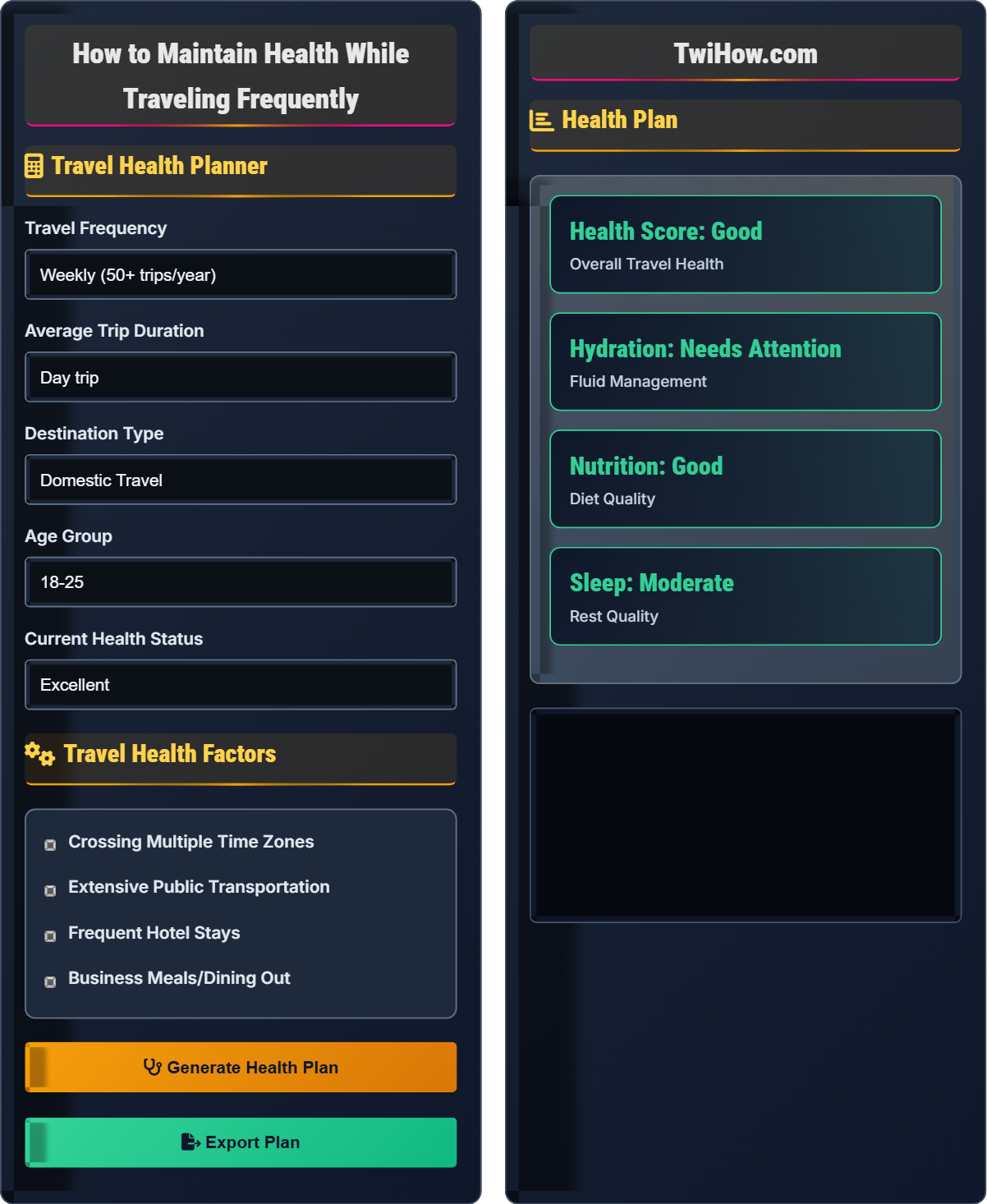
Travel Health Planner
Travel Health Factors
Health Plan
| Item | Frequency | Priority | Notes |
|---|---|---|---|
| Hand sanitizer | Always | High | Carry 2oz bottle |
| Medications | Always | High | Extra week supply |
| Healthy snacks | Always | High | Nuts, dried fruit |
| Sleep aids | As needed | Medium | Eye mask, earplugs |
| Exercise gear | Often | Medium | Resistance bands |
Travel Health Management Explained
Frequent travelers face circadian rhythm disruption which affects sleep, appetite, and overall health:
- Jet Lag: Temporary sleep disorder caused by crossing time zones
- Sleep-Wake Cycle: Takes 1-2 days to adjust per time zone crossed
- Light Exposure: Primary cue for resetting internal clock
- Hormone Regulation: Melatonin and cortisol rhythms disrupted
Travel disrupts regular eating patterns and presents unique nutritional challenges:
- Irregular Meal Times: Disrupted hunger cues and metabolism
- Limited Options: Airport/fast food choices
- Dehydration: Dry cabin air and caffeine consumption
- Portion Control: Larger restaurant portions
Travel often limits opportunities for regular exercise:
- Hotel Gyms: Limited or unavailable facilities
- Time Constraints: Tight schedules and meetings
- Space Limitations: Small hotel rooms
- Equipment Access: No personal workout equipment
Frequent travel can compromise immune function:
- Sleep Deprivation: Reduces immune response
- Stress Hormones: Elevated cortisol suppresses immunity
- Pathogen Exposure: Increased contact with germs
- Environmental Changes: New allergens and pathogens
Travel can affect heart health through:
- Sedentary Behavior: Extended sitting during flights
- Dehydration: Thickened blood and increased clot risk
- Stress: Elevated blood pressure and heart rate
- Irregular Routines: Disrupted medication schedules
Travel Health Strategies
Sleep management, nutrition, hydration, exercise, stress reduction, immune support, hygiene practices.
Travel Health = (Sleep Quality × Nutrition × Hydration × Exercise) ÷ (Stress × Dehydration × Immune Suppression)
Maintaining balance across all factors is crucial for optimal travel health.
- Stay hydrated during flights
- Maintain consistent sleep schedule
- Make healthy food choices when possible
- Exercise regularly during travel
- Practice good hygiene
Preparation Guidelines
Health checkups, vaccinations, medications, nutrition planning, exercise routines, sleep schedule adjustment.
- 4-6 weeks before: Health checkup and vaccinations
- 2-3 weeks before: Begin sleep schedule adjustment
- 1 week before: Pack health essentials
- Day before: Final preparations and rest
- Day of travel: Hydrate and eat well
- Consult healthcare provider before international travel
- Consider destination-specific health risks
- Plan for chronic condition management
- Prepare for emergency situations
Travel Health Quiz
How much water should frequent travelers aim to drink during flights to prevent dehydration?
The answer is B) 8 oz every 1-2 hours.
Commercial aircraft cabins have very low humidity (typically 10-20%), which causes rapid dehydration. The dry air increases water loss through respiration and evaporation. Additionally, pressurized cabins increase the rate of fluid loss.
Why 8 oz every 1-2 hours:
• Compensates for increased fluid loss in low humidity
• Prevents mild dehydration symptoms (headache, fatigue, dry skin)
• Maintains proper blood volume and circulation
• Supports kidney function during flight
Additional Hydration Tips:
• Avoid alcohol and caffeine during flights (they increase dehydration)
• Choose water over carbonated beverages
• Start hydrating before the flight
• Continue hydration after landing
For longer flights (>4 hours), aim for 8 oz every hour. For shorter flights, 8 oz every 1-2 hours is sufficient.
Dehydration during flights is often underestimated because passengers don't feel thirsty immediately. The low humidity in airplane cabins causes insensible water loss through breathing and skin evaporation. Understanding this mechanism helps travelers proactively maintain hydration rather than waiting for symptoms to appear.
Insensible Water Loss: Water lost through breathing and skin without notice
Cabin Humidity: Low moisture content in airplane cabins
Pressurized Environment: Artificial atmospheric pressure in aircraft
• Cabin air is very dry
• Dehydration occurs before feeling thirsty
• Proactive hydration prevents symptoms
• Fill water bottle after security
• Set hourly hydration reminders
• Choose aisle seat for easier access to water
• Waiting until thirsty to drink
• Drinking alcohol to relax during flight
• Not adjusting for flight duration
Explain the science behind jet lag and describe effective strategies for managing it during international travel.
Science Behind Jet Lag:
Jet lag occurs when the body's internal circadian rhythm is out of sync with the local time at the destination. The suprachiasmatic nucleus (SCN) in the hypothalamus acts as the body's master clock, regulating sleep-wake cycles, hormone release, and body temperature. This internal clock operates on approximately a 24-hour cycle but requires environmental cues (zeitgebers) to stay synchronized with the external environment.
When traveling across multiple time zones, the SCN still operates on the original time zone's schedule, causing misalignment between internal rhythms and local time. This affects:
• Sleep-wake timing
• Hormone production (melatonin, cortisol)
• Body temperature regulation
• Digestive processes
• Cognitive performance
Effective Management Strategies:
1. Pre-Travel Adjustment: Gradually shift sleep schedule by 15-30 minutes per day in the direction of travel for 3-5 days before departure
2. Light Exposure: Seek bright light in the morning at destination to advance circadian rhythm; avoid bright light in the evening to delay it
3. Timing Strategy: Align activities with destination time zone immediately upon arrival
4. Supplements: Melatonin (0.5-3mg) taken 30 minutes before desired sleep time can help reset the clock
5. Hydration: Maintain adequate fluid intake to support circadian function
6. Gradual Adjustment: Allow 1-2 days per time zone crossed for full adjustment
Eastward travel (losing time) is typically more difficult than westward travel (gaining time) because it's harder to advance the circadian clock than to delay it.
Understanding the biological basis of jet lag helps travelers implement evidence-based strategies rather than relying on ineffective approaches. The circadian system is sensitive to light cues, which is why strategic light exposure is the most effective non-pharmacological intervention for jet lag.
Circadian Rhythm: Internal biological clock operating on 24-hour cycle
Zeitgeber: External cues that synchronize biological rhythms
Suprachiasmatic Nucleus: Master clock in the brain
• Light is the strongest zeitgeber
• Eastward travel is more challenging
• Gradual adjustment is most effective
• Use light therapy apps for timing
• Adjust watches to destination time immediately
• Plan important activities after adjustment period
• Not preparing before travel
• Staying awake too long after arrival
• Ignoring light exposure timing
You're a frequent business traveler with a 5-day international trip coming up. You have diabetes and need to maintain consistent meal timing and carbohydrate intake. How would you plan your nutrition for this trip, considering airport delays, time zone changes, and business dining obligations?
Pre-Travel Preparation:
1. Medical Documentation: Carry doctor's letter explaining diabetes and medications
2. Food Planning: Research restaurants with healthy options at destination
3. Snack Preparation: Pack portable, diabetes-friendly snacks
4. Medication: Bring extra supplies in carry-on luggage
During Travel:
• Hydration: Drink water regularly (especially during flights)
• Carb Counting: Use smartphone app to track carbohydrates
• Meal Timing: Adjust to destination time zone within 24 hours
• Snacking: Pack nuts, cheese sticks, or glucose tablets
Business Dining Strategies:
• Menu Research: Check restaurant menus online beforehand
• Restaurant Requests: Ask for dressings on the side, substitutions
• Alcohol Moderation: Limit alcohol which can affect blood sugar
• Plate Planning: Follow plate method (½ non-starchy vegetables, ¼ protein, ¼ carbs)
Emergency Preparedness:
• Glucose Monitoring: Check blood sugar more frequently during travel
• Time Zone Adjustments: Consult endocrinologist about medication timing
• Local Resources: Locate pharmacies near accommodations
• Contact Information: Store local emergency numbers
This systematic approach ensures consistent diabetes management while maintaining professional obligations.
Managing chronic conditions during travel requires advance planning and contingency strategies. The key is maintaining consistency in monitoring and treatment while adapting to new environments. Having backup plans and emergency supplies ensures safety during unexpected travel disruptions.
Carbohydrate Counting: Method for managing diabetes through carb tracking
Plate Method: Visual guide for balanced meals
Zeitgeber: Environmental cues that affect biological rhythms
• Maintain consistency in monitoring
• Adjust to destination time zone
• Have emergency supplies accessible
• Use insulated bags for medication storage
• Pack extra testing supplies
• Inform airline of medical needs
• Not adjusting medication timing for time zones
• Skipping meals during travel
• Not having emergency supplies
A fitness enthusiast travels frequently for work and wants to maintain their exercise routine. They have limited time (30-45 minutes) and no access to a gym. Design a portable workout routine that addresses strength, cardio, and flexibility.
Portable Equipment:
• Resistance bands (light, medium, heavy)
• Jump rope or suspension trainer
• Yoga mat (thin, packable)
• Foam roller (compact version)
30-Minute Full-Body Circuit (Repeat 2-3 rounds):
1. Warm-up (5 min): Jumping jacks, arm circles, dynamic stretches
2. Strength Circuit (15 min):
• Squats with resistance band (15 reps)
• Push-ups or resistance band chest press (10-15 reps)
• Resistance band rows (12-15 reps)
• Plank hold (30-60 seconds)
• Resistance band bicep curls/tricep extensions (10-12 reps each)
3. Cardio Burst (5 min):
• Jump rope or jumping jacks (30 seconds on, 30 seconds rest)
• Mountain climbers (30 seconds)
• High knees (30 seconds)
4. Cool-down (5 min): Static stretching focusing on major muscle groups
Alternative Bodyweight Routine (No Equipment):
• Burpees, lunges, push-ups, planks, mountain climbers, bicycle crunches
Flexibility Integration:
• Morning stretches before starting day
• Evening yoga flow (10-15 minutes)
• Desk stretches during work breaks
This routine can be adapted to any hotel room and maintains fitness levels during travel.
High-intensity circuit training is ideal for travelers because it provides cardiovascular and strength benefits in a short time frame. Resistance bands are lightweight, versatile, and allow for progressive overload. The key is designing workouts that can be performed in small spaces with minimal equipment.
Circuit Training: Series of exercises performed in sequence with minimal rest
Progressive Overload: Gradually increasing exercise demands
Bodyweight Exercises: Exercises using only body mass as resistance
• Maintain intensity despite time constraints
• Include all fitness components
• Adapt to available space
• Use hotel stairs for cardio
• Take advantage of outdoor spaces
• Schedule workouts like meetings
• Skipping workouts due to time constraints
• Not packing appropriate equipment
• Focusing only on one fitness component
Which of the following is the most effective strategy for maintaining immune function during frequent travel?
The answer is B) Maintaining consistent sleep schedule and managing stress.
While all the options have some merit, sleep and stress management are the most fundamental factors for immune function:
Sleep and Immunity:
• Sleep deprivation reduces T-cell function
• Poor sleep increases inflammatory markers
• Adequate sleep enhances vaccine effectiveness
• Sleep supports memory formation of immune responses
Stress and Immunity:
• Chronic stress elevates cortisol which suppresses immune function
• Stress hormones reduce white blood cell activity
• Stress affects gut microbiome which influences immunity
Why Other Options Are Less Effective:
• A) Vitamin C has limited effect on immune function in healthy individuals
• C) Surface disinfection reduces exposure but doesn't boost immunity
• D) Social isolation can increase stress and reduce well-being
Consistent sleep (7-9 hours) and stress management provide the foundation for immune resilience during travel.
Immune function is influenced by multiple lifestyle factors, but sleep and stress management have the most profound impact. These factors affect the production and function of immune cells, making them the most important targets for immune support during travel stress.
T-Cells: White blood cells that fight infection
Cortisol: Stress hormone that can suppress immunity
Inflammatory Markers: Indicators of immune system activation
• Sleep is foundational for immunity
• Stress management is crucial
• Supplements are secondary to lifestyle factors
• Maintain consistent sleep schedule across time zones
• Practice stress-reduction techniques
• Balance activity with adequate rest
• Relying solely on supplements
• Sacrificing sleep for productivity
• Not managing travel stress
FAQ
Q: I travel 3-4 times per month for business and always get sick after trips. What can I do to prevent this?
A: Frequent illness after travel is common among frequent travelers due to several factors:
Contributing Factors:
• Sleep disruption affecting immune function
• Stress from travel and work demands
• Exposure to new pathogens
• Irregular eating and hydration
• Disrupted exercise routines
Prevention Strategies:
1. Immune Support: Maintain 7-9 hours of sleep, take vitamin D if deficient, consider probiotics
2. Hygiene: Wash hands frequently, use hand sanitizer, avoid touching face
3. Hydration: Drink 8+ glasses of water daily during travel
4. Nutrition: Pack healthy snacks, choose nutritious meals when possible
5. Recovery: Schedule rest days after trips, avoid back-to-back travel
Specific Travel Tips:
• Use airplane air ventilation nozzle to direct airflow away from face
• Consider a HEPA filter mask during flights
• Disinfect hotel room surfaces
• Maintain consistent sleep schedule as much as possible
Consider discussing immunoglobulin levels with your doctor if infections continue frequently.
Q: How do I maintain my fitness routine while traveling frequently? I always struggle to stay consistent.
A: Maintaining fitness while traveling requires planning and adaptability:
Portable Equipment:
• Resistance bands (light to heavy)
• Suspension trainer (TRX)
• Jump rope
• Yoga mat (thin, packable)
Hotel Room Workouts:
• Bodyweight circuits (push-ups, squats, lunges, planks)
• Resistance band routines
• Stair climbing in hotel
• Yoga or stretching sessions
Time-Efficient Routines:
• High-intensity interval training (HIIT) in 20-30 minutes
• Full-body circuits that work multiple muscle groups
• Functional movements that mimic daily activities
Consistency Strategies:
• Schedule workouts like meetings
• Exercise in morning to avoid scheduling conflicts
• Have backup plans for when gyms aren't available
• Focus on maintaining activity rather than perfect workouts
Remember: Any movement is better than none. Consistency matters more than intensity.