How Do I Manage Allergies Effectively?
Complete allergy management guide • Step-by-step explanations
Allergy Management Fundamentals:
Show Allergy TrackerEffective allergy management involves identifying triggers, implementing avoidance strategies, using appropriate medications, and sometimes immunotherapy. The goal is to minimize symptoms and improve quality of life while preventing severe reactions.
Allergy management works by reducing exposure to allergens, controlling symptoms through medication, and building tolerance through immunotherapy. Success depends on accurate identification of triggers, consistent avoidance strategies, and proper use of treatment options.
Key allergy management components:
- Trigger Identification: Recognizing and avoiding specific allergens
- Environmental Control: Creating allergen-free spaces at home and work
- Medication Management: Proper use of antihistamines, decongestants, and other treatments
- Lifestyle Modifications: Dietary changes, stress management, and immune support
Modern allergy management combines evidence-based medical interventions with personalized environmental and lifestyle strategies tailored to individual triggers and severity.
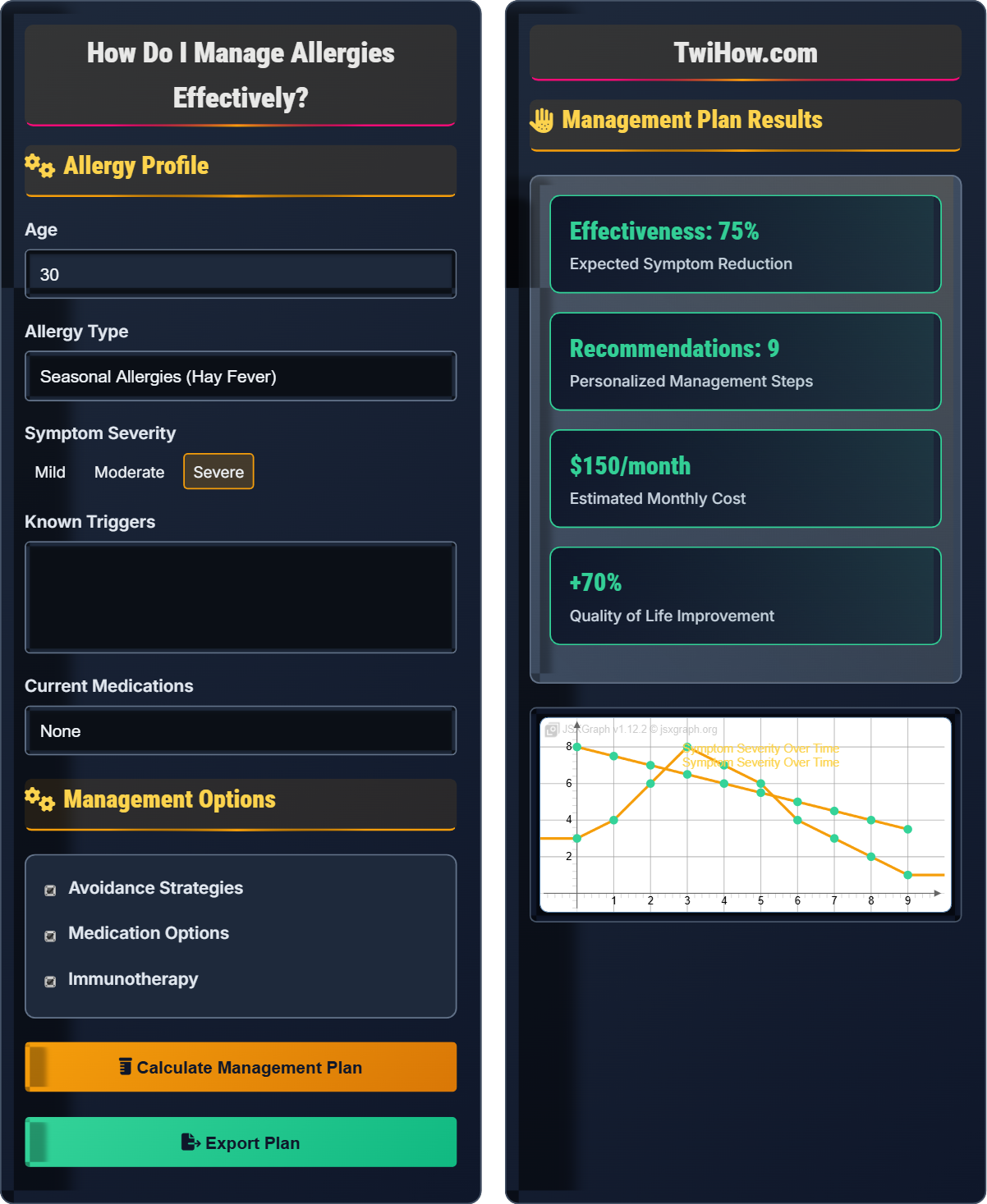
Allergy Profile
Management Options
Management Plan Results
| Category | Strategy | Priority | Timeline |
|---|---|---|---|
| Avoidance | Remove pet dander sources | High | Immediate |
| Medication | Antihistamine daily | High | Start Now |
| Environment | HEPA air purifier | Medium | Within 2 Weeks |
| Monitoring | Symptom diary | Medium | Daily |
Allergy Management Explained
Allergies occur when the immune system overreacts to normally harmless substances called allergens. The immune system produces antibodies (IgE) that attach to mast cells and basophils, triggering the release of histamine and other chemicals that cause allergic symptoms.
Effective allergy management involves understanding the immune response, identifying specific triggers, and implementing strategies to prevent or minimize reactions. The goal is to achieve symptom control while maintaining quality of life.
Management Success = (Avoidance Effectiveness + Treatment Compliance + Environmental Control) × Individual Response Factor
Where:
- Avoidance Effectiveness: Percentage reduction in allergen exposure
- Treatment Compliance: Consistency in medication use
- Environmental Control: Measures taken to reduce allergens
- Individual Response Factor: Personal sensitivity and genetics
Effective allergy management encompasses several key areas:
- Avoidance Strategies: Removing or minimizing exposure to allergens
- Medication Therapy: Antihistamines, decongestants, corticosteroids, and other treatments
- Environmental Control: Air purification, humidity control, cleaning protocols
- Emergency Preparedness: Epinephrine for severe reactions and action plans
- Lifestyle Modifications: Diet, exercise, and stress management to support immune health
- Antihistamines: Block histamine receptors to reduce symptoms
- Decongestants: Reduce nasal congestion
- Nasal Corticosteroids: Reduce inflammation in nasal passages
- Eye Drops: Relieve itchy, watery eyes
- Immunotherapy: Gradual exposure to build tolerance
Allergy Management Fundamentals
Allergens, immune response, IgE antibodies, histamine release, cross-reactivity, threshold levels.
Success Rate = (Avoidance + Treatment + Environment) / Total Possible Interventions
Where Success Rate = effectiveness of management plan, components are weighted by importance.
- Identify specific triggers accurately
- Consistent avoidance is most effective
- Early treatment prevents escalation
Applications
Seasonal allergy management, food allergy safety, pet dander control, workplace accommodations.
- Accurate allergen identification
- Personalized avoidance plan
- Appropriate medication selection
- Ongoing monitoring and adjustment
- Seasonal variations in triggers
- Individual response differences
- Emergency preparedness
- Quality of life impact
Allergy Management Learning Quiz
Which type of allergy involves an immediate immune response mediated by IgE antibodies?
Type I hypersensitivity is the immediate allergic reaction mediated by IgE antibodies. This is the most common type of allergy involving histamine release and rapid symptom onset. Examples include hay fever, food allergies, and anaphylaxis. Types II, III, and IV involve different immune mechanisms and timing.
The answer is A) Type I Hypersensitivity.
Understanding the classification of allergic reactions helps in proper management. Type I reactions occur within minutes of exposure and involve IgE antibodies binding to mast cells and basophils, leading to histamine release. This knowledge guides both immediate treatment and long-term management strategies.
IgE Antibodies: Immunoglobulin responsible for allergic reactions
Histamine: Chemical released during allergic reactions
Hypersensitivity: Excessive immune response to harmless substances
• Type I reactions are immediate and IgE-mediated
• Symptoms appear rapidly after exposure
• Know the difference between reaction types
• Immediate reactions require quick action
• Prevention is better than treatment
• Confusing reaction types
• Delaying treatment for immediate reactions
• Not understanding IgE role
Explain the importance of allergen avoidance in allergy management and describe specific strategies for common allergens like dust mites, pollen, and pet dander.
Importance of Avoidance: Allergen avoidance is the foundation of allergy management because it addresses the root cause rather than just treating symptoms. While medications can control symptoms, avoiding triggers prevents reactions entirely and reduces the need for medication.
Dust Mite Strategies: Use allergen-proof mattress and pillow covers, wash bedding weekly in hot water (130°F+), maintain humidity below 50%, vacuum with HEPA filter, remove carpeting if possible.
Pollen Strategies: Keep windows closed during high pollen seasons, use air conditioning with HEPA filters, shower after outdoor activities, check daily pollen counts, avoid outdoor activities during peak pollen times.
Pet Dander Strategies: Keep pets out of bedrooms, bathe pets weekly, use HEPA air purifiers, vacuum frequently with HEPA filter, consider pet-free zones in the home.
Environmental control is the most effective long-term strategy for managing allergies. While it may seem overwhelming initially, implementing these strategies systematically creates an allergen-free environment that significantly reduces symptoms. The key is consistency and understanding which strategies work best for specific triggers.
Allergen Avoidance: Strategies to minimize exposure to triggers
HEPA Filter: High-efficiency particulate air filtration
Dust Mites: Microscopic creatures that cause allergies
• Avoidance is most effective management strategy
• Consistency is key for success
• Multiple strategies work better than single approaches
• Start with biggest triggers first
• Make gradual environmental changes
• Track symptom improvement
• Trying to avoid everything at once
• Not maintaining environmental controls
• Underestimating the importance of avoidance
Sarah has a severe peanut allergy and accidentally consumed a cookie containing peanuts. She experiences swelling of lips, difficulty breathing, and hives. What is the immediate emergency protocol she should follow, and what steps should she take afterward?
Immediate Emergency Protocol:
1. Administer Epinephrine: Use auto-injector immediately in outer thigh muscle. Even if symptoms seem mild, epinephrine should be given promptly.
2. Call 911: Request emergency medical services immediately. Do not drive to hospital yourself.
3. Position Safely: Sit upright if having breathing difficulties. Lie flat with legs elevated if experiencing shock symptoms.
4. Monitor Symptoms: Stay calm and continue to monitor breathing and consciousness.
Afterward Steps: Receive medical evaluation at emergency room, follow up with allergist, review and update emergency action plan, educate family/friends about emergency procedures, consider carrying two epinephrine auto-injectors.
Epinephrine is the only medication that can reverse anaphylaxis symptoms.
Food allergy emergencies require immediate action because anaphylaxis can progress rapidly and become life-threatening. The key principle is to act quickly with epinephrine, which works by reversing the effects of histamine and opening airways. Never delay treatment hoping symptoms will resolve on their own.
Anaphylaxis: Severe, potentially life-threatening allergic reaction
Epinephrine: First-line treatment for anaphylaxis
Auto-injector: Device for self-administering epinephrine
• Use epinephrine immediately during severe reactions
• Always call 911 after epinephrine use
• Never give oral medications during breathing difficulties
• Practice using trainer device regularly
• Carry epinephrine everywhere
• Educate others about emergency plan
• Delaying epinephrine administration
• Not calling emergency services
• Giving antihistamines as first treatment
Michael suffers from seasonal allergies triggered by tree pollen in spring and ragweed in fall. He travels frequently for business and needs to maintain control during peak seasons. How should he prepare for and manage his allergies during travel?
Pre-Travel Preparation: Check pollen forecasts for destination, pack adequate medication supply (extra for delays), bring portable air purifier if staying in older hotels, inform hotel about hypoallergenic room request.
During Travel: Keep car windows closed with AC on recirculation mode, shower immediately upon arrival, use hotel air conditioning with clean filter, avoid outdoor activities during peak pollen times (early morning).
Medication Strategy: Begin antihistamines 2-3 days before anticipated exposure, continue regularly during travel period, carry rescue medications like nasal spray, consider prophylactic eye drops.
Destination Management: Research local pollen levels, avoid outdoor dining during high pollen days, request rooms away from gardens/parks, use hotel amenities like pools that don't attract allergens.
Planning ahead and maintaining consistent medication timing is crucial for travel success.
Managing seasonal allergies during travel requires advance preparation and consistent management practices. The key is to maintain your usual control measures while adapting to new environments. Proactive medication timing and environmental awareness help prevent symptom escalation in unfamiliar settings.
Prophylactic: Preventive treatment before exposure
Pollen Forecast: Predicted pollen levels for specific areas
Hypoallergenic: Designed to minimize allergic reactions
• Plan ahead for travel during peak seasons
• Maintain medication schedule while traveling
• Adapt environmental controls to new locations
• Pack extra medication in carry-on
• Use pollen tracking apps
• Book accommodations with air control
• Forgetting medication while traveling
• Not checking destination pollen levels
• Discontinuing preventive medications
For maximum effectiveness, when should someone with seasonal allergies start taking preventive medications before peak pollen season?
Preventive medications are most effective when started 1-2 weeks before expected allergen exposure. This allows the medication to build up in the system and establish protection before symptoms begin. Starting medication after symptoms appear means dealing with an already activated immune response, which is harder to control.
The answer is B) 1-2 weeks before expected exposure.
Preventive medication timing is crucial for optimal allergy management. Antihistamines and nasal corticosteroids need time to reach therapeutic levels and establish anti-inflammatory effects. This proactive approach prevents the cascade of allergic reactions rather than trying to interrupt them after they've started.
Prophylactic Medication: Taken to prevent symptoms before exposure
Therapeutic Levels: Concentration needed for effectiveness
Anti-inflammatory: Reducing inflammatory responses
• Prevention is more effective than treatment
• Medications need time to work optimally
• Consistent timing improves effectiveness
• Set calendar reminders for medication start dates
• Track local pollen calendars
• Maintain consistent daily dosing
• Starting medications too late
• Inconsistent daily dosing
• Stopping medications when feeling better
FAQ
Q: How can I tell if my child has allergies or just a cold?
A: There are several key differences between allergies and colds:
Allergy Signs: Symptoms last weeks or months during specific seasons, clear thin mucus, sneezing fits, itchy eyes/nose/throat, no fever, consistent timing year after year.
Cold Signs: Symptoms last 7-10 days, thicker yellow/green mucus, fever possible, body aches, symptoms come and go over short period.
Duration: Allergies persist as long as exposed to trigger, colds resolve within 1-2 weeks. If symptoms occur during the same time each year, likely allergies.
Consult an allergist for proper testing if uncertain.
Q: Is it possible to outgrow allergies, and can you develop new ones as an adult?
A: Yes, both scenarios are possible:
Outgrowing Allergies: Children commonly outgrow milk, egg, wheat, and soy allergies, though peanut, tree nut, fish, and shellfish allergies tend to be lifelong. The immune system can develop tolerance over time.
Developing Adult-Onset Allergies: Adults can develop new allergies due to increased exposure, moving to new environments with different allergens, hormonal changes, immune system changes, or cross-reactivity with other allergens.
Factors Influencing Changes: Genetics, environmental exposures, pollution levels, dietary changes, stress, and overall immune health. Regular monitoring is important as allergy profiles can change throughout life.