How to Manage Seasonal Illnesses Like Cold and Flu
Complete seasonal illness guide • Step-by-step explanations
Seasonal Illness Overview:
Show Symptom TrackerSeasonal illnesses like colds and flu are common respiratory infections that occur more frequently during specific times of the year. The common cold is caused by various viruses (primarily rhinovirus), while influenza is caused by influenza viruses. Understanding how to manage these illnesses is crucial for minimizing their impact on your health and daily life.
Seasonal patterns occur due to factors like cooler temperatures, reduced humidity, increased indoor crowding, and changes in immune function. Prevention is always better than treatment, but knowing how to manage symptoms effectively can reduce illness duration and severity.
Core concepts:
- Viral Transmission: Airborne droplets, surface contact, person-to-person spread
- Immune Response: Body's defense mechanisms against pathogens
- Symptom Management: Alleviating discomfort while fighting infection
- Recovery Process: Timeline and stages of healing
- Prevention Strategies: Vaccination, hygiene, immune support
Effective management combines rest, proper nutrition, hydration, symptom relief, and prevention of complications. Understanding the differences between cold and flu symptoms helps determine appropriate care.
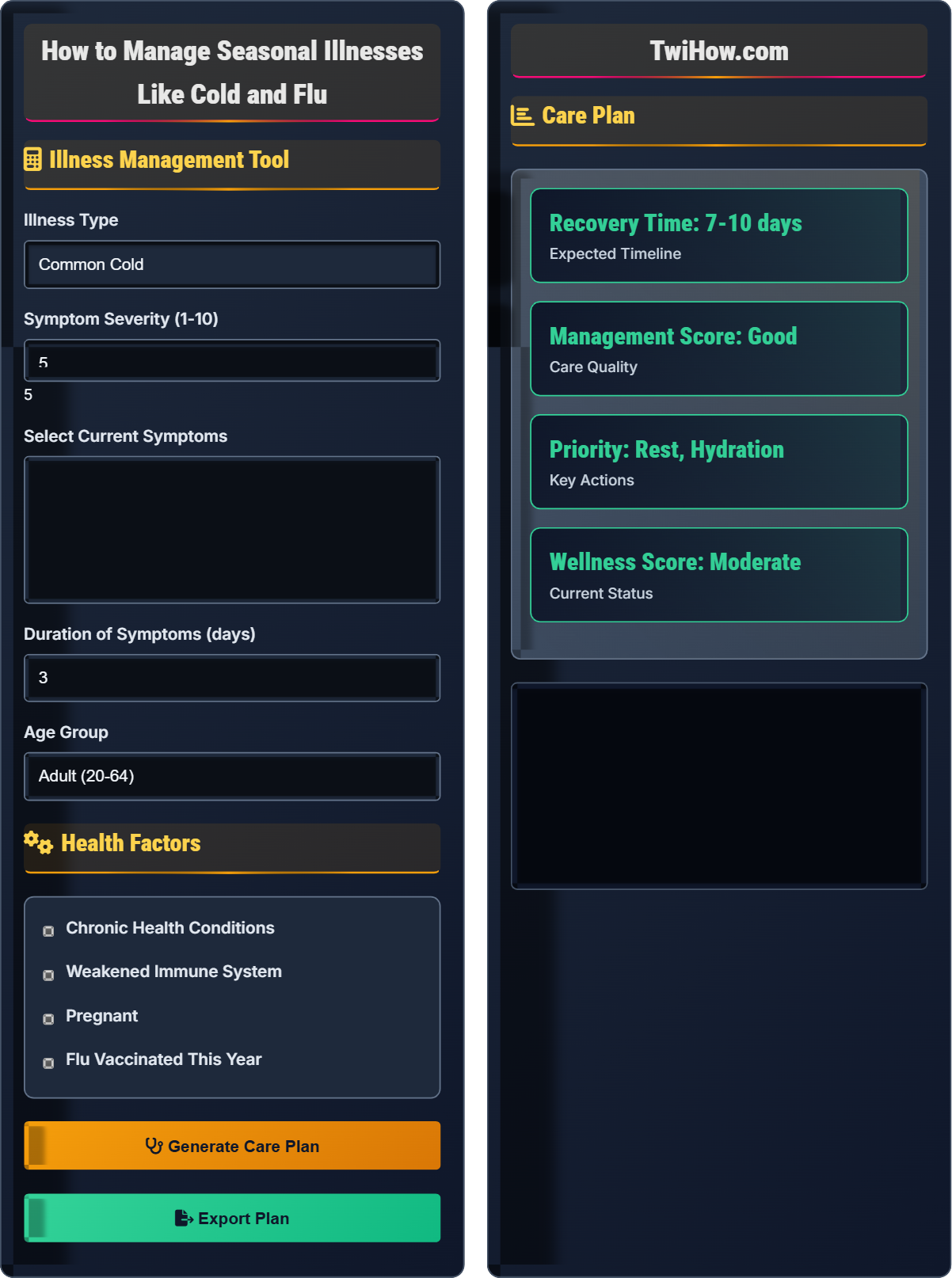
Illness Management Tool
Health Factors
Care Plan
| Prevention Method | Effectiveness | Implementation |
|---|---|---|
| Hand Washing | High | 20+ seconds with soap |
| Flu Vaccination | High | Annual vaccination |
| Avoid Touching Face | Moderate | Hands to eyes/nose/mouth |
| Disinfect Surfaces | Moderate | Regular cleaning |
| Immune Support | Moderate | Healthy diet, sleep |
Seasonal Illness Management Explained
The common cold and influenza are both respiratory illnesses but differ in severity and symptoms:
- Common Cold: Milder symptoms, gradual onset, primarily affects nose and throat
- Influenza: More severe symptoms, sudden onset, affects entire body
Key differences include fever (rare in colds, common in flu), body aches (mild vs. severe), fatigue (mild vs. severe), and overall severity (mild vs. severe).
When your body encounters a virus, the immune system responds through multiple stages:
- Detection: Immune cells recognize foreign pathogens
- Activation: White blood cells and antibodies are produced
- Response: Fever, inflammation, and symptom development
- Resolution: Pathogen elimination and tissue repair
- Memory: Immune system remembers pathogen for future protection
Effective symptom management supports your body's natural healing process:
- Rest: Conserves energy for immune function
- Hydration: Maintains mucous membrane function and prevents dehydration
- Nutrition: Provides essential nutrients for immune response
- Humidification: Eases congestion and soothes irritated tissues
- Pain Relief: Reduces discomfort and fever
Consult a healthcare provider if you experience:
- Severe symptoms: High fever (>103°F), severe headache, breathing difficulties
- Duration concerns: Symptoms lasting more than 10 days
- Complications: Chest pain, persistent vomiting, signs of pneumonia
- High-risk factors: Chronic conditions, age extremes, weakened immunity
- Worsening symptoms: Improvement followed by deterioration
Preventing seasonal illnesses involves multiple approaches:
- Vaccination: Annual flu vaccine is most effective prevention
- Hygiene: Frequent handwashing, avoiding touching face
- Immune Support: Adequate sleep, regular exercise, balanced nutrition
- Environmental: Avoiding crowded spaces during outbreaks
- Community: Staying home when sick to prevent spread
Recovery Rate = (Rest × Hydration × Nutrition × Immune Support) ÷ (Stress × Complications × Delayed Treatment)
Maximizing supportive factors while minimizing stress and complications accelerates recovery.
Symptom Management
Nasal congestion, sore throat, cough, fever, body aches, fatigue, headache, chills.
Relief = (Hydration × Rest × Symptom Targeting) ÷ (Irritants × Stress × Delay)
Early intervention with appropriate remedies provides optimal relief.
- Start treatment early for best results
- Stay hydrated throughout illness
- Rest is crucial for recovery
- Know when to seek medical care
Prevention Strategies
Vaccination, hand hygiene, immune support, environmental controls, social distancing during outbreaks.
- Get annual flu vaccination
- Maintain good hand hygiene
- Support immune system with healthy lifestyle
- Avoid close contact with sick individuals
- Disinfect frequently touched surfaces
- Stay home when experiencing symptoms
- Vaccination effectiveness varies by season
- Some individuals cannot receive vaccines
- Prevention is more effective than treatment
- Community immunity protects vulnerable populations
Seasonal Illness Management Quiz
Which of the following best distinguishes influenza from the common cold?
The answer is B) Onset of symptoms.
Influenza typically has a sudden, abrupt onset with severe symptoms appearing quickly, often within hours. The common cold has a gradual onset with symptoms developing over several days.
Other distinguishing features of flu include:
- High fever (often 100°F+)
- Severe body aches and chills
- Extreme fatigue and weakness
- Headache
- Occasionally nausea and vomiting (especially in children)
Colds typically feature:
- Milder symptoms overall
- Primarily nasal congestion and runny nose
- Sore throat that develops gradually
- Rarely fever in adults
- Gradual development of symptoms
Understanding the differences between cold and flu symptoms is crucial for appropriate treatment and prevention of complications. The rapid onset of flu symptoms often helps distinguish it from other respiratory illnesses, though testing may be needed for definitive diagnosis.
Onset: Beginning of symptoms
Influenza: Viral infection with systemic symptoms
Common Cold: Viral infection primarily affecting upper respiratory tract
• Flu has sudden onset while colds develop gradually
• Flu affects entire body while colds are localized
• Seek medical attention for severe flu symptoms
• Note the timing of symptom appearance
• Monitor for fever and body aches
• Consider flu season timing
• Assuming all respiratory symptoms are colds
• Not recognizing flu symptoms in early stages
• Delaying treatment for severe flu
Explain how proper nutrition and sleep support the immune system during illness, and describe specific nutrients that are particularly important.
Role of Sleep in Immune Function:
Sleep is crucial for immune system function and recovery:
• Cellular Repair: Sleep allows for tissue repair and regeneration
• Antibody Production: Sleep enhances antibody response to vaccines
• Cytokine Production: Sleep supports production of immune-signaling molecules
• White Blood Cell Function: Adequate sleep maintains optimal immune cell activity
• Stress Reduction: Sleep reduces cortisol levels that can suppress immunity
Immune-Supporting Nutrients:
1. Vitamin C: Antioxidant that supports white blood cell function
• Sources: Citrus fruits, berries, bell peppers, broccoli
• Role: Enhances immune cell function and reduces cold duration
2. Vitamin D: Regulates immune response
• Sources: Sunlight, fatty fish, fortified dairy
• Role: Modulates immune system and reduces respiratory infections
3. Zinc: Essential for immune cell development and function
• Sources: Shellfish, legumes, seeds, nuts
• Role: Supports immune response and may reduce cold severity
4. Vitamin A: Maintains mucosal barrier integrity
• Sources: Carrots, sweet potatoes, leafy greens
• Role: Supports skin and mucous membrane barriers
5. Protein: Building blocks for immune cells
• Sources: Lean meats, poultry, fish, beans, eggs
• Role: Provides amino acids for antibody and immune cell production
During illness, the body's demand for these nutrients increases to support the immune response.
The immune system requires significant energy and nutrients to function optimally. During illness, the body diverts resources to fight infection, making proper nutrition and rest essential for recovery. Understanding which nutrients support immunity helps guide dietary choices during illness.
Immune Response: Body's defense against pathogens
Antibodies: Proteins that identify and neutralize pathogens
Cytokines: Signaling molecules that regulate immune response
• Adequate sleep is essential for immune function
• Micronutrients support immune cell activity
• Hydration is critical during illness
• Eat nutrient-dense foods when possible
• Stay hydrated with water, broths, and herbal teas
• Prioritize sleep during recovery
• Not eating enough during illness
• Skipping sleep to "power through" symptoms
• Relying on supplements instead of whole foods
You've developed flu symptoms including fever (101°F), severe body aches, fatigue, and headache. It's day 2 of symptoms. What is the optimal treatment approach for the next 5 days, and when should you consider seeking medical attention?
Day 2-3 (Acute Phase):
• Rest: Bed rest with minimal activity
• Hydration: 8-10 glasses of water/fluids daily
• Medication: Acetaminophen or ibuprofen for fever/pain
• Nutrition: Light, easily digestible foods
• Isolation: Avoid contact with others to prevent spread
Day 4-5 (Recovery Phase):
• Gradual Activity: Increase activity as tolerated
• Continue Hydration: Maintain fluid intake
• Nutrition: Resume normal diet as appetite returns
• Monitor Symptoms: Watch for complications
When to Seek Medical Attention:
• Difficulty breathing or shortness of breath
• Persistent high fever (103°F+) after day 3
• Severe or persistent vomiting
• Chest pain or pressure
• Confusion or dizziness
• Symptoms that improve then worsen
Recovery Timeline:
Most flu symptoms resolve within 5-7 days, but fatigue may persist for 1-2 weeks. Full recovery typically takes 1-2 weeks.
Flu recovery follows a predictable pattern with distinct phases. Understanding this timeline helps set appropriate expectations and identify when complications may be developing. Early aggressive rest and symptom management can reduce overall illness duration.
Acute Phase: Initial period of severe symptoms
Recovery Phase: Period of gradual improvement
Complications: Secondary problems arising from primary illness
• Rest is most important in early stages
• Monitor for complications
• Stay isolated to prevent spread
• Prepare ahead with supplies
• Use humidifier to ease congestion
• Take medication as directed
• Returning to activities too soon
• Not staying adequately hydrated
• Ignoring warning signs of complications
A school is experiencing a flu outbreak. As a parent, what steps should you take to protect your family, and how do these strategies work to prevent transmission?
Immediate Actions:
1. Vaccination: Ensure all family members have received flu vaccines
2. Hygiene: Teach and reinforce frequent handwashing with soap for 20+ seconds
3. Disinfection: Clean and disinfect frequently touched surfaces
4. Isolation: Keep sick family members at home
5. Monitoring: Watch for symptoms in all family members
How Prevention Strategies Work:
• Vaccination: Trains immune system to recognize and fight specific flu strains
• Hand Hygiene: Removes viruses from hands before they can enter the body
• Surface Disinfection: Kills viruses on objects that may be touched
• Respiratory Etiquette: Prevents virus spread through coughing and sneezing
• Isolation: Reduces opportunities for virus transmission
Additional Protective Measures:
• Avoid touching eyes, nose, and mouth
• Maintain distance from visibly sick individuals
• Ensure adequate sleep and nutrition for immune support
• Consider antiviral prophylaxis if recommended by healthcare provider
These measures work together to break the chain of transmission by targeting the three components: source, route, and host susceptibility.
Prevention of infectious diseases relies on breaking the transmission chain at multiple points. The epidemiological triad (agent, host, environment) provides a framework for understanding how prevention strategies work. Combining multiple approaches is more effective than single interventions.
Transmission Chain: Sequence of events required for infection to spread
Prophylaxis: Prevention of disease before it occurs
Community Immunity: Protection of population through vaccination
• Multiple prevention strategies are more effective
• Vaccination is primary prevention method
• Early intervention prevents spread
• Keep hand sanitizer available
• Teach children proper cough etiquette
• Have supplies ready before outbreak
• Waiting until outbreak begins to vaccinate
• Not maintaining prevention measures consistently
• Sending sick children to school
Which of the following is the most reliable indicator that a person is recovering from influenza?
The answer is B) Fever subsiding for 24+ hours without medication.
Fever is a key indicator of active infection and immune response. When fever resolves and stays resolved for 24 hours without the use of fever-reducing medications, it typically indicates that the body has overcome the acute phase of infection.
Why other options are less reliable:
• A) Appetite can return before full recovery
• C) Energy may fluctuate during recovery
• D) Cough can persist for weeks after other symptoms resolve
The absence of fever without medication is a consistent indicator that the immune system has gained control over the viral infection, signaling the transition from acute illness to recovery phase.
Additional recovery indicators include:
• Improved energy levels (gradual improvement)
• Decreased severity of symptoms
• Return of appetite
• Ability to resume normal activities
Fever serves as a biological indicator of active infection. Its resolution indicates that the pathogen load has been reduced to a level where the immune system no longer needs to mount a high-temperature response. This biological marker is more reliable than subjective symptoms for assessing recovery status.
Recovery Phase: Period after acute illness when symptoms resolve
Biological Marker: Measurable indicator of physiological state
Pathogen Load: Amount of infectious agent in the body
• Fever resolution indicates infection control
• Recovery is gradual process
• Multiple indicators support assessment
• Monitor temperature without medication
• Look for consistent improvement
• Don't rush back to activities
• Returning to activities too soon after fever breaks
• Using fever reducers to mask symptoms
• Not recognizing that recovery takes time
FAQ
Q: My child has a cold. When should I keep them home from school, and when is it okay for them to return?
A: The decision to keep a child home should be based on their symptoms and ability to participate:
Keep Home When:
• Fever of 100°F or higher (until fever-free for 24 hours)
• Severe symptoms that prevent learning or participation
• Vomiting or diarrhea
• Severe cough that disrupts class
• Extreme fatigue or lethargy
Okay to Return When:
• Fever-free for 24+ hours without medication
• Able to participate in normal activities
• Appetite has returned
• Cough is manageable and not disruptive
Additional Considerations:
• Some schools have specific policies for different symptoms
• Consider the comfort and safety of other students
• Child should feel well enough to engage in learning
• If symptoms are mild and child feels well, they may attend
Always follow your school's specific policies and err on the side of caution to prevent spreading illness to classmates.
Q: I have a chronic condition. How does this affect my risk of complications from seasonal illnesses, and what precautions should I take?
A: Chronic conditions can increase risk of complications from seasonal illnesses:
Higher-Risk Conditions:
• Heart disease (increased risk of cardiac complications)
• Lung disease (COPD, asthma - risk of respiratory complications)
• Diabetes (compromised immune response)
• Immunocompromised states (reduced ability to fight infection)
• Kidney disease (increased infection risk)
• Liver disease (impaired immune function)
Enhanced Precautions:
• Annual flu vaccination (sometimes with adjuvanted versions)
• Pneumonia vaccination as recommended
• Antiviral medications if exposed to flu
• More aggressive symptom monitoring
• Earlier medical consultation if symptoms develop
• Ensure chronic condition medications are well-managed
During Illness:
• Monitor chronic condition parameters more closely
• Continue regular medications unless advised otherwise
• Contact healthcare provider promptly if symptoms worsen
• Consider telemedicine for initial consultation
Always consult with your healthcare team about specific precautions based on your conditions.