How to Manage Stress-Related Physical Symptoms
Complete stress management guide • Step-by-step explanations
Stress Management Overview:
Show Stress Relief CalculatorManaging stress-related physical symptoms is crucial for maintaining overall health and well-being. Chronic stress can manifest in numerous physical ways including tension headaches, muscle pain, digestive issues, elevated blood pressure, and sleep disturbances. Understanding these symptoms and implementing effective management strategies can significantly improve quality of life.
Effective stress management combines multiple approaches including relaxation techniques, lifestyle modifications, physical activity, and proper self-care. The goal is to reduce both the psychological and physical impact of stress on the body.
Core concepts:
- Stress Response: Fight-or-flight mechanism and its physical effects
- Symptom Recognition: Identifying physical manifestations of stress
- Relief Techniques: Breathing, meditation, progressive muscle relaxation
- Lifestyle Changes: Exercise, sleep hygiene, nutrition
- Prevention Strategies: Building resilience and coping skills
Successful stress management requires consistent practice of multiple techniques tailored to individual needs and symptoms.
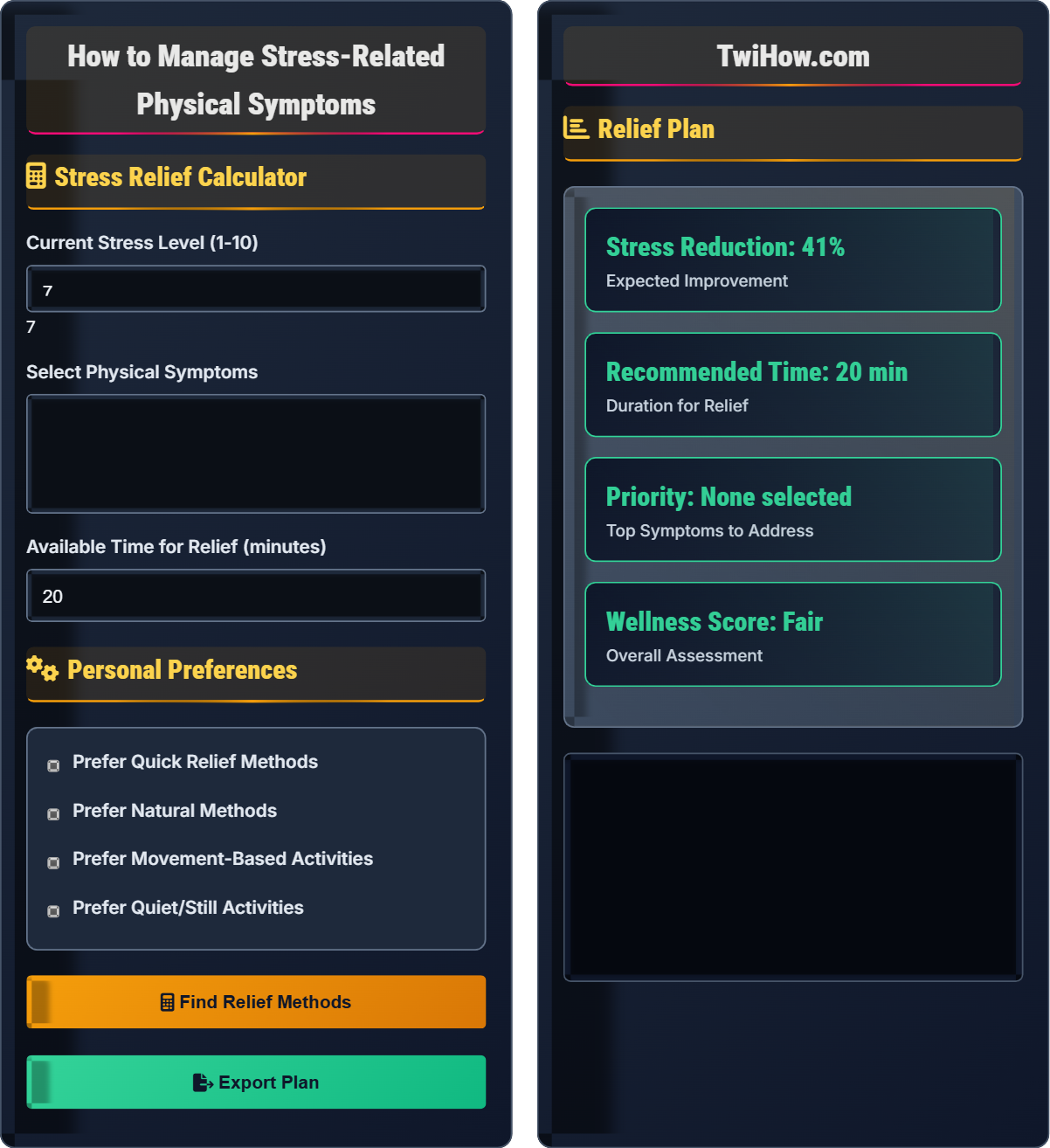
Stress Relief Calculator
Personal Preferences
Relief Plan
| Time | Activity | Duration | Benefit |
|---|---|---|---|
| 8:00 AM | Morning Meditation | 10 min | Reduce anxiety |
| 12:00 PM | Walking Break | 15 min | Release tension |
| 3:00 PM | Stretching | 10 min | Relieve muscle stress |
| 9:00 PM | Evening Wind-down | 20 min | Improve sleep |
Managing Stress-Related Physical Symptoms Explained
When you experience stress, your body activates the fight-or-flight response, releasing hormones like cortisol and adrenaline. This response increases heart rate, blood pressure, and muscle tension to prepare for action. While helpful in short bursts, chronic activation of this system leads to physical symptoms.
Stress manifests physically in various ways:
- Tension Headaches: Caused by tight muscles in head, neck, and shoulders
- Muscle Tension: Particularly in neck, shoulders, and back
- Digestive Issues: Including nausea, stomach pain, and irritable bowel syndrome
- Sleep Problems: Difficulty falling asleep or staying asleep
- Cardiovascular Effects: Elevated blood pressure and heart palpitations
- Immune Suppression: Increased susceptibility to illness
Quick techniques to address stress symptoms:
- Deep Breathing: Activate the parasympathetic nervous system
- Progressive Muscle Relaxation: Release physical tension systematically
- Grounding Techniques: Focus on present moment sensations
- Quick Stretching: Relieve muscle tension
- Positive Self-Talk: Challenge anxious thoughts
Building resilience against stress:
- Regular Exercise: Releases endorphins and reduces tension
- Consistent Sleep Schedule: Allows for physical recovery
- Stress Inoculation: Gradual exposure to manageable stressors
- Social Support: Emotional buffer against stress
- Mindfulness Practices: Develop awareness and acceptance
- Time Management: Reduce stress-inducing pressures
Stress can be understood through the equation: Stress = Pressure / Coping Resources. To reduce stress, you can either decrease pressure or increase coping resources:
- Decrease Pressure: Set boundaries, delegate tasks, prioritize
- Increase Resources: Build skills, seek support, practice self-care
Recovery from stress involves several stages:
- Acute Recovery: Immediate relief through relaxation techniques
- Short-term Recovery: Sleep, nutrition, and light activity
- Long-term Recovery: Building resilience and adaptive capacity
- Prevention: Developing sustainable stress management practices
Stress Management Techniques
Deep breathing, progressive muscle relaxation, mindfulness meditation, exercise, journaling, social support.
Stress Relief = (Coping Techniques × Consistency) - (Stressors × Duration)
Effective management requires increasing coping strategies while reducing stressor impact.
- Start with short, manageable practices
- Combine multiple techniques for better results
- Practice regularly for lasting benefits
- Address both symptoms and root causes
Symptom-Specific Relief
Headache: Cold compresses, neck stretches, dark quiet room. Muscle tension: Progressive relaxation, heat therapy, massage. Digestive: Peppermint tea, deep breathing, small frequent meals.
- Identify most disruptive symptom
- Select appropriate targeted technique
- Implement immediate relief method
- Follow up with prevention strategy
- Evaluate effectiveness
- Physical symptoms may indicate chronic stress
- Severe symptoms require medical attention
- Consistency is more important than perfection
- Personalize techniques to your preferences
Stress Management Quiz
Which of the following is NOT a typical physical response to acute stress?
The stress response, also known as the fight-or-flight response, prepares the body for immediate action by activating the sympathetic nervous system. Typical responses include:
- Increased heart rate to pump more blood to muscles
- Muscle tension for readiness to act
- Increased blood pressure to enhance circulation
- Dilated pupils to improve vision
- Released stress hormones (cortisol, adrenaline)
Decreased blood pressure is not a typical stress response; in fact, stress usually increases blood pressure temporarily.
The answer is C) Decreased blood pressure.
Understanding the physiological stress response is fundamental to managing stress effectively. The body's stress response is designed to be temporary and protective, but chronic activation can lead to health problems. Recognizing the signs of stress helps you implement appropriate interventions.
Stress Response: Automatic physiological reaction to perceived threats
Sympathetic Nervous System: Part of autonomic nervous system responsible for fight-or-flight
Homeostasis: Body's tendency to maintain internal balance
• Stress response increases vital functions
• Chronic stress disrupts homeostasis
• Recognizing symptoms enables intervention
• Notice early signs of stress response
• Learn to differentiate between acute and chronic stress
• Practice calming techniques regularly
• Ignoring early warning signs
• Confusing normal responses with pathological ones
• Not understanding the temporary nature of acute stress
Explain the relationship between stress and tension headaches, and describe three evidence-based techniques for relieving tension headache symptoms.
Relationship: Stress triggers tension headaches through several mechanisms:
1. Muscle Tension: Stress causes muscles in the neck, shoulders, and scalp to tighten, leading to pain
2. Hormonal Changes: Stress hormones like cortisol can affect pain perception
3. Posture: Stress often leads to poor posture, contributing to neck and head tension
Three Evidence-Based Techniques:
1. Progressive Muscle Relaxation: Systematically tense and relax muscle groups starting from toes and moving upward, spending 5-10 seconds on each group. This helps release accumulated muscle tension.
2. Deep Breathing (4-7-8 Technique): Inhale for 4 counts, hold for 7, exhale for 8. This activates the parasympathetic nervous system, reducing stress and muscle tension.
3. Neck Stretches: Gently tilt head side to side, forward and backward, and rotate slowly. Hold each stretch for 15-30 seconds. This releases tension in the neck muscles that contribute to headaches.
Tension headaches are the most common type of headache and are directly related to muscle tension and stress. Understanding the connection helps individuals recognize early symptoms and take preventive action. The techniques work by interrupting the stress-tension-pain cycle through physical and psychological relaxation.
Tension Headache: Headache caused by muscle tension in neck and scalp
Progressive Muscle Relaxation: Systematic tensing and relaxing of muscle groups
Parasympathetic Nervous System: Part of autonomic system that promotes relaxation
• Address both physical and psychological components
• Practice techniques regularly for prevention
• Gentle movements prevent further tension
• Use heat or cold therapy for additional relief
• Maintain good posture to prevent tension
• Take breaks during prolonged activities
• Over-tightening during stretches
• Ignoring early warning signs
• Not addressing underlying stress
Sarah experiences chronic stress from her demanding job, manifesting as muscle tension in her neck and shoulders, occasional tension headaches, and trouble sleeping. She has 15 minutes during lunch and 20 minutes in the evening for stress management activities. Design a 7-day plan that addresses her specific symptoms and fits her schedule.
Day 1-2: Foundation Building
Lunch (15 min): 5 min deep breathing + 10 min progressive muscle relaxation focusing on neck/shoulders
Evening (20 min): 10 min gentle neck stretches + 10 min mindfulness meditation
Day 3-4: Integration
Lunch (15 min): 5 min guided imagery + 10 min yoga poses for neck/shoulders
Evening (20 min): 15 min body scan meditation + 5 min journaling
Day 5-7: Consolidation
Lunch (15 min): 10 min walking meditation + 5 min postural awareness
Evening (20 min): 15 min bedtime routine with breathing exercises + 5 min gratitude practice
Additional Recommendations:
• Adjust workspace ergonomics to reduce strain
• Set hourly reminders to take brief movement breaks
• Practice the same techniques during actual stress episodes
Effective stress management plans must be tailored to individual symptoms, schedules, and preferences. The plan addresses Sarah's specific physical manifestations (neck/shoulder tension, headaches) while incorporating evidence-based techniques. Starting with foundational techniques allows for gradual skill-building before progressing to more complex practices.
Progressive Muscle Relaxation: Systematic tensing and relaxing of muscle groups
Mindfulness Meditation: Present-moment awareness without judgment
Guided Imagery: Mental visualization for relaxation
• Match techniques to specific symptoms
• Start simple and progress gradually
• Consistency matters more than duration
• Use apps for guided sessions
• Create a calm environment for practice
• Track symptoms to measure improvement
• Setting unrealistic expectations
• Not adapting to changing needs
• Focusing only on immediate relief
A person experiences chest tightness and rapid heartbeat. How would you distinguish whether these symptoms are due to stress or a medical emergency? What are appropriate actions for each scenario?
Distinguishing Stress Symptoms from Medical Emergencies:
Stress-Related Symptoms:
• Onset typically gradual or linked to identifiable stressor
• Accompanied by other stress symptoms (sweating, trembling, anxiety)
• Improves with relaxation techniques
• Person remains alert and oriented
• Symptoms may fluctuate with stress levels
Medical Emergency Signs:
• Sudden, severe onset without obvious trigger
• Chest pain that radiates to arm, jaw, or back
• Difficulty breathing, dizziness, nausea
• Pain persists despite relaxation attempts
• Person appears pale, sweaty, or distressed
Appropriate Actions:
For Stress: Deep breathing, progressive muscle relaxation, removing from stressor, reassurance
For Medical Emergency: Call 911 immediately, have person sit down, loosen tight clothing, monitor consciousness
When in doubt, seek immediate medical attention.
Differentiating between stress symptoms and medical emergencies is critical for appropriate intervention. While stress can cause alarming physical symptoms, some symptoms require immediate medical attention. The key is recognizing patterns, severity, and response to intervention. Safety always takes precedence over assuming symptoms are stress-related.
Stress Response: Physiological reaction to perceived threats
Medical Emergency: Situation requiring immediate professional care
Discrimination: Ability to distinguish between similar symptoms
• Safety first in uncertain situations
• Learn your personal stress patterns
• Know when to seek medical help
• Keep emergency contacts accessible
• Dismissing serious symptoms as stress
• Panicking when symptoms are stress-related
• Not having a clear action plan
Which relaxation technique is most effective for immediate relief of acute stress symptoms?
For immediate relief of acute stress symptoms, deep breathing exercises are most effective because:
1. Speed: Can be initiated immediately and shows effects within seconds to minutes
2. Portability: Can be done anywhere without equipment or special space
3. Physiology: Directly activates the parasympathetic nervous system to counteract stress response
4. Discretion: Can be done unobtrusively in public settings
While other techniques are valuable for stress management, they require more time and setup. Deep breathing can be practiced instantly during acute stress episodes.
The answer is B) Deep breathing exercises (2-5 minutes).
Effective stress management requires different techniques for different situations. For immediate relief during acute stress, quick techniques that directly impact the nervous system are most appropriate. For long-term stress management, longer practices that build resilience are beneficial. Having a toolkit of techniques for different scenarios is essential.
Acute Stress: Immediate stress response to current situation
Parasympathetic Nervous System: System that promotes relaxation and recoveryImmediate Relief: Rapid reduction of stress symptoms
• Match technique to urgency level
• Practice techniques before stress occurs
• Have backup options available
• Learn breathing techniques in advance
• Practice in calm situations first
• Keep techniques simple for stressful moments
• Trying new techniques during high stress
• Not having accessible relief methods
• Assuming all techniques work equally well
FAQ
Q: I have chronic neck and shoulder tension from sitting at a computer all day. What can I do during my workday to manage this stress-related pain?
A: Managing computer-related neck and shoulder tension requires both preventive and relief strategies:
Preventive Measures:
1. Set hourly reminders: Stand up, stretch, and move for 2-3 minutes every hour
2. Posture checks: Keep ears aligned over shoulders, shoulders relaxed, feet flat on floor
3. Monitor positioning: Top of screen at eye level, arms at 90 degrees
Relief Techniques During Work:
1. Seated neck rolls: Slow, controlled rotation of neck in both directions
2. Shoulder blade squeezes: Pull shoulder blades together and hold for 5 seconds
3. Deep breathing: 4-7-8 technique to activate relaxation response
4. Wrist and hand stretches: Prevents tension from traveling up arms
Consistency with these micro-breaks throughout the day will significantly reduce cumulative tension.
Q: I experience stress-related digestive issues, especially during exam periods. What can I do to manage this?
A: Stress significantly impacts digestive function through the gut-brain connection. Here are evidence-based strategies:
During Stressful Periods:
1. Controlled breathing: Practice before meals to activate parasympathetic nervous system
2. Small, frequent meals: Easier to digest than large meals
3. Peppermint tea: Helps relax GI muscles and reduce cramping
4. Probiotics: Support gut health and stress resilience
Preparation Strategies:
1. Meal prep: Prepare simple, nourishing foods in advance
2. Hydration: Maintain adequate water intake (but not excessive)
3. Stress inoculation: Practice relaxation techniques regularly, not just during crisis
4. Avoid trigger foods: Limit caffeine, spicy foods, and processed items during stress
Remember that stress management is as important as dietary changes for digestive health.