How Often Should I Get a Full Physical Exam?
Preventive care guide • Step-by-step approach
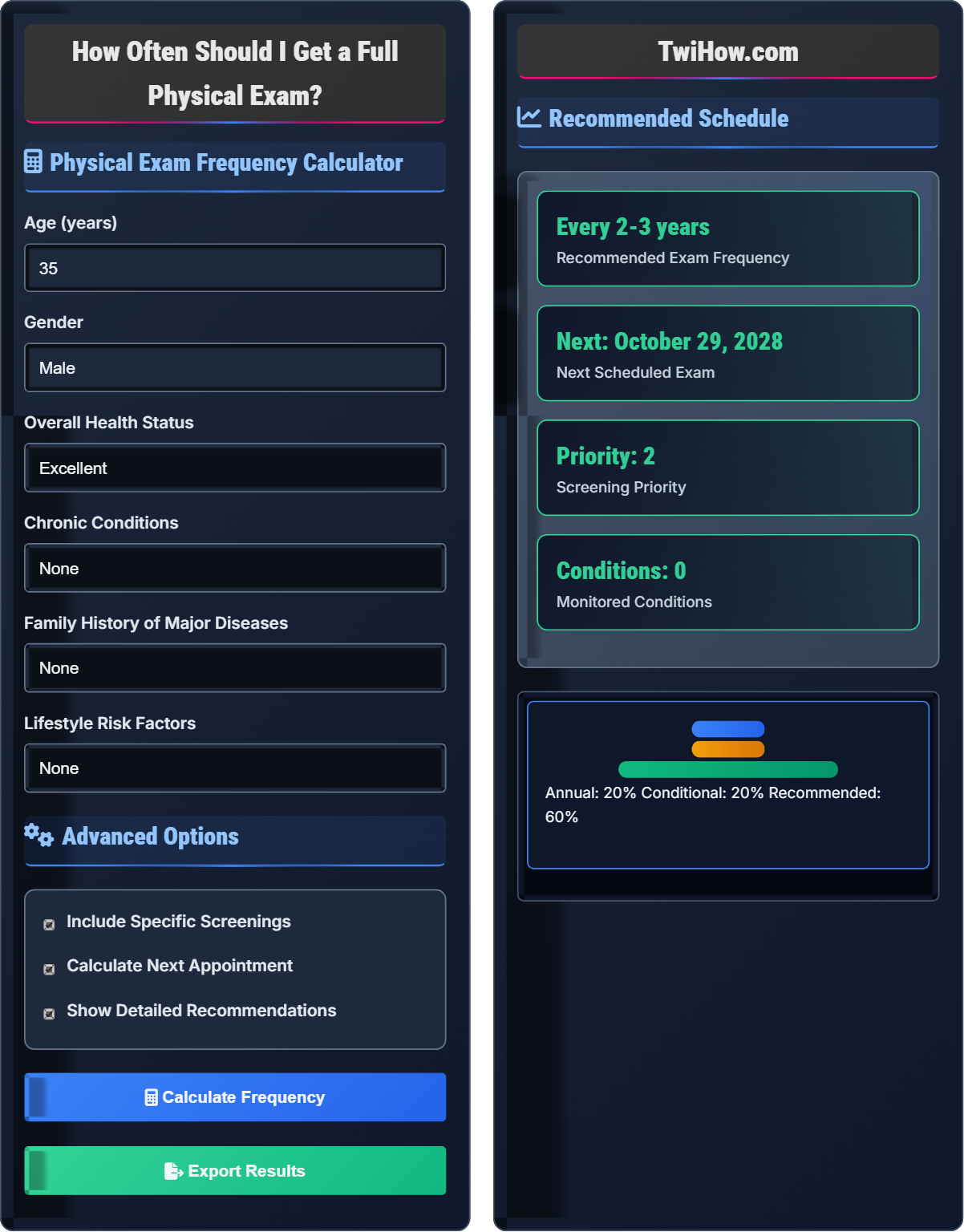
Physical Exam Frequency:
Assess Your NeedsThe frequency of full physical exams depends on your age, health status, risk factors, and medical history. While general guidelines exist, personalized recommendations from your healthcare provider are most appropriate. Regular physical exams help detect health issues early when they're most treatable.
General recommendations by age group:
- Young Adults (18-39): Every 2-3 years if healthy
- Middle Age (40-64): Every 1-2 years
- Seniors (65+): Annually or as recommended
- With Health Conditions: More frequent visits as needed
Additional factors that may increase exam frequency include family history of diseases, chronic conditions, medications, and lifestyle risk factors. Preventive care is key to maintaining long-term health.
Physical Exam Frequency Calculator
Advanced Options
Recommended Schedule
| Age Group | Frequency | Reason |
|---|---|---|
| 18-39 years | Every 2-3 years | If healthy |
| 40-49 years | Every 1-2 years | Baseline screenings |
| 50-64 years | Annually | Increased risk |
| 65+ years | Annually | Senior care |
Recommended Screenings
Blood Pressure: Every 2 years (annually if high)
Cholesterol: Every 4-6 years (every 1-2 years if high)
Diabetes: Every 3 years (annually if at risk)
Cancer: Age and gender-specific schedules
Personalized Recommendations
Based on your profile: Continue regular preventive care
Key areas: Maintain current health status
Lifestyle: Healthy habits are beneficial
Monitoring: Standard preventive schedule
Physical Exam Frequency Guidelines
The recommended frequency of physical exams is determined by multiple factors:
Where frequency typically decreases (more frequent) with advancing age, declining health status, and presence of chronic conditions or risk factors.
Guidelines for physical exam frequency by age group:
For young, healthy adults, physical exams can be spaced further apart since the risk of chronic diseases is relatively low.
Several factors influence physical exam frequency recommendations:
- Age: Risk of chronic diseases increases with age
- Health Status: Existing conditions require more frequent monitoring
- Family History: Genetic predisposition affects screening needs
- Lifestyle Factors: Smoking, diet, exercise impact health risks
- Medications: Some drugs require regular monitoring
- Insurance Coverage: Annual wellness visits may be covered
- Consistency: Regular scheduled appointments
- Communication: Open dialogue with healthcare provider
- Preparation: Come prepared with questions and concerns
- Follow-up: Address recommendations from previous visits
- Advocacy: Request screenings appropriate for your age and risk
- Documentation: Keep records of all examinations
Exam Frequency Fundamentals
Preventive care, annual wellness visit, physical examination, health screening, risk assessment.
Exam Frequency = Age Factor + Health Status + Risk Factors + Conditions
Young adults (18-39): Every 2-3 years if healthy, middle age (40-64): annually or biannually, seniors (65+): annually.
- Healthy young adults: Every 2-3 years
- Adults 40+: Annually or biannually
- Seniors: Annually
Age-Based Guidelines
Young Adults: 18-39 years, Middle Age: 40-64 years, Seniors: 65+ years.
- Young Adults: Every 2-3 years if healthy
- Middle Age: Annual baseline screenings
- Seniors: Annual comprehensive exams
- Adjust for individual risk factors
- Individual health history varies
- Family history affects recommendations
- Chronic conditions require more frequent visits
- Insurance coverage may influence schedule
Physical Exam Frequency Quiz
According to general guidelines, how often should a healthy 25-year-old with no risk factors get a full physical exam?
For healthy young adults aged 18-39 with no risk factors or chronic conditions, general guidelines recommend a full physical exam every 2-3 years. At this age, the risk of developing chronic diseases is relatively low, so less frequent examinations are appropriate. However, this schedule may change if risk factors develop or health status changes.
The answer is B) Every 2-3 years.
Physical exam frequency guidelines are based on evidence showing that the risk of developing significant health issues increases with age. Young, healthy adults have a lower baseline risk, so exams can be spaced further apart while still providing adequate preventive care. The 2-3 year interval balances the need for monitoring with resource efficiency.
Physical Examination: Comprehensive health assessment by a healthcare provider
Preventive Care: Healthcare focused on preventing disease
Risk Factors: Characteristics that increase disease probability
• Healthy young adults: Every 2-3 years
• Middle-aged adults: Annually or biannually
• Seniors: Annually
• Still see provider annually for other needs
• Get recommended screenings
• Update immunizations
• Thinking annual visits aren't needed
• Ignoring preventive screenings
• Not updating immunizations
What are the main risk factors that might increase the frequency of physical exams, and how do they affect recommendations?
Main Risk Factors:
1. Chronic Conditions: Diabetes, hypertension, heart disease require more frequent monitoring (every 3-6 months)
2. Family History: Strong family history of cancer, heart disease may require earlier or more frequent screenings
3. Lifestyle Factors: Smoking, obesity, sedentary lifestyle increase health risks
4. Medications: Some drugs require regular lab monitoring
5. Age: Risk increases with advancing age
Impact on Recommendations: Each risk factor may necessitate more frequent visits, specific screenings, or closer monitoring of particular health parameters. The healthcare provider considers the cumulative effect of multiple risk factors when determining exam frequency.
Risk factors modify general guidelines because they increase the likelihood of developing health problems. Healthcare providers use a risk-stratified approach, where higher-risk individuals receive more intensive monitoring. This personalized approach optimizes resource allocation while ensuring high-risk patients receive appropriate care.
Risk Stratification: Categorizing patients by risk level
Chronic Disease: Long-lasting health conditions
Preventive Screening: Tests to detect disease early
• Multiple risk factors compound frequency needs
• Individualized recommendations are most appropriate
• Risk assessment should be updated regularly
• Track family health history
• Report lifestyle changes
• Discuss medication side effects
• Not reporting lifestyle changes
• Ignoring family history
• Assuming all patients follow same schedule
John is a 45-year-old man with well-controlled type 2 diabetes and hypertension. He takes two medications for diabetes and one for blood pressure. His father had a heart attack at age 52. John hasn't had a physical exam in 18 months. Based on his health status, how often should John get physical exams, and what should be emphasized during these visits?
Exam Frequency: Given John's multiple chronic conditions (diabetes and hypertension), he should have physical exams every 3-6 months, rather than the typical annual schedule for his age group.
Emphasis Areas:
1. Diabetes Management: HbA1c levels, foot exams, eye exams, kidney function
2. Cardiovascular Health: Blood pressure control, cholesterol levels, cardiac risk assessment (especially given family history)
3. Medication Review: Effectiveness and side effects of current medications
4. Lifestyle Counseling: Diet, exercise, weight management
5. Complications Screening: Regular monitoring for diabetes and hypertension complications
Additional Screenings: Given his family history of early heart disease, John may need more frequent cardiac assessments than typical for his age group.
This case illustrates how multiple factors interact to determine exam frequency. John's age (45) would normally suggest annual exams, but his chronic conditions and family history significantly increase his risk profile, necessitating more frequent monitoring. This demonstrates the importance of individualized care plans based on comprehensive risk assessment.
HbA1c: Glycated hemoglobin test reflecting 2-3 month glucose control
Cardiac Risk: Probability of heart disease events
Complications Screening: Monitoring for disease-related problems
• Chronic conditions require more frequent monitoring
• Family history affects screening recommendations
• Multiple risk factors compound frequency needs
• Keep a medication list updated
• Track blood glucose readings
• Prepare questions in advance
• Not reporting medication changes
• Ignoring family history significance
• Skipping appointments when feeling well
A patient has Medicare Part B, which covers an annual "Wellness Visit." However, they have multiple chronic conditions requiring more frequent monitoring than once per year. How should they approach their healthcare to ensure appropriate care while maximizing insurance benefits?
Understanding Medicare Benefits: Medicare Part B covers an Annual Wellness Visit (AWV) once per year, which is different from a comprehensive physical exam. The AWV focuses on preventive care planning and risk assessment.
Approach for Multiple Conditions:
1. Use AWV: Maximize the annual wellness visit for preventive care planning and health risk assessment
2. Separate Visits: Schedule additional visits for chronic condition management (these are covered separately)
3. Coordination: Work with healthcare provider to coordinate visits efficiently
4. Documentation: Ensure all chronic conditions are documented to justify more frequent visits
5. Specialist Care: Utilize specialists for specific conditions when appropriate
Maximizing Benefits: The AWV can serve as the annual comprehensive assessment, while additional visits focus on specific condition management, ensuring both preventive care and chronic disease monitoring.
This scenario highlights the intersection of clinical needs and insurance coverage. While clinical guidelines may recommend more frequent visits for patients with multiple chronic conditions, insurance benefits are often structured differently. Understanding the difference between an Annual Wellness Visit and a comprehensive physical exam is crucial for maximizing healthcare benefits while ensuring appropriate care.
Annual Wellness Visit: Medicare-covered preventive care planning
Comprehensive Physical: Complete health examination
Chronic Disease Management: Ongoing care for long-term conditions
• AWV is separate from physical exams
• Chronic conditions justify additional visits
• Insurance benefits should not limit necessary care
• Understand your insurance benefits
• Discuss needs with healthcare provider
• Document all chronic conditions
• Confusing AWV with physical exam
• Not advocating for needed care
• Assuming annual visit is sufficient
Which of the following screening recommendations differs significantly between men and women?
Breast cancer screening differs significantly between men and women. While women are recommended to undergo regular mammography screening (typically annually starting at age 40-50), breast cancer screening for men is not routinely recommended due to the much lower incidence. Men may occasionally undergo breast cancer screening if they have specific risk factors, but the standard guidelines differ dramatically between genders. Other screenings like blood pressure, cholesterol, and diabetes are generally recommended similarly for both men and women, though specific risk factors may vary.
The answer is B) Breast cancer screening.
Gender-specific screening recommendations reflect the different disease risks between men and women. Breast cancer is predominantly a female disease, making routine screening appropriate for women but not for men. Other conditions like heart disease and diabetes affect both genders, though sometimes with different risk profiles, leading to similar screening recommendations with potential adjustments for gender-specific factors.
Gender-Specific Screening: Tests tailored to gender-related risks
Mammography: X-ray screening for breast cancer
Incidence: Number of new cases in a population
• Screenings vary by gender
• Breast cancer screening is gender-specific
• Other screenings are generally similar
• Know gender-specific recommendations
• Discuss with healthcare provider
• Consider family history
• Assuming same screenings for all genders
• Not understanding gender-specific risks
• Ignoring family history impact
FAQ
Q: I'm a healthy 30-year-old with no family history of disease. Do I really need to go to the doctor every year?
A: For healthy 30-year-olds like yourself, the general recommendation is to have a physical exam every 2-3 years rather than annually. However, you should still maintain contact with a healthcare provider for certain things:
Annual Needs:
• Dental checkups and cleanings
• Eye exams (especially if you wear contacts or glasses)
• Immunization updates (tetanus every 10 years, flu shot annually)
• Mental health check-ins
When to See a Doctor Sooner:
• New symptoms or health concerns
• Changes in family medical history
• Significant lifestyle changes
• Before starting a new exercise program if you've been sedentary
While annual physicals may not be necessary for healthy young adults, maintaining a relationship with a healthcare provider is important for preventive care and early intervention if health issues arise.
Q: What's the difference between an annual physical and an annual wellness visit?
A: There is an important distinction between an annual physical exam and an annual wellness visit:
Annual Physical Exam:
• Comprehensive head-to-toe examination
• Includes laboratory tests and diagnostic procedures
• Covers complete medical history review
• Addresses current health concerns
• More thorough assessment of organ systems
Annual Wellness Visit (AWV):
• Focuses on preventive care planning
• Reviews medical and family history
• Assesses risk factors and functional ability
• Creates/update prevention plan
• Does not include physical examination or lab work
Insurance Coverage: Medicare covers AWVs annually with no copay, while physical exams may have different coverage depending on your plan. Private insurance plans vary in their coverage of these services.
Both serve important purposes in preventive healthcare, but they serve different functions in maintaining your health.