What Are the Most Common Medication Side Effects to Watch For?
Complete medication safety guide • Step-by-step explanations
Medication Side Effects:
Show Side Effect TrackerMedication side effects are unintended reactions that occur when taking prescribed, over-the-counter, or herbal medications. Understanding these effects is crucial for safe medication use and optimal health outcomes. Side effects can range from mild and temporary to severe and life-threatening.
Common side effects often affect major organ systems and can vary based on the medication type, dosage, duration of use, and individual patient factors. Recognizing early warning signs and knowing when to seek medical attention can prevent serious complications and ensure proper treatment.
Key categories of side effects:
- Gastrointestinal: Nausea, vomiting, diarrhea, constipation
- Neurological: Dizziness, drowsiness, headaches, confusion
- Dermatological: Rashes, itching, swelling, photosensitivity
- Cardiovascular: Changes in heart rate, blood pressure fluctuations
- Allergic Reactions: Hives, swelling, difficulty breathing
Modern medication safety emphasizes patient education, proactive monitoring, and open communication with healthcare providers to optimize therapeutic benefits while minimizing risks.
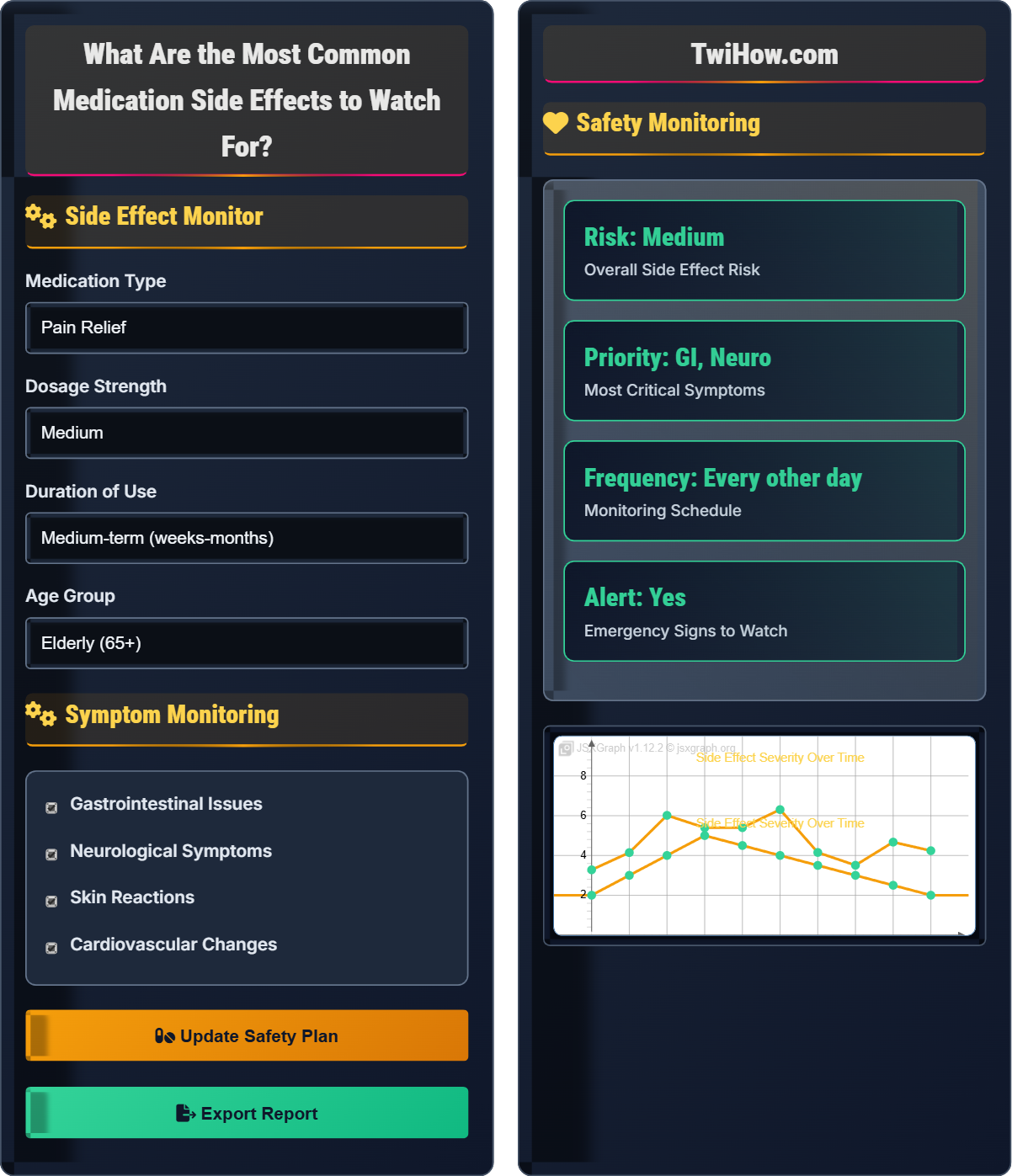
Side Effect Monitor
Symptom Monitoring
Safety Monitoring
| System | Common Effects | Severity | Action Required |
|---|---|---|---|
| Gastrointestinal | Nausea, Diarrhea | Mild-Moderate | Monitor, Hydrate |
| Neurological | Dizziness, Drowsiness | Mild | Caution with driving |
| Dermatological | Rash | Mild | Watch for worsening |
| Cardiovascular | BP changes | Moderate | Monitor regularly |
| Allergic | Hives | Severe if present | Stop immediately |
Medication Side Effects Explained
Medication side effects, also known as adverse drug reactions, are unintended responses to medications that occur at normal doses used for prophylaxis, diagnosis, or therapy. These reactions can affect any organ system and range from minor inconveniences to life-threatening emergencies.
Side effects can be categorized using several frameworks:
Where:
- Type A (Augmented): Predictable, dose-dependent, common effects
- Type B (Bizarre): Unpredictable, idiosyncratic, rare reactions
- Type C (Chronic): Long-term effects from prolonged use
- Type D (Delayed): Effects appearing long after use
- Type E (End of use): Withdrawal reactions
Key areas where medications commonly cause side effects:
- Gastrointestinal: Nausea, vomiting, diarrhea, constipation, stomach irritation
- Central Nervous System: Dizziness, drowsiness, headaches, confusion, mood changes
- Skin and Allergies: Rashes, hives, itching, photosensitivity, anaphylaxis
- Cardiovascular: Blood pressure changes, heart rhythm alterations, fluid retention
- Renal System: Kidney function changes, electrolyte imbalances
- Hepatic System: Liver enzyme elevation, jaundice, liver damage
- Age: Elderly and pediatric patients have higher sensitivity
- Gender: Hormonal differences affect drug metabolism
- Genetics: Metabolic enzyme variations influence drug processing
- Concurrent Medications: Drug interactions increase side effect risk
- Underlying Conditions: Organ dysfunction affects drug handling
Side Effects Fundamentals
Adverse drug reactions, side effects, drug interactions, allergic reactions, contraindications.
Risk Factor = (Drug Properties × Patient Factors × Environmental Factors) / Protective Factors
Where Drug Properties = potency, mechanism; Patient = age, conditions.
- Read medication information carefully
- Monitor for side effects consistently
- Report serious effects immediately
Monitoring Applications
Symptom tracking, medication diaries, side effect scales, health apps, pill organizers.
- Identify high-risk medications
- Create monitoring schedule
- Document all observations
- Communicate with providers
- Individual responses vary significantly
- Timing of effects differs by medication
- Severity can escalate quickly
- Benefit-risk ratio must be evaluated
Medication Side Effects Learning Quiz
Which classification describes side effects that are predictable, dose-dependent, and occur frequently with certain medications?
Type A (Augmented) reactions are the most common category of side effects. They are predictable extensions of the drug's pharmacological action, usually dose-dependent, and occur frequently in many people taking the medication. Examples include nausea from antibiotics, drowsiness from antihistamines, or low blood sugar from diabetes medications. These reactions are typically mild and reversible when the medication is stopped or the dose is reduced.
The answer is A) Type A (Augmented) reactions.
Understanding the classification of adverse drug reactions helps healthcare providers and patients anticipate potential problems and implement appropriate monitoring strategies. Type A reactions are the most common and predictable, representing about 80% of all adverse drug reactions. Because they're related to the drug's primary mechanism of action, they can often be managed by adjusting the dose or providing supportive care.
Type A Reaction: Predictable, dose-dependent, common side effects
Type B Reaction: Unpredictable, idiosyncratic, rare reactions
Adverse Drug Reaction: Unintended response to medication at normal doses
• Type A reactions are predictable and common
• Dose reduction often helps manage Type A
• Type B reactions are unpredictable and rare
• Take medications with food to reduce GI effects
• Start with lower doses when possible
• Monitor for expected side effects
• Confusing Type A with Type B reactions
• Not anticipating predictable side effects
• Dismissing common side effects as insignificant
Describe the most common side effects associated with each major body system and explain why certain systems are more frequently affected by medications.
Gastrointestinal System: Nausea, vomiting, diarrhea, constipation, and stomach irritation are extremely common because medications often come into direct contact with the GI tract. The stomach and intestines have high blood flow and numerous receptors, making them susceptible to drug effects.
Central Nervous System: Dizziness, drowsiness, headaches, and cognitive effects occur frequently because many drugs can cross the blood-brain barrier or affect neurotransmitter systems. The brain controls many vital functions, so disruptions can have wide-ranging effects.
Skin and Allergic Reactions: Rashes, hives, and photosensitivity are common because the skin is a major route of drug elimination and has extensive immune system involvement. Allergic reactions represent immune system responses to medications.
Cardiovascular System: Blood pressure changes, heart rate alterations, and fluid retention occur because the cardiovascular system is central to drug distribution and many medications affect heart rhythm or blood vessels directly.
These systems are frequently affected because they have high metabolic activity, extensive blood supply, and numerous receptor sites that medications can interact with.
The frequency of side effects in certain systems relates to anatomical and physiological factors. Systems with high blood flow (like the GI tract and kidneys) encounter high concentrations of medications. Systems with extensive receptor networks (like the nervous system) are prone to drug interactions. Understanding these patterns helps predict which side effects are most likely to occur with different types of medications.
Side Effect: Unintended response to medication at normal doses
Systemic Effect: Impact on entire body system
Organ Toxicity: Damage to specific organs from medication
• GI and CNS effects are most common
• Skin reactions can indicate serious allergies
• Cardiovascular effects require monitoring
• Take GI-irritating medications with food
• Avoid driving with CNS depressants
• Protect skin from sun with photosensitizing drugs
• Ignoring early GI symptoms
• Underestimating CNS effects on safety
• Dismissing skin changes as minor
A 70-year-old patient with multiple chronic conditions is prescribed a new antibiotic for a respiratory infection. They take medications for blood pressure, diabetes, and arthritis. Design a comprehensive side effect monitoring plan that accounts for age-related factors, polypharmacy, and the specific risks associated with the new antibiotic.
Age-Related Considerations: Elderly patients have decreased kidney and liver function, slower drug metabolism, and increased sensitivity to medications. They're more prone to falls, confusion, and electrolyte imbalances.
Polypharmacy Risks: Multiple medications increase the risk of drug interactions. The antibiotic may interact with blood pressure or diabetes medications.
Antibiotic-Specific Monitoring: Common antibiotic side effects include GI upset, yeast infections, and potential for Clostridium difficile infection. Some antibiotics can affect kidney function or blood sugar.
Comprehensive Plan: Monitor blood pressure and glucose more frequently, watch for GI symptoms, check for signs of superinfection (yeast, diarrhea), assess for dizziness or confusion, and ensure adequate hydration. Schedule follow-up within 3-5 days to assess tolerance and effectiveness.
Monitoring in complex patients requires consideration of multiple factors simultaneously. Age affects drug metabolism and increases sensitivity. Polypharmacy creates interaction potential. The specific medication class has its own risk profile. A comprehensive approach considers all these factors and implements targeted monitoring strategies for each risk area.
Polypharmacy: Use of multiple medications simultaneously
Drug Interaction: One drug affecting another's action
Age-Related Changes: Physiological changes affecting drug handling
• Elderly patients need closer monitoring
• Multiple medications increase interaction risk
• Follow up promptly after new prescriptions
• Use medication reconciliation tools
• Monitor lab values more frequently
• Assess functional status regularly
• Not accounting for age-related changes
• Overlooking drug-drug interactions
• Insufficient follow-up after new prescriptions
You're helping someone create a medication safety plan. They need to know which side effects require immediate medical attention versus those they can monitor at home. Explain the difference between urgent and non-urgent side effects, and provide specific examples of each.
Urgent/Immediate Medical Attention:
1. Severe Allergic Reactions: Difficulty breathing, swelling of face/throat, severe hives, rapid heartbeat
2. Cardiovascular Events: Chest pain, severe palpitations, fainting, severe blood pressure changes
3. Severe GI Issues: Severe abdominal pain, bloody stools, persistent vomiting
4. Neurological Emergencies: Severe headache, vision changes, weakness, confusion
5. Severe Skin Reactions: Stevens-Johnson syndrome symptoms, widespread rash with fever
Non-Urgent (Monitor at Home):
1. Mild GI: Mild nausea, loose stools without blood
2. Mild CNS: Mild dizziness that resolves, mild fatigue
3. Mild Skin: Localized itching, mild rash without systemic symptoms
4. Mild Constitutional: Mild fever, general malaise
The key is assessing severity, progression, and associated symptoms.
Recognizing the difference between urgent and non-urgent side effects is critical for patient safety. Urgent symptoms typically involve multiple body systems, rapidly progressing symptoms, or life-threatening manifestations. Non-urgent symptoms are typically mild, stable, and not affecting vital functions. The acronym "AEIOU TIPS" (Alcohol, Epilepsy, Insulin, Opioids, Uremia, Trauma, Infection, Psychiatric) can help remember causes of altered mental status that require urgent attention.
Urgent Side Effect: Requires immediate medical attention
Non-Urgent Side Effect: Can be monitored at home
Life-Threatening Reaction: Potentially fatal adverse event
• Breathing difficulties require immediate help
• Severe allergic reactions are emergencies
• Always err on the side of caution
• Keep emergency numbers readily available
• Know the difference between mild and severe
• Document symptoms with dates/times
• Delaying care for severe symptoms
• Seeking emergency care for minor issues
• Not recognizing progression of symptoms
Which patient characteristic is most strongly associated with increased risk of medication side effects?
Advanced age (over 65) is the strongest predictor of increased medication side effects. Older adults experience age-related changes in drug absorption, distribution, metabolism, and excretion. They often have multiple chronic conditions requiring multiple medications (polypharmacy), which increases the risk of drug interactions. Additionally, elderly patients may have decreased organ function, altered body composition, and increased sensitivity to medications, making them more susceptible to adverse effects.
The answer is B) Advanced age (over 65).
Age-related physiological changes significantly affect how medications work in the body. As people age, they experience decreased kidney and liver function, which affects drug elimination. Changes in body composition (increased fat, decreased muscle mass) alter drug distribution. Altered protein binding and increased sensitivity to certain drug classes contribute to higher rates of adverse effects in older adults. This is why dosing adjustments are often necessary for elderly patients.
Pharmacokinetics: How the body handles drugs (absorption, distribution, metabolism, excretion)
Pharmacodynamics: How drugs affect the body
Polypharmacy: Use of multiple medications simultaneously
• Elderly patients need special monitoring
• Age affects drug metabolism significantly
• Start low, go slow with elderly patients
• Use lowest effective dose in elderly
• Monitor kidney/liver function regularly
• Assess for drug interactions frequently
• Using adult doses for elderly patients
• Not adjusting for organ function changes
• Overlooking drug interactions in polypharmacy
FAQ
Q: How do I know if a symptom is a side effect or a sign of my original condition getting worse?
A: Distinguishing between side effects and disease progression requires careful observation of timing and pattern:
Side Effects: Usually appear shortly after starting a new medication (hours to days), have characteristics described in the medication information, improve when the medication is stopped or dose is reduced, and may not match the symptoms of your original condition.
Disease Progression: Gradual worsening of baseline symptoms, may occur independently of medication timing, symptoms typically match what's expected for your condition, and may be accompanied by other signs of disease advancement.
Key Clues:
1. Timing: Did symptoms start after medication initiation?
2. Pattern: Do symptoms match known side effects?
3. Consistency: Are symptoms consistent with your condition?
4. Response: Do symptoms improve with dose adjustment?
When uncertain, always contact your healthcare provider for evaluation.
Q: Should I stop taking my medication if I experience side effects?
A: The decision to continue or stop a medication due to side effects depends on the severity and type of reaction:
DO NOT STOP IMMEDIATELY if you experience:
• Mild side effects that may diminish over time
• Expected side effects mentioned in medication information
• Minor symptoms that don't interfere with daily activities
CONTACT HEALTHCARE PROVIDER BEFORE STOPPING for:
• Moderate side effects that interfere with quality of life
• Symptoms that worsen over time
• New symptoms that concern you
STOP IMMEDIATELY AND SEEK EMERGENCY CARE if you experience:
• Difficulty breathing or swallowing
• Severe swelling of face, lips, or throat
• Severe abdominal pain or persistent vomiting
• Signs of severe allergic reaction (anaphylaxis)
Never discontinue medications without consulting your healthcare provider, as stopping suddenly can be dangerous. Your provider may adjust the dose, switch medications, or suggest ways to manage side effects.