What Are the Symptoms of Diabetes and How Is It Managed?
Comprehensive diabetes guide • Step-by-step approach
Diabetes Overview:
Assess Your RiskDiabetes is a chronic condition characterized by elevated blood glucose levels due to problems with insulin production or utilization. There are two main types: Type 1 (autoimmune destruction of insulin-producing cells) and Type 2 (insulin resistance). Early recognition of symptoms and proper management are crucial for preventing complications.
Common symptoms include:
- Increased Thirst: Polydipsia due to dehydration
- Frequent Urination: Polyuria as kidneys filter excess glucose
- Extreme Hunger: Polyphagia as cells lack glucose
- Unexplained Weight Loss: Particularly in Type 1 diabetes
Effective diabetes management involves blood glucose monitoring, medication adherence, healthy eating, regular exercise, and routine medical care. With proper care, people with diabetes can live healthy, active lives.
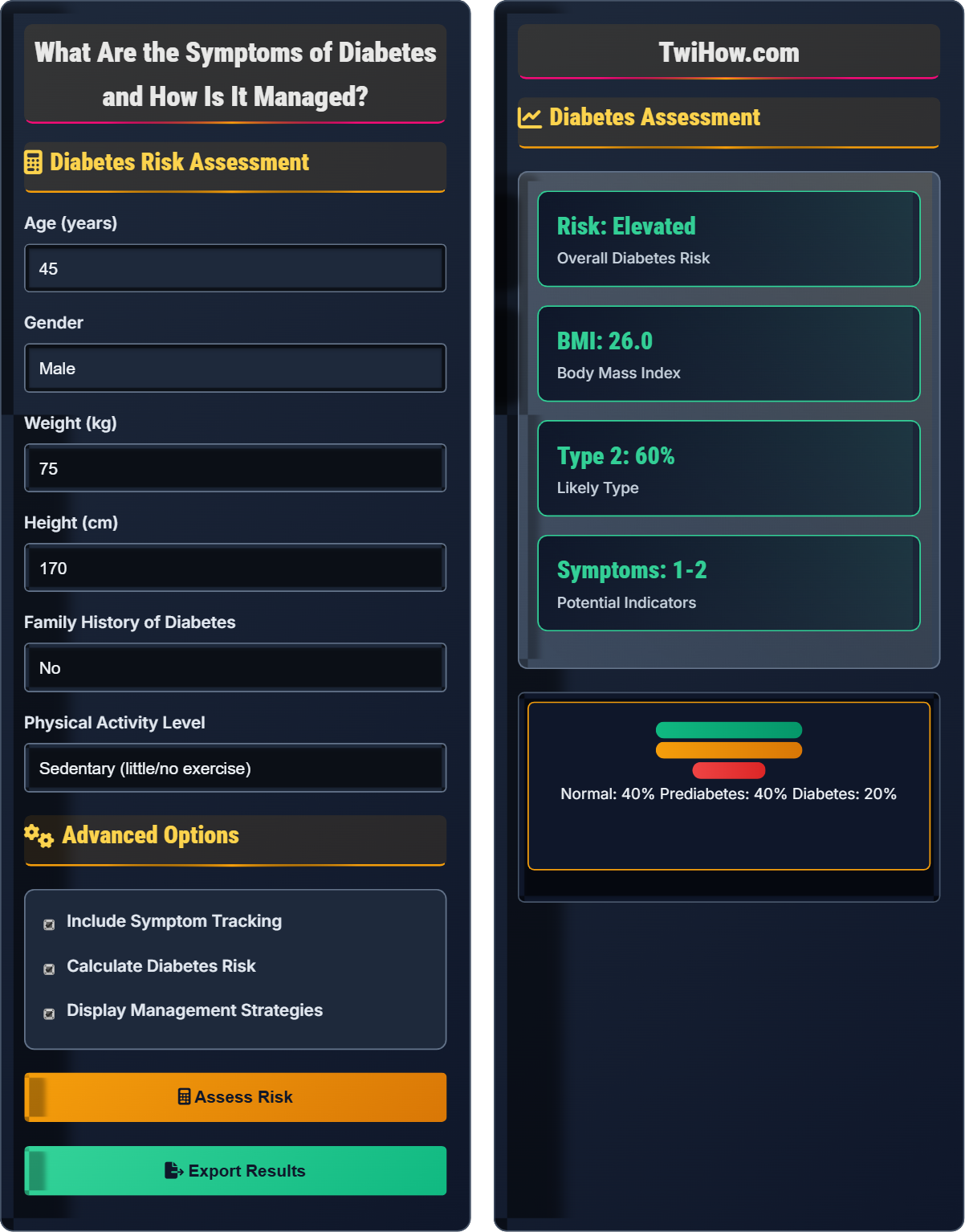
Diabetes Risk Assessment
Advanced Options
Diabetes Assessment
| Symptom | Type | Severity |
|---|---|---|
| Increased Thirst | Common | Moderate |
| Frequent Urination | Common | Moderate |
| Increased Hunger | Type 1 | Low |
| Unexplained Weight Loss | Type 1 | Low |
Management Strategies
Glucose Monitoring: Regular blood sugar checks
Medication: Insulin or oral medications as prescribed
Diet: Carbohydrate counting and healthy eating
Exercise: Regular physical activity
Prevention Measures
Weight Management: Maintain healthy BMI
Physical Activity: 150 min/week moderate exercise
Healthy Eating: Balanced, low-glycemic diet
Regular Screening: Annual check-ups
Diabetes Pathophysiology & Management
Blood glucose levels are regulated by the balance between glucose input and output:
When this balance is disrupted, diabetes develops. Type 1 results from beta cell destruction, while Type 2 involves insulin resistance and relative insulin deficiency.
Glycated hemoglobin (HbA1c) reflects average blood glucose over 2-3 months:
This formula helps translate HbA1c percentages into average glucose values that patients can understand.
Effective diabetes management involves multiple interconnected components:
- Glucose Monitoring: Regular self-monitoring and HbA1c testing
- Medication: Insulin therapy for Type 1, various options for Type 2
- Diet: Carbohydrate counting and glycemic control
- Exercise: Regular physical activity for glucose utilization
- Education: Understanding diabetes and self-care
- Complications: Prevention and early detection
- Early Detection: Recognizing symptoms promptly
- Consistent Monitoring: Regular glucose checks
- Medication Adherence: Taking prescribed medications as directed
- Healthy Lifestyle: Balanced diet and regular exercise
- Regular Care: Ongoing medical supervision
- Self-Management: Patient empowerment and education
Diabetes Fundamentals
Insulin, glucose, HbA1c, beta cells, insulin resistance, hyperglycemia, hypoglycemia.
Blood glucose = Glucose input - Glucose output + Insulin action
Normal fasting glucose: 70-99 mg/dL, Prediabetes: 100-125 mg/dL, Diabetes: ≥126 mg/dL.
- Normal fasting glucose: 70-99 mg/dL
- Diabetes threshold: ≥126 mg/dL fasting
- HbA1c target: <7% for most patients
Type Differences
Type 1: Autoimmune, insulin-dependent, usually childhood onset. Type 2: Insulin resistance, progressive, typically adult onset.
- Fasting Plasma Glucose ≥126 mg/dL
- 2-hour OGTT ≥200 mg/dL
- HbA1c ≥6.5%
- Random glucose ≥200 mg/dL with symptoms
- Type 1 requires lifelong insulin therapy
- Type 2 may be managed with lifestyle initially
- Both require glucose monitoring
- Complications are similar in both types
Diabetes Knowledge Quiz
Which of the following is NOT a classic symptom of diabetes?
The three classic symptoms of diabetes are polyuria (frequent urination), polydipsia (increased thirst), and polyphagia (increased hunger). These occur because high blood glucose levels cause glucose to spill into the urine, drawing water with it (causing frequent urination), leading to dehydration (causing increased thirst). The body's inability to use glucose for energy leads to increased hunger. Decreased appetite is not a classic symptom of diabetes.
The answer is D) Decreased appetite.
Understanding the classic triad of diabetes symptoms (polyuria, polydipsia, polyphagia) is crucial for early recognition. These symptoms occur due to the pathophysiology of diabetes: high blood glucose exceeds the kidney's threshold, causing glucose to appear in urine. This osmotic effect draws water into the urine, causing frequent urination and subsequent dehydration, which triggers thirst. Meanwhile, cells are starved of glucose, leading to increased hunger.
Polyuria: Excessive urination
Polydipsia: Excessive thirst
Polyphagia: Excessive hunger
• Classic symptoms are more pronounced in Type 1
• Type 2 may have subtle or absent symptoms
• Unexplained weight loss is more common in Type 1
• Remember the "3 P's" of diabetes
• Consider diabetes in patients with recurrent infections
• Skin changes may be early signs
• Missing subtle symptoms in Type 2
• Attributing symptoms to aging
• Confusing with other conditions
Compare and contrast Type 1 and Type 2 diabetes in terms of pathophysiology, presentation, and management.
Pathophysiology:
• Type 1: Autoimmune destruction of pancreatic beta cells, leading to absolute insulin deficiency
• Type 2: Insulin resistance with relative insulin deficiency, progressive beta cell dysfunction
Presentation:
• Type 1: Usually presents acutely in children/young adults, classic symptoms prominent, often with ketoacidosis
• Type 2: Often insidious onset in adults, may be asymptomatic, rarely presents with ketoacidosis
Management:
• Type 1: Requires lifelong insulin therapy, intensive glucose monitoring, carbohydrate counting
• Type 2: May start with lifestyle modification and oral medications, may eventually require insulin
Prognosis: Both types require careful management to prevent complications, but Type 1 always requires insulin replacement.
The fundamental difference between Type 1 and Type 2 diabetes lies in the underlying pathophysiology. Type 1 is an autoimmune condition where the immune system destroys insulin-producing cells, requiring lifelong insulin replacement. Type 2 involves insulin resistance and progressive beta cell dysfunction, often manageable initially with lifestyle and oral medications. Understanding these differences is crucial for appropriate treatment and patient education.
Beta Cells: Pancreatic cells that produce insulin
Insulin Resistance: Cells don't respond normally to insulin
Autoimmune: Immune system attacks own tissues
• Type 1 always requires insulin
• Type 2 may progress to insulin dependence
• Both require glucose monitoring
• Type 1: "T for trouble" - needs insulin immediately
• Type 2: "T for treatable" - may start with lifestyle
• Both require comprehensive care
• Confusing Type 1 and Type 2 management
• Assuming Type 2 is less serious
• Misunderstanding insulin requirements
Sarah, a 42-year-old woman, has been experiencing increased thirst, frequent urination, and unexplained weight loss over the past month. Her fasting blood glucose is 145 mg/dL, and her HbA1c is 8.2%. She has a family history of Type 2 diabetes and is overweight (BMI 32). What is the likely diagnosis, and what would be the initial management approach?
Diagnosis: Based on symptoms (classic triad), elevated fasting glucose (≥126 mg/dL), and elevated HbA1c (≥6.5%), Sarah meets criteria for diabetes mellitus. Given her age (42), family history of Type 2 diabetes, and obesity, she most likely has Type 2 diabetes.
Initial Management:
1. Education: Comprehensive diabetes self-management education
2. Medication: Start metformin as first-line therapy
3. Lifestyle: Medical nutrition therapy and weight management
4. Monitoring: Self-glucose monitoring and HbA1c every 3-6 months
5. Complications: Screen for complications and comorbidities
6. Follow-up: Regular visits with healthcare team
Target Goals: HbA1c <7%, blood pressure <130/80 mmHg, lipid management.
This case demonstrates the typical presentation of Type 2 diabetes in an adult with risk factors. The diagnostic criteria are met with both elevated fasting glucose and HbA1c. The management approach follows evidence-based guidelines, starting with lifestyle modification and metformin. Regular monitoring and screening for complications are essential components of comprehensive care.
Metformin: First-line medication for Type 2 diabetes
DSME: Diabetes Self-Management Education
HbA1c: Glycated hemoglobin reflecting 2-3 month average glucose
• Confirm diagnosis with repeat testing
A patient with newly diagnosed diabetes asks about preventing complications. What are the key strategies for preventing diabetic complications, and how do they work?
Primary Prevention Strategies:
1. Glucose Control: Tight glycemic control reduces microvascular complications (retinopathy, nephropathy, neuropathy) by preventing glucose toxicity to small blood vessels.
2. Blood Pressure Management: Controlling hypertension reduces both microvascular and macrovascular complications by protecting blood vessels from additional stress.
3. Lipid Management: Managing cholesterol levels prevents atherosclerosis and reduces cardiovascular risk.
4. Regular Monitoring: Early detection of complications allows for timely intervention before irreversible damage occurs.
Specific Preventive Measures:
• Annual eye exams for retinopathy screening
• Microalbumin testing for early nephropathy detection
• Foot exams for neuropathy and ulcer prevention
• Cardiovascular risk assessment
Additional Strategies: Smoking cessation, regular exercise, and healthy eating further reduce complications risk.
Diabetic complications result from chronic hyperglycemia damaging blood vessels and nerves. The "time and glucose" relationship means that longer duration and higher glucose levels increase complication risk. Prevention focuses on maintaining tight control of glucose, blood pressure, and lipids, along with regular screening for early detection. This proactive approach significantly reduces the risk of both microvascular and macrovascular complications.
Microvascular: Small blood vessel complications
Macrovascular: Large blood vessel complications
Glucose Toxicity: Cellular damage from high glucose
• Early intervention is most effective
• Regular screening prevents complications
• Multifactorial approach is essential
• "Think kidneys, eyes, feet"
• Annual screenings are crucial
• ABCs: A1c, Blood pressure, Cholesterol
• Neglecting annual screenings
• Focusing only on glucose control
• Delaying treatment initiation
Which of the following is a sign of diabetic ketoacidosis (DKA) that requires immediate medical attention?
Diabetic ketoacidosis (DKA) is a serious complication of diabetes, particularly Type 1, that occurs when there's a severe lack of insulin. This forces the body to break down fat for energy, producing ketones. The accumulation of ketones makes the blood acidic. A fruity-smelling breath is a characteristic sign of ketones in the blood and indicates DKA, which requires immediate medical intervention to prevent coma or death.
The answer is B) Fruity-smelling breath.
DKA is a medical emergency that occurs when insulin deficiency leads to fat breakdown and ketone production. Other signs include nausea/vomiting, abdominal pain, rapid breathing, confusion, and high blood glucose. Recognizing these symptoms is crucial for prompt treatment, which typically involves IV fluids, insulin, and electrolyte replacement. DKA is more common in Type 1 diabetes but can occur in Type 2 under stress conditions.
DKA: Diabetic Ketoacidosis - serious metabolic complication
Ketones: Acidic byproducts of fat breakdown
Ketonuria: Ketones in urine
• DKA is a medical emergency
• Test for ketones during illness
• Seek immediate care if suspected
• Know the "sick day rules"
• Check ketones when glucose >240 mg/dL
• Stay hydrated during illness
• Ignoring high glucose readings
• Not checking ketones during illness
• Delaying medical care
FAQ
Q: How often should someone with diabetes check their blood sugar?
A: The frequency of blood glucose monitoring depends on the type of diabetes and treatment regimen:
Type 1 Diabetes: Usually 4-6 times daily (before meals, snacks, bedtime, sometimes overnight) or continuous glucose monitoring.
Type 2 Diabetes on Insulin: 2-4 times daily depending on insulin regimen.
Type 2 Diabetes on Oral Medications: May range from 2-3 times weekly to daily, depending on glucose control and medications.
General Guidelines:
• Check more frequently when sick or stressed
• Before driving if taking insulin or sulfonylureas
• When experiencing symptoms of hypo/hyperglycemia
• Before and after exercise if glucose is unstable
Additionally, HbA1c should be checked every 3-6 months to assess overall glucose control. The specific monitoring schedule should be individualized based on the patient's needs, lifestyle, and treatment goals.
Q: Can Type 2 diabetes be reversed with lifestyle changes?
A: While Type 2 diabetes is a progressive condition, significant lifestyle changes can lead to remission in some cases, particularly when implemented early after diagnosis.
Potential for Remission:
• Achieving substantial weight loss (10-15% of body weight)
• Following a very low-calorie diet (under medical supervision)
• Maintaining strict glucose control
Important Considerations:
• Remission means normal glucose levels without medication, but the underlying predisposition remains
• Long-standing diabetes with significant beta-cell damage is less likely to achieve remission
• Lifestyle changes must be maintained long-term to sustain improvements
• Some patients may still require medication despite excellent lifestyle habits
Research shows that bariatric surgery can achieve remission in up to 80% of patients, while intensive lifestyle interventions may achieve remission in 20-30% of cases. However, each person's response is unique, and medical supervision is essential for any intensive intervention.