Warning Signs of Mental Health Affecting Physical Health
Complete mind-body health guide • Step-by-step explanations
Mental-Physical Health Connection:
Show Symptom TrackerThe connection between mental and physical health is profound and scientifically established. Mental health conditions like depression, anxiety, and chronic stress can manifest in physical symptoms affecting various body systems. Understanding these connections helps identify when psychological factors may be impacting physical wellbeing.
Common physical manifestations include headaches, digestive issues, chronic pain, cardiovascular problems, and immune system suppression. The stress response activates the sympathetic nervous system, releasing hormones that can cause long-term physical damage when activated chronically.
Core concepts:
- Psychosomatic Symptoms: Physical symptoms caused by psychological factors
- Stress Response: Fight-or-flight mechanism affecting body systems
- Neuroplasticity: Brain's ability to change and affect physical health
- Immune System: Psychological impact on physical defenses
- Cardiovascular Health: Mental health effects on heart and blood vessels
Recognizing these warning signs enables early intervention and holistic treatment approaches.
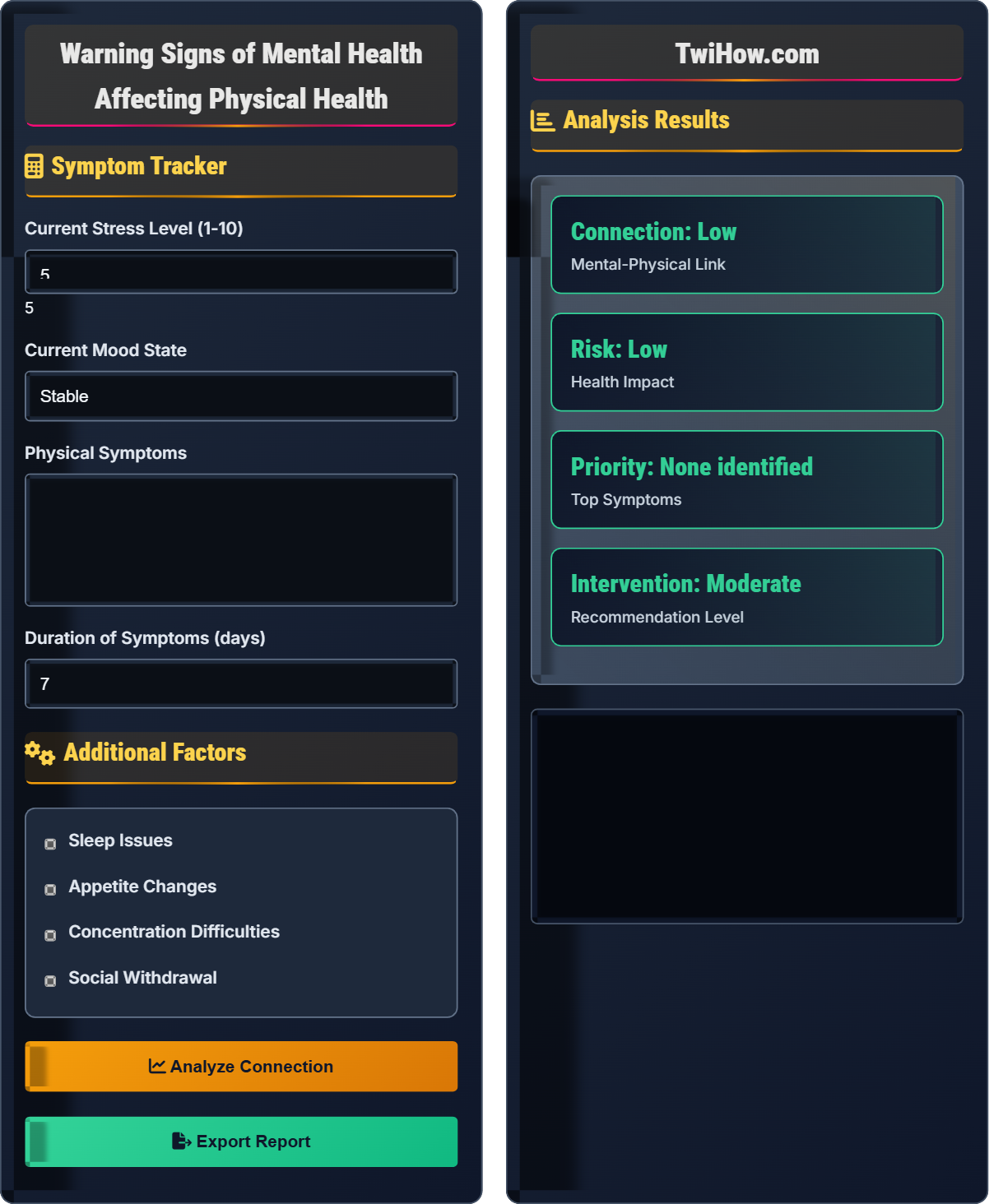
Symptom Tracker
Additional Factors
Analysis Results
| Intervention | Priority | Timeline | Expected Benefit |
|---|---|---|---|
| Stress Management | High | Immediate | Reduce physical symptoms |
| Sleep Hygiene | High | 1-2 weeks | Improve energy levels |
| Regular Exercise | Medium | 2-4 weeks | Boost mood and energy |
| Mental Health Support | High | Immediate | Address root causes |
Mental-Physical Health Connection Explained
The mind and body are intricately connected through multiple biological pathways:
- Nervous System: The autonomic nervous system controls involuntary functions affected by stress
- Endocrine System: Stress hormones like cortisol and adrenaline impact multiple body systems
- Immune System: Chronic stress suppresses immune function
- Cardiovascular System: Stress increases heart rate and blood pressure
- Digestive System: Stress affects gut function and microbiome
- Neurotransmitters: Brain chemicals affect both mood and physical sensations
Mental health conditions often manifest through physical symptoms:
- Headaches: Tension headaches from muscle tension and stress
- Chest Pain: Anxiety can cause chest tightness and pain
- Digestive Issues: Irritable bowel syndrome, nausea, acid reflux
- Sleep Disturbances: Insomnia, restless sleep, nightmares
- Chronic Pain: Fibromyalgia, back pain, muscle tension
- Cardiovascular: Palpitations, high blood pressure, chest tightness
- Immune Function: Frequent colds, slow wound healing, increased infection susceptibility
Watch for these warning signs of mental health affecting physical health:
- Unexplained Physical Symptoms: Symptoms without clear medical cause
- Pattern Correlation: Physical symptoms worsening with stress
- Functional Impairment: Symptoms interfering with daily activities
- Duration: Persistent symptoms lasting weeks or months
- Severity Increase: Symptoms becoming more frequent or intense
- Sleep Disruption: Consistent problems with sleep patterns
- Appetite Changes: Significant weight loss or gain
Understanding the stress response helps recognize physical symptoms:
- Acute Stress: Immediate fight-or-flight response (increased heart rate, heightened senses)
- Chronic Stress: Prolonged activation causing wear and tear on body systems
- Cortisol Impact: Suppresses immune system and affects metabolism
- Adrenaline Effects: Increases heart rate, blood pressure, and energy availability
- Inflammation: Chronic stress leads to systemic inflammation
- Hormonal Imbalance: Affects sleep, appetite, and mood regulation
Consult healthcare professionals when experiencing:
- Severe Symptoms: Chest pain, difficulty breathing, severe pain
- Persistent Symptoms: Physical symptoms lasting more than 2 weeks
- Functional Impact: Symptoms interfering with work or relationships
- Escalation: Symptoms becoming more frequent or intense
- Suicidal Thoughts: Any thoughts of self-harm require immediate attention
- Medication Side Effects: Unusual reactions to prescribed medications
Physical Symptom Intensity = (Mental Stress × Vulnerability Factor × Duration) ÷ Resilience Capacity
Early recognition and intervention can break the cycle before physical symptoms become chronic.
Warning Sign Categories
Cardiovascular symptoms, digestive issues, neurological symptoms, muscular pain, immune system changes, hormonal imbalances.
Warning Sign = (Physical Symptom × Emotional Trigger) + Duration Factor
When emotional states consistently precede physical symptoms, the connection is likely.
- Correlation doesn't always equal causation
- Rule out medical conditions first
- Track patterns over time
- Consider multiple factors
Intervention Strategies
Stress management, therapy, exercise, sleep hygiene, nutrition, social support, medication when appropriate.
- Medical evaluation to rule out physical causes
- Identify and address stressors
- Implement stress management techniques
- Consider therapy or counseling
- Medication if necessary
- Monitor and adjust approach
- Always consult healthcare professionals
- Don't dismiss physical symptoms
- Address both mental and physical aspects
- Be patient with treatment process
Mental-Physical Health Quiz
Which of the following is NOT a common physical manifestation of anxiety?
The answer is D) Improved sleep quality.
Anxiety typically disrupts sleep patterns rather than improving them. Common sleep disturbances associated with anxiety include:
- Difficulty falling asleep
- Frequent awakening during the night
- Racing thoughts that prevent sleep
- Restless, non-refreshing sleep
- Nightmares or anxiety dreams
On the contrary, all other options are common physical manifestations of anxiety:
A) Rapid heartbeat - activation of sympathetic nervous system
B) Nausea and digestive upset - stress response affecting GI tract
C) Frequent urination - anxiety can increase urination frequency
Understanding the physical manifestations of anxiety helps recognize the mind-body connection. The sympathetic nervous system's "fight-or-flight" response affects multiple body systems simultaneously, creating a cascade of physical symptoms that can be mistaken for purely physical conditions.
Anxiety: Excessive worry or fear that affects daily functioning
Physical Manifestations: Bodily symptoms resulting from psychological states
Sympathetic Nervous System: Body's stress response system
• Anxiety affects multiple body systems
• Physical symptoms are real and valid
• Sleep is typically disrupted, not improved
• Track symptoms alongside emotional states
• Notice patterns and triggers
• Consider both mental and physical aspects of symptoms
• Assuming physical symptoms are purely psychological
• Dismissing physical symptoms as "just stress"
• Not considering bidirectional mind-body effects
Explain how depression can affect physical health and list five specific physical symptoms associated with depression.
How Depression Affects Physical Health:
Depression affects physical health through multiple pathways:
1. Neurochemical Changes: Depression alters neurotransmitter levels (serotonin, dopamine, norepinephrine) that affect both mood and physical sensations
2. Stress Response: Chronic depression keeps stress hormones elevated, affecting multiple body systems
3. Inflammation: Depression is associated with increased inflammatory markers throughout the body
4. Hormonal Disruption: Affects sleep, appetite, and stress hormones
5. Behavioral Changes: Depression often leads to poor self-care, affecting physical health
Five Specific Physical Symptoms of Depression:
1. Chronic Fatigue: Persistent tiredness and lack of energy despite adequate sleep
2. Appetite Changes: Significant weight loss or gain, loss of appetite or overeating
3. Somatic Pain: Unexplained aches, headaches, back pain, or joint pain
4. Sleep Disturbances: Insomnia, early morning awakening, or hypersomnia
5. Psychomotor Changes: Slowed movements, speech, or physical agitation
These physical symptoms can be severe and significantly impact daily functioning, sometimes even more than emotional symptoms.
Depression is not just a mental health condition—it has significant physical manifestations. The physical symptoms of depression can sometimes be the most prominent features, leading to misdiagnosis if the underlying depression isn't recognized. Understanding this connection is crucial for proper treatment.
Depression: Mood disorder with persistent sadness and loss of interest
Somatic Symptoms: Physical symptoms without clear medical cause
Psychomotor Changes: Alterations in physical movement and speech
• Depression has physical as well as emotional symptoms
• Physical symptoms can be primary complaints
• Proper diagnosis requires considering both aspects
• Pay attention to physical symptoms that persist
• Consider mood when experiencing unexplained physical symptoms
• Track patterns of mood and physical symptoms together
• Dismissing physical symptoms as "just depression"
• Not considering depression when physical symptoms predominate
• Assuming physical symptoms are imaginary
Sarah has been experiencing frequent headaches, stomach issues, and muscle tension for the past 3 weeks. She recently started a new job with high demands and long hours. Her sleep has been poor, and she feels constantly worried about meeting expectations. What is the likely connection between her mental state and physical symptoms, and what recommendations would you make?
Likely Connection:
Sarah's physical symptoms are likely stress-related manifestations of her anxiety about the new job. The timing (started after job began) and pattern (worsening with stress) strongly suggest a mental-physical health connection.
Biological Mechanisms:
• Headaches: Stress causes muscle tension in neck/shoulders and affects blood flow to the brain
• Stomach Issues: Stress affects gut function and can cause acid reflux, IBS, or nausea
• Muscle Tension: The body's stress response causes muscles to remain in a state of readiness
• Sleep Problems: Anxiety interferes with sleep initiation and maintenance
Recommendations:
1. Stress Management: Practice relaxation techniques like deep breathing, meditation, or progressive muscle relaxation
2. Sleep Hygiene: Establish consistent bedtime routine, limit screen time before bed, create restful environment
3. Work-Life Balance: Set boundaries around work hours, take regular breaks
4. Physical Activity: Regular exercise to reduce stress hormones and improve mood
5. Professional Support: Consider counseling to develop coping strategies
6. Medical Evaluation: Rule out other causes if symptoms persist after stress management
Timeline: With proper stress management, physical symptoms should begin to improve within 2-4 weeks.
This case illustrates the classic pattern of stress-related physical symptoms. The temporal relationship between the stressor (new job) and symptom onset is a key clue. Physical symptoms of stress are real and have genuine biological causes, not imaginary ones.
Stress Response: Body's automatic reaction to perceived threats
Psychosomatic: Physical symptoms caused by psychological factors
Sleep Hygiene: Practices that promote good sleep
• Stress can cause real physical symptoms
• Address both mental and physical aspects
• Consider timing when evaluating connections
• Keep a stress-symptom diary
• Practice stress reduction techniques regularly
• Seek support when facing major life changes
• Assuming physical symptoms have no psychological component
• Not addressing stress when treating physical symptoms
• Dismissing symptoms as "all in your head"
A patient has chronic back pain that hasn't responded to traditional treatments (medication, physical therapy, injections). The pain seems to worsen during periods of high stress and improves when the patient is relaxed. The patient also reports symptoms of depression and anxiety. How would you approach this case, and what treatment considerations would you recommend?
Approach:
This case demonstrates the complex relationship between chronic pain and mental health. The correlation between stress levels and pain intensity suggests a significant psychological component to the pain experience.
Assessment Considerations:
1. Comprehensive Evaluation: Ensure no underlying medical condition is missed
2. Mental Health Screening: Assess for depression, anxiety, and trauma history
3. Pain Psychology: Evaluate catastrophic thinking about pain
4. Functional Assessment: How pain affects daily activities
5. Stress-Pain Connection: Document the correlation between stress and pain intensity
Treatment Recommendations:
1. Integrated Care: Coordinate between pain management, mental health, and primary care
2. Cognitive Behavioral Therapy: Address pain-related thoughts and behaviors
3. Mindfulness-Based Stress Reduction: Reduce stress and improve pain coping
4. Physical Therapy: Continue with focus on functional movement
5. Medication Review: Consider antidepressants that help both mood and pain
6. Relaxation Training: Techniques to reduce muscle tension
Prognosis: With integrated treatment addressing both physical and psychological aspects, patients often experience significant improvement in both pain and mood symptoms.
Chronic pain and mental health are intimately connected. The brain areas processing pain and emotion overlap significantly. Addressing only the physical aspects of chronic pain often fails to provide complete relief when psychological factors are involved.
Chronic Pain: Pain lasting longer than 3-6 months
Pain Catastrophizing: Exaggerated negative thoughts about pain
Integrated Care: Coordinated treatment of mental and physical health
• Chronic pain often has psychological components
• Integrated treatment is most effective
• Don't assume psychological means imaginary
• Address both pain and emotional aspects
• Use validated pain scales
• Consider multidisciplinary approaches
• Treating only physical aspects of chronic pain
• Dismissing psychological components
• Assuming patients are exaggerating symptoms
Which of the following best describes psychosomatic symptoms?
The answer is B) Real physical symptoms caused by psychological factors.
Psychosomatic symptoms are genuine physical symptoms that arise from psychological factors. Key points:
• The symptoms are real and cause real suffering
• They result from the mind-body connection
• They involve actual physiological changes in the body
• They can coexist with other medical conditions
Why other options are incorrect:
A) Psychosomatic symptoms are real, not imaginary
C) Anyone can experience stress-related physical symptoms
D) While some may have unclear origins, they are still real
Psychosomatic symptoms demonstrate the powerful connection between mind and body, and they require compassionate, comprehensive treatment addressing both psychological and physical aspects.
Understanding psychosomatic symptoms requires recognizing that psychological and physical health are interconnected. The term doesn't mean "fake" or "imagined"—these are real symptoms with real biological causes rooted in the brain-body connection.
Psychosomatic: Mind-body connection in symptom production
Real Symptoms: Genuine physical experiences
Mind-Body Connection: Biological pathways linking mental and physical health
• Psychosomatic symptoms are real
• Psychological factors can cause physical symptoms
• Don't dismiss physical symptoms
• Consider psychological factors in physical complaints
• Address both mental and physical health
• Dismissing symptoms as "all in your head"
• Assuming patients are faking symptoms
• Not recognizing the mind-body connection
FAQ
Q: I've been having chest pain and heart palpitations. My doctor says my heart is fine, but I'm still worried. Could this be related to my anxiety?
A: Yes, anxiety can absolutely cause chest pain and heart palpitations that feel very real and frightening. Here's what happens:
Mechanisms:
• Hypervigilance: Anxiety makes you more aware of normal heart sensations
• Muscle Tension: Stress causes chest wall muscles to tense, causing pain
• Increased Adrenaline: Makes your heart beat faster and stronger
• Shallow Breathing: Can cause chest tightness and palpitations
Important Points:
• When cardiac causes are ruled out by proper testing, anxiety is often the culprit
• Symptoms can be very real and intense despite psychological origin
• The fear of having a heart attack can actually worsen symptoms
• Proper diagnosis is crucial to avoid unnecessary worry
Management:
• Practice deep breathing exercises
• Consider cognitive behavioral therapy for anxiety
• Gradual exposure to feared sensations
• Stress management techniques
• Sometimes anti-anxiety medications can help
Always trust your doctor's assessment when cardiac causes are properly ruled out.
Q: My loved one has depression and has been experiencing unexplained physical symptoms. How can I support them while encouraging them to seek help?
A: Supporting someone with depression and physical symptoms requires understanding and patience:
Validation:
• Acknowledge that their physical symptoms are real and painful
• Avoid saying "it's all in your head" or "just think positive"
• Recognize that depression can cause genuine physical suffering
Supportive Actions:
• Encourage professional help for both mental and physical symptoms
• Offer to accompany them to medical appointments
• Help with daily tasks when they're overwhelmed
• Listen without judgment or trying to "fix" everything
• Encourage small, manageable activities
Encouraging Professional Help:
• Frame treatment as comprehensive (addressing both mental and physical)
• Emphasize that physical symptoms are real and treatable
• Suggest starting with primary care physician who can coordinate care
• Consider suggesting therapy or counseling
Self-Care:
• Set healthy boundaries to prevent caregiver burnout
• Seek support for yourself
• Remember that recovery takes time
Depression with physical symptoms requires comprehensive treatment addressing both aspects simultaneously.