What is Preventive Care and Why is it Important?
Complete health guide • Step-by-step explanations
Preventive Care Fundamentals:
Show Health CalculatorPreventive care is a proactive approach to maintaining health and preventing diseases before they occur or worsen. It involves regular health screenings, immunizations, health education, and lifestyle modifications aimed at identifying risk factors and early signs of disease.
Preventive care works by detecting health issues in their earliest stages when they're most treatable, reducing the burden of chronic diseases, and promoting healthy behaviors that prevent illness. This approach saves lives, reduces healthcare costs, and improves overall quality of life.
Key preventive care components:
- Primary Prevention: Preventing disease before it occurs (vaccinations, healthy lifestyle)
- Secondary Prevention: Early detection and intervention (screenings, checkups)
- Tertiary Prevention: Managing existing conditions to prevent complications
- Lifestyle Modifications: Diet, exercise, stress management, avoiding harmful substances
Modern preventive care combines evidence-based medical interventions with personalized health strategies tailored to individual risk factors, family history, and lifestyle choices.
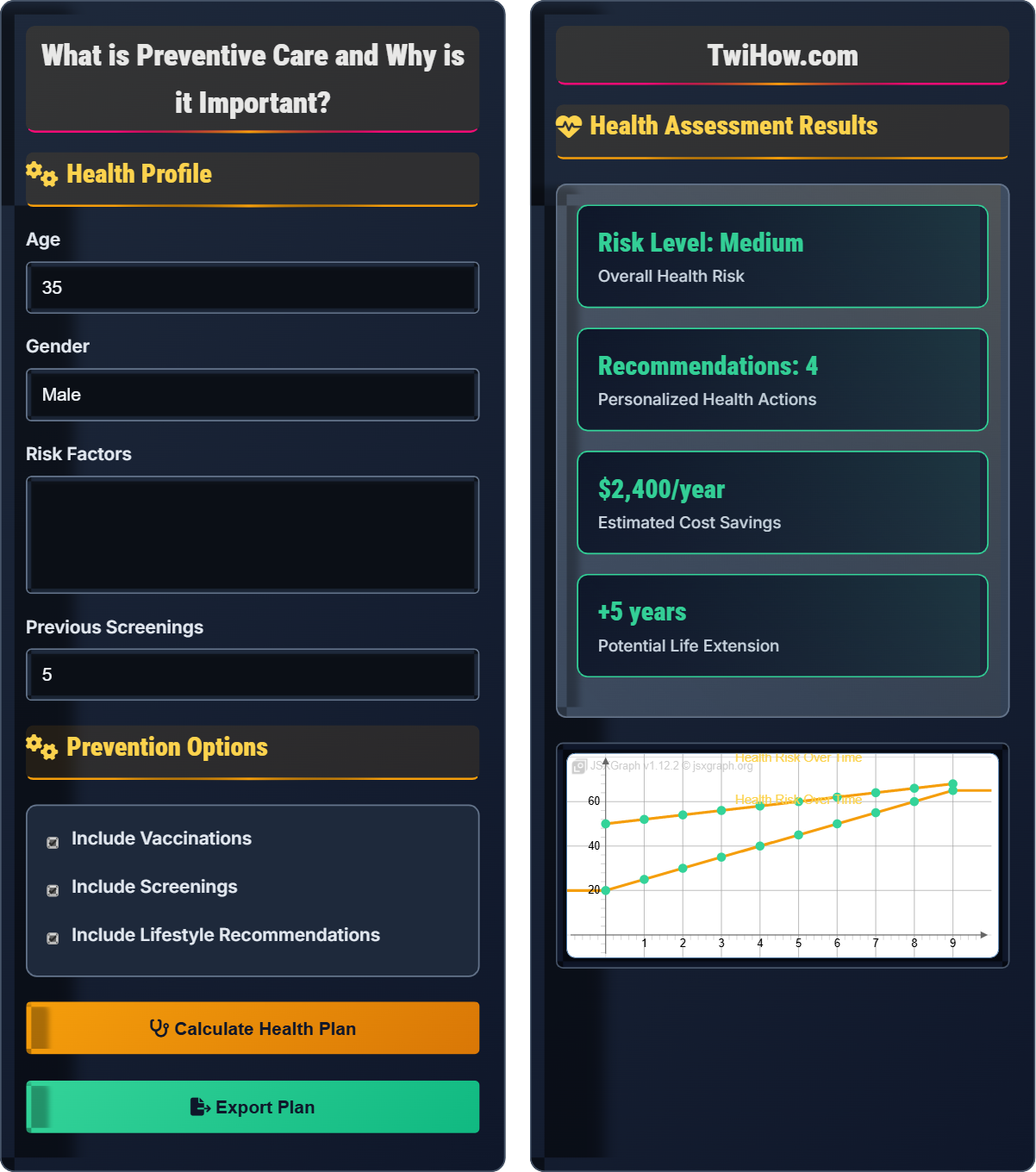
Health Profile
Prevention Options
Health Assessment Results
| Type | Recommendation | Frequency | Priority |
|---|---|---|---|
| Vaccination | Flu Shot | Annual | High |
| Screening | Blood Pressure | Annual | High |
| Lifestyle | Exercise | Daily | Medium |
| Screening | Cholesterol | Every 2 Years | Medium |
Preventive Care Explained
Preventive care is a proactive approach to health that focuses on preventing diseases and maintaining wellness rather than treating illness after it occurs. It encompasses regular health screenings, immunizations, health education, and lifestyle modifications designed to identify risk factors and early signs of disease.
Preventive care operates on the principle that early detection and intervention lead to better health outcomes and reduced healthcare costs. By identifying health issues in their earliest stages, when they are most treatable, preventive care can significantly improve prognosis and quality of life.
Preventive care is categorized into three main types:
Where:
- Primary Prevention: Includes vaccinations, healthy lifestyle choices, and environmental modifications to prevent disease onset
- Secondary Prevention: Involves screenings and regular checkups to detect disease early
- Tertiary Prevention: Focuses on managing existing conditions to prevent complications and progression
Key benefits of preventive care include:
- Disease Prevention: Reduces risk of developing chronic diseases like heart disease, diabetes, and cancer
- Early Detection: Identifies diseases in early, more treatable stages
- Cost Savings: Significantly lower costs compared to treating advanced diseases
- Improved Quality of Life: Better health outcomes and longevity
- Reduced Healthcare Burden: Decreases strain on healthcare systems
- Immunizations: Vaccines for flu, pneumonia, hepatitis, HPV, and others based on age and risk
- Cancer Screenings: Mammograms, Pap smears, colonoscopies, skin checks
- Cardiovascular Screenings: Blood pressure, cholesterol, and diabetes screenings
- Lifestyle Counseling: Nutrition, exercise, smoking cessation, alcohol moderation
- Mental Health Screening: Depression, anxiety, and substance abuse assessments
Preventive Care Fundamentals
Primary prevention, secondary prevention, tertiary prevention, health screenings, vaccinations, risk assessment.
Risk Score = Age Factor + Family History + Lifestyle Factors + Environmental Exposures
Where Risk Score = overall health risk indicator, factors are weighted based on evidence.
- Prevention is more cost-effective than treatment
- Early detection improves outcomes significantly
- Personalized plans based on individual risk factors
Applications
Vaccination programs, cancer screenings, cardiovascular risk assessments, diabetes prevention, mental health evaluations.
- Individual risk assessment
- Personalized screening schedule
- Lifestyle counseling
- Ongoing monitoring
- Age-appropriate screenings
- Gender-specific recommendations
- Family history impacts
- Cost-effectiveness
Preventive Care Learning Quiz
Which type of prevention involves detecting disease early when it is most treatable?
Secondary prevention involves detecting disease early when it is most treatable, often before symptoms appear. This includes regular screenings like mammograms, colonoscopies, and blood pressure checks. Primary prevention aims to prevent disease before it occurs, while tertiary prevention manages existing conditions to prevent complications.
The answer is B) Secondary Prevention.
Understanding the different levels of prevention is crucial for effective healthcare planning. Primary prevention (like vaccinations) stops disease before it starts. Secondary prevention (like cancer screenings) catches disease early. Tertiary prevention (like rehabilitation) manages existing disease. Each level serves a distinct purpose in the healthcare continuum.
Primary Prevention: Preventing disease before it occurs
Secondary Prevention: Early detection and intervention
Tertiary Prevention: Managing existing conditions to prevent complications
• Secondary prevention saves lives through early detection
• Screenings should be personalized based on risk
• Age and gender affect recommended screenings
• Keep a health record of all screenings
• Discuss family history with your doctor
• Follow recommended screening schedules
• Confusing primary and secondary prevention
• Skipping recommended screenings
• Ignoring family health history
Explain why preventive care is important and describe three specific examples of how it benefits individuals and society as a whole.
Importance of Preventive Care: Preventive care is crucial because it identifies health issues early when they are most treatable, prevents diseases from occurring in the first place, and promotes healthy behaviors that reduce long-term health risks.
Example 1 - Cost Savings: Treating advanced cancer costs hundreds of thousands of dollars, while a routine colonoscopy costs a few hundred dollars. Preventive care reduces healthcare costs significantly.
Example 2 - Improved Outcomes: Detecting breast cancer in Stage I has a 95% five-year survival rate, while Stage IV has only a 27% survival rate. Early detection dramatically improves prognosis.
Example 3 - Population Health: Vaccination programs have virtually eliminated diseases like polio and measles, protecting entire communities through herd immunity.
Preventive care operates on the principle that investing in health maintenance is far more cost-effective and beneficial than treating advanced disease. This approach benefits not only individuals through better health outcomes and longer lives, but also society through reduced healthcare costs and improved productivity.
Preventive Care: Healthcare focused on preventing disease rather than treating it
Herd Immunity: Protection of a population when a high percentage is immune
Early Detection: Finding disease in early, more treatable stages
• Prevention is more cost-effective than treatment
• Early detection improves survival rates
• Vaccines protect entire communities
• Maintain a preventive care calendar
• Keep updated vaccination records
• Discuss preventive needs with your doctor
• Delaying preventive care when feeling healthy
• Not understanding cost benefits
• Ignoring family health history
Sarah is a 45-year-old woman with no significant family history of cancer. She has never had a mammogram or colonoscopy. According to standard preventive care guidelines, what screenings should she prioritize in the next year and why?
Recommended Screenings for Sarah:
1. Mammogram: Annual mammograms should begin at age 40 for average-risk women. At 45, Sarah is in the optimal age group for breast cancer screening.
2. Colonoscopy: Colorectal cancer screening should begin at age 45 for average-risk individuals. Sarah should schedule her first colonoscopy soon.
3. Routine Physical: Annual comprehensive physical examination including blood pressure, cholesterol, and diabetes screening.
4. Pap Smear: Cervical cancer screening every 3-5 years depending on previous results and HPV testing.
These screenings are prioritized because they detect cancers at early, highly treatable stages when cure rates are highest.
Screening recommendations are age and gender-specific, with some adjustments based on family history and risk factors. For average-risk individuals, certain screenings have established starting ages based on when disease risk increases significantly. Understanding these guidelines helps optimize health outcomes.
Mammogram: X-ray imaging for breast cancer detection
Colonoscopy: Procedure to examine the colon for polyps/cancer
Guidelines: Evidence-based recommendations for care timing
• Mammograms start at age 40 for average-risk women
• Colonoscopy starts at age 45 for average-risk adults
• Screenings continue regularly once started
• Schedule screenings in advance
• Keep a health record calendar
• Discuss family history with doctor
• Waiting until symptoms appear
• Skipping regular screenings
• Not understanding age guidelines
John is a 50-year-old man with a family history of heart disease (father had heart attack at 55), smokes half a pack per day, has high blood pressure, and is overweight. How should his preventive care plan differ from that of an average 50-year-old man without risk factors?
Differences in John's Preventive Care Plan:
1. Earlier and More Frequent Screenings: John should have cardiovascular screenings more frequently than annual checkups. His blood pressure, cholesterol, and diabetes screenings should be monitored closely.
2. Additional Cardiac Tests: Depending on his doctor's assessment, John might need additional tests like coronary calcium scoring or stress tests.
3. Smoking Cessation Support: John should receive counseling and resources for quitting smoking, which is the most impactful change he can make.
4. Weight Management Program: Structured weight loss support and nutrition counseling.
5. Medication Considerations: Depending on his risk score, John might benefit from preventive medications like statins or low-dose aspirin.
John's plan is intensified due to his multiple risk factors for heart disease.
Preventive care plans are highly individualized based on risk factors. People with multiple risk factors like John require more intensive monitoring and earlier interventions. The goal is to modify controllable risk factors and closely monitor uncontrollable ones to prevent disease progression.
Risk Factor: Attribute that increases disease likelihood
Coronary Calcium Scoring: Imaging test for heart disease risk
Intensified Screening: More frequent monitoring due to risk
• Risk factors necessitate earlier screening
• Address modifiable risk factors first
• Track progress with regular measurements
• Seek professional support for lifestyle changes
• Ignoring family history impact
• Not addressing modifiable risk factors
• Following generic guidelines without risk assessment
According to healthcare economics research, what is the typical cost savings ratio of preventive care compared to treating advanced disease?
Healthcare economics research consistently shows that preventive care provides substantial cost savings. Studies indicate that for every dollar spent on preventive care, approximately $5-7 in future treatment costs are avoided. This is because preventing disease or catching it early is far less expensive than treating advanced disease with complex procedures, hospitalizations, and long-term care.
The answer is B) $1 spent on prevention saves $5-7 in treatment costs.
The economic argument for preventive care is compelling. Simple interventions like vaccinations, screenings, and lifestyle counseling cost relatively little compared to the expenses associated with treating advanced diseases. This cost-benefit relationship benefits patients, insurers, employers, and healthcare systems.
Cost-Benefit Analysis: Economic evaluation of intervention value
Healthcare Economics: Study of healthcare resource allocation
Return on Investment: Financial benefit compared to cost
• Prevention has positive ROI
• Early intervention costs less
• Population health improves
• View preventive care as investment
• Consider long-term benefits
• Factor in quality of life improvements
• Focusing only on immediate costs
• Not considering long-term savings
• Undervaluing health benefits
FAQ
Q: How often should I get preventive health screenings?
A: The frequency of preventive screenings depends on your age, gender, risk factors, and family history:
Annual: Comprehensive physical exam, blood pressure check, cholesterol screening (every 4-6 years for low-risk adults)
Every 3 Years: Dental exams, vision and hearing tests
Age-Specific: Mammograms annually starting at 40-50, colonoscopies every 10 years starting at 45-50, Pap smears every 3-5 years
As Needed: Based on risk factors or symptoms
Your doctor will create a personalized schedule based on your individual health profile and risk factors.
Q: What's the difference between preventive care and wellness care?
A: While related, preventive care and wellness care serve different purposes:
Preventive Care: Medical interventions designed to prevent disease or detect it early. This includes vaccinations, screenings, and health assessments performed by healthcare professionals. It's evidence-based and often covered by insurance.
Wellness Care: Holistic approach to optimizing health and well-being through lifestyle choices. This includes nutrition, exercise, stress management, sleep hygiene, and complementary therapies. It focuses on achieving peak health rather than just preventing disease.
Both approaches work together synergistically to promote optimal health outcomes.