What is Telehealth and When Should I Use It?
Complete telehealth guide • Step-by-step explanations
Telehealth Overview:
Show Telehealth FinderTelehealth is the delivery of healthcare services using digital communication technologies like video calls, phone calls, and secure messaging platforms. It enables patients to connect with healthcare providers remotely, providing convenient access to medical care without requiring physical presence in a clinic or hospital.
Telehealth encompasses a wide range of services including virtual consultations, remote monitoring, health education, and prescription management. It has become increasingly important, especially during the COVID-19 pandemic, as a way to maintain healthcare access while reducing exposure risks.
Core concepts:
- Video Consultations: Real-time audio and video communication
- Remote Monitoring: Tracking health data from home
- Secure Messaging: Asynchronous communication with providers
- Prescription Management: Virtual prescription renewals
- Follow-up Care: Post-treatment monitoring and support
Telehealth is most effective for non-emergency medical issues and routine care, offering convenience and accessibility while maintaining quality care standards.
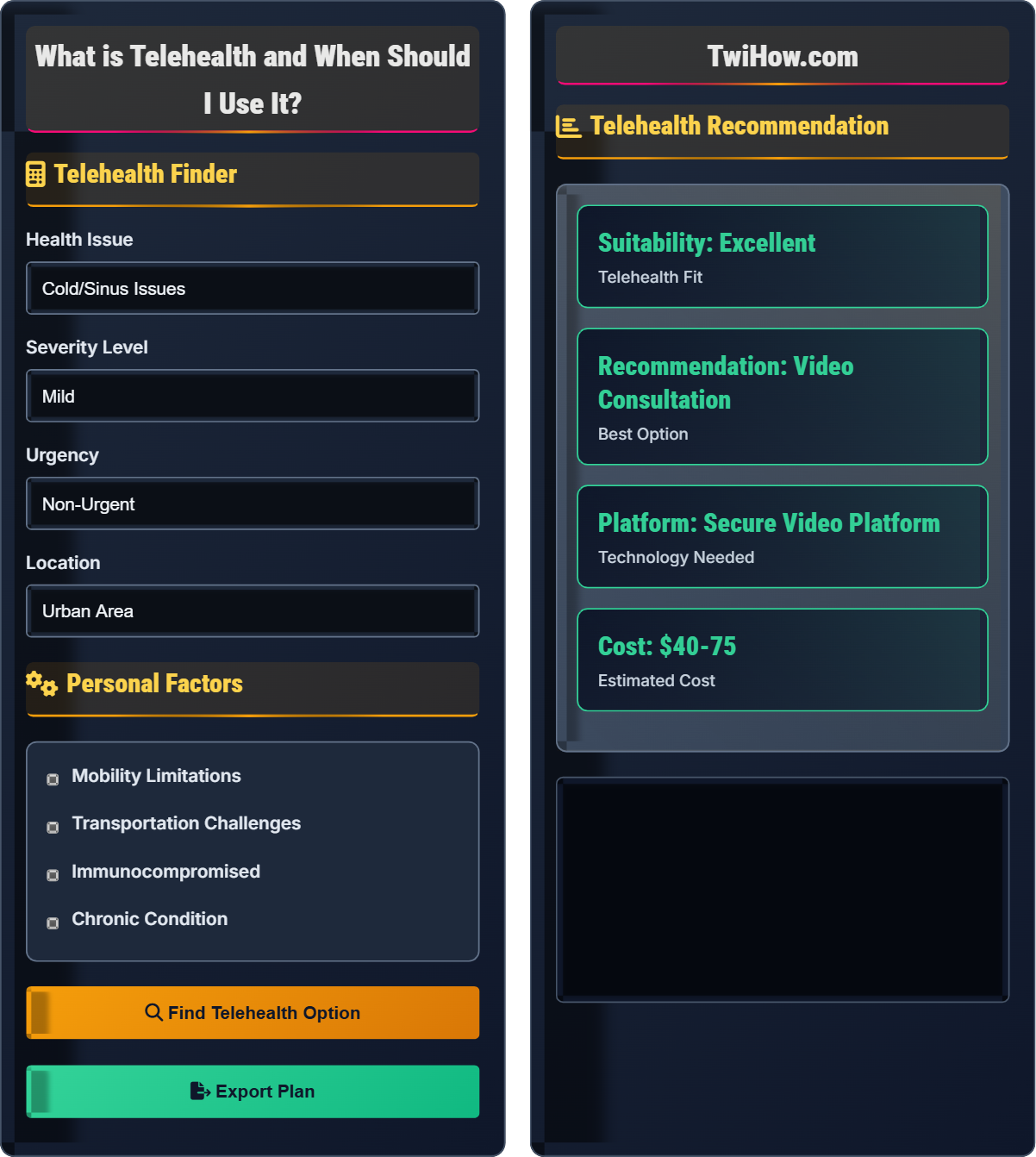
Telehealth Finder
Personal Factors
Telehealth Recommendation
| Condition | Telehealth Suitable | Recommendation |
|---|---|---|
| Upper respiratory infections | Yes | Video consultation |
| Prescription renewals | Yes | Phone/video |
| Mental health counseling | Yes | Video preferred |
| Chronic disease management | Yes | Regular video visits |
| Physical examination needed | No | In-person visit |
Telehealth Explained
Telehealth is the delivery of healthcare services using digital communication technologies. It includes video consultations, phone calls, secure messaging, and remote monitoring. Telehealth enables patients to connect with healthcare providers from their homes or other convenient locations.
Telehealth encompasses various services:
- Video Consultations: Real-time audio and video communication with providers
- Phone Consultations: Audio-only communication for simpler issues
- Secure Messaging: Asynchronous communication for follow-ups and questions
- Remote Monitoring: Sharing health data from home devices
- Store-and-Forward: Transmitting medical data for later review
- Mobile Health (mHealth): Health apps and mobile device integration
Telehealth offers numerous advantages:
- Convenience: Access care from home without travel
- Accessibility: Reach providers in underserved areas
- Cost Savings: Lower costs for patients and providers
- Time Efficiency: Reduced wait times and travel time
- Continuity of Care: Regular follow-ups and monitoring
- Reduced Exposure: Lower risk of infectious disease transmission
Telehealth has important limitations:
- Physical Examination: Limited ability to perform hands-on exams
- Emergency Care: Not suitable for urgent or emergent conditions
- Technology Barriers: Requires internet access and devices
- Diagnostic Limitations: Cannot perform certain tests remotely
- Privacy Concerns: Potential security and confidentiality issues
- Provider Licensing: Providers must be licensed in patient's state
Telehealth is suitable for:
- Follow-up Visits: Post-operative care, chronic disease monitoring
- Prescription Renewals: Medication management and refills
- Minor Illnesses: Cold, flu, sinus infections, minor skin conditions
- Mental Health: Counseling, therapy, and psychiatric consultations
- Chronic Disease Management: Diabetes, hypertension, asthma monitoring
- Health Education: Preventive care advice and lifestyle counseling
Telehealth should not be used for:
- Emergency Situations: Chest pain, severe bleeding, breathing difficulties
- Physical Examinations: Abdominal pain, severe injuries, detailed physical assessments
- Diagnostic Procedures: Lab tests, imaging, biopsies
- Complex Conditions: New onset of severe symptoms
- Prescription for Controlled Substances: Certain medications require in-person visits
- Acute Trauma: Broken bones, major injuries
Effective telehealth requires:
- Reliable Internet Connection: Minimum 1 Mbps for video calls
- Compatible Device: Smartphone, tablet, or computer with camera
- Updated Software: Latest browser or app versions
- Audio Equipment: Working microphone and speakers
- Privacy: Quiet, private location for consultation
- Backup Plan: Phone number for technical issues
Telehealth Services
Video consultations, phone calls, secure messaging, remote monitoring, store-and-forward, mobile health.
Telehealth Suitability = (Condition Appropriateness × Technology Access × Patient Comfort) ÷ Urgency Level
Higher scores indicate better telehealth appropriateness.
- Never use for emergencies
- Ensure proper technology setup
- Maintain privacy during consultations
- Have backup in-person care options
Implementation Guidelines
Prepare your space, test technology, gather medical information, write questions, have medications ready, verify insurance coverage.
- Choose a quiet, well-lit location
- Test your camera and microphone
- Have a list of current medications
- Prepare a list of symptoms
- Have recent medical records available
- Write down questions for your provider
- Ensure stable internet connection
- Have a phone number as backup
- Keep emergency services contact nearby
- Understand limitations of remote care
Telehealth Knowledge Quiz
Which of the following best describes telehealth?
Telehealth is the delivery of healthcare services using digital communication technologies. This includes video consultations, phone calls, secure messaging, remote monitoring, and store-and-forward transmission of medical data.
Telehealth encompasses a broad range of services beyond just phone calls, and it's not limited to smartphone apps. It's a comprehensive approach to providing healthcare remotely.
The answer is B) Delivery of healthcare services using digital communication technologies.
Understanding the definition of telehealth is crucial for knowing its scope and capabilities. Telehealth is broader than just video calls or phone consultations; it encompasses multiple modalities of remote healthcare delivery.
Telehealth: Broad term for healthcare delivery using technology
Telemedicine: Subset of telehealth involving clinical services
Remote Monitoring: Tracking health data from a distance
• Telehealth includes multiple service types
• It requires digital communication technologies
• It enables remote healthcare access
• Familiarize yourself with different telehealth modalities
• Understand the distinction between telehealth and telemedicine
• Know the range of services available
• Thinking telehealth is only video calls
• Assuming it's only for young tech-savvy users
• Not understanding the breadth of services
Explain when telehealth is appropriate and when it is not appropriate for healthcare delivery.
Telehealth is Appropriate for:
1. Follow-up Visits: Post-operative care, chronic disease monitoring, routine check-ins
2. Prescription Renewals: Medication management, refills for stable conditions
3. Minor Illnesses: Upper respiratory infections, minor skin conditions, mild allergic reactions
4. Mental Health Services: Therapy, counseling, psychiatric consultations
5. Health Education: Lifestyle counseling, preventive care advice
6. Chronic Disease Management: Diabetes, hypertension, asthma monitoring
Telehealth is NOT Appropriate for:
1. Emergency Situations: Chest pain, severe bleeding, breathing difficulties, stroke symptoms
2. Physical Examinations: Abdominal pain, suspected fractures, detailed physical assessments
3. Diagnostic Procedures: Lab tests, imaging, biopsies, physical procedures
4. Acute Trauma: Broken bones, major injuries, severe wounds
5. Complex Conditions: New onset of severe symptoms requiring immediate physical examination
6. Controlled Substances: Certain medications require in-person visits for legal reasons
The key is assessing whether the condition requires hands-on examination or immediate intervention that cannot be provided remotely.
Understanding when telehealth is appropriate is critical for patient safety and effective care. The decision depends on the nature of the condition, the need for physical examination, and the urgency of care. Patients should be able to recognize when telehealth is appropriate versus when they need in-person care.
Appropriateness: Suitability of telehealth for specific conditions
Physical Examination: Hands-on assessment by healthcare provider
Emergency: Condition requiring immediate medical attention
• Never use telehealth for emergencies
• Physical examinations often require in-person visits
• Assess urgency level before choosing telehealth
• When in doubt, choose in-person care
• Know the signs of emergency conditions
• Have a plan for escalating to in-person care if needed
• Using telehealth for true emergencies
• Assuming all conditions can be assessed remotely
• Not understanding the limitations of remote care
You have a persistent cough that started 3 weeks ago, accompanied by mild fever and fatigue. You live in a rural area with limited access to specialists. Your local clinic offers both in-person and telehealth visits. Considering your situation, what factors should you evaluate to decide whether to use telehealth for this issue?
Factors to Evaluate:
Condition Assessment:
• Duration: 3 weeks is concerning for a persistent cough
• Symptoms: Cough + fever + fatigue suggests possible infection
• Severity: Mild fever suggests it may not be immediately life-threatening
Geographic Considerations:
• Rural location makes in-person access challenging
• Limited specialist access may delay care if in-person is required
• Telehealth could provide faster access to specialist opinions
Telehealth Suitability:
• Video consultation could allow provider to observe breathing patterns
• Provider could assess general appearance and signs of distress
• Physical examination of chest may be limited but visual inspection is possible
Recommendation:
A video consultation would be appropriate as an initial assessment. The provider can evaluate the severity and determine if in-person visit or additional testing is needed. Given the duration of symptoms, this approach balances convenience with appropriate care.
Contingency Plan:
Have plan to transition to in-person care if the provider determines physical examination is necessary or if symptoms worsen.
Decision-making for telehealth use involves multiple factors including condition severity, geographic constraints, and the nature of the required examination. A balanced approach considers both the benefits of telehealth (accessibility, convenience) and its limitations (physical examination constraints).
Contingency Plan: Backup plan if initial approach is insufficient
Geographic Constraints: Access limitations due to location
Physical Examination Limitations: Constraints of remote assessment
• Consider geographic accessibility
• Evaluate symptom duration and severity
• Describe symptoms clearly during telehealth visits
• Be prepared to transition to in-person care if needed
• Consider both convenience and medical necessity
• Not considering geographic constraints
• Ignoring symptom duration and progression
• Not having a plan for escalation to in-person care
An elderly patient wants to use telehealth services but has limited technology experience. They own an older smartphone with basic features and have a slow internet connection. What recommendations would you give to help them access telehealth services successfully?
Technology Assessment:
• Smartphone compatibility: Check if the device can support telehealth apps
• Internet speed: Slow connections may require audio-only calls or messaging
• User interface: Simplified interfaces may be more appropriate
Recommendations:
1. Start Simple: Begin with phone consultations before attempting video calls
2. Device Optimization: Close unnecessary apps to improve performance
3. Internet Solutions: Use Wi-Fi instead of cellular data when possible
4. Assistance: Have a family member or friend assist with setup
5. Alternative Methods: Use secure messaging or email if video is problematic
6. Practice Sessions: Schedule practice calls before actual appointments
Support Systems:
• Many telehealth platforms offer tech support for patients
• Some healthcare systems provide device lending programs
• Community centers may offer technology assistance programs
Backup Plans:
Always have a landline or phone number available as backup in case of technical issues.
Technology barriers shouldn't prevent access to healthcare. Successful telehealth implementation requires addressing technological limitations through alternative approaches and support systems. The goal is to ensure healthcare access regardless of technological constraints.
Technology Barriers: Obstacles preventing telehealth access
Alternative Modalities: Different methods of remote communication
Support Systems: Resources to assist with technology use
• Technology should enhance, not hinder, care access
• Multiple communication methods are available
• Support is available for technical issues
• Test technology before scheduled appointments
• Have a tech-savvy contact available during visits
• Consider using simpler communication methods first
• Assuming all patients can use advanced technology
• Not providing adequate technical support
• Not having backup communication plans
Which of the following is the most important consideration for maintaining privacy and security during telehealth visits?
While all options contribute to privacy and security, using a healthcare system's approved platform is the most important consideration. These platforms are specifically designed to comply with HIPAA regulations and other privacy laws.
Why Each Option Matters:
• A) Latest smartphone model: Provides better security features but not the primary factor
• B) Private location: Critical for confidentiality during conversation but not technical security
• C) Strong passwords: Important for device security but not the platform itself
• D) Approved platform: Ensures compliance with healthcare privacy regulations and encrypted communication
Healthcare-approved platforms undergo rigorous security assessments and are specifically designed for medical communications, ensuring that patient information is transmitted securely.
The answer is D) Using a healthcare system's approved platform.
Healthcare privacy regulations like HIPAA require specific security measures for transmitting patient information. Consumer video platforms (like FaceTime or Zoom) may not meet these requirements, making healthcare-approved platforms essential for compliant telehealth services.
HIPAA: Health Insurance Portability and Accountability Act
Encrypted Communication: Secured transmission of information
Healthcare Compliance: Meeting regulatory requirements
• Use only approved healthcare platforms
• Verify the platform is HIPAA-compliant
• Use only systems recommended by your healthcare provider
• Check for security certifications
• Using consumer video platforms for medical consultations
• Not verifying platform compliance
• Assuming all video platforms are secure for healthcare
FAQ
Q: Can I get a prescription filled through telehealth, and are there any limitations?
A: Yes, you can often get prescriptions through telehealth visits, but there are important limitations:
Generally Available:
• Prescription renewals for stable conditions
• New prescriptions for conditions that can be diagnosed remotely
• Non-controlled medications
• Preventive medications
Limitations:
• Controlled Substances: Federal law often requires in-person visits for certain medications (Schedule II-V drugs)
• New Diagnoses: Some conditions require physical examination before prescribing
• Complex Medications: Drugs requiring lab monitoring may need in-person follow-up
• State Laws: Regulations vary by state regarding telehealth prescribing
Process:
• Provider will assess your condition during the telehealth visit
• If appropriate, they can electronically send prescriptions to your pharmacy
• Some medications may require additional verification steps
Always discuss prescription needs during your telehealth visit to ensure appropriate care.
Q: Can I participate in a telehealth visit with my elderly parent to help them navigate the technology and communicate with their doctor?
A: Yes, you can absolutely participate in telehealth visits with your elderly parent, and it's often encouraged:
Benefits of Participation:
• Help with technology setup and troubleshooting
• Assist with communication if hearing/vision issues exist
• Take notes during the visit
• Ask questions on behalf of your parent
• Ensure understanding of treatment instructions
How to Participate:
1. Before the Visit: Ensure the device is charged and connected to the internet
2. During Setup: Help with logging in and adjusting camera/lighting
3. During Visit: Remain visible if participating, otherwise stay in the background
4. Communication: Let the provider know you're present to assist
5. After Visit: Help with follow-up instructions and scheduling
Privacy Considerations:
• Your parent should consent to your participation
• Some personal information may be discussed privately
• Respect your parent's autonomy in decision-making
Most healthcare providers welcome family involvement in telehealth visits, especially for elderly patients.