What Is the Connection Between Gut Health and Overall Wellness?
Complete gut health guide • Step-by-step explanations
Gut-Brain Axis Fundamentals:
Show Gut Health AnalyzerThe gut-brain axis is a bidirectional communication system connecting the gastrointestinal tract with the central nervous system. This complex network involves the microbiome, immune system, and neurotransmitter production, influencing everything from mood and cognition to immune function and metabolism.
Gut health impacts overall wellness through multiple pathways: the production of neurotransmitters like serotonin, immune system modulation, inflammatory response regulation, and nutrient absorption. A healthy gut microbiome supports mental health, immune function, and metabolic balance, while dysbiosis contributes to various health issues.
Key connections include:
- Immune System: 70% of immune cells located in the gut
- Neurotransmitter Production: 90% of serotonin produced in the gut
- Inflammation Control: Gut bacteria influence systemic inflammation
- Metabolic Health: Microbiome affects weight and blood sugar regulation
Modern research reveals that gut health is foundational to overall wellness, making it crucial to maintain a diverse and balanced microbiome.
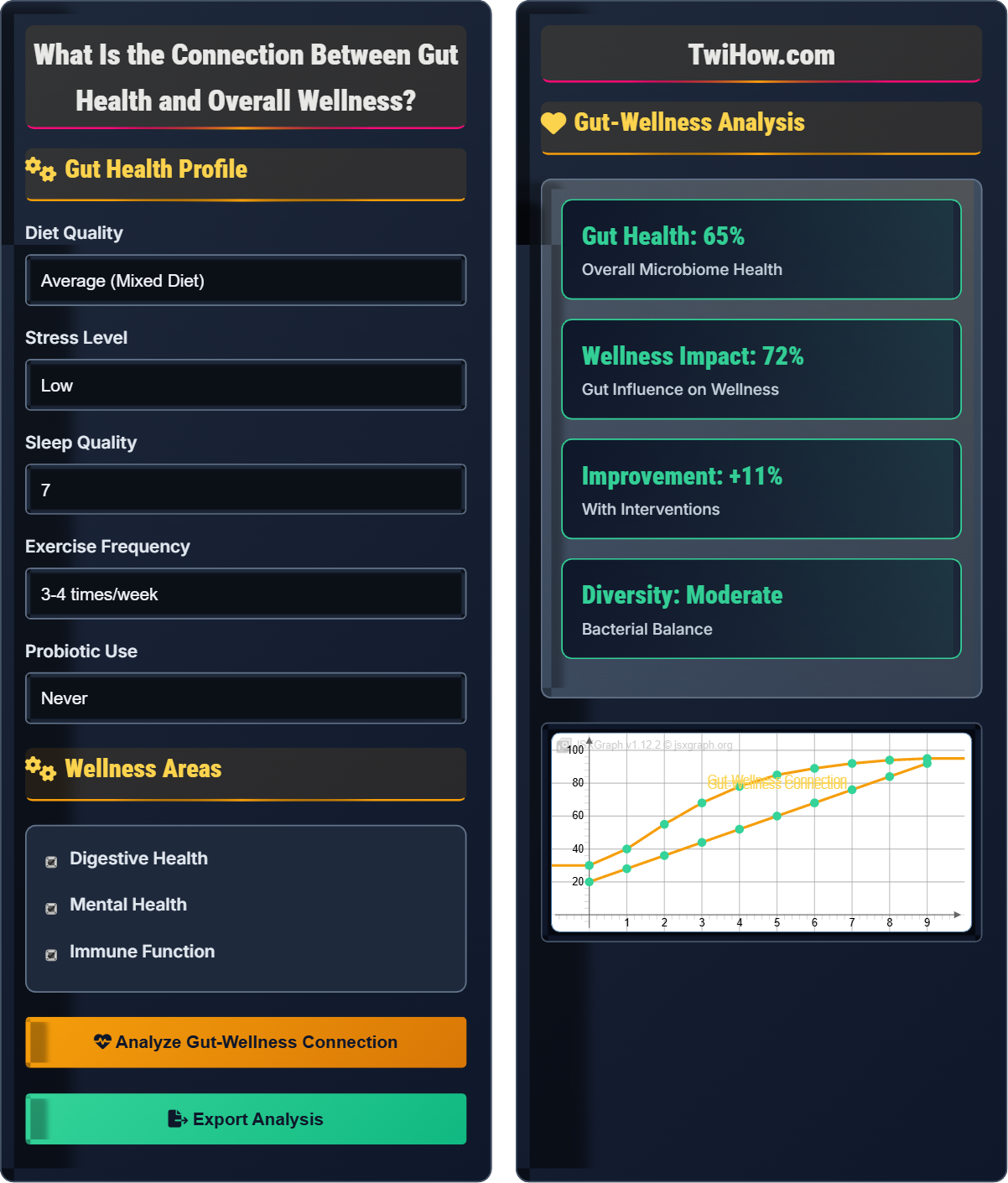
Gut Health Profile
Wellness Areas
Gut-Wellness Analysis
| System | Connection | Impact Level | Intervention |
|---|---|---|---|
| Immune System | 70% of immune cells in gut | High | Probiotics, fiber |
| Mental Health | 90% of serotonin in gut | High | Stress management |
| Digestion | Nutrient absorption | High | Enzyme support |
| Skin Health | Leaky gut syndrome | Medium | Anti-inflammatory foods |
Gut-Wellness Connection Explained
The gut-brain axis is a complex bidirectional communication system connecting the enteric nervous system (ENS) of the gut with the central nervous system (CNS). This system involves neural, hormonal, and immune pathways, with the gut microbiome playing a crucial role in modulating these communications.
The gut contains over 100 million neurons forming the "second brain," which communicates with the brain through the vagus nerve. Additionally, gut bacteria produce neurotransmitters like serotonin, GABA, and dopamine, directly influencing mood, cognition, and behavior.
Wellness Impact = (Microbiome Diversity + Diet Quality + Stress Management) × (Immune Function + Mental Health) ÷ (Inflammation Level)
Where:
- Microbiome Diversity: Variety and balance of gut bacteria
- Diet Quality: Nutritional value and fiber content
- Stress Management: Psychological and physiological stress levels
- Immune Function: Gut's role in immune system regulation
- Mental Health: Neurotransmitter production and brain function
- Inflammation Level: Systemic inflammatory response
The gut influences wellness through several critical pathways:
- Immune System: 70% of immune cells located in the gut, regulating systemic immunity
- Mental Health: 90% of serotonin produced in the gut, affecting mood and cognition
- Inflammation: Gut bacteria influence inflammatory responses throughout the body
- Metabolism: Microbiome affects nutrient absorption and energy regulation
- Skin Health: Gut-skin axis connects digestive health to skin condition
- Cardiovascular Health: Short-chain fatty acids affect heart health
- Digestive Support: Break down complex carbohydrates and produce vitamins
- Immune Regulation: Train immune system and prevent pathogen overgrowth
- Neurotransmitter Production: Synthesize mood-regulating chemicals
- Barrier Function: Maintain intestinal lining integrity
- Metabolic Influence: Affect energy extraction and storage
- Detoxification: Help process and eliminate toxins
Gut-Wellness Fundamentals
Microbiome, gut-brain axis, enteric nervous system, short-chain fatty acids, dysbiosis, leaky gut.
Gut-Wellness Score = (Microbiome Diversity × Communication Efficiency) + (Immune Modulation × Metabolic Impact)
Where Gut-Wellness Score indicates overall health influence, components are weighted by scientific evidence.
- Microbiome diversity is crucial for health
- Gut health affects mental health significantly
- Stress directly impacts gut function
Applications
Probiotic supplementation, dietary interventions, stress management, prebiotic foods, fermented foods.
- Assess current gut health status
- Identify dietary and lifestyle factors
- Implement targeted interventions
- Monitor and adjust approach
- Individual microbiome varies significantly
- Changes take time to manifest
- Consistency is crucial for results
- Professional guidance may be needed
Gut-Wellness Learning Quiz
Approximately what percentage of serotonin is produced in the gut?
Approximately 90% of the body's serotonin is produced in the gut by enterochromaffin cells in the intestinal lining. This serotonin plays a crucial role in gut motility, secretion, and sensation. The remaining 10% is produced in the brain and is responsible for mood regulation. This demonstrates the direct connection between gut health and mental well-being.
The answer is C) 90%.
This fact challenges the common assumption that serotonin is primarily a brain neurotransmitter. The gut-brain connection is so strong that the digestive system produces the majority of this "feel-good" hormone. This is why digestive issues often correlate with mood disorders and why gut health interventions can positively impact mental health.
Serotonin: Neurotransmitter affecting mood and gut function
Enterochromaffin Cells: Serotonin-producing cells in gut lining
Gut-Brain Axis: Bidirectional communication system
• Most serotonin is gut-produced
• Gut affects mood significantly
• Digestive health impacts mental health
• Pay attention to gut feelings
• Address digestive issues for mood
• Support gut health for mental well-being
• Thinking serotonin is only brain-based
• Ignoring gut-brain connection
• Not considering digestive impact on mood
Explain how the gut microbiome influences the immune system and what happens when this relationship is disrupted.
How Gut Microbiome Influences Immune System:
1. Immune Cell Development: Gut bacteria help train and mature immune cells, teaching them to distinguish between self and non-self antigens. This education prevents autoimmune reactions.
2. Barrier Function: Beneficial bacteria maintain intestinal barrier integrity, preventing pathogens from entering the bloodstream while allowing nutrients to pass through.
3. Inflammation Regulation: Good bacteria produce anti-inflammatory compounds and short-chain fatty acids that help regulate immune responses and prevent chronic inflammation.
4. Pathogen Defense: Beneficial bacteria compete with harmful microbes for resources and attachment sites, producing antimicrobial substances.
When Relationship is Disrupted (Dysbiosis):
Increased Permeability: "Leaky gut" allows bacteria and toxins to enter bloodstream, triggering immune responses.
Autoimmune Reactions: Improper immune education may lead to attacks on body's own tissues.
Chronic Inflammation: Loss of regulatory bacteria leads to persistent inflammatory states.
Increased Susceptibility: Weakened barrier function increases vulnerability to infections.
Research shows that 70% of immune cells are located in the gut-associated lymphoid tissue (GALT), highlighting the critical importance of gut-immune interactions.
The gut-immune connection represents one of the most important relationships in human health. The gut microbiome acts like an immune system trainer, teaching white blood cells to respond appropriately. When this relationship is disrupted, the immune system may become overactive (autoimmunity) or underactive (increased infection susceptibility). This explains why gut health issues often coincide with immune-related conditions.
Dysbiosis: Imbalance in microbial community
GALT: Gut-associated lymphoid tissue
Short-Chain Fatty Acids: Anti-inflammatory bacterial byproducts
• 70% of immune cells are in the gut
• Microbiome trains immune system
• Balance is crucial for health
• Support microbiome diversity
• Address digestive symptoms early
• Consider immune issues as gut-related
• Not connecting gut and immune health
• Ignoring digestive symptoms
• Overlooking microbiome impact
Sarah notices that during periods of high stress at work, she experiences digestive issues including bloating, irregular bowel movements, and stomach discomfort. Explain the physiological mechanism behind this connection and suggest practical interventions.
Physiological Mechanism:
Stress Response: When stressed, the body releases cortisol and adrenaline, activating the "fight or flight" response. This diverts blood flow and energy away from digestive organs toward muscles and the brain.
Gut-Brain Communication: Stress signals travel through the vagus nerve, affecting gut motility and secretions. Chronic stress can alter the gut microbiome composition.
Microbiome Changes: Stress hormones can change the gut environment, favoring harmful bacteria over beneficial ones.
Barrier Function: Chronic stress may compromise intestinal barrier integrity, leading to increased permeability ("leaky gut").
Practical Interventions:
Stress Management: Practice meditation, deep breathing, or yoga before meals to activate parasympathetic ("rest and digest") mode.
Mindful Eating: Eat slowly in a calm environment, chew thoroughly to support digestion.
Probiotics: Consider probiotic supplements to support beneficial bacteria during stressful periods.
Regular Schedule: Maintain consistent meal times to support circadian rhythms and digestive function.
Stress Reduction: Implement stress management techniques like exercise, journaling, or therapy.
Research shows that stress management can significantly improve digestive symptoms and restore healthy gut function.
This example demonstrates the immediate and observable effects of the gut-brain axis. The enteric nervous system (gut's "brain") is directly connected to the central nervous system through the vagus nerve. When the brain perceives stress, it sends signals that directly affect digestive function, illustrating the bidirectional nature of this connection. This is why digestive symptoms often accompany psychological stress.
Vagus Nerve: Major nerve connecting gut and brain
Enteric Nervous System: Gut's own nervous system
Parasympathetic: Rest and digest nervous system branch• Stress directly affects digestion
• Mindful eating supports gut health
• Stress management improves digestive function
• Eat in calm environment
• Practice stress management
• Consider probiotics during stress
• Not connecting stress and digestion
• Eating while stressed
• Ignoring psychological digestive triggers
Mark has been experiencing fatigue, occasional digestive issues, and mood swings. His diet consists mainly of processed foods with little fiber. How should he modify his diet to improve his gut health and overall wellness, and what timeline should he expect for improvements?
Dietary Modifications:
Phase 1 (Week 1-2): Gradually increase fiber intake with vegetables, fruits, and whole grains. Add fermented foods like yogurt, kefir, or sauerkraut. Eliminate ultra-processed foods and added sugars.
Phase 2 (Week 3-4): Introduce prebiotic foods (onions, garlic, bananas, oats) to feed beneficial bacteria. Add more variety in colorful vegetables and fruits.
Phase 3 (Month 2-3): Incorporate diverse fermented foods and consider probiotic supplements. Continue eliminating processed foods.
Expected Timeline:
Week 1-2: Possible initial digestive changes (gas, bloating) as microbiome adjusts. Energy levels may fluctuate.
Week 3-4: Digestive symptoms improve, energy becomes more stable. Mood may begin to improve.
Month 1-2: Significant improvements in energy, mood, and digestive comfort. Immune function may strengthen.
Month 3-6: Major improvements in overall wellness, mental clarity, and metabolic health. Microbiome diversity increases significantly.
Research indicates that significant microbiome changes can occur within 3-4 days of dietary changes, but full ecosystem shifts take 2-6 months.
Important Note: Changes should be gradual to avoid digestive discomfort. Individual responses vary significantly.
This example demonstrates how dietary interventions can have cascading effects on multiple body systems through the gut. The microbiome responds relatively quickly to dietary changes, which then affects neurotransmitter production, immune function, and inflammation levels. The timeline reflects the time needed for bacterial populations to shift and for systemic effects to manifest.
Prebiotics: Food for beneficial bacteria
Probiotics: Live beneficial bacteria
Microbiome Shift: Change in bacterial populations
• Changes occur within days to months
• Gradual transitions prevent discomfort
• Individual responses vary significantly
• Increase fiber gradually
• Track symptoms and food
• Be patient with changes
• Changing diet too quickly
• Not tracking individual responses
• Expecting immediate results
What are short-chain fatty acids (SCFAs) and why are they important for gut and overall health?
Short-chain fatty acids (SCFAs) are beneficial compounds produced by beneficial gut bacteria when they ferment dietary fiber. The main SCFAs are acetate, propionate, and butyrate. They play crucial roles in maintaining gut health by providing energy to colonocytes (colon cells), strengthening the intestinal barrier, reducing inflammation, and supporting immune function. SCFAs also have systemic effects, influencing metabolism, cardiovascular health, and brain function.
The answer is B) Beneficial compounds produced by gut bacteria from fiber.
SCFAs represent a perfect example of how gut bacteria benefit us. When we eat fiber (which we cannot digest), beneficial bacteria break it down and produce SCFAs as byproducts. These compounds then nourish the cells lining our colon and provide numerous health benefits. This symbiotic relationship illustrates why eating fiber-rich foods supports both gut health and overall wellness.
SCFAs: Short-chain fatty acids
Colonocytes: Cells lining the colon
Symbiotic Relationship: Mutually beneficial interaction
• Fiber feeds beneficial bacteria
• Bacteria produce beneficial compounds
• SCFAs nourish colon cells
• Eat diverse fiber sources
• Include prebiotic foods
• Support bacterial diversity
• Not eating enough fiber
• Not understanding fiber-bacteria connection
• Focusing only on probiotics, ignoring prebiotics
FAQ
Q: How can my gut really affect my mood and mental health?
A: The gut-brain axis is a real and scientifically documented connection:
Neurotransmitter Production: Your gut produces 90% of your body's serotonin, 50% of dopamine, and other mood-regulating chemicals. These directly influence your emotional state.
Vagus Nerve Communication: The vagus nerve carries signals between your gut and brain in both directions. Gut bacteria can send signals that affect stress response and mood.
Inflammation Impact: Gut health affects systemic inflammation, which can cross the blood-brain barrier and influence brain function.
Microbiome-Gene Expression: Gut bacteria can influence the expression of genes related to brain function and behavior.
Studies show that people with depression often have different gut bacteria than those without depression. Probiotic interventions have shown promise in improving mood and reducing anxiety.
This is why digestive symptoms often accompany anxiety and depression, and why treating gut health can improve mental health outcomes.
Q: What's the difference between prebiotics and probiotics, and which is more important?
A: Prebiotics and probiotics work together but serve different functions:
Probiotics: Live beneficial bacteria that you consume to add to your gut microbiome. Found in fermented foods (yogurt, kefir, sauerkraut) and supplements.
Prebiotics: Non-digestible fibers that feed beneficial bacteria already in your gut. Found in foods like onions, garlic, bananas, oats, and Jerusalem artichokes.
Which is more important? Both are essential and work synergistically. Think of probiotics as planting seeds and prebiotics as watering and fertilizing them. Without prebiotics, beneficial bacteria may not thrive. Without probiotics, you may lack the beneficial strains to begin with.
Synbiotics: Some products combine both for maximum effect.
For most people, a diet rich in diverse plant foods provides both prebiotics and creates an environment where beneficial bacteria can flourish. Targeted probiotics may be helpful for specific conditions.