What is the Ideal Amount of Sleep for Adults?
Complete sleep science guide • Step-by-step explanations
Sleep Duration Overview:
Show Sleep Needs CalculatorThe National Sleep Foundation recommends 7-9 hours of sleep per night for healthy adults aged 18-64. This range accounts for individual variations in sleep needs while ensuring optimal physical and mental health. Adequate sleep is essential for memory consolidation, immune function, emotional regulation, and physical recovery.
Sleep quality is as important as quantity. Even if you spend enough time in bed, poor sleep quality can leave you feeling unrested. Factors affecting sleep quality include sleep disorders, environmental conditions, and lifestyle habits.
Core concepts:
- Sleep Stages: Light, deep, and REM sleep with distinct functions
- Circadian Rhythm: Internal body clock regulating sleep-wake cycles
- Individual Variation: Some people need more or less sleep naturally
- Sleep Debt: Accumulated lack of sleep that impairs functioning
- Health Consequences: Effects of insufficient sleep on physical and mental health
Understanding your personal sleep needs and optimizing sleep quality is crucial for maintaining health and performance.
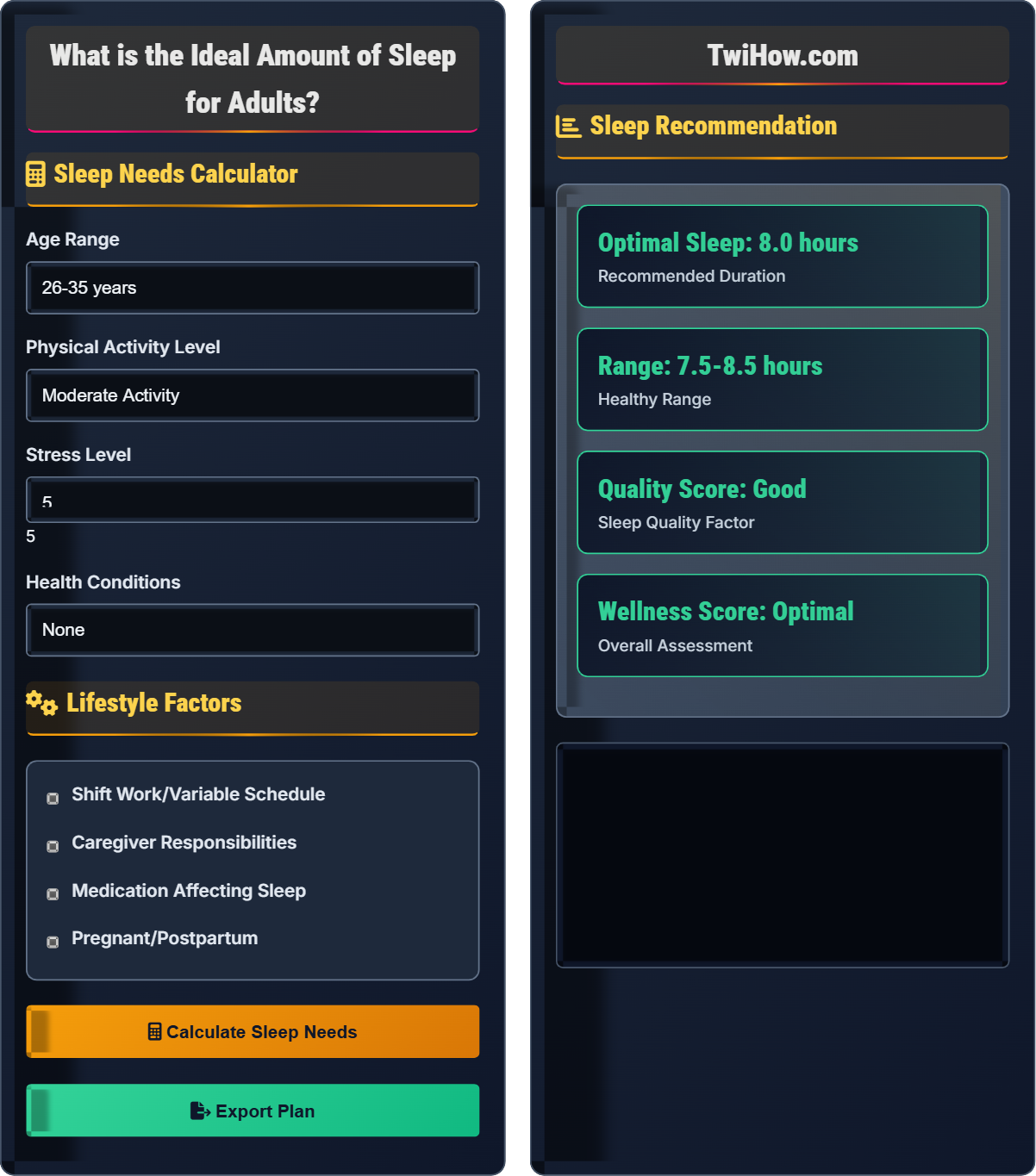
Sleep Needs Calculator
Lifestyle Factors
Sleep Recommendation
Sleep Science Explained
The National Sleep Foundation recommends 7-9 hours of sleep per night for adults aged 18-64. This range is based on extensive research linking sleep duration to health outcomes. Individual needs may vary, with some people requiring slightly more or less sleep to feel fully rested.
Sleep consists of four distinct stages that repeat in cycles throughout the night:
- Stage 1 (N1): Light sleep, transition phase (5-10% of total sleep)
- Stage 2 (N2): Deeper light sleep, memory consolidation begins (45-55% of total sleep)
- Stage 3 (N3): Deep sleep, physical restoration occurs (15-20% of total sleep)
- REM Sleep: Rapid eye movement, dreaming, memory processing (20-25% of total sleep)
Each sleep cycle lasts approximately 90 minutes and includes all four sleep stages. During a typical 8-hour sleep period, you'll experience 4-5 complete cycles. Early cycles contain more deep sleep, while later cycles have more REM sleep. This pattern optimizes both physical and mental restoration.
Getting 7-9 hours of quality sleep provides numerous health benefits:
- Immune Function: Better resistance to infections
- Memory Consolidation: Improved learning and retention
- Emotional Regulation: Better mood and stress management
- Physical Recovery: Tissue repair and growth hormone release
- Metabolic Health: Better glucose control and appetite regulation
- Cardiovascular Health: Lower risk of heart disease
Chronic sleep deprivation can lead to serious health consequences:
- Cognitive Impairment: Reduced attention, memory, and decision-making
- Weakened Immunity: Increased susceptibility to illness
- Mood Disorders: Higher risk of depression and anxiety
- Metabolic Issues: Weight gain and increased diabetes risk
- Cardiovascular Problems: Elevated blood pressure and heart disease
- Accident Risk: Impaired reaction time and coordination
Sleep needs vary between individuals due to genetic, age, and lifestyle factors. Some people are natural "short sleepers" who function well on 6 hours, while others need 9-10 hours to feel rested. The key indicator of adequate sleep is feeling refreshed upon waking and alert throughout the day without relying on caffeine.
Sleep Requirements by Life Stage
Newborns: 14-17 hours, Infants: 12-15 hours, Toddlers: 11-14 hours, Preschoolers: 10-13 hours, School-age: 9-11 hours, Teenagers: 8-10 hours, Adults: 7-9 hours, Older Adults: 7-8 hours.
Base Need (7-9 hrs) + Adjustment Factors = Personalized Requirement
Adjustment factors include activity level, stress, health conditions, and life circumstances.
- Quality matters as much as quantity
- Consistency is crucial for optimal sleep
- Individual variation is normal
- Signs of adequacy are more important than hours
Sleep Optimization
Bedroom environment, sleep schedule consistency, pre-sleep routines, light exposure, caffeine timing, physical activity timing, meal timing.
- Establish consistent sleep/wake times
- Create optimal sleep environment
- Develop calming pre-sleep routine
- Limit stimulating activities before bed
- Manage stress effectively
- Seek professional help if needed
- Changes take time to show effects
- Track your sleep patterns
- Address underlying health issues
- Be patient with the process
Sleep Knowledge Quiz
According to the National Sleep Foundation, what is the recommended sleep duration for healthy adults aged 18-64?
The National Sleep Foundation recommends 7-9 hours of sleep per night for healthy adults aged 18-64. This range is based on extensive research linking sleep duration to health outcomes, cognitive performance, and overall well-being.
This recommendation accounts for individual variation in sleep needs while ensuring optimal physical and mental health. Getting less than 7 hours consistently can lead to sleep deprivation and associated health risks.
The answer is B) 7-9 hours.
Sleep recommendations are based on decades of research examining the relationship between sleep duration and health outcomes. The 7-9 hour range represents the amount of sleep that allows for optimal functioning for most adults, though individual needs may vary slightly.
Sleep Duration: Total amount of time spent sleeping
National Sleep Foundation: Leading organization promoting sleep health
Health Outcomes: Measurable health effects related to sleep
• Recommendations are evidence-based
• Individual variation exists within guidelines
• Consistency is important alongside duration
• Track your sleep to identify your optimal amount
• Focus on how you feel rather than just hours
• Maintain consistent sleep schedule
• Believing you can function optimally on minimal sleep
• Ignoring individual variation in sleep needs
• Not considering sleep quality along with quantity
Explain the different sleep stages and their primary functions in the sleep cycle.
Sleep consists of four distinct stages that cycle throughout the night:
Stage 1 (N1 - Light Sleep): This is the transition phase between wakefulness and sleep, lasting 5-10 minutes. Brain waves begin to slow from wakeful activity. Muscle activity decreases, and the eyes roll slowly. This stage comprises 5-10% of total sleep time.
Stage 2 (N2 - Deeper Light Sleep): This stage marks the beginning of true sleep. Eye movement stops, and brain waves slow further with occasional bursts of rapid activity called sleep spindles. Body temperature drops, and heart rate slows. This stage accounts for 45-55% of total sleep time and is crucial for memory consolidation.
Stage 3 (N3 - Deep Sleep): This is the deepest stage of sleep, characterized by slow delta waves. It's difficult to awaken someone from this stage. This is when tissue growth and repair occur, hormones are released, and immune function is strengthened. This stage represents 15-20% of total sleep time.
REM Sleep: Rapid Eye Movement sleep occurs about 90 minutes after falling asleep. The brain becomes active, eyes move rapidly, and most vivid dreams occur. Breathing becomes faster and irregular, and heart rate and blood pressure increase. This stage is crucial for memory consolidation, learning, and emotional processing. It comprises 20-25% of total sleep time.
Each sleep stage serves unique and essential functions for physical and mental health. The progression through these stages is not random but follows a specific pattern that optimizes restoration. Understanding sleep stages helps appreciate why simply getting enough hours isn't sufficient—quality sleep with proper stage distribution is crucial.
Sleep Stages: Distinct phases of sleep with different characteristics
Delta Waves: Slow brain waves associated with deep sleep
Sleep Spindles: Bursts of rapid brain activity during stage 2 sleep
• All stages are necessary for optimal health
• Stage distribution changes throughout the night
• Disruption of any stage affects overall sleep quality
• Avoid alcohol before bed (disrupts REM sleep)
• Maintain consistent sleep schedule (optimizes staging)
• Create optimal sleep environment (minimizes disruptions)
• Focusing only on total sleep time
• Not understanding the importance of deep sleep
• Underestimating REM sleep functions
Jane typically gets 6 hours of sleep per night due to work demands, but her optimal requirement is 8 hours. She maintains this schedule for 5 days straight. Calculate Jane's sleep debt and explain the potential consequences if this pattern continues.
Calculation:
Daily sleep deficit = Optimal sleep - Actual sleep
Daily sleep deficit = 8 hours - 6 hours = 2 hours per night
Sleep debt after 5 days = Daily deficit × Number of nights
Sleep debt after 5 days = 2 hours × 5 nights = 10 hours
Potential Consequences:
With a 10-hour sleep debt, Jane may experience:
• Impaired cognitive function and decision-making
• Reduced reaction time and increased accident risk
• Weakened immune system making her more susceptible to illness
• Mood changes including irritability and decreased emotional regulation
• Reduced productivity and concentration at work
If this pattern continues, Jane's sleep debt will accumulate, potentially leading to chronic sleep deprivation with more severe health consequences including increased risk of cardiovascular disease, diabetes, and mental health issues.
Sleep debt accumulates when you consistently get less sleep than your body needs. Unlike financial debt, sleep debt cannot be fully repaid with a single long sleep session. The body needs consistent adequate sleep to recover from accumulated sleep loss and restore optimal functioning.
Sleep Debt: Accumulated lack of sleep over time
Cognitive Function: Mental processes like thinking, remembering, and deciding
Chronic Sleep Deprivation: Prolonged insufficient sleep
• Sleep debt accumulates over time
• Effects compound with continued sleep loss
• Recovery requires consistent adequate sleep
• Monitor your sleep patterns regularly
• Prioritize sleep during demanding periods
• Address sleep debt before it becomes chronic
• Believing you can indefinitely function on reduced sleep
• Not recognizing accumulating sleep debt
• Thinking weekend catch-up fully corrects debt
A nurse works rotating shifts including days, evenings, and nights. She struggles with sleep quality and daytime alertness. Explain how shift work affects circadian rhythms and suggest evidence-based strategies to manage these challenges.
Circadian Rhythm Impact:
Shift work disrupts the natural circadian rhythm, which is synchronized to the light-dark cycle. The body's internal clock expects sleep during darkness and wakefulness during daylight. Rotating shifts force the body to constantly adjust, leading to:
• Desynchronization between internal clock and external schedule
• Reduced sleep quality and duration
• Impaired alertness and performance
• Increased risk of accidents and health problems
Evidence-Based Strategies:
1. Light Management: Use bright light therapy during work hours and wear sunglasses when leaving work in the morning to minimize light exposure that signals wakefulness.
2. Sleep Environment: Use blackout curtains, eye masks, and white noise machines to create a dark, quiet environment for daytime sleep.
3. Consistent Schedule: If possible, limit shift rotations and try to maintain a consistent sleep schedule even on days off.
4. Strategic Napping: Take 20-30 minute naps before or during breaks to improve alertness.
5. Melatonin Supplementation: Consider melatonin supplements timed appropriately to help reset the circadian clock.
6. Gradual Adjustment: Shift sleep schedules gradually when transitioning between day and night shifts.
Circadian rhythms are fundamental biological processes that regulate sleep-wake cycles, hormone release, and other physiological functions. When these rhythms are disrupted, as in shift work, the body struggles to adapt, leading to various health and performance issues. Understanding this disruption helps in developing targeted interventions.
Circadian Rhythm: 24-hour biological cycle regulating bodily functions
Chronotype: Individual preference for sleep/wake timing
Entrainment: Synchronization of internal clock with external cues
• Light is the strongest circadian cue
• Consistency helps adaptation
• Individual responses vary significantly
• Maintain consistent sleep schedule even on days off
• Use light therapy strategically
• Consider chronotype when scheduling if possible
• Expecting quick adaptation to shift changes
• Not optimizing sleep environment for unusual hours
• Ignoring the cumulative effects of circadian disruption
Which of the following is the best indicator that you're getting adequate, quality sleep?
The best indicator of adequate, quality sleep is waking up naturally without an alarm and feeling refreshed. This suggests:
• You've completed sufficient sleep cycles
• Your circadian rhythm is properly aligned
• You've achieved restorative sleep stages
• Your sleep need has been met
The other options are less reliable indicators:
• Spending 8 hours in bed doesn't guarantee quality sleep
• Falling asleep immediately may indicate sleep deprivation
• Dream recall varies greatly and doesn't indicate sleep quality
Feeling rested upon waking is a more accurate measure than simply tracking hours.
The answer is B) Waking up naturally without an alarm and feeling refreshed.
While sleep duration guidelines are important, individual assessment of sleep adequacy is equally crucial. The subjective experience of feeling rested is often a better indicator of sleep sufficiency than objective measures alone. This emphasizes the importance of listening to your body's signals.
Sleep Quality: Subjective and objective measures of sleep satisfaction
Subjective Assessment: Personal evaluation of sleep experience
Objective Measures: Quantifiable sleep parameters
• Duration and quality both matter
• Individual indicators are important
• Consistent feelings of restfulness indicate adequacy
• Track how you feel upon waking
• Notice daytime energy levels
• Assess cognitive performance throughout the day
• Focusing only on hours spent in bed
• Ignoring personal sleep needs
• Not connecting sleep to daytime functioning
FAQ
Q: I'm a college student who often gets only 5-6 hours of sleep during the week but tries to "catch up" on weekends. Is this an effective strategy?
A: Unfortunately, weekend "catch-up" sleep is not an effective strategy for fully recovering from weekday sleep deprivation. Here's why:
Limitations of Catch-Up Sleep:
1. Metabolic Impact: Studies show that even after weekend recovery, metabolic dysfunction markers remain elevated
2. Performance: Cognitive function and reaction time don't fully return to baseline
3. Social Jet Lag: Shifting sleep schedules creates internal desynchronization
Healthier Alternatives:
1. Micro-naps: Take 20-minute power naps during the day to supplement nighttime sleep
2. Prioritize Sleep: Aim for at least 7 hours consistently, even if it means adjusting your schedule
3. Efficient Studying: Improve study techniques to reduce time needed for academic work
4. Weekend Adjustment: If you must catch up, limit weekend sleep extension to 1-2 hours maximum
Consistent sleep schedules are more beneficial than intermittent recovery.
Q: I'm 35 years old and feel fine with 6 hours of sleep. Do I really need 7-9 hours as recommended?
A: While some individuals have genetic variants that allow them to function well on less sleep (less than 1% of the population), most people who think they're fine on 6 hours are actually experiencing mild impairment without realizing it.
Signs You May Need More Sleep:
1. Reliance on Alarm Clock: If you can't wake up naturally, you likely need more sleep
2. Caffeine Dependence: Needing coffee to function indicates sleep debt
3. Afternoon Energy Dip: Significant fatigue around 2-4 PM
4. Impaired Performance: Difficulty concentrating or making decisions
Testing Your True Needs:
Take a vacation and allow yourself to sleep without an alarm for a week. Initially, you may sleep longer to repay sleep debt, but eventually, you'll settle into your natural requirement. Most people discover they need more sleep than they thought.
Consider gradually increasing your sleep time to 7 hours and observe how you feel.