What Vitamins Should I Take?
Complete vitamin guide • Personalized supplement recommendations
Vitamin Fundamentals:
Assess My Vitamin NeedsVitamins are essential organic compounds that your body needs in small amounts to function properly. They play crucial roles in metabolism, immune function, bone health, and many other processes. While a balanced diet should provide most vitamins, certain life stages, health conditions, and lifestyle factors may increase your needs.
Some vitamins are fat-soluble (A, D, E, K) and stored in the body, while others are water-soluble (B-complex, C) and need regular replenishment. Deficiencies can lead to various health problems, but excessive intake can also be harmful.
Key vitamin categories:
- Water-Soluble: B-complex and vitamin C (excess excreted)
- Fat-Soluble: A, D, E, K (stored in body tissues)
- Essential: Must be obtained from diet or supplements
- Deficiency Risk: Certain populations at higher risk
- Interactions: Vitamins can interact with medications
Understanding your vitamin needs is crucial for optimal health and preventing deficiency-related conditions.
Personal Information
Health & Lifestyle
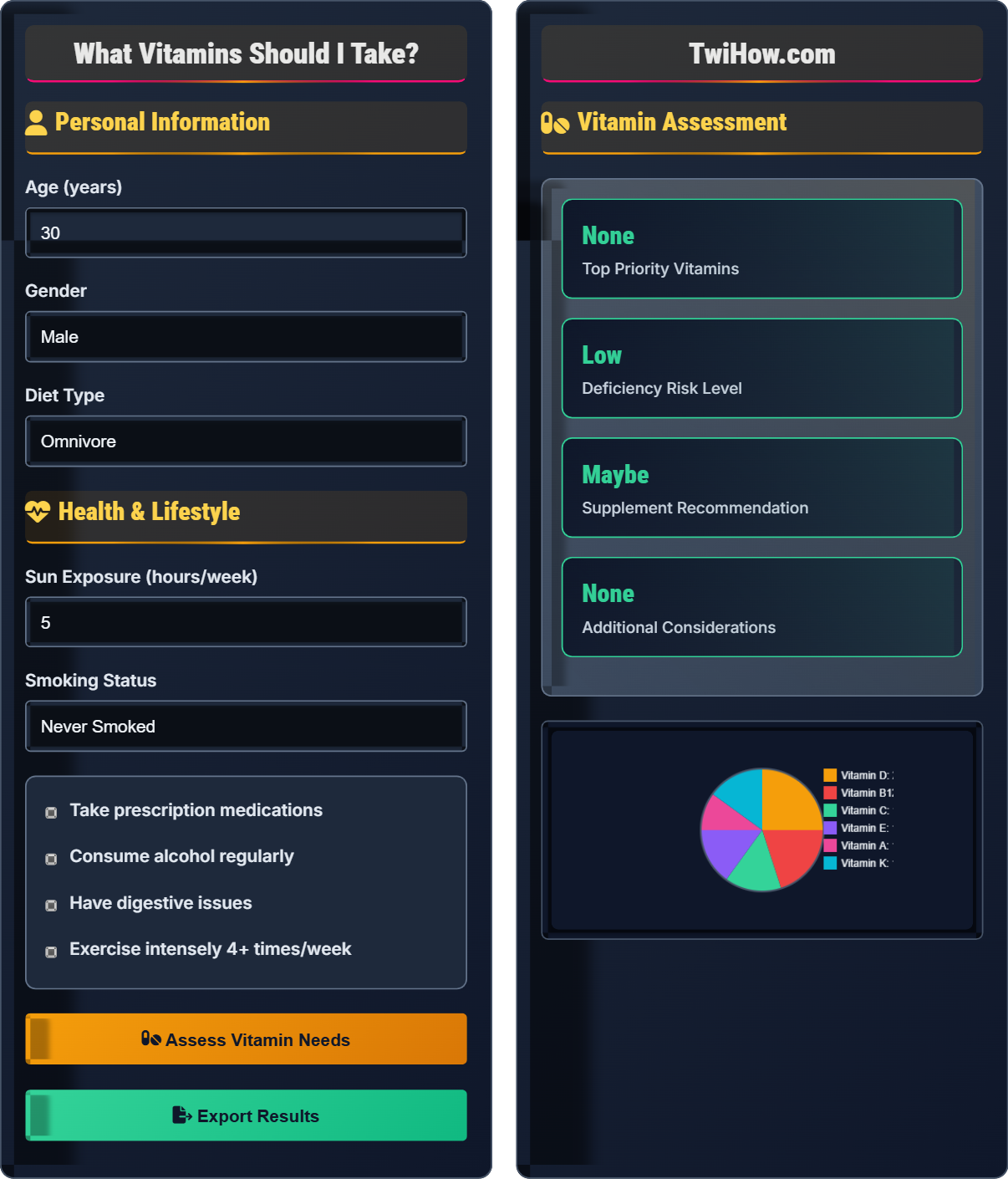
Vitamin Assessment
| Vitamin | Recommendation | Reason | Priority |
|---|---|---|---|
| Vitamin D | Supplement | Low sun exposure | High |
| Vitamin B12 | Supplement | Dietary restriction | High |
| Vitamin C | Consider | General health | Medium |
| Vitamin E | Consider | Antioxidant support | Medium |
Understanding Vitamin Categories
Water-soluble vitamins (B-complex and vitamin C) dissolve in water and are not stored in the body. Excess amounts are excreted in urine, so they need regular replenishment.
Vitamin B12: Essential for nerve function and red blood cell formation. Found primarily in animal products, so vegans and vegetarians often need supplements.
Vitamin C: Important for immune function, wound healing, and iron absorption. Found in citrus fruits, berries, and vegetables.
B-Complex: Includes B1 (thiamine), B2 (riboflavin), B3 (niacin), B5 (pantothenic acid), B6 (pyridoxine), B7 (biotin), and B9 (folate).
Fat-soluble vitamins (A, D, E, K) dissolve in fat and are stored in the liver and fatty tissues. Because they're stored, excessive intake can lead to toxicity.
Vitamin D: Essential for calcium absorption and bone health. Synthesized in skin from sunlight exposure. Deficiency is common, especially in northern climates.
Vitamin A: Important for vision, immune function, and skin health. Found in orange/yellow vegetables and liver.
Vitamin E: Powerful antioxidant that protects cells from damage. Found in nuts, seeds, and oils.
Vitamin K: Essential for blood clotting and bone health. Found in leafy greens.
Factors that influence vitamin requirements:
Most common vitamin deficiencies:
- Vitamin D: Affects up to 40% of adults, especially in winter months
- Vitamin B12: Common in vegetarians, vegans, and older adults
- Vitamin B6: Often low in people with poor diet or alcohol use
- Folate: Important for women of childbearing age
- Vitamin C: Can be low in smokers and those with poor fruit/vegetable intake
Symptoms of deficiency include fatigue, weakness, skin problems, and increased infection risk.
- Focus on Deficiencies: Supplement only what you're lacking
- Quality Matters: Choose reputable brands with third-party testing
- Timing: Fat-soluble vitamins with meals, water-soluble anytime
- Consistency: Take regularly for best results
- Consult Healthcare Provider: Especially if taking medications
Vitamin Fundamentals
Vitamins, water-soluble, fat-soluble, deficiency, supplementation, bioavailability.
Vitamin Needs = (Age Factor × Gender Factor × Diet Factor × Lifestyle Factor) + Health Conditions
- Water-soluble vitamins need regular replenishment
- Fat-soluble vitamins can accumulate to toxic levels
- Deficiencies are often diet-dependent
Supplementation Guidelines
Dietary gaps, absorption issues, lifestyle factors, health conditions.
- Assess dietary intake and lifestyle factors
- Identify potential deficiencies
- Choose appropriate supplements
- Monitor effectiveness and adjust as needed
- Don't exceed upper tolerable limits
- Check for medication interactions
- Consult healthcare providers
- Choose quality supplements
Vitamin Knowledge Quiz
Which of the following vitamins are fat-soluble?
Vitamins A, D, E, and K are fat-soluble vitamins. They dissolve in fat and are stored in the liver and fatty tissues. Unlike water-soluble vitamins, they don't need to be replenished as frequently but can accumulate to toxic levels if taken in excess. The B-complex vitamins and vitamin C are water-soluble and are excreted in urine when consumed in excess.
The answer is B) A, D, E, K.
Understanding the difference between fat-soluble and water-soluble vitamins is crucial for safe supplementation. Fat-soluble vitamins can be stored in the body and pose a higher risk of toxicity if taken in excessive amounts. Water-soluble vitamins are generally safer because excess amounts are excreted, but they need to be replenished more frequently.
Water-Soluble: Dissolve in water, not stored in body
Fat-Soluble: Dissolve in fat, stored in tissues
Toxicity: Harmful effects from excessive intake
• Fat-soluble vitamins can accumulate to toxic levels
• Water-soluble vitamins need regular replenishment
• Different storage and excretion patterns
• Take fat-soluble vitamins with meals
• Water-soluble vitamins can be taken anytime
• Monitor intake of fat-soluble vitamins
• Not understanding storage differences
• Taking excessive fat-soluble vitamins
• Assuming all vitamins are the same
Who is at risk for vitamin B12 deficiency and why? What are the symptoms and consequences of B12 deficiency?
At Risk Populations: Vegetarians and vegans (B12 found primarily in animal products), older adults (reduced absorption), people with digestive disorders (pernicious anemia, Crohn's disease), and those taking certain medications (metformin, proton pump inhibitors).
Symptoms: Fatigue, weakness, constipation, loss of appetite, weight loss, megaloblastic anemia, numbness and tingling in hands and feet, difficulty maintaining balance, depression, confusion, dementia, poor memory, soreness of mouth or tongue.
Consequences: Irreversible neurological damage if left untreated, anemia, increased homocysteine levels (cardiovascular risk).
Prevention: Regular B12 supplementation for at-risk groups.
Vitamin B12 deficiency is particularly important to understand because it's preventable yet can cause irreversible damage if not addressed early. This is why vegans and vegetarians are strongly advised to supplement B12. The neurological symptoms are often mistaken for other conditions, delaying treatment.
Megaloblastic Anemia: Abnormal red blood cell formation
Pernicious Anemia: B12 deficiency due to absorption issues
Homocysteine: Amino acid linked to cardiovascular risk
• B12 deficiency can cause irreversible damage
• Vegans must supplement B12
• Early detection prevents complications
• Annual B12 testing for at-risk groups
• Cyanocobalamin vs methylcobalamin forms
• Sublingual supplements for better absorption
• Assuming B12 deficiency is rare
• Not testing at-risk populations
• Delaying treatment for neurological symptoms
Sarah is a 28-year-old vegan woman who works indoors and rarely gets sun exposure. She exercises regularly but doesn't consume fortified foods. Calculate her likely vitamin deficiencies and recommend appropriate supplements with dosages. Consider her lifestyle and dietary restrictions.
At-Risk Vitamins: B12 (animal products only), D (sun exposure limited), Omega-3s (fish sources), possibly iron and zinc (bioavailability issues with plant sources).
Recommended Supplements:
Vitamin B12: 1000 mcg cyanocobalamin weekly or 25-100 mcg daily
Vitamin D3: 2000-4000 IU daily
Algae Oil (Omega-3): 250-500 mg EPA/DHA daily
Iron (if deficient): 18 mg elemental iron with vitamin C for absorption
Consider: B-complex, zinc, and vitamin K2 for bone health.
This example shows how multiple lifestyle factors compound to create specific nutritional needs. Sarah's vegan diet eliminates all B12 sources, while indoor work limits vitamin D synthesis. This demonstrates the importance of personalized supplementation based on individual circumstances rather than generic recommendations.
Bioavailability: Amount absorbed and utilized by the body
Fortified Foods: Foods enriched with nutrients
Algae Oil: Plant-based source of omega-3 fatty acids
• Vegans must supplement B12
• Indoor workers often need vitamin D
• Plant-based diets may need additional nutrients
• Focus on nutrients absent from diet
• Consider bioavailability differences
• Test levels when possible
• Assuming plant-based diets are nutritionally complete
• Not supplementing critical nutrients
• Taking unnecessary supplements
A patient taking warfarin (blood thinner) wants to start a multivitamin. Which vitamins should they avoid or be cautious about, and why? What precautions should be taken?
Vitamin K: Should be avoided or kept consistent. Warfarin works by blocking vitamin K's action, so fluctuating vitamin K intake affects blood clotting time.
Vitamin E: May enhance anticoagulant effects, increasing bleeding risk.
Vitamin D: Generally safe but may interact with some medications.
Precautions: Consult healthcare provider before starting any supplement. Monitor INR levels regularly. Keep vitamin K intake consistent if supplementing.
This demonstrates why medication interactions are critical when considering supplements. Many people don't realize that vitamins can interact with medications just like other drugs. This is why healthcare provider consultation is essential, especially for those taking medications.
INR: International Normalized Ratio - blood clotting measure
Anticoagulant: Substance that prevents blood clotting
Medication Interaction: Effect of combining substances
• Always consult healthcare providers
• Monitor medication interactions
• Some vitamins affect drug efficacy
• Keep a supplement list for doctors
• Report all supplements during visits
• Research before starting new supplements
• Not informing doctors about supplements
• Assuming vitamins are always safe
• Ignoring medication interactions
Which vitamin has the lowest tolerable upper intake level for adults?
Vitamin A has the lowest tolerable upper intake level at 3000 mcg (10,000 IU) for adults. This is significantly lower than other fat-soluble vitamins because excess vitamin A can cause serious toxicity including liver damage, bone loss, and birth defects. The upper limits for other vitamins are: Vitamin C (2000 mg), Vitamin D (4000 IU), Vitamin E (1000 mg).
The answer is C) Vitamin A (3000 mcg).
This highlights why understanding upper limits is important. While vitamins are essential, they can be harmful in excessive amounts. Vitamin A is particularly concerning because it's stored in the liver and can accumulate to toxic levels over time. This is why beta-carotene (a precursor to vitamin A) is safer than preformed vitamin A.
Upper Limit: Maximum safe daily intake
Tolerable Intake: Level unlikely to cause adverse effects
Toxicity: Harmful effects from excessive intake
• Don't exceed upper tolerable limits
• Fat-soluble vitamins have lower limits
• Preformed vitamin A is more risky than beta-carotene
• Choose beta-carotene over retinol for vitamin A
• Read labels carefully for amounts
• Don't assume "more is better"
• Taking excessive amounts "just in case"
• Not checking upper limits
• Assuming supplements are harmless
FAQ
Q: What vitamins do I absolutely need to supplement on a vegan diet?
A: Vitamin B12 is essential for all vegans as it's found almost exclusively in animal products. Vitamin D is important if you don't get regular sun exposure. Consider iodine (seaweed, iodized salt), omega-3s (algae oil), and possibly iron, zinc, and calcium depending on your diet. A B-complex and multivitamin can help fill gaps, but focus on B12 as the most critical supplement.
Q: Do I need more vitamins as I get older?
A: Yes, older adults often need more vitamin D, B12, and calcium. As we age, our ability to absorb B12 decreases and vitamin D synthesis from sun exposure becomes less efficient. Bone health becomes more important, so calcium and vitamin D needs increase. Digestive changes can affect absorption of other nutrients as well. Regular testing helps identify specific needs.
Q: Do athletes need special vitamin supplements?
A: Athletes may have increased needs for B-vitamins (energy metabolism), vitamin D (bone health), iron (oxygen transport), and antioxidants (recovery). However, most needs can be met through a well-planned diet. Supplements should address specific deficiencies identified through testing rather than blanket supplementation. Recovery-focused nutrients like vitamin C and E may be beneficial around intense training periods.