How to Manage Balance Between Consistency and Creativity in Food Service
Complete balance guide • Step-by-step strategies
Consistency and Creativity Balance Fundamentals:
Show Balance SimulatorBalancing consistency and creativity in food service is the art of maintaining quality standards and customer expectations while fostering innovation and fresh experiences. This delicate equilibrium ensures reliable operations while encouraging culinary exploration and growth.
The balance involves establishing standardized procedures for core operations while creating opportunities for creative expression in peripheral areas. It requires systems that support both stability and innovation simultaneously.
Key balance elements:
- Standardized Procedures: Consistent processes for core operations
- Creative Zones: Designated areas for innovation and experimentation
- Quality Control: Systems to maintain standards while allowing creativity
- Staff Empowerment: Training that supports both consistency and creativity
Successful balance drives customer satisfaction, staff engagement, operational efficiency, and competitive advantage. It creates an environment where excellence is maintained while innovation thrives.
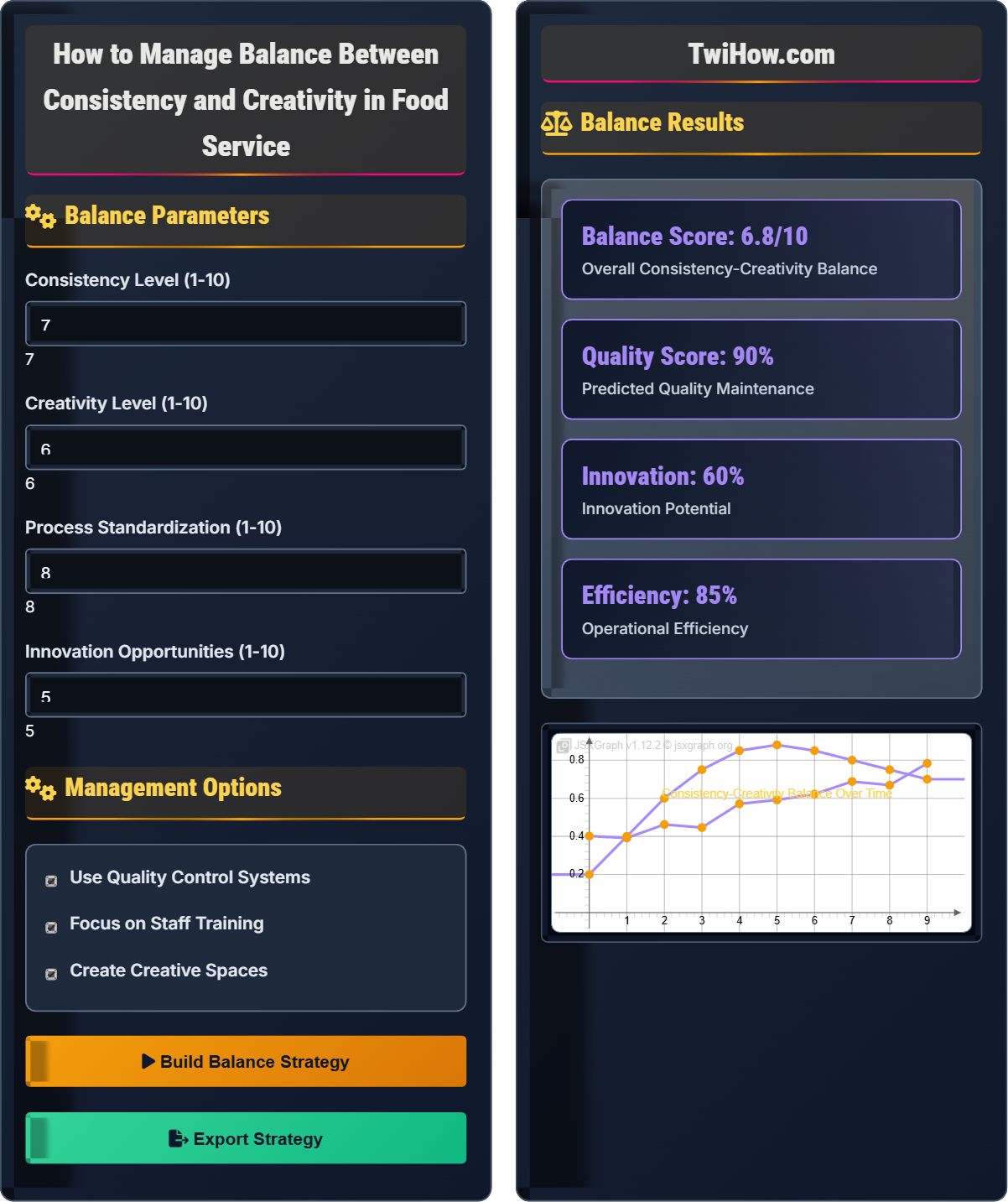
Balance Parameters
Management Options
Balance Results
| Element | Score | Impact | Recommendation |
|---|---|---|---|
| Consistency | 7/10 | High | Strong operational base |
| Creativity | 6/10 | Medium | Room for improvement |
| Standards | 8/10 | High | Excellent standardization |
| Innovation | 5/10 | Medium | Expand creative opportunities |
How Balance Between Consistency and Creativity Works
Balance between consistency and creativity in food service is the strategic management of standardized operations and innovative expression. It involves maintaining reliable quality, service standards, and operational procedures while creating opportunities for creative exploration, staff development, and customer engagement. This balance ensures that customers receive dependable service while experiencing fresh, exciting offerings.
Successful balance follows a structured approach that integrates both elements:
Where:
- Consistency: Reliable standards and procedures
- Creativity: Innovative expression and exploration
- Risk: Potential for quality or safety issues
- Complexity: Operational and training challenges
Key areas where balance impacts food service operations:
- Menu Development: Standard items vs. seasonal innovations
- Service Delivery: Consistent procedures vs. personalized touches
- Staff Management: Standardized training vs. creative expression
- Quality Control: Consistent standards vs. innovation tolerance
- Customer Experience: Reliable service vs. exciting surprises
- Operations: Efficient systems vs. flexible processes
- Foundation Approach: Strong consistency with selective creativity
- Rotation Approach: Consistent core with rotating innovations
- Zoning Approach: Different areas for consistency vs. creativity
- Layering Approach: Consistent base with creative overlays
- Phased Approach: Alternating periods of consistency and creativity
- Hybrid Approach: Integrated balance across all operations
Balance Fundamentals
Consistency, creativity, operational standards, quality control, staff empowerment, customer satisfaction.
Optimal Balance = (Consistency × Creativity) ÷ (Risk + Complexity)
Where Optimal Balance = effective management, Consistency = reliable standards, Creativity = innovative expression.
- Core operations must remain consistent
- Creative zones should be clearly defined
- Balance requires ongoing monitoring and adjustment
Applications
Menu planning, service delivery, staff training, quality management, customer experience design, operational efficiency.
- Establish core standard procedures
- Identify areas for creative freedom
- Develop balanced training programs
- Implement monitoring systems
- Staff skill development needs
- Customer expectation management
- Operational complexity considerations
- Quality assurance requirements
Consistency and Creativity Balance Quiz
Which of the following is NOT a fundamental element of balancing consistency and creativity in food service?
Successful balance between consistency and creativity requires flexibility, not maximum rigidity. The key elements include standardized procedures for core operations, designated creative zones, and quality control systems that maintain standards while allowing innovation. Rigidity prevents the creative expression necessary for balance.
The answer is D) Maximum Rigidity.
Balance implies flexibility and adaptability, not inflexibility. The goal is to maintain reliable operations while allowing for creative expression. Maximum rigidity eliminates the possibility of creative innovation, which defeats the purpose of achieving balance. True balance requires systems that can accommodate both stability and change.
Standardized Procedures: Consistent processes for core operations
Creative Zones: Designated areas where innovation is encouraged
Quality Control Systems: Methods to maintain standards while allowing creativity
• Balance requires flexibility
• Core operations need consistency
• Creative areas need freedom
• Define clear boundaries
• Establish creative opportunities
• Maintain core standards
• Applying rigid standards everywhere
• Not defining creative boundaries
• Eliminating creative opportunities
Explain how to create "creative zones" within a food service operation while maintaining overall consistency. Provide specific examples of where these zones can be established and how to ensure they don't compromise quality standards.
Creative Zone Definition: Areas within operations where staff can exercise creativity while adhering to established guidelines.
Examples of Creative Zones:
• Plating: Allow creative presentation within portion and garnish guidelines
• Seasonal Items: Encourage new dishes using seasonal ingredients
• Customer Interaction: Personalize service within professional standards
• Special Requests: Adapt standard recipes for dietary needs
Quality Assurance: Implement tasting protocols, peer reviews, and manager approvals for new creations to maintain standards.
Creative zones are essential for staff engagement and innovation while maintaining operational stability. They provide controlled opportunities for creative expression within defined parameters. This approach satisfies both the need for consistency and the desire for creative fulfillment among staff members.
Creative Zones: Designated areas for innovation within operational guidelines
Controlled Innovation: Creative expression within defined parameters
Quality Assurance: Systems to maintain standards while allowing creativity
• Define clear boundaries
• Maintain quality checkpoints
• Train staff on parameters
• Start with small creative opportunities
• Establish approval processes
• Monitor results closely
• Not defining clear boundaries
• Lacking quality checkpoints
• Insufficient staff training
You manage a fine dining restaurant where customers expect both perfectly executed classic dishes and innovative new offerings. Your staff struggles with maintaining consistency on signature items while developing new seasonal specialties. Describe a comprehensive balance strategy that addresses both operational needs, including specific techniques for standardizing core operations while encouraging creative innovation.
Standardization Strategy: Create detailed recipes, timing protocols, and plating specifications for signature dishes.
Innovation Strategy: Dedicate specific time slots for experimentation, establish seasonal menu development cycles.
Staff Management: Assign core preparation duties to experienced staff, allow newer staff to assist with innovation projects.
Quality Control: Implement daily tastings, peer reviews, and manager approvals for new items.
Training Program: Master foundational skills first, then encourage creative expression.
Strategy: Maintain 80% consistency in core operations, allocate 20% for creative exploration.
High-end restaurants face the unique challenge of delivering perfect consistency on signature items while pushing culinary boundaries. The 80/20 approach provides a framework where the majority of operations remain consistent while allowing for innovation. This approach ensures that customers receive reliable service while experiencing new, exciting offerings.
Signature Dishes: Core items that define your restaurant's identity
Seasonal Innovation: Regular introduction of new items based on seasonal ingredients80/20 Rule: 80% consistency, 20% innovation approach
• Prioritize core item consistency
• Schedule innovation activities
• Maintain quality standards
• Use prep time for innovation
• Train in phases
• Test before service
• Allowing innovation to compromise core items
• Not scheduling innovation time
• Insufficient testing of new items
A restaurant owner wants to train staff to be both consistent and creative but is concerned that encouraging creativity might undermine standardized procedures. Explain how to design a training program that develops both skills simultaneously, and provide three specific techniques that allow for creative expression while reinforcing consistency.
Training Philosophy: Establish that consistency is the foundation upon which creativity is built. Staff must master fundamentals before exploring creative possibilities.
Techniques:
1. Progressive Learning: Master standard procedures first, then introduce creative variations
2. Guided Experimentation: Provide structured opportunities for creative expression within parameters
3. Peer Mentoring: Pair experienced consistent performers with creative team members
Always ensure that creative expression enhances rather than compromises the reliable service that customers expect.
Consistency and creativity are not opposing forces but complementary skills. The key is to develop a foundation of consistent skills that enables confident creative expression. When staff master the basics, they gain the confidence and capability to explore creative possibilities while maintaining quality standards.
Progressive Learning: Building skills sequentially from basic to advanced
Guided Experimentation: Creative exploration within defined parameters
Foundational Skills: Basic competencies that enable advanced capabilities
• Master consistency first
• Build creativity on solid foundation
• Maintain quality standards
• Use hands-on practice
• Provide clear examples
• Encourage questions
• Teaching creativity before consistency
• Not establishing clear foundations
• Lacking structured progression
Which of the following best represents the primary benefit of successfully balancing consistency and creativity in food service?
The primary benefit of successfully balancing consistency and creativity is customer satisfaction and staff engagement. Consistency ensures reliable quality that customers can depend on, while creativity provides exciting experiences that keep them interested. This balance also engages staff by providing both structure and opportunities for creative expression, leading to higher retention and better performance.
The answer is B) Customer satisfaction and staff engagement.
Customer satisfaction and staff engagement are fundamental to restaurant success. Customers want to trust that they'll receive quality service while also experiencing something new and exciting. Staff want to feel challenged and creative while having clear guidelines for success. The balance achieves both objectives simultaneously.
Customer Satisfaction: Meeting or exceeding customer expectations
Staff Engagement: Employee investment in their work and success
Reliable Quality: Consistent delivery of expected standards
• Balance drives satisfaction
• Engaged staff perform better
• Trust and excitement coexist
• Focus on both sides of balance
• Monitor customer feedback
• Engage staff in process
• Focusing only on one side of balance
• Not involving staff in decisions
• Ignoring customer feedback
FAQ
Q: How can I measure whether my restaurant has achieved the right balance between consistency and creativity?
A: Measure balance through these indicators:
1. Customer Feedback: Look for comments about both reliability and exciting experiences
2. Staff Satisfaction: Gauge employee engagement and creative fulfillment
3. Quality Metrics: Track consistency in core operations
4. Innovation Outcomes: Monitor success of new items and initiatives
5. Retention Rates: Both customer and staff retention indicate balance
When both reliability and innovation are evident in feedback, you've achieved good balance.
Q: What's the difference between having a balance and just having inconsistent service?
A: Balance and inconsistency differ significantly in approach and outcome:
Balance: Intentional strategy with clear standards for core operations and defined opportunities for creativity. Everything is planned and controlled.
Inconsistency: Lack of standards and controls, unpredictable outcomes, unreliable service. Nothing is intentional or controlled.
Balance provides both reliability and excitement through deliberate design, while inconsistency provides neither reliability nor intentional creativity.